We’re looking forward to introducing you to Jess Gill. Check out our conversation below.
Hi Jess, thank you so much for taking time out of your busy day to share your story, experiences and insights with our readers. Let’s jump right in with an interesting one: What do the first 90 minutes of your day look like?
Usually, it’s being jolted out of slumber by the dog jumping all over my husband when she realizes it’s “wake-up” time. Then, the cat ambles in for his morning scritches. The duration of the scritches is entirely dependent on whether or not my toddler is awake — if she’s awake and peacefully playing, that’s one thing. If she’s awake and yelling, that’s another.
The next hour is a blur of breakfast, playtime, and getting her off to daycare, at which point I get a moment to breathe for the first time since waking up. That’s when I try to give myself a half hour of decompression time, since that likely will be the only chance I get for the rest of the day. It might be scrolling on social media, it might be reading, it might be catching up on TV. Whatever it is, it’s much appreciated before jumping into the next part of the day.
Can you briefly introduce yourself and share what makes you or your brand unique?
In 2024, I launched Sunny Side Creative with a colleague and friend, Elisa Watson. With my background in communications and writing and her background in creative direction and design, our skillsets dovetailed neatly to support the needs of mission-driven organizations. We decided that our focus would be on helping organizations illuminate what makes them shine — verbally and visually.
Our work together encompasses all things branding, marketing and communications strategy, creative and design, and web. What makes us different is that we are thoughtful listeners, curious questioners, and engaged doers who are committed to telling our clients’ stories meaningfully.
Amazing, so let’s take a moment to go back in time. What was your earliest memory of feeling powerful?
In elementary school, I wrote a paper on Amelia Earhart for a class assignment. My parents got called in because the teacher didn’t believe I had written the entire thing myself. But I had! I just had an advanced vocabulary and understanding of narrative structure beyond my age group because I was an avid reader and frequent library patron.
That was the first time I realized that writing could be a superpower — and more specifically, my superpower.
When did you last change your mind about something important?
I grew up knowing only the security of large employment enterprises — the New York City Board of Education, the State of Maryland, Johns Hopkins University, etc. But my last role in a large system wasn’t serving me. Instead, it was making me anxious, stressed, and depressed.
I tried making it work for far longer than I should have — more than a year past my husband’s gentle suggestions that maybe this wasn’t the right role for me. When I finally mustered up the strength to walk away without a backup plan, I had every intention of re-entering the enterprise world. After all, a steady paycheck, benefits, and defined responsibilities is pretty appealing. But COVID-19 hit the same week I left, leading to hiring freezes left and right. Suddenly, I had no clear path forward.
By chance, several freelance opportunities presented themselves, which let me try my hand at something new. Now, I was on the outside providing support rather than on the inside. And it felt empowering. It felt like my work was beneficial and helpful. It felt like I was adding value.
After a few months of this, my husband said, “You know you can do this for a living, right?”
Mind. Blown.
It had never occurred to me to not go back to the world of large employer systems. But with that one comment, suddenly, a whole new world opened up to me. And I am so grateful for where my life has taken me since!
Next, maybe we can discuss some of your foundational philosophies and views? What’s a cultural value you protect at all costs?
As someone with an intersectional identity of being both deaf and Jewish, I learned early on that I was an outlier. That my needs or experiences were “less” than someone with hearing or who isn’t Jewish. That my access requirements were based on preference, not need — as though I could somehow pick and choose how my deafness worked.
Fortunately, my parents and grandparents showed me the way when it came to self-advocacy. They taught me that it was okay to ask for the things I needed to be on a level playing field with my peers — an FM system, better hearing aids, note takers, etc. They raised me to be proud of my cultural and religious identity — to the point that I didn’t realize how small the Jewish population was globally until I was much older.
Because I was given access to the things that allowed me to flourish, I can’t imagine not giving that same access to others. For that reason, I will always protect and amplify equitable access.
Okay, so let’s keep going with one more question that means a lot to us: What is the story you hope people tell about you when you’re gone?
I hope that people will say, “She built systems to make this world a better place for people and she was generous with her time, her heart, and her mind.” I hope people will remember my preference for leading with joy and laughter and my addiction to books. I hope people will remember dancing wildly with me and how much love I have for my family and friends. I hope that people say I left this world a little bit better than I found it. And I hope that this doesn’t happen for a very long time!
Contact Info:
- Website: https://thesunnysidecreative.com/
- Linkedin: https://www.linkedin.com/in/jessgill/
- Other: Threads: @thejessgill
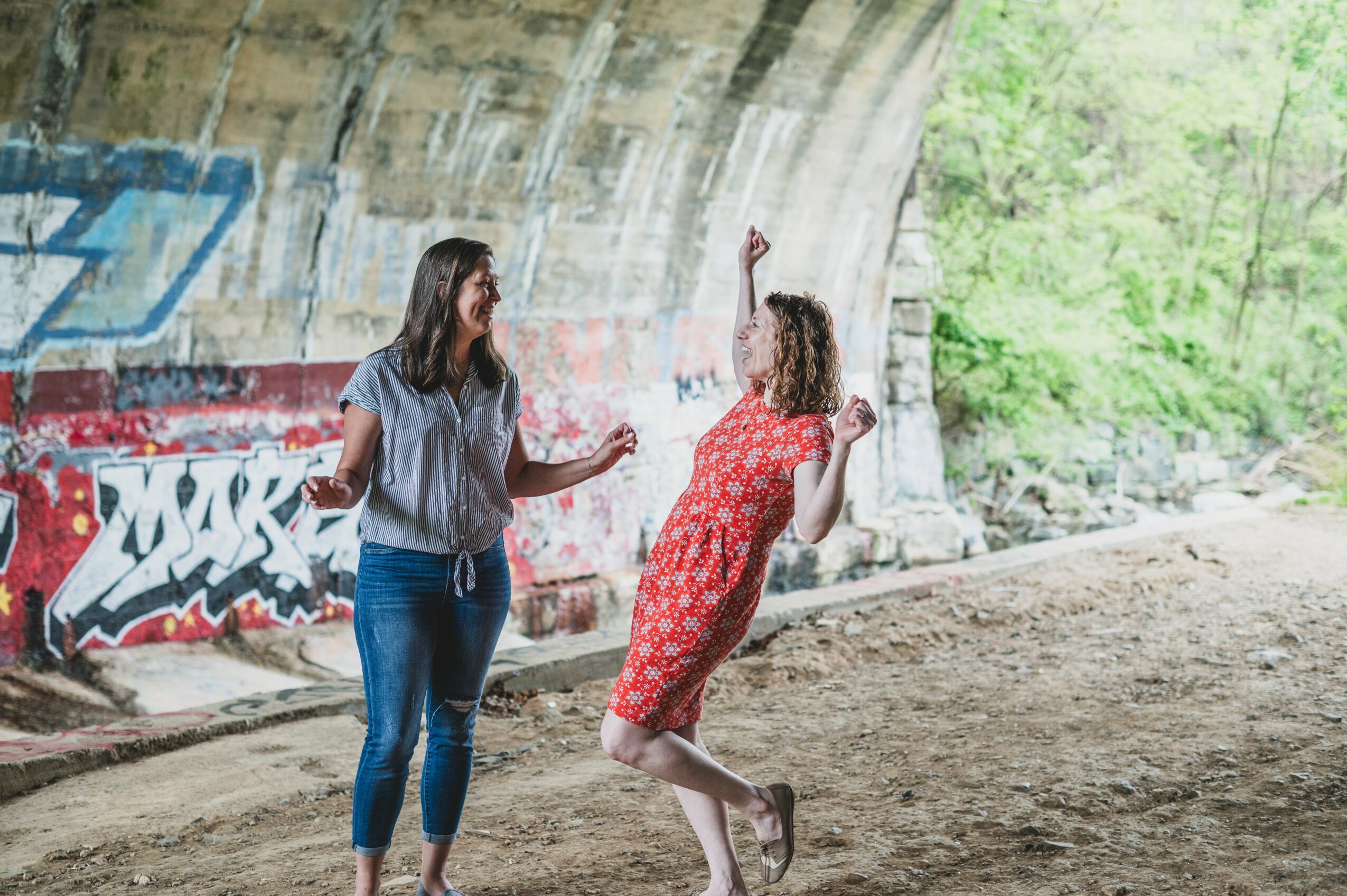
Image Credits
Mollye Miller Photography