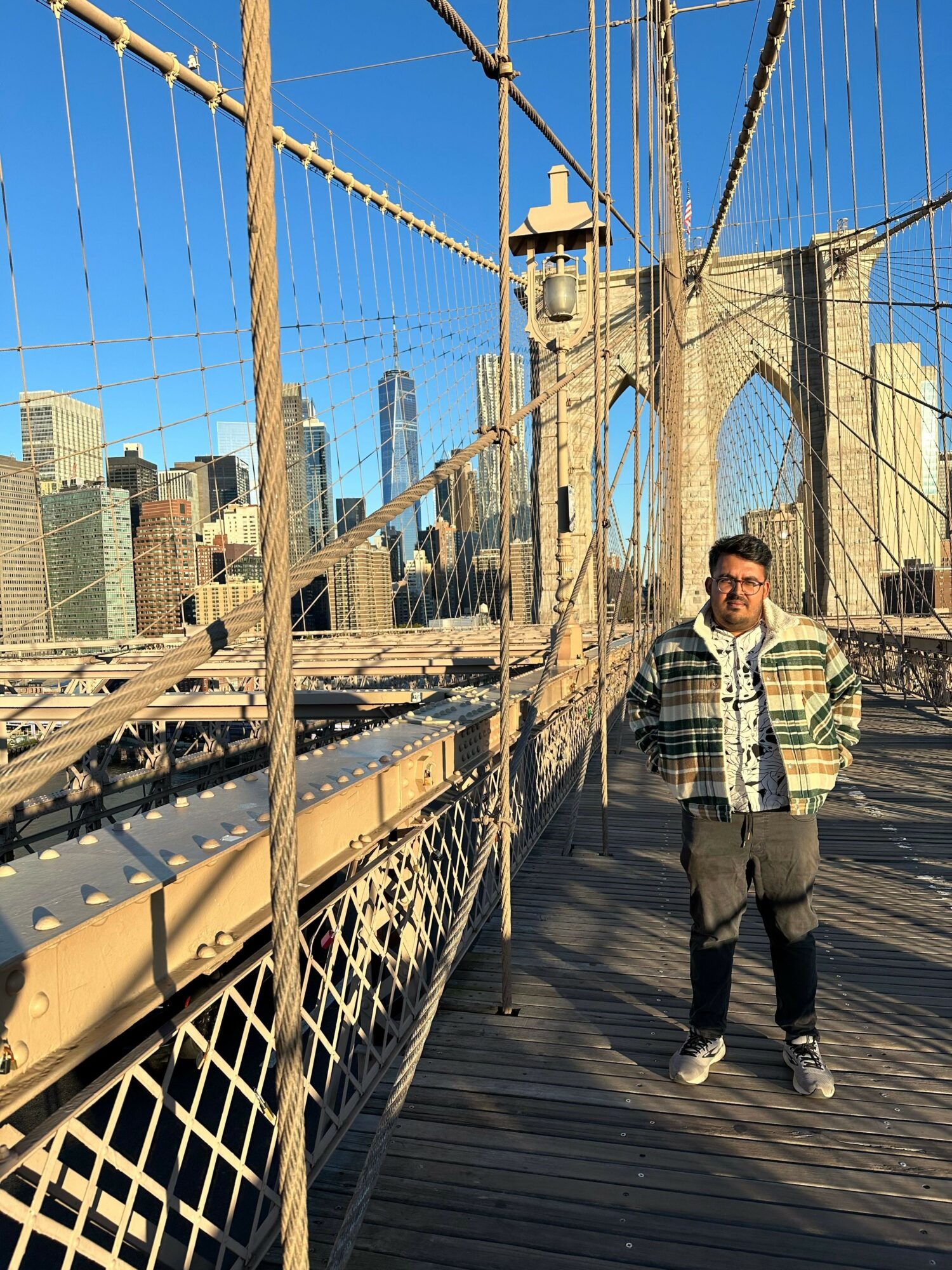
Today we’d like to introduce you to Priyanshu Banerjee.
Hi Priyanshu, so excited to have you with us today. What can you tell us about your story?
Growing up in India, I wouldn’t say I was the top student in the class — I was pretty average academically. But what I did have was curiosity. I was always interested in how things worked. If something broke, I wanted to understand why. That curiosity is what led me to choose Mechanical Engineering for my bachelor’s degree.
After finishing undergrad, I had this feeling that I had only scratched the surface. I knew the formulas, I knew the theory — but I didn’t feel like I truly understood the field yet. So I decided to push myself further and moved to Texas to pursue my Master’s in Mechanical Engineering. That was a big leap for me — new country, new system — but it really expanded my perspective.
During my master’s, I got involved in research, and that’s when things really clicked. I realized I enjoyed asking open-ended questions and working on problems where the answers weren’t in a textbook. That experience led me to pursue a Ph.D., where I focused on energy harvesting and thermoelectric materials.
One of the most exciting moments during my Ph.D. was when my research group and I developed a device that could convert body heat into electricity. It started as a research idea, but it had real-world potential. We patented the technology and eventually co-founded a startup, FlexiCharge, to explore commercialization. I still serve as a board member, which keeps me connected to that entrepreneurial side of engineering.
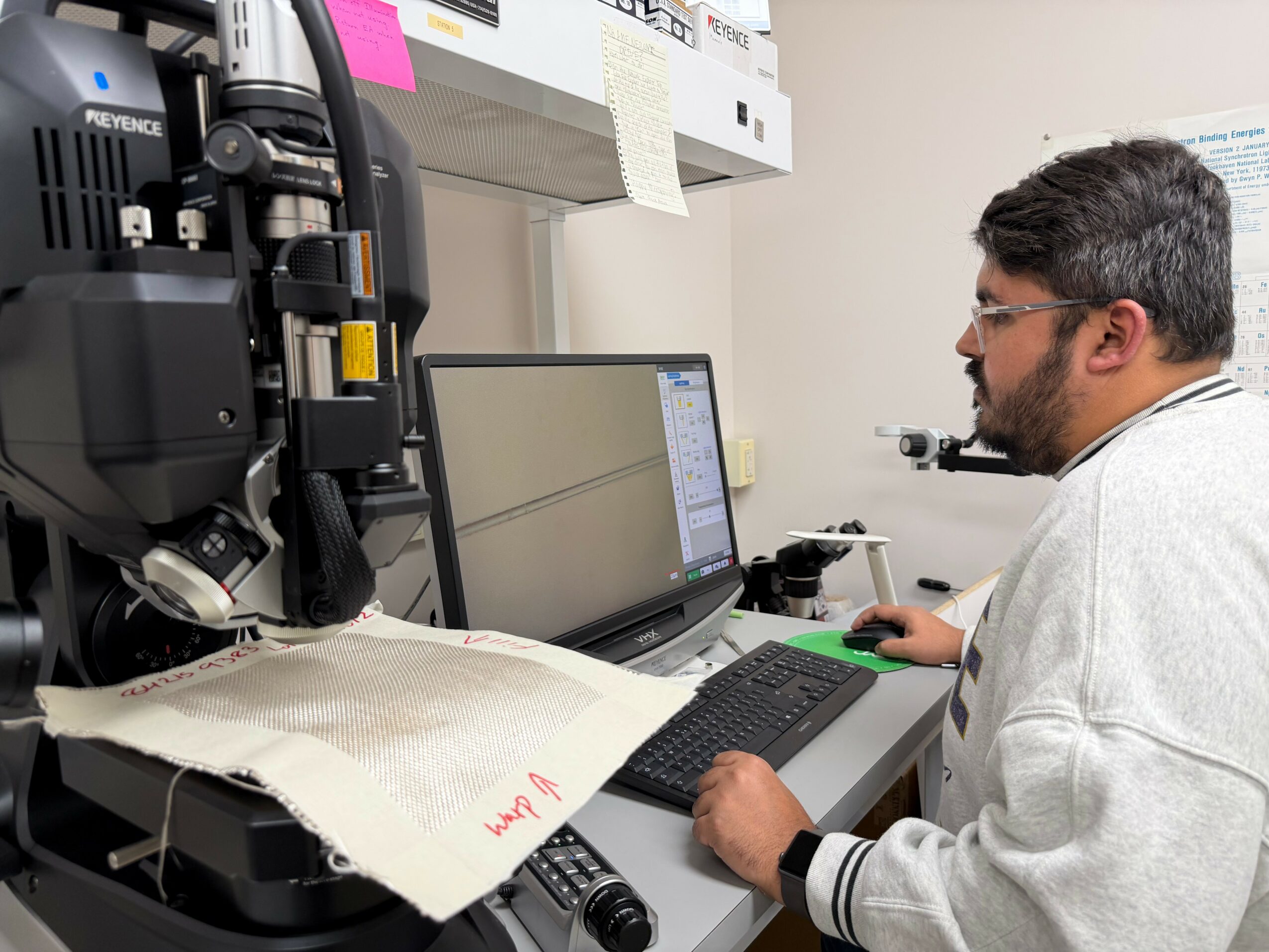
After completing my Ph.D., I joined Anderson Materials Evaluation as a Materials Scientist. That role has allowed me to apply everything I’ve learned in a very practical way. Instead of just publishing papers, I now work directly with clients to solve real materials problems — whether that’s analyzing failures, testing mechanical properties, or figuring out why a product isn’t performing as expected. I really enjoy the investigative side of it — understanding the material’s history, processing, and performance, and then building a clear plan to address the issue.
Would you say it’s been a smooth road, and if not what are some of the biggest challenges you’ve faced along the way?
It definitely wasn’t a smooth road — it never really is. It started with moving to a completely new country, away from friends and family, and building a life from scratch. That transition wasn’t easy. I had grown up fairly sheltered, so suddenly managing everything on my own — cooking, cleaning, daily responsibilities — while also trying to focus on building my research career was a major adjustment.
There was a real learning curve in becoming independent while staying fully committed to research. I remember there was a stretch of nearly seven years when I didn’t get to see my family back home because I was so focused on my work and pushing my research forward. That was one of the toughest sacrifices.
But in the end, it made the achievement even more meaningful. Being able to invite my family to my graduation and have them watch me receive my diploma made all those years of hard work and distance feel worth it. It was a full-circle moment — not just professionally, but personally.
Thanks for sharing that. So, maybe next you can tell us a bit more about your work?
At the core of what I do, I’m a materials scientist and problem solver. I specialize in understanding why materials behave the way they do — whether that’s mechanical failure, surface chemistry issues, coating performance, or long-term durability. My background started in energy harvesting and thermoelectric materials during my Ph.D., but over time I’ve expanded into a much broader range of materials characterization and applied testing.
Today, I work closely with manufacturers and engineers to diagnose materials problems and develop practical, goal-directed solutions. That can involve mechanical testing, microscopy, spectroscopy, surface analysis, or designing custom test plans depending on the client’s needs. What I enjoy most is the investigative aspect — digging into the history of a material, how it was processed, how it failed, and connecting all the dots.
I think what I’m known for is being very detail-oriented and analytical, but also being able to communicate complex technical findings in a way that clients can actually use. It’s not just about generating data — it’s about translating that data into decisions that improve products and performance.
What I’m most proud of is building something tangible from research. During my Ph.D., my team and I developed a device that could convert body heat into electricity, which we patented and later commercialized through a startup. Seeing an idea move from theory to a working device — and then into the real world — was incredibly rewarding. It showed me that research can have practical impact.
What sets me apart, I think, is the combination of research depth and applied problem-solving. I’ve worked in academic research, entrepreneurship, and now industry. That allows me to approach problems from multiple angles — scientifically rigorous, but also practical and solution-oriented. I don’t just look at a material and ask, “What is it?” I ask, “How can we make it better, and how can this data actually help someone?”
At the end of the day, I’m driven by curiosity and impact — understanding materials deeply and using that understanding to solve real-world problems.
Do you have recommendations for books, apps, blogs, etc?
I follow quite a few STEM-focused YouTubers. Some of my favorites are Veritasium, NileRed, Great Big Story, Hashem Al-Ghaili, Extra History, Steve Mould, Lex Fridman, Free Documentary, Weird History, Kurzgesagt – In a Nutshell, RealLifeLore, Half as Interesting, and Geography Now — and a few others as well. These are just the ones that immediately came to mind.
I really enjoy them because they help me unwind after a long day while still keeping my mind engaged. They’re entertaining, but also informative in a way that feeds my curiosity without feeling like work.
Contact Info:
- Website: https://www.andersonmaterials.com/
- LinkedIn: https://www.linkedin.com/in/p99/