Today we’d like to introduce you to Sandeep Bathala.
Hi Sandeep, thanks for joining us today. We’d love for you to start by introducing yourself.
I started my career in direct services, working with South Asian survivors of domestic violence at Manavi, and that really shaped everything that came after. Early on, I was supporting clients directly, navigating systems with them, and seeing firsthand how complex those situations can be.
Over time, I moved into roles where I was overseeing programs and teams, including serving as Director of Direct Services at Sakhi for South Asian Women, which gave me a broader view of how organizations function—what works well, and where systems can either support or hinder the work.
From there, my career expanded into leadership and external-facing roles. I spent time at organizations where I was focused on fundraising, partnerships, and national visibility, and at organizations where I worked at the intersection of policy, advocacy, and donor engagement.
What has been constant is a focus on building organizations that can deliver strong, survivor-centered services while also being sustainable and well-structured behind the scenes.
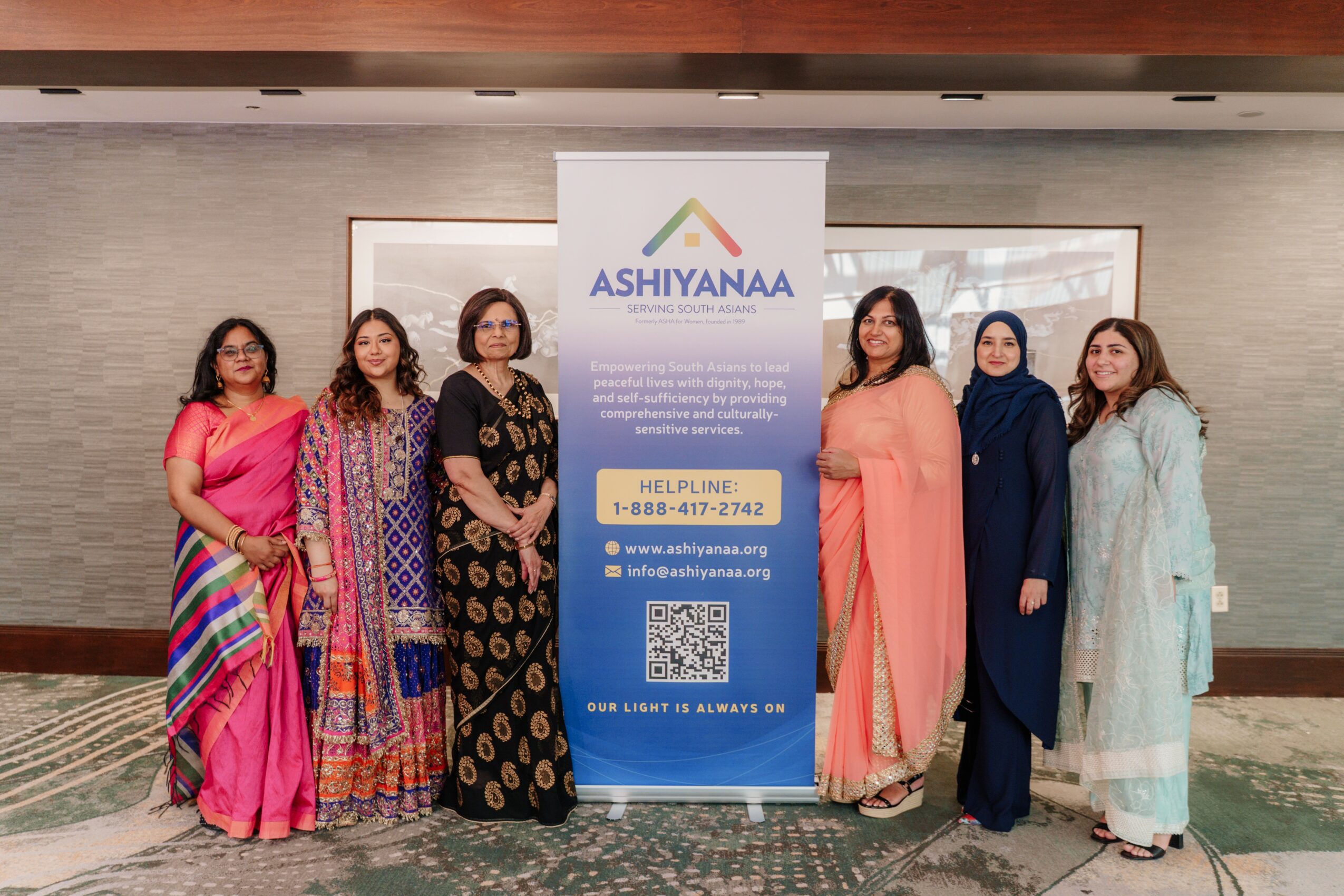
And that’s what brought me to Ashiyanaa. Ashiyanaa (formerly ASHA for Women) is a non-profit organization founded in 1989 to provide culturally-competent support services to South Asian women in the DMV area impacted by domestic violence). Over the years, our services and programs have expanded. We currently serve South Asians seniors as well.
Alright, so let’s dig a little deeper into the story – has it been an easy path overall and if not, what were the challenges you’ve had to overcome?
Not at all—it definitely hasn’t been a smooth road.
Early on, in direct services, the biggest challenge was the intensity of the work. You’re sitting with people in really difficult moments, and there’s only so much you can fix in the moment. That tension—between what someone needs and what systems can actually provide—was something I had to learn to navigate pretty quickly.
As I moved into leadership, the challenges shifted. It became less about individual cases and more about systems—funding constraints, staffing limitations, and trying to build infrastructure while still meeting immediate needs. In smaller organizations especially, you’re often doing everything at once, and that can stretch both the organization and the people in it.
I also had a few moments where roles grew faster than the structure around them. Expectations increased—whether around fundraising, operations, or external visibility—but the support systems didn’t always grow at the same pace. That forced me to get really clear about prioritization and about building teams and systems that could actually sustain the work.
And then there’s the reality of nonprofit funding. There have been times where we were navigating uncertainty—waiting on grants, adjusting budgets, figuring out how to continue services without overextending. That’s never easy, especially when you know what’s at stake for the people you’re serving.
But I think those experiences are what shaped my work now. I’m very focused on building organizations that are not just mission-driven, but also structured in a way that actually supports the people doing the work.
Thanks for sharing that. So, maybe next you can tell us a bit more about your business?
My work has always been about helping organizations do two things well at the same time—deliver strong, meaningful programs, and build the kind of infrastructure that actually sustains that work over time.
I’ve worked primarily with nonprofits focused on domestic violence, reproductive health, and broader issues impacting women and families. A lot of that work has been around fundraising strategy, grant development, and donor engagement—but it’s never just about raising money. It’s really about aligning fundraising with program goals, operations, and long-term growth.
I started in direct services, moved into program leadership, and then into executive roles. So when I’m working with an organization, I’m thinking not just about strategy, but about what’s actually realistic for staff, what systems are in place, and how decisions will play out day-to-day.
I’ve also spent a lot of time working across different types of organizations—from smaller, community-based groups to national organizations—which has given me a sense of how to scale things appropriately. What works for a large organization doesn’t always translate to a smaller one, and vice versa.
In terms of what I’m most proud of, it’s probably the ability to help organizations grow in a way that feels sustainable. That might mean helping secure funding, but it also means putting systems in place—whether around donor engagement, program structure, or internal processes—that allow that growth to continue beyond any one moment or any one person.
More broadly, I think of my “brand” as being very grounded and practical. I’m not coming in with a one-size-fits-all model. I’m looking at what an organization already does well, where the gaps are, and how to build something that actually works for them.
The work is always tied back to impact—making sure organizations are in a position to continue serving their communities in a way that’s thoughtful, consistent, and sustainable.
How do you define success?
Success is more than just hitting targets.
That matters—fundraising goals, program reach, growth—but on their own they don’t tell the full story.
Success is when an organization is able to do its work well and sustain it over time. That means a few things:
The programs are actually making a difference in people’s lives
Staff feel supported and aren’t constantly operating at a breaking point
Systems are in place
And there’s enough stability—financially and operationally—to keep going, even when things shift
In the domestic violence and women’s health space, I also think success shows up in quieter ways. It’s not always immediate or visible. Sometimes it’s a client feeling safe enough to come back, or a staff member staying in the role long enough to build trust and consistency.
Success is impact plus sustainability—being able to do meaningful work in a way that can last.
Contact Info:
- Website: https://ashiyanaa.org
- Instagram: https://www.instagram.com/ashiyanaa_org/
- Facebook: https://www.facebook.com/ashiyanaaorg
- LinkedIn: https://www.linkedin.com/company/82256259/admin/dashboard/
- Twitter: https://x.com/ashiyanaa_org