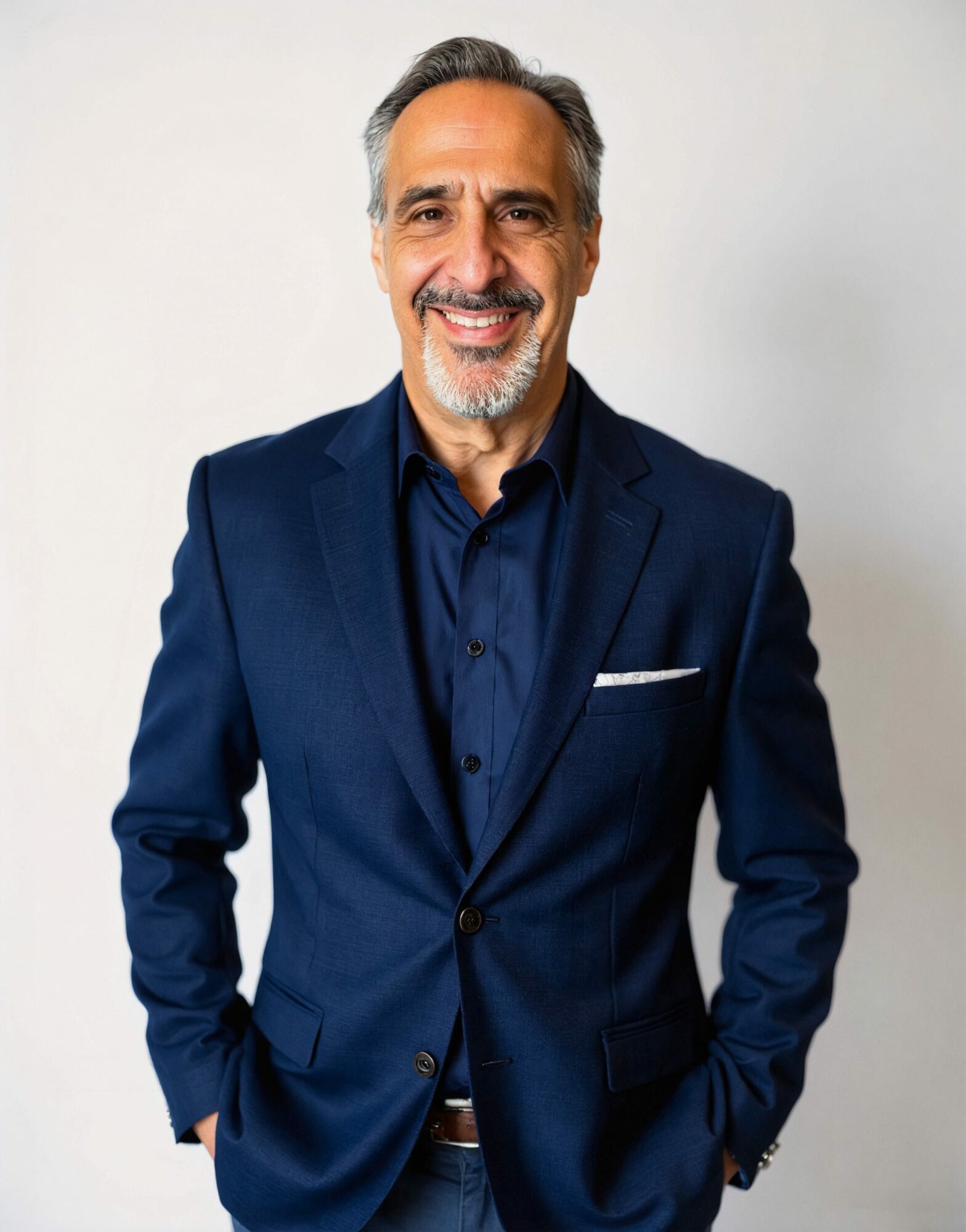
Today we’d like to introduce you to Phil Masiello.
Hi Phil, we’re thrilled to have a chance to learn your story today. So, before we get into specifics, maybe you can briefly walk us through how you got to where you are today?
I started my first business at 27, a specialty food store in the suburbs of New York.
On paper, the model was solid. In reality, I was the problem.
I was working 80–90 hours a week, trying to do everything myself. I wasn’t building systems, I wasn’t transferring knowledge, and I certainly wasn’t leading. The business ran off my back instead of off a process, and I’m pretty sure my team hated coming to work.
I’m not a quitter, so I pushed for three years. But eventually I had to face a hard truth: the bottleneck wasn’t the market, it was me.
So I sold the business and did two things with the proceeds.
First, I went back to school for an MBA. Not because I thought another degree would magically fix anything, but because I needed to learn how to think about business differently.
Second, I invested in a small company with two stores very similar to mine, except they had stronger management in place and needed help scaling.
Those two decisions completely rewired how I saw entrepreneurship. I realized you can’t scale on heroics. You scale on teams and systems.
We took that second business from 2 stores to 12, plus 2 acquisitions. Eventually we were acquired, and this time I chose not to stay on. I already had the next idea forming.
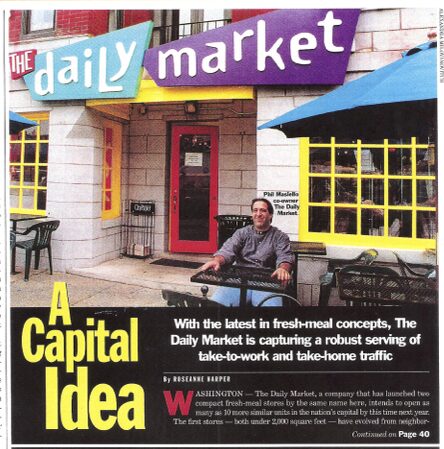
I moved to the Washington, DC area and launched a new concept called The Daily Market, smaller, grab-and-go meal stores. We built a very innovative supply chain, and around 2000 we launched one of the first websites actually selling food online. That caught the attention of a private equity group that owned a $3 billion supermarket chain.
They invested in us with the idea that I’d help them adapt this supply chain model for their supermarkets. So for two years I lived on planes, going back and forth between North Carolina and DC.
Then we hit a wall we never anticipated: real estate.
Starbucks, Panera, and other chains were paying top dollar for every prime DC location we wanted. We just couldn’t make the rents work. We tried to buy a few existing chains and plug our model into them, but nothing fit.
Then Starbucks came knocking, not for coffee, but for our locations.
They wanted our sites, and with the PE group behind us, selling made more sense than forcing growth in bad locations. So we exited.
After that, I had a couple of shorter-lived ventures that didn’t quite land. But one of them introduced me to a really innovative beauty manufacturer working with “raw” ingredients, minimal processing, high performance, very ahead of where the market was going.
Around the same time, a supermodel from the 80s, Carol Alt, had written books on the raw lifestyle. I reached out, and we created a brand around her philosophy: Raw Essentials by Carol Alt. She wasn’t just the face; she was an owner.
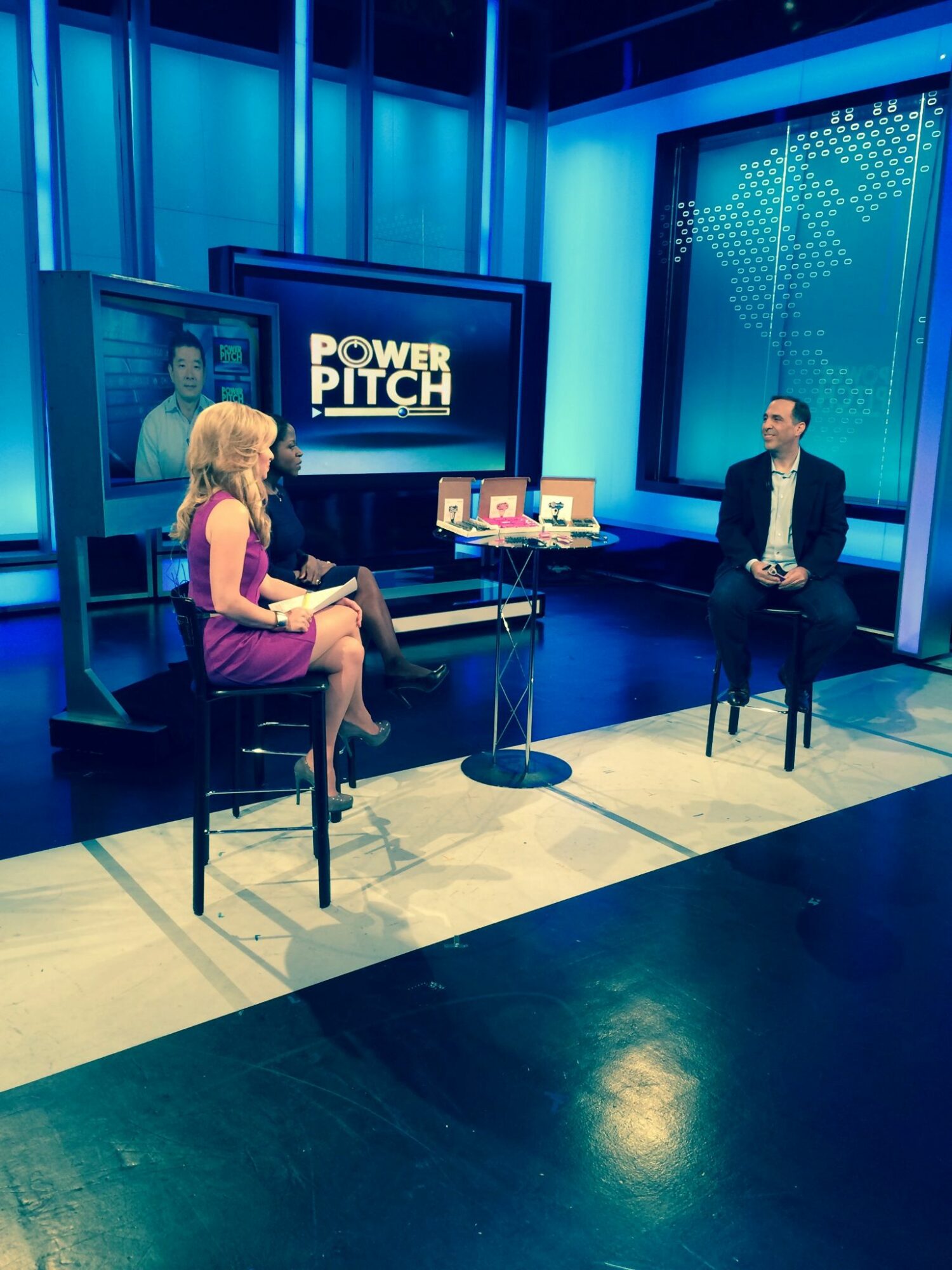
We pitched it to Home Shopping Network because I knew this brand needed storytelling, not just shelf space. HSN loved it. We signed a three-year deal, and that opened the door to more shopping channels around the world.
We were also one of the first beauty brands allowed onto Amazon’s marketplace when they opened it up beyond books and media in 2006. So we were early on TV shopping and early on Amazon.
We raised some growth capital, got into retailers like ULTA and Sephora, and even beauty bars internationally. But growth eats cash. And because our formulas were so specialized, there weren’t many manufacturers in the world who could produce them.
So we made a strategic move: we turned our manufacturer into our partner. That created real defensibility, a moat based on capability, not just branding.
A few years later, a division of Johnson & Johnson came calling. We sold. It was a win not only for us, but also for our manufacturing partner and for Carol. I stayed on a couple of years to keep doing TV and marketing as part of the earn-out.
While all that was happening, another idea was brewing.
I’d been talking with the second-largest razor manufacturer in the world about bringing shaving online, combining what we knew from skincare with a better shaving experience for men and women. They agreed to make our razor in the U.S., just for us, but needed about a year to tool up.
The timing lined up perfectly with the end of my obligations to Raw Essentials. About 14 months later, we launched our razor brand. And it was… slow. Painfully slow. We tried every play we knew, and sales were just trickling in.
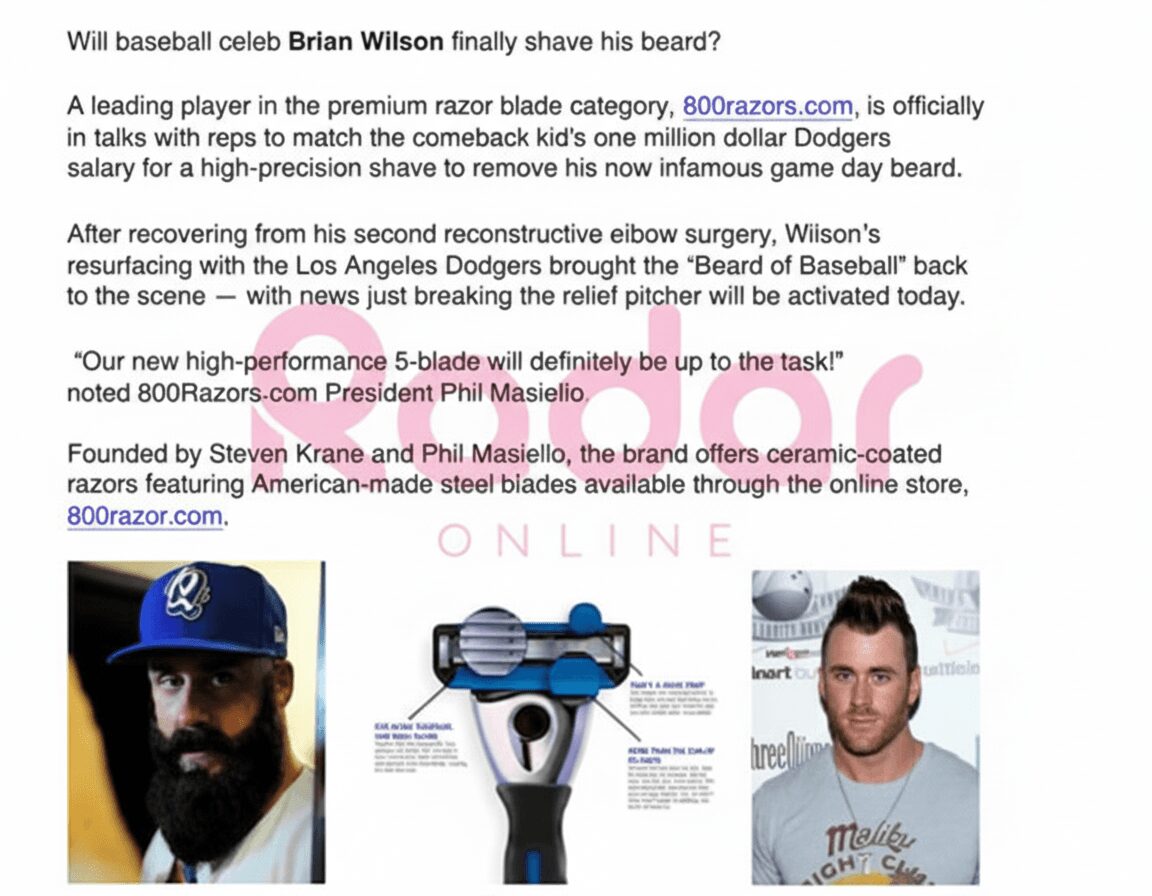
Then one morning I’m reading sports news, and I see that Brian Wilson, the San Francisco Giants pitcher famous for his huge beard, had been traded to the Dodgers and was coming back from Tommy John surgery.
Lightbulb moment.
I emailed his team and said, “We’ll pay Brian Wilson $1 million to shave his beard with our razor.” All I needed was a non-no. And I got it. They replied that they’d discuss it with him.
Now, truthfully, we didn’t have a signed deal. But we were legitimately in discussions, which meant we could say, “We’ve offered Brian Wilson $1 million to shave with our razor, and we’re in talks with his team.”
We handed that line to our PR firm.
It was instantaneous combustion.
Every sports outlet, every news channel, everyone wanted to know: “Is this real?” Social media exploded. People were posting pictures of different body parts with price tags, “I’ll shave this for $5,000,” “I’ll shave this for $10,000.” Others were outraged that we’d give “a millionaire a million dollars just to shave.”
It was perfect. The controversy was the campaign. Our brand finally had oxygen, and orders started to pour in.
The buzz died down after about two weeks, and then TMZ caught Brian coming out of a gym and asked him if he was going to take our offer. He said, “I’m not shaving my beard for anybody.”
Boom. Round two.
Now the conversation became, “How can you turn down a million dollars just to shave?” It extended the entire news cycle and cemented us in the market.
That PR stunt really launched the brand. Then the shaving category got hot. Suddenly everyone wanted to be in razors. Because there are only a handful of manufacturers, and we had the second-largest behind us, our company and supply chain position became increasingly valuable.
Eventually, we sold. Personally, I felt it was a bit early, but when you have investors, you don’t always get to time the exit perfectly.
After that, I hit a bit of a “now what?” moment. I didn’t feel done. I just wasn’t sure what the next thing was.
Then my razor manufacturing partner called. They said, “We know how to sell to supermarkets, drug chains, club stores, big box. We don’t know how to do direct-to-consumer. Can you help us?”
They sold to Amazon, but not on Amazon. They had no idea how to build DTC brands.
So we started building sites, launching products on Amazon, and running digital marketing for them and then for other brands. That evolved into what I do today: CrunchGrowth Revenue Acceleration Agency.
Now I spend my time helping consumer brands scale online and offline, using every lesson from that messy first store at 27, through the exits, the failures, the stunts, and the experiments.
And on top of the agency work, I coach other founders — partly so they can avoid a few of the potholes I’ve happily thrown myself into over the years.
If there’s a through-line in my story, it’s this:
You are not your business’s superpower. Your systems, your team, your ability to learn and adapt — that’s the superpower. I had to fail early to really understand that.
Would you say it’s been a smooth road, and if not what are some of the biggest challenges you’ve faced along the way?
Smooth? Not even close. If anything, it’s been a masterclass in “learning the hard way.”
My first business at 27 was a specialty food store that looked good on paper and terrible in real life. The model was fine, I was the problem. I was working 80–90 hours a week, trying to do everything myself, not building systems, not transferring knowledge, and not leading. The business ran on my personal heroics instead of a process. My team was miserable, I was exhausted, and after three years I had to admit the uncomfortable truth: I was the bottleneck. Selling that business was a hit to my ego, but it forced me to confront the difference between owning a business and building one.
Even after that, the road didn’t magically smooth out. With The Daily Market, we had a really innovative grab-and-go model, an early eCommerce food site around 2000, and backing from a private equity group tied to a $3 billion supermarket chain. It looked like a rocket ship. Then we ran into a problem nobody had on the whiteboard: real estate. Starbucks, Panera, and other chains were scooping up every prime location in DC and paying rents we simply couldn’t match. We tried to acquire similar chains to bolt our concept onto, and nothing fit. In the end, Starbucks came for our locations, and that’s how we exited. It was a win on paper, but operationally it was born out of a pretty hard ceiling we couldn’t break through.
There were also a few short-lived ventures in between that didn’t take off. They weren’t disasters, but they weren’t successes either — they were the kind of businesses that quietly tell you, “This isn’t it.” One of those “failed” paths led me to an innovative beauty manufacturer working with raw ingredients, which ultimately became Raw Essentials with Carol Alt. Even that story, which ends in a sale to a J&J division, had its struggle phase. We were early in the “clean” beauty space, and growth outpaced the capital we’d raised. Cash was always tight. The formulas were complex and there were very few manufacturers who could actually produce them, which meant supply wasn’t an easy lever. Turning our manufacturer into a partner was both a strategic move and a survival tactic.
The razor brand after that looked like it should have been easy, big, established manufacturer partner, solid product, clear value proposition. We launch… and nothing. Sales trickled in. We threw every tactic we knew at it and it was still slow. The business only really broke through when I pulled a PR stunt and publicly offered $1 million to Brian Wilson, the bearded pitcher, to shave with our razor. That unlocked press, controversy, and demand, but it came from a place of frustration, not comfort. And just when we were finally gaining traction, the category exploded with competitors. Suddenly everyone wanted to be in razors, and because there are only a few big manufacturers, the game became strategic very quickly. We eventually sold, and while it was a good outcome, I personally felt it was premature. That’s another kind of obstacle founders don’t always talk about: exits that are financially successful but emotionally complicated.
Even starting CrunchGrowth wasn’t some perfectly planned next move. It started because my razor manufacturing partner called and basically said, “We have no idea how to do DTC or sell on Amazon, can you help us?” It was born out of their gap and my sense that I wasn’t done yet. From there, we had to figure out how to turn everything I’d learned, the failures, the pivots, the hard lessons in capital, real estate, supply chain, marketing, and PR, into a repeatable system we could use to scale other brands.
So no, it hasn’t been smooth. It’s been bumpy, humbling, and at times very expensive. But every obstacle, being the bottleneck, losing out on locations, running out of runway, slow launches, aggressive competition, even “good but early” exits, forced me to evolve. That’s why, today, when I coach founders, I’m not just talking theory. I’m trying to help them avoid some of the walls I’ve already face-planted into.
Great, so let’s talk business. Can you tell our readers more about what you do and what you think sets you apart from others?
When you crunch data you CrunchGrowth.
CrunchGrowth is a performance advertising partner for brands that live (and win) in digital. We plan, buy, and optimize media across every major platform: Meta, Google, YouTube, TikTok, Amazon & retail media networks, then extend your reach with programmatic display/video and high-impact Connected TV/OTT. Our team are operators first: we build audience strategy, creative, and measurement into one loop so every dollar pushes down CAC, lifts MER/ROAS, and drives real revenue—not just pretty dashboards.
On programmatic, we run precision buys through top DSPs with a full mix of prospecting and retargeting: private marketplace deals, contextual and commerce data, geo-fenced store campaigns, and shoppable video that moves customers from impression to action. For CTV, we treat the big screen like a performance channel—leveraging ACR/viewership data, household retargeting, QR-to-offer flows, and store-level or retailer lift studies—so you get brand-level storytelling with direct-response accountability.
What we do:
Omnichannel media buying: social, search, YouTube, TikTok, Amazon/RMNs, programmatic display/video, CTV/OTT.
Creative that sells: UGC, hooks, and variations engineered for platform algorithms and fast testing.
Measurement you can run a business on: clean-room & first-party data strategy, pixel/server-side tracking, incrementality testing, MMM light, and in-store lift via QR/coupon and retailer data.
Retail + local dominance: store-level targeting, geo-conquesting, and “digital-to-shelf” campaigns that prove velocity.
Continuous optimization: audience models, bid strategies, and creative refreshes on a tight test-learn-scale cadence.
Who we help: founders and marketing leaders in food & beverage, beauty, personal care, and other consumer categories who need a partner to turn media into measurable growth across DTC, marketplaces, and retail. We don’t chase impressions—we engineer outcomes. When you crunch data, you CrunchGrowth.
Who else deserves credit in your story?
I had one great mentor in my life. He was the founder of a large PE firm. And he drilled into me to always stay focused on the customer. Know everything you can about the customer. This will help you understand what you are selling, why you are selling it and where to reach them. His name was Henry Nasella. Unfortunately he has passed on.
Contact Info:
- Website: https://www.crunchgrowth.com/
- Instagram: https://www.instagram.com/philmasiello/
- Facebook: https://www.facebook.com/philmasiello
- LinkedIn: https://www.linkedin.com/in/phil-masiello/
- Youtube: https://www.youtube.com/@philmasiello
- Other: https://philmasiello.com/