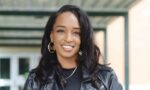
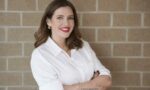
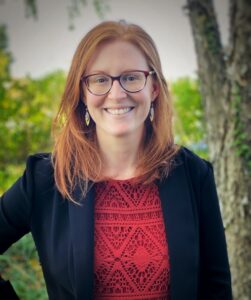
 Today we’d like to introduce you to Catherine Whelan and Chelsea Haverly.
Hi Catherine and Chelsea, so excited to have you on the platform. So before we get into questions about your work life, maybe you can bring our readers up to speed on your story and how you got to where you are today.
We both have had our professional journey before working together as co-facilitators. I (Catherine) have worked as a bodyworker for 20 years. Chelsea has worked as a trauma therapist for 15 years. Our first joint session was in 2021 and came about from a place of curiosity for each other’s modalities and a foundational belief in working in a community and collaboration.
Our first experience collaborating was when we began working with a shared client who was stuck in traditional talk therapy. This collaboration showed us how working together created a better way to hold space for the client’s healing. Throughout our careers, we have encountered people who have had little to no support in their lifetimes. They are the ones who benefit from a team of providers to demonstrate what support looks like and more importantly what it feels like in their bodies. When this support is felt; a powerful shift in their internal sense of self and safety happens.
The exponential effect of combining our therapies was evident to all involved. This made us think of others who would benefit from collaborative sessions. The unexpected benefit was that as a craniosacral facilitator, I (Catherine) felt more supported and inspired by teaming up with another trauma therapist. This was a welcome shift after years of the COVID pandemic and being on the edge of burnout. We both feel supported and grounded in having another person in the room with similar energy and desire to help people with a shared value system.
There is such comfort in not having to be an expert in everything. I (Chelsea) can be an expert holding knowledge of trauma reminders in the body, historical patterns, and tools to support regulation both in and out of the joint session and Catherine can be an expert in the tissue of a body. Facilitating a mind/body session together really supports easing emotional rawness and historical trauma which has an edge to safety around it. Working together feels more sustainable and ultimately deeper work can happen with two providers.
We started doing joint work in two separate office locations and our work has only improved with now sharing an office suite. This joint work continues to plant the seed for what else is possible in our collective fields of practice to continue to grow and share in providing a framework for other body workers and trauma therapists to work collaboratively toward collective healing.
Alright, so let’s dig a little deeper into the story – has it been an easy path overall, and if not, what were the challenges you’ve had to overcome?
The challenge/invitation is how to recreate this model with other therapists. Chelsea and I (Catherine) are very similar in many ways which has made our working relationship easy and exciting. Now, we are trying to inform others how to recreate this model in a way that benefits everyone involved.
One of the pieces we are working on is creating a shared language between professions. From my (Catherine’s) perspective, talk therapists are really good when it comes to the language of the intellectual process and craniosacral facilitators are really good when it comes to the language of the body. How we communicate with each other is similar learning to how our clients begin to communicate between their bodies and minds. Sometimes it can feel like the other is speaking a foreign language we have never heard before.
Another important piece to note is that we are aiming to collectively demystify what joint work or collaborative care means between craniosacral facilitators and trauma therapists. Many of us fall into the “Am I doing it right?” trap when starting something new. We need to continue to strive for ways to better explain and teach joint work in a way that makes sense and in a way that invites imperfection and trust between providers.
I (Catherine) find another challenge has been how to explain what craniosacral therapy is. There is a wide variety of people who practice craniosacral therapy (physical therapists, massage therapists, chiropractors…) and a wide range of why someone might receive CST (migraines, chronic pain, traumatic brain injuries, trauma…). Craniosacral therapy is a gentle, hands-on treatment that helps release tensions in and around the brain and spinal cord, the craniosacral system. CST facilitates the body’s natural and innate healing processes.
I appreciate you sharing that. What else should we know about what you do?
My (Chelsea’s) specialized clinical focus is treating survivors of sexual abuse, assault, sex trafficking, and complex trauma. I utilize a brain-based and body centered approach to my work with complex trauma and I am an active member of the Maryland Human Trafficking Task Force, Victims Service Subcommittee. Before I worked in private practice, I worked in Baltimore City at the Center for Child and Family Traumatic Stress at Kennedy Krieger Institute doing community-based mental health care and advocacy. I’m passionate about working in collaboration with other providers. In my work I aim to create a place to gather collective energy from different backgrounds, disciplines, frameworks, cultures, and communities and to support a collective desire to teach, serve, uplift, connect, and support one another in our fields of practice.
I’m a mother to two strong-willed children, a creator, Sagittarius, a responsible eldest daughter, story keeper, writer, epic schedule juggler, and a voracious reader. I am deeply connected to my grandmother, whose wisdom and life lessons guide me today. As a young girl, people told me their issues and I found a purpose in listening and holding their stories. I believe our stories can be reclaimed and are forever changing. I am deeply connected to back road drives, the canopy of the forest, the smell of a campfire, and the depth and beauty of a mountain. I feel rooted and intuitive in my work and allow ideas to take off quickly when they feel right. I am meant to work with other people. I have no desire to do this deeply shifting and powerful work alone. My superpower for problem solving has served me well. Though, my growth and healing journey continues to be looking for moments and practices that center ease, comfort, softness, and rest.
I (Catherine) have two decades of experience working with the body and health. In the past ten years, I have focused on craniosacral therapy as my main modality. I am inspired by CST and its focus on client-centered therapy, through the process the client becomes empowered takes ownership of their health and knows how to listen to their bodies. I am a CranioSacral Therapy 1 instructor with the Upledger Institute and an advanced-level craniosacral facilitator with a Diplomate certification.
I started with a Kinesiology degree from the University of Wisconsin-Madison, followed by massage therapy training from Boulder College of Massage, and I have continued my education at the highest levels in Craniosacral Therapy as well as Visceral Manipulation. My drive for education has made me stay active in the classroom as a frequent instructor and study group leader. Health is a lifelong journey with an ebb and flow; through interoception and mindfulness, we connect with our self-healing ability. I have a passion for Craniosacral Therapy; both in the treatment room and the classroom.
In our joint work, we specialize in working with people who are stuck in traditional therapy modalities, experience hypervigilance, are high achievers, and share “I’ve tried everything and nothing works”. Many times, we also work with people who are disconnected from the body/mind, and communication between both is challenging and/or not experienced.
Networking and finding a mentor can have a positive impact on one’s life and career. Any advice?
Catherine and I both agree that we must first know our values and what brings us a feeling of safety and comfort both within ourselves and with others when we are looking to collaborate. We must also assess our alignment in values and practices that are in the community involving commitment to networking and relationship building.
Community and relationships are where healing begins. Building community in a different way, where meeting with people is about how they make you feel not what they can do for you is a radical shift. It’s also about how they live their lives and if they are in alignment with the goals of collective healing looking differently and being collaborative vs. individualistic.
Ideas for ways to build community.
- Meet-ups:
- Invite a new provider every week/monthly to your practice to talk about what they do.
- Attend other provider open houses.
- Social media networking connects with accounts that are doing similar work in the community.
- Amplifying the voices of community leaders on your platforms.
- Volunteering to provide information, tabling, chats, and support for other community providers.
- Providing sliding scale tiered pricing, and pro bono options.
Self-check-in for building collaborative relationships.
Who do I refer to? How do I collaborate with other providers? What’s my philosophy on healing? Do I provide scholarships, sliding scale, or other pricing adjustments to increase accessibility? How do I take care of myself in my work? How is my work connected to the community and the larger world? Am I comfortable in silence? How do I respond when I’m not sure what to do next?
Both Catherine and I respectfully acknowledge that the land on which we work, live, and practice is the traditional unceded territory of the Piscataway, Nanticoke & Susquehannock–the original keepers of the land we now call Maryland. This land was stolen, the people were killed, and their culture was taken from them.
We honor the elders of this land and commit to paying a land tax. To make your contribution click here and take the Acknowledgment to Action Pledge. To find out on whose land you occupy text 907-312-5085 your zip code.
Contact Info:
- Website: www.anchoredhopetherapy.com and www.catherinewhelan.org
- Instagram: @catherinewhelancstd and @anchoredhopetherapyllc


Image Credits
Tonya Bryant, Carolyn Andros, and Chelsea Haverly