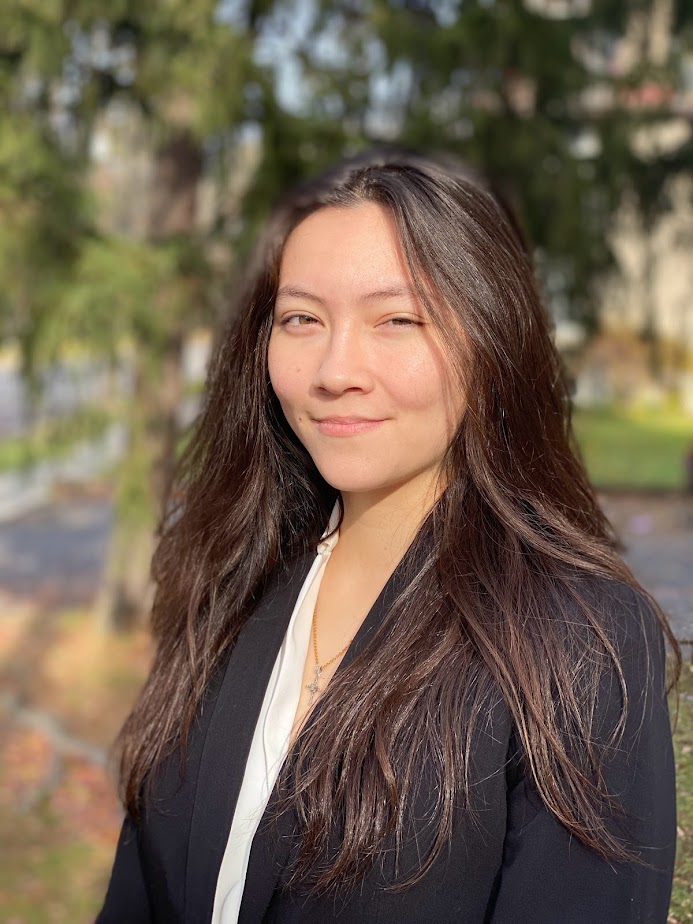
 Today we’d like to introduce you to Seika Brown.
Seika, we appreciate you taking the time to share your story with us today. Where does your story begin?
When I was eight years old, my older brother attempted suicide. My family has struggled with substance abuse, financial difficulties, cultural differences, and overall hardship for most of my life.
Yet, I consider myself a joyful person and hold no ill feelings towards the hardship myself and my family have faced. My mother was born and raised in Japan, and my father was born in England to a military family, their understandings of mental health are drastically different from each other. So, growing up with their conflicting values was difficult. It created confusion, which spiraled into a multitude of feelings.
When I was 15 years old, I founded my first non-profit organization around mental health policy change and awareness. It started from my sophomore psychology project where we had to find an issue in the high school and present a solution to our administrators.
The issue I chose to focus on was rising stress and anxiety rates in school, and the solution was simple: raise awareness about the resources the school already provides by creating a mental health club. Long story short, the school admin denied the club idea. Upset with my principal who said “no”, I thought to myself “who can she not say no to?” The first person that came to mind was her boss – the superintendent of the school district.
This started a long process of creating a three-tier program for schools in my school district. After talking with my superintendent, he mentioned that while it is a good idea to spread awareness around resources – there is no backing to what we were pitching. There was no research, or outside support testifying on our behalf. This led our small team of students to advocate for a school club to transform into students running a proper youth organization.
We spent the next few months conducting our own field research by interviewing and surveying students within our school district. On the side, we began reaching out to professionals in the mental health field; we talked to professors from nearby universities, and emailed state legislators and senators asking for their thoughts and ideas around this type of reform.
One state legislator responded with joy and quickly invited me out to a Starbucks to discuss this further. It was this conversation with State Representative Tina Orwall (Washington State), that began our work in policy. As we worked with our district on the mental health program, we began testifying and gathering support for a bill around suicide prevention. This was the first of two bills that my team (ArchNova) worked on.
This first bill on suicide prevention was exciting – we were able to work with policy and changemakers that genuinely helped the people in our state. The bill ended up not getting passed due to fiscal problems. However, at the age of 16 and 17, my team and I were able to work within the state on a bill; we made speeches, wrote press releases, did research, and testified for the backing of this bill. And while it did not get passed, it was an amazing experience to be so involved. This led us to the second bill we assisted in Washington State.
The second bill got passed – the bill focused on school safety and having a student advisory board. This board of students is able to work closely with government departments on issues that mattered to young people. It provided an experience similar to the one my team and I were able to be part of.
At this point, three years have passed. I started at 15 in my sophomore year of high school and by the time the bill got passed. I was 18 in my senior year of high school. Reflecting on the three years up to that point, and looking forward to my college experience, I realized that I wanted to disband the organization. As my friends and I enter college, it seemed most fitting to allow us all to follow our own individual passions. So to mark the end of ArchNova, we created a youth activism toolkit that provided six steps to other young people who want to create their own social campaigns.
After I graduated high school in 2020 during the pandemic, I traveled to upstate New York to attend Cornell University. Attending Cornell was beyond surreal. I did terrible in high school and graduated with a 2.6 GPA and a low SAT score. Classes were not my passion and I spent more time with my organization (and Track and Field) than I did with academics. But Cornell values what a student can do, not just how they can perform on a test.
When I was 16/17 I applied for a grant award with an organization called citiesRISE. citiesRISE assisted my team in passing the bill in 2019 and assisted in the creation of our toolkit. In October of 2020 for World Mental Health day, citiesRISE invited me to be on a panel with the ex-chief of the health of UNICEF Stefan Peterson. It was in that conversation that I began to realize my passion for cultural mental health. As someone who grew up in a mixed-culture household, I realized the importance of understanding how mental health is talked about in specific cultures.
So in October of 2020, after a conversation with Stefan Peterson, I decided to form an independent research initiative aiming to discover how mental health is defined across cultures and backgrounds. YLG (youth lead global) Research was founded on the value of listening. “Not here to help, here to listen” is the slogan that drives the work I do. Instead of proposing the next best mental health solution, I hope to hear how people actually view and personally define mental health.
I conduct research interviews with people across the world and have interviewed individuals (via zoom) from over ten countries. I hope to compile what people say into a report analyzing and sharing the perspectives of people across the world in a way that anyone could understand. Mental health is NOT a professional-only conversation, mental health is real to us all – and having a conversation is the best place to start.
Alright, so let’s dig a little deeper into the story – has it been an easy path overall, and if not, what were the challenges you’ve had to overcome?
Life comes with difficulties, but I’m not opposed to the hardship that can come from being passionate about something. Especially in the field of mental health, I have to constantly reflect on what I do and do not want to share.
My family means so much to me. Knowing how to talk about our personal problems in a way that does not put down my parents or brother is difficult, and while the experiences I personally have are my own, they do coincide with what my family has experienced, and I don’t want to overshare in a way that hurts them.
However, because the work I do know has me asking people to share their thoughts, perspectives, and experiences with me, I equally need to hold myself accountable to share as well.
Equally on the personal side, this work affects my ability to do school and be with my friends. I’m only 20 and am in the prime of my undergraduate career. I still find deep value in academics. But I have to remind myself that Cornell did not accept me on the basis of my grades, but rather on the pursuit of what I see as valuable.
Doing this work has me doing early morning meetings at 7 am/8 am, which leaves me waking up early at 5/6 am to get ready for my 9 am classes. Balance by all means is not easy. And as someone in the mental health field, I can’t neglect my own mental health (it would be very hypocritical). I also have my friends to pour into – though they’re amazing friends and pour into me endlessly.
Work specific, not everyone has been receptive to a 15-20-year-old girl talking loudly about mental health. I’ve been shut down time after time, had meetings canceled over and over again, I’ve been ignored, and told that it’s not my place to work in this. Not everyone will agree – and that’s okay!
As you know, we’re big fans of you and your work. For our readers who might not be as familiar what can you tell them about what you do?
My name is Seika Brown and I am a student and researcher advocating for mental health. I run my own independent research initiative aiming to discover how mental health is defined across cultures and backgrounds.
I also work closely with The Karolinska Institute (a Swedish Medical University) and Johns Hopkins on a global study on “The Political Economy of Adolescent Mental Health”. I am a youth researcher with citiesRISE and am assisting them with a multitude of projects.
When I was 18, I was recognized as a local changemaker by the Gates Foundation Discovery Center. In 2020 I was recognized for my work in mental health by The ConversationaLIST. June of 2021, I was awarded the mPower Award from Mental Health America.
Alright so before we go can you talk to us a bit about how people can work with you, collaborate with you or support you?
I’m always looking for more people to interview for the research!
Anyone, from any background, is welcome to the table to share their perspectives and experiences. I always hope to have conversations with people, not to be a researcher just identifying participants.
People can reach out via social media or through a link on my website to apply to be interviewed!
Contact Info:
- Email: Seikabrown16@gmail.com
- Website: https://www.seikabrown.com/
- Instagram: https://www.instagram.com/seikabrown/
- Twitter: https://twitter.com/SeikaBrownn

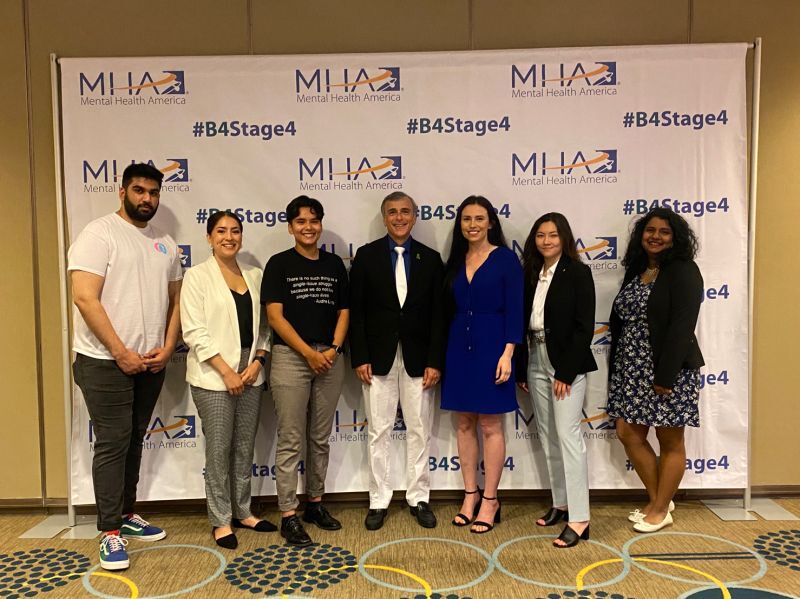
Image Credit
Full Body Shot: The conversationalist 2022 premiere – Getty Images
MHA Photo: Mental Health America Conference in Washington DC 2021
Suggest a Story: VoyageBaltimore is built on recommendations from the community; it’s how we uncover hidden gems, so if you or someone you know deserves recognition please let us know here.