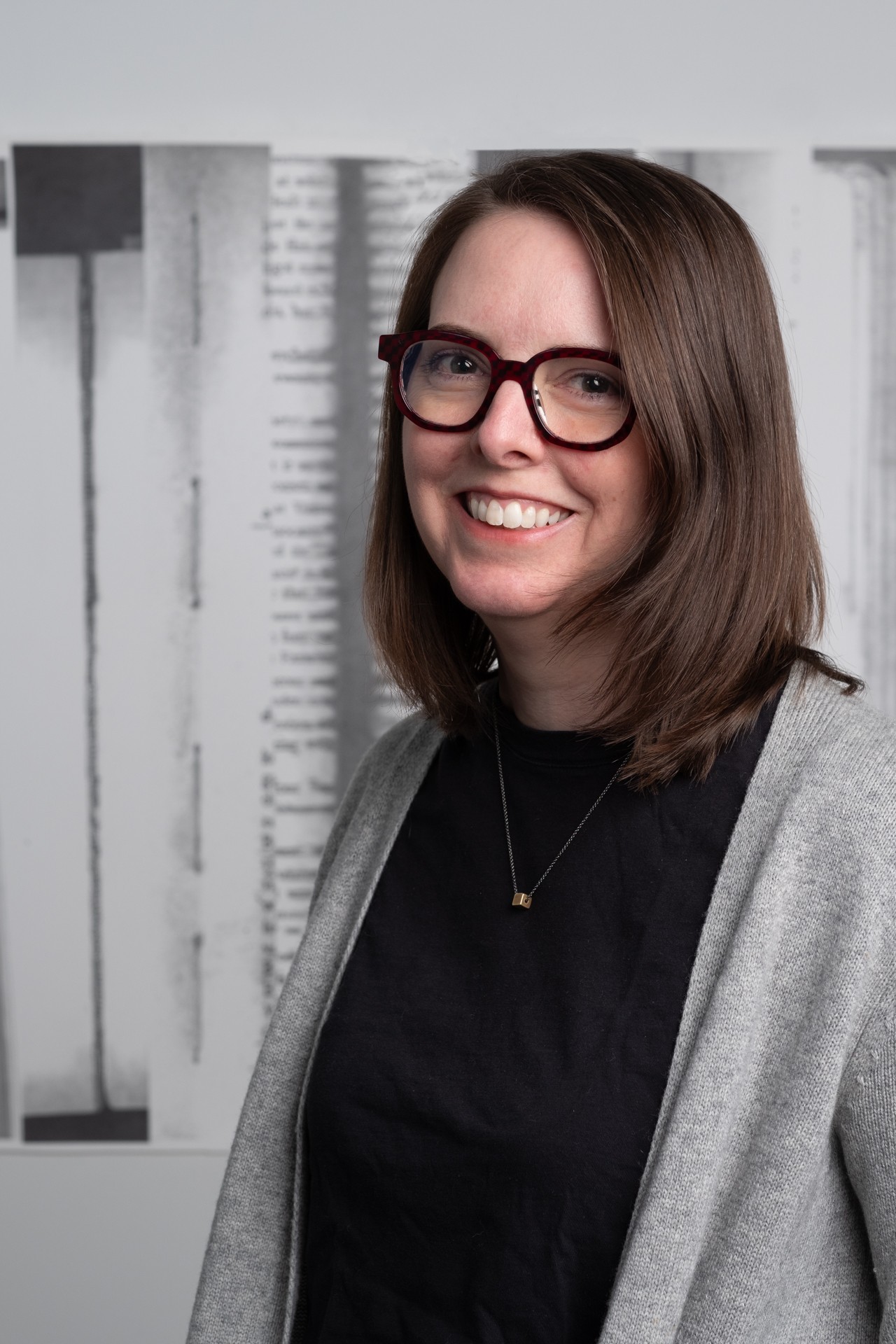
Today we’d like to introduce you to Molly Springfield.
Hi Molly, so excited to have you on the platform. So before we get into questions about your work-life, maybe you can bring our readers up to speed on your story and how you got to where you are today?
For the past 20 years, I’ve been making graphite drawings based on photocopies of printed texts.
I’m interested in how the history of information and reproduction fundamentally transform how we experience language: in art, in literature, and in technology.
These interests evolved from a life-long love of reading and an affinity for the material qualities of the written word. As a kid growing up in Florida, I probably spent more time inside reading than outside on the beach. And as a member of the last non-digital native generation, my relationship with words began on paper, not screens. So I worry about what happens to our relationships with texts as their tactile, material forms are increasingly eliminated. Inevitably, things are lost when new systems of information take hold. My practice is an attempt—however futile—to preserve what is lost.
Before I started drawing photocopies, though, I was a painter. I went to a small liberal arts school in North Carolina where I was trained as a traditional, representational oil painter. I mostly made figurative paintings and drawings. After undergrad, I spent a year at the Maryland Institute College of Art’s Post-Baccalaureate program. At MICA, I started making trompe l’oeil drawings and paintings of envelopes and other paper ephemera with printed text. After MICA, I moved to Washington, DC, to be with my now husband, who was finishing law school. I had a full-time day job and painted in the evenings in our tiny guest room. I had some of my first group shows and worked on my portfolio for graduate school.
I found the direction of my drawing practice while I was a graduate student at the University of California, Berkeley. At Berkeley, I was introduced to the history of Conceptual art. This radically shifted my frame of reference, forcing me to articulate the central question of my practice: what does it mean to reproduce something?
After Berkeley, I moved back to Washington, D.C., and began tackling this question in earnest by making drawings of photocopies of books.
Would you say it’s been a smooth road, and if not what are some of the biggest challenges you’ve faced along the way?
I’ve been fortunate to enjoy a mostly smooth road in my career as an artist. Like all artists, I’ve experienced my fair share of rejection. Especially now that I’ve been working as a professional artist for over twenty years. But I have a strong sense of what success means for me. Is my work moving forward? Am I challenging myself? If I can answer yes to those questions, the rejections sting less.
In 2016, after years of overwork, my dominant index finger swelled up and froze in a semi-pointing position. I underwent hand surgery to repair what turned out to be a severely inflamed tendon in my dominant index finger. I was unable to draw for the better part of a year.
After months of physical therapy, my finger regained most of its range of motion, but I can’t draw the way I could pre-surgery. Although it was painful at first to accept that I’d have to change the way I draw, my physical limitation imposed new and unexpectedly productive parameters. The experience also reminded me that I wasn’t an artist because I could draw well—I was an artist because I have ideas that need to be expressed in visual form. Drawing will always be the cornerstone of my practice, but I’m more open now to other media and ways of working.
Alright, so let’s switch gears a bit and talk business. What should we know about your work?
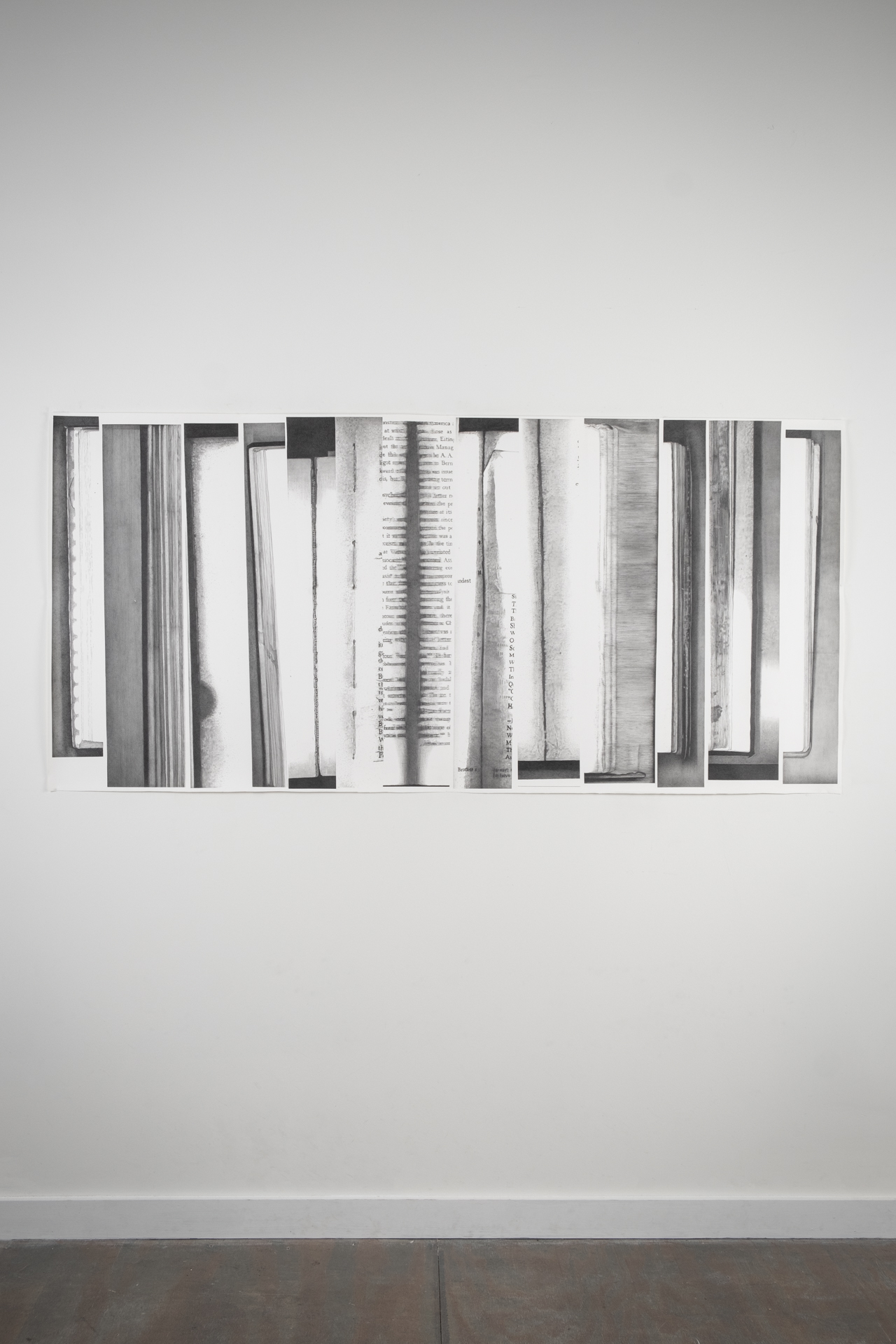
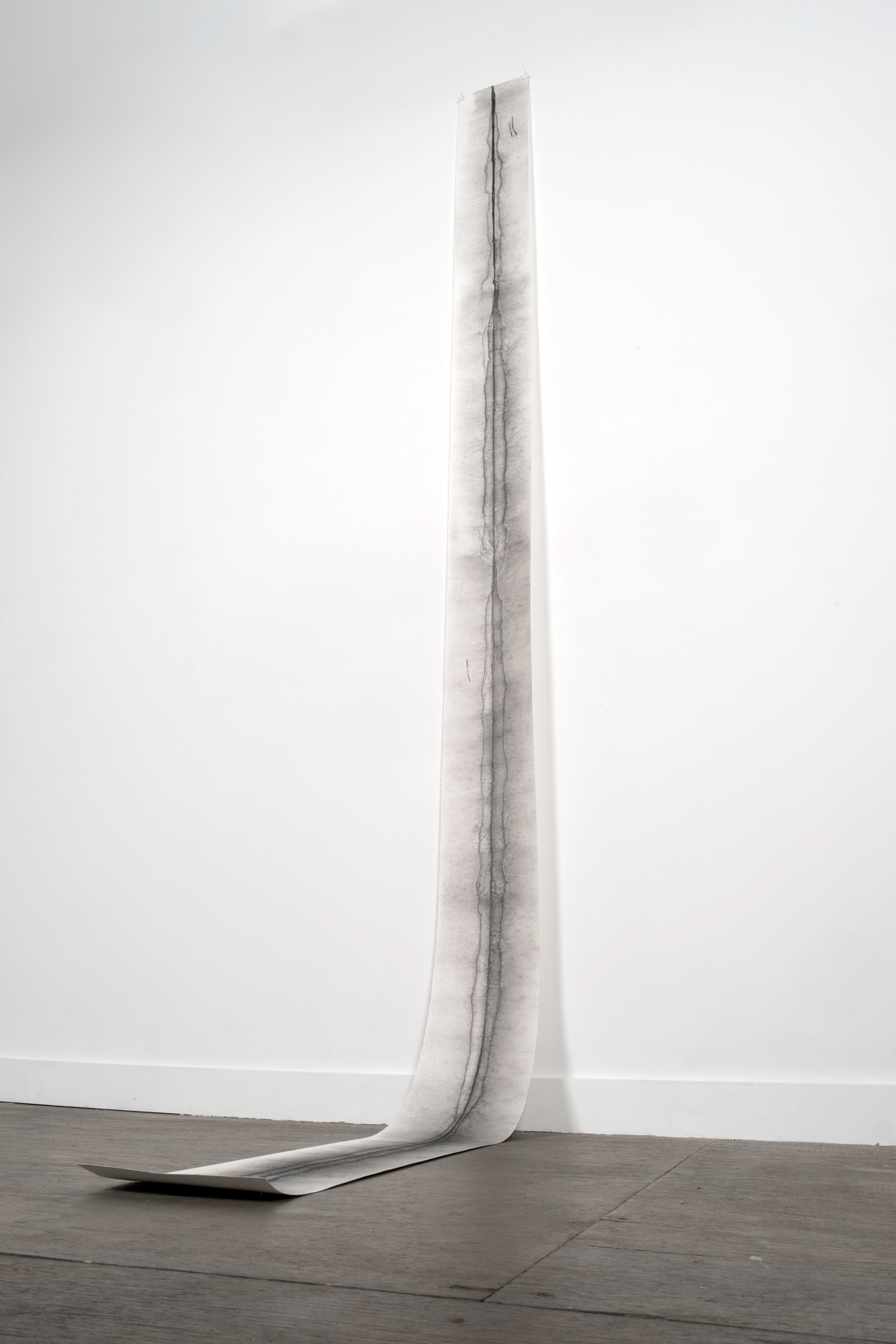
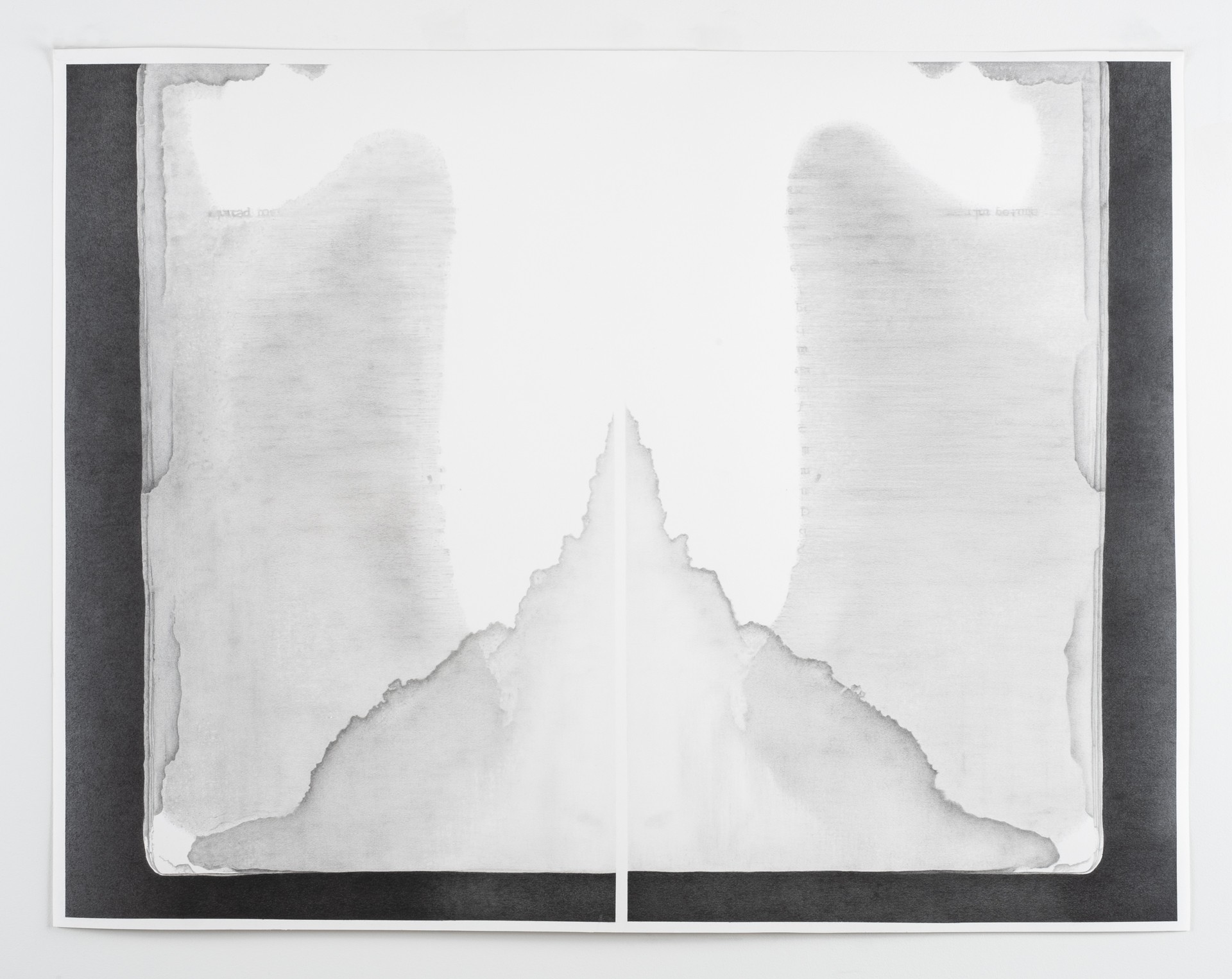
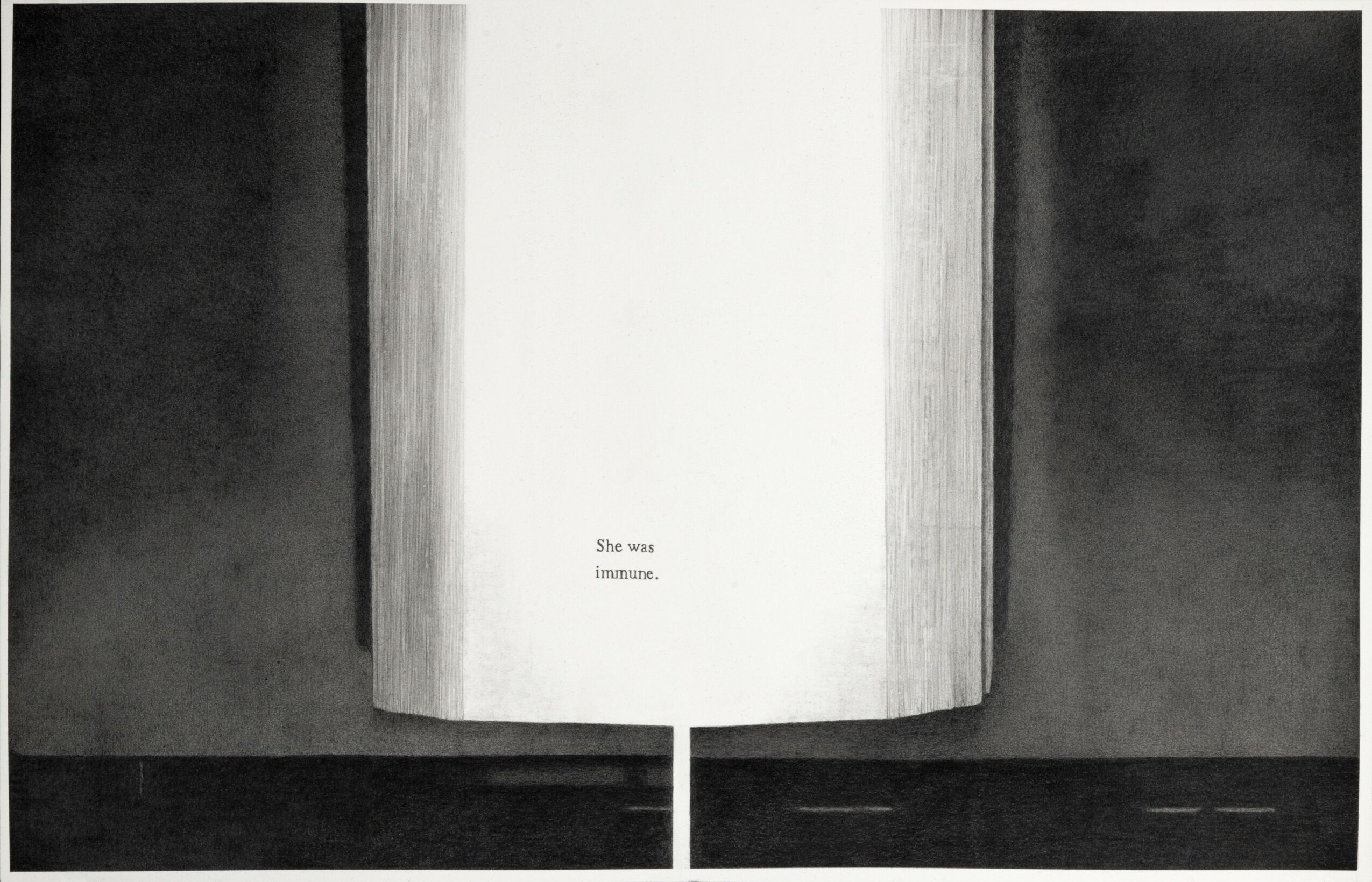
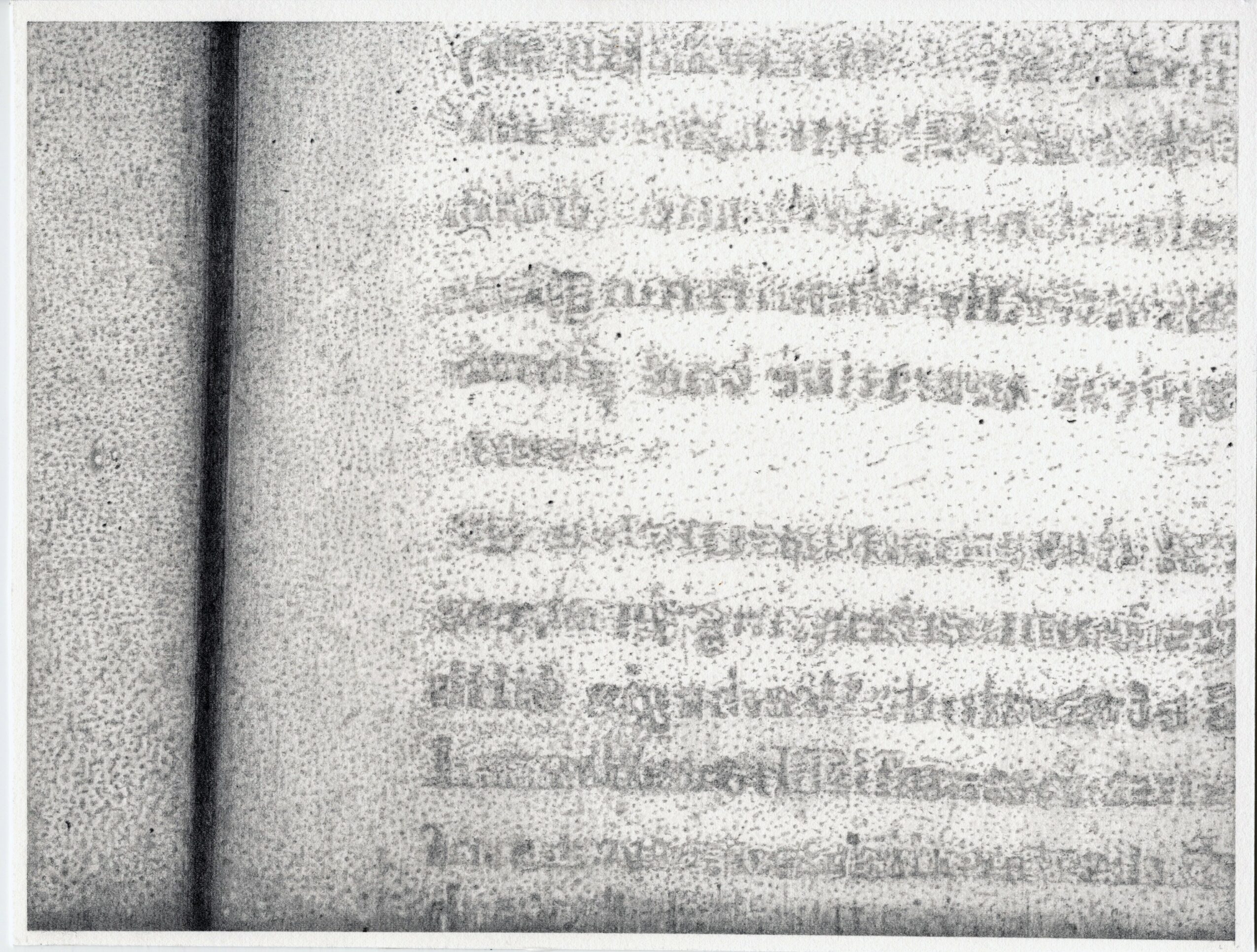
As I’ve mentioned, I make graphite drawings based on photocopies of printed text. I make a photocopy of a book or another document, then I draw that photocopy by hand. When you look at my work, you are looking at a hand-drawn copy of a copy.
I develop projects over many years, beginning with library-based research. The books and other documents collected during the research phase become the source material for the photocopies. Often, photocopies are enlarged multiple times to distort or manipulate the image. I use larger photocopies as sources for multi-panel, large-scale drawings. I typically make many more photocopies than I will draw. Sorting through which photocopies will become the reference for the drawings is my “writing” phase. Once I have chosen a photocopy or a sequence of photocopies, I make the drawing. Individual drawings usually take months, not days, to complete.
“Translation” is an early project that marked a shift toward long-term, project-based work. It is a “translation”—entirely in the form of graphite drawings—of the first chapter of Marcel Proust’s novel In Search of Lost Time. The project took two years to complete and consists of twenty-eight individual drawings of photocopies of sequential pages from the novel’s first chapter, pieced together from every existing English translation, resolving into an incomplete, not-fully-readable rendition of the original.
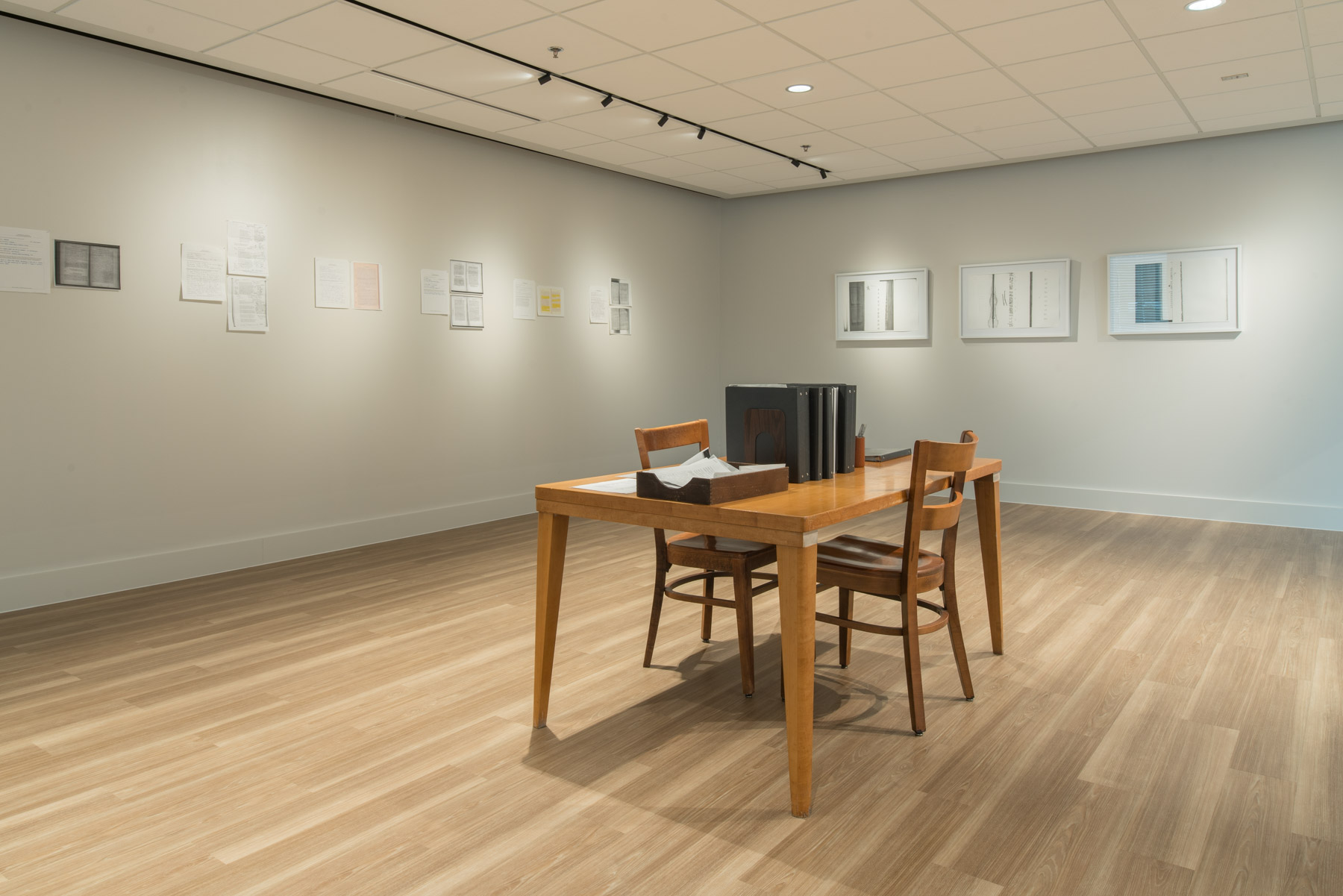
“The Marginalia Archive” is an ongoing interactive project that interrogates the changing nature of reading and seeing in an era of digital transformation. The source material—photocopies of annotated books I started soliciting in 2007—is collected into a functioning archive that viewers can browse and contribute to during an exhibition. I use these photocopies as source material for drawings that are exhibited alongside the archive, but are also standalone projects. I’ve exhibited this project widely, and it will be a lifelong endeavor. It’s become something that I can return to when I’m between other projects. I turned to it for inspiration during the pandemic when I couldn’t go to libraries. It’s a generative source for me.
My most recent project, “Holograph Draft”, is primarily inspired by two sources: a holograph draft of Virginia Woolf’s novel To the Lighthouse and reproductions of her personal family photo albums. I started researching this project while recovering from hand surgery, and it has led to the inclusion of new media, including collage and fine print lithography, in my practice.
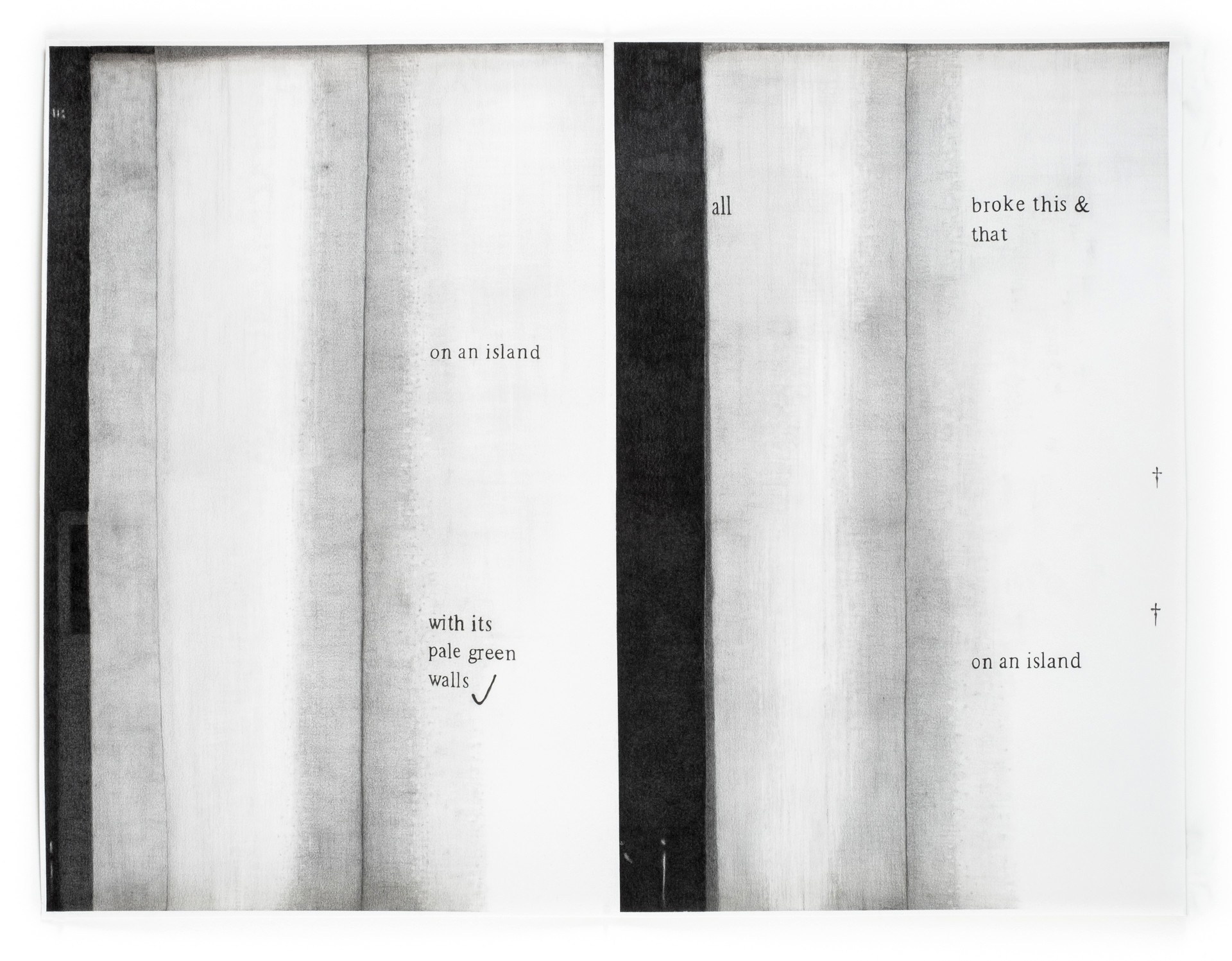
A holograph draft is a printed text transcribed from an original handwritten manuscript that retains the author’s handwritten emendation marks. A series of text-based drawings anchors “Holograph Draft”. They’re based on photocopies of Woolf’s marginal notes from the holograph draft. I extract and enlarge words and short phrases by photocopying and re-photocopying. I then group the resulting poetic fragments to form longer poems and phrases, which I transform into graphite drawings.
The text-based drawings are complemented by a series of abstract drawings inspired by Woolf’s photo albums. These drawings are based on enlarged photocopies of collages I made from photocopied fragments from Woolf’s photo albums. While abstract, they reference the material qualities of the original albums and provide a denser visual counterpoint to the relatively sparer text-based drawings.
Given the amount of time I spend on my projects, I’m deeply invested in their source material, but “Holograph Draft” is a particularly personal project. I started it when I was unsure if I would be able to make drawings at all. And I ended up making work I’m incredibly proud of. This year, I was awarded a Guggenheim Fellowship in support of making new work for the project. I’m planning to make sculptures, which will be an entirely new adventure.
Contact Info:
- Website: https://mollyspringfield.com/
- Instagram: https://www.instagram.com/mollyrspring/