Today, we’d like to introduce you to Black Magic Tim.
Hello Black Magic Tim, it’s an honor to have you on the platform. Thanks for taking the time to share your story with us – to start, maybe you can share some of your backstory with our readers.
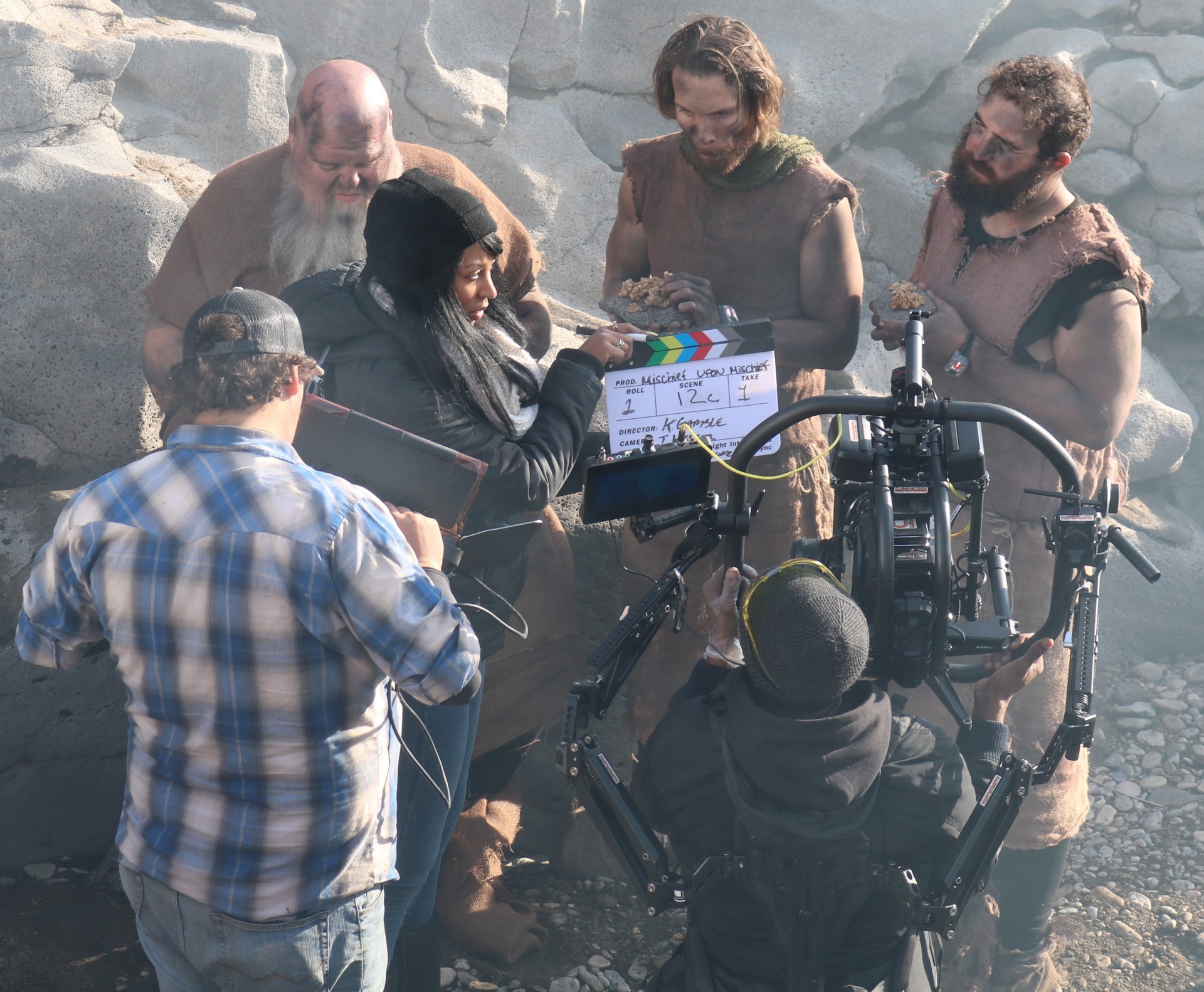
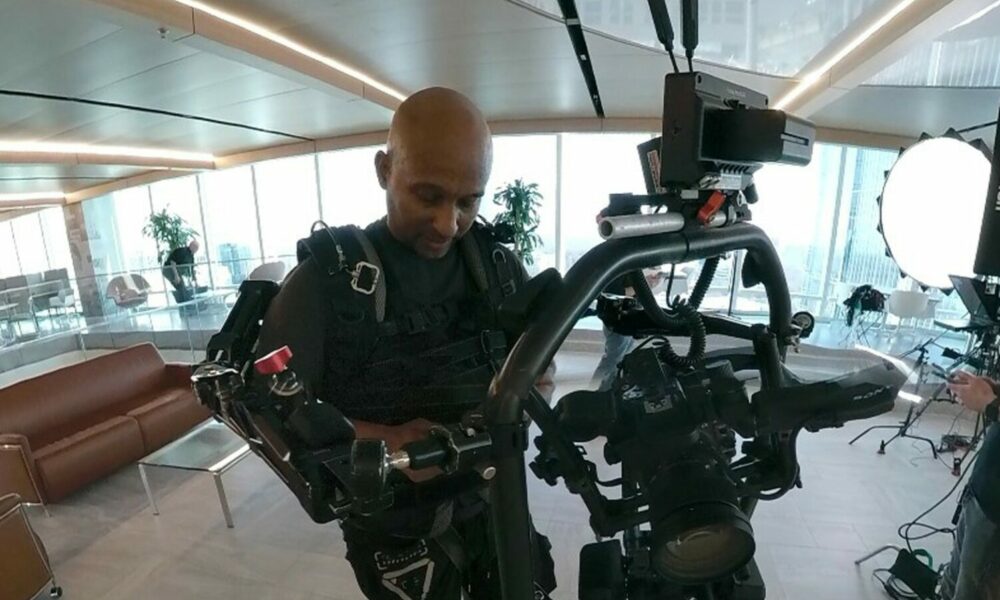
I am known as the cinematographer of the future. Half man, half machine, as I am embracing the latest technologies and applying them to film and TV production in sometimes non-traditional ways. I enjoy combining emerging technologies to help create stories in more speedy and efficient ways. As a Tony Stark of film, I have an arsenal of Iron Man-like tools that allow me to take camera movement and camera operation into new futuristic realms and applications.
Originally a Washingtonian for 50 years, I recently set up shop in NE Baltimore, MD. In 36 years of being in the film business, I have created incredible works of art as a cinematographer, VFX artist, and technology innovator for clients like the U.S. Marine Corps., U.S. Coast Guard, US Army, Geico, Whistle Pig Whiskey, Xbox, NASCAR, Pokémon, AARP, Industrial Bank, Verizon, the DC Government, DC Public Charter Schools system, the NAACP LDF, CBCF, several major record labels, and other D.O.D. contracts, winning several awards for documentaries, feature films, and commercials.
I have done documentary work for the George Lucas Museum of Narrative Art, Lonnie Bunch and the African American Museum, Bryan Stevenson and his Legacy Museum with director Crystal McCrary, as well as the late John Lewis PBS special “Eyes on the Prize” and other political films.
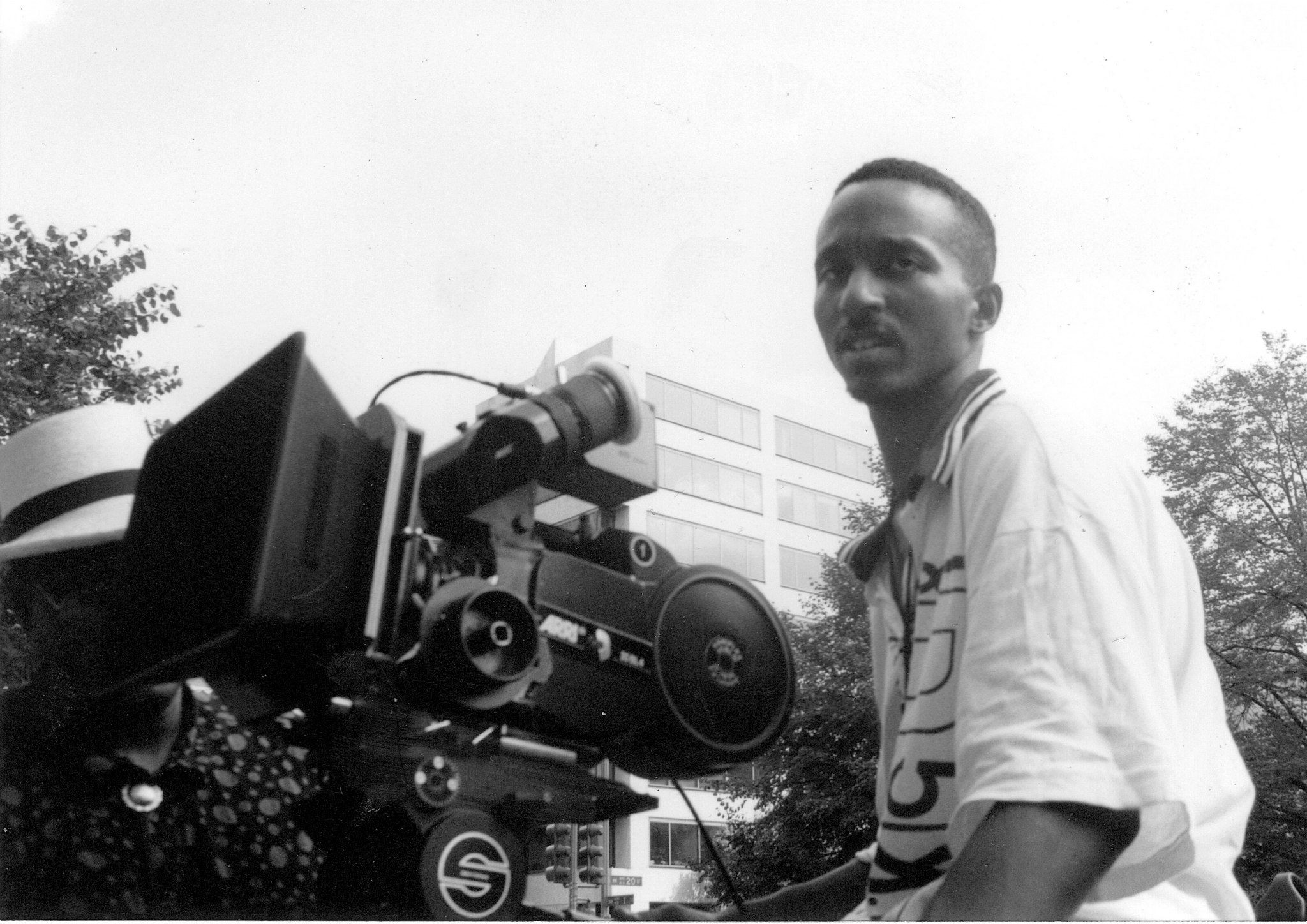
I attended Howard University Film School, studying under Haile Gerima before starting my first film company (Black Magic Cinemaworks) in Washington, D.C., in 1989. I have appeared in various publications via sources such as CCTV, Voice of America, The Washington Post, and WUSA-9. I have products available in all major retailers (Best Buy, Walmart, Kmart, etc.)
But that’s where I am in the Future… the now. If we time flux back to the “Back to the Future” number of ’88, we will find a fresh out of high school robotics nerd who started his career with VHS camcorders and Japanese anime.
I’m sure it wasn’t obstacle-free, but would you say the journey has been fairly smooth so far?
There have been many struggles faced trying to make a living from my love of art. Over time I found the key ingredient to success is finding a niche, perfecting it and crushing it like no other.
In 1988, my first year as a film student at Howard University, my first niche was showing newly imported Japanese animation to my fellow filmmakers in the School of Communications screening room west. This introduced me to other like-minded artists, and we began making VHS action movies together that mirrored the Japanese animation style of storytelling. Needless to say, that was not generating income, but it certainly had every other film student talking about the magic and exciting films we were creating with no funding on VHS tape.
My team of fellow film students, Eric Mclain, Tony Starnes, and Kimothy Innis, decided we should go more professional with our gear and teamed up to buy more serious film cameras like a 16mm Bolex Camera, which we purchased from our film professor Haile Gerima.
When we first began in the late 80s, that niche was easier because there were very few professional black filmmakers in the area shooting on film. Ironically, my initial niche became offering more affordable productions in 16mm and then 35mm film for local music video artists who saw and loved what we were doing with our own sci-fi anime-inspired films.
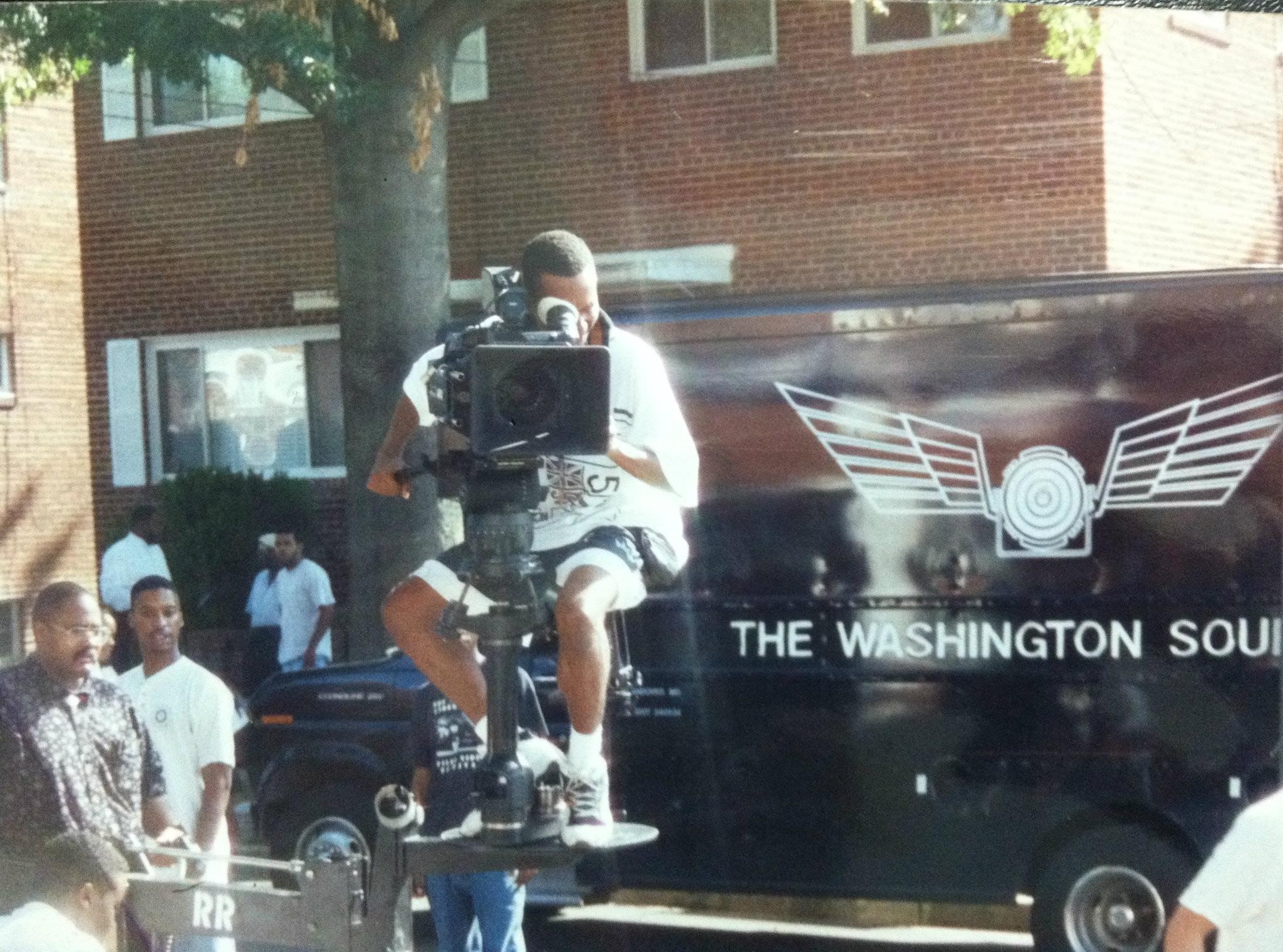
Typical music video budgets of the era started at 50k, and we were doing them at half that price. This not only helped the growth of my team’s first film company, Black Magic Cinemaworks, named after the four black camera magicians who created that magic on screen like Lucas’s Industrial Light and Magic but put me into the limelight as a go-to filmmaker.
At that time, I was doing Music Videos and EPKS on celluloid for Blackground Records, Tommyboy, and others. What started off as smaller artists grew to bigger artists like Akinyele, Kim Scott, Tank, Garbage, and others. We started purchasing bigger, more expensive 16mm and 35mm camera systems when another bumpy road emerged.
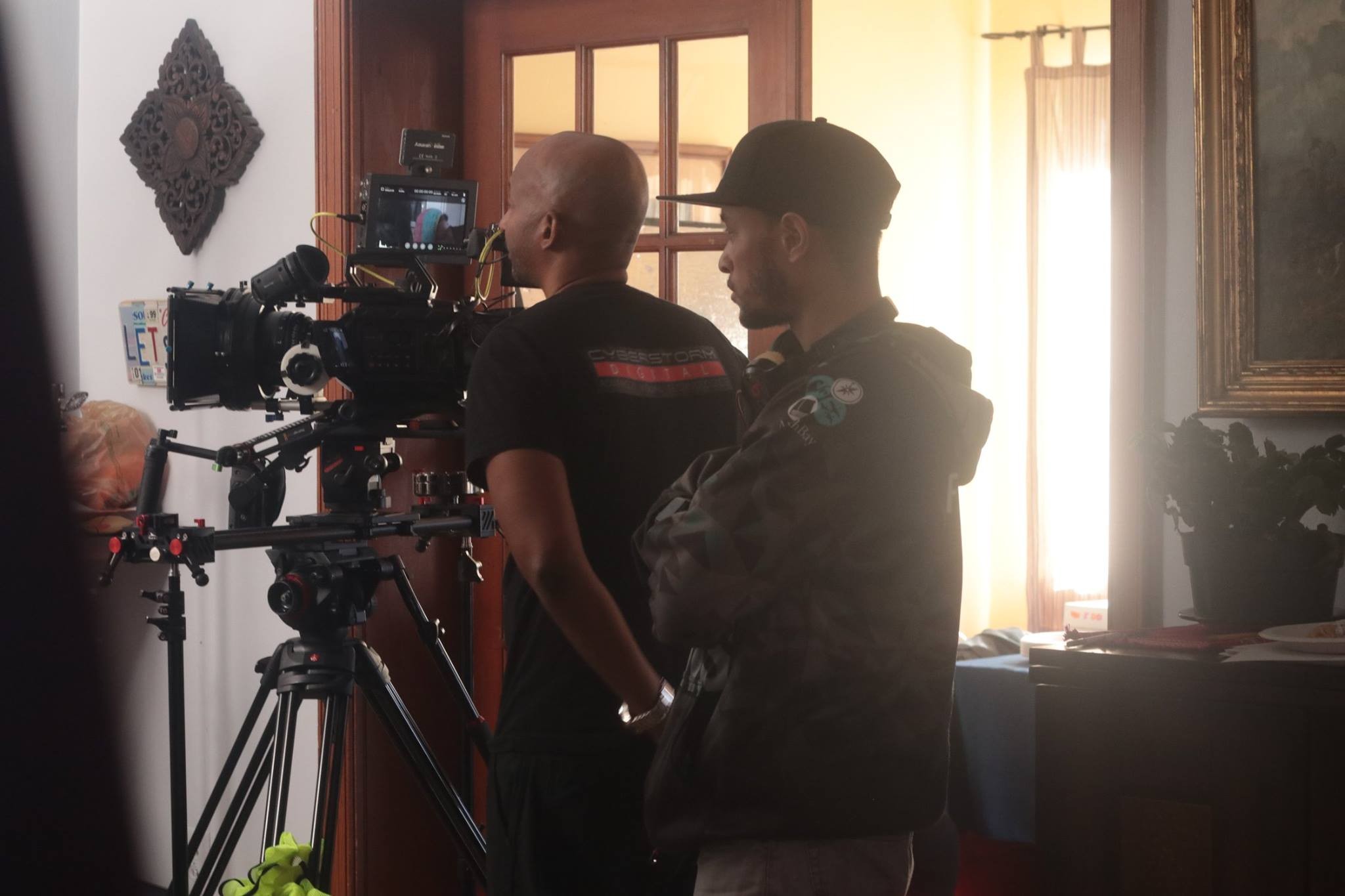
Around 2000, the advent of DV/HDV and affordable digital cameras began to emerge. Then, a strange new camera that looked like a ray gun was developed called the “RED” camera. This prototype and other more affordable camera systems destabilized my niche and democratized professional productions quite drastically over the next ten years. I also started a company called Cyberstorm Digital around this time that would be focused on this leap from film to digital production. However, that change happened quicker than I expected.
Digital video was taking off. This forced me to sell my film gear and reluctantly move into filmmaking with HD video cameras to compete with the dropping budgets and influx of new filmmakers who also had access to these lower-cost tools. During this time, I did not do as well financially and struggled, forcing me to create more visually intensive work. This moved me from shooting to visual effects and post, along with shooting and directing, and I became a jack of all trades!
However, the budgets were much lower, and more energy was put into creating visually appealing images all by myself to offset the costs of a race-to-the-bottom approach starting to emerge in a more competitive world of easily accessible film tools.
During this time, I was working 10x harder and making 10x less. Even though my work was amazing, it also was getting less attention and less prestige as I was taking on clients that were also start-ups and also didn’t have the means to get national exposure like some of my earlier film clientele.
Eventually, I began making my own visual effects film called Vector 2033 to bring attention to my skillset. However, this film threw me into credit card debt and consumed all my time from working on any opportunities that would generate money. Even though I was unable to complete the film, the trailer started getting attention from many art communities. One of these led me to my next niche market. Nollywood.
Koby Maxwell, a Ghanaian Music artist, introduced me to the world of Nollywood. A genre of film that was greatly unknown but had a strong ecosystem of DVD and VHS sales and was generating 8 billion a year. However, the production quality was extremely sub-par and boarded on amateur filmmaking, however this closed ecosystem was loyal. I agreed to help Koby in his vision to increase the quality of Nollywood and attempt to bring it to the mainstream, under the condition that we use the best available techniques to elevate the quality.
I spent seven years in Nollywood, and we created several films together, with 3 making a major impact on Nollywood film saturation in the USA. One Night in Vegas and Paparazzi Eye in the Dark were 2 of those award-winning films. However, once again, I did not reap the financial rewards needed to keep me afloat as a full-time Filmmaker and Cinematographer.
Frustrated, I knew I had to re-invent myself and stay relevant, I began to focus more on emerging technologies. My new company, which I started in 1997, was called Cyberstorm Digital: Advanced Visual Technologies… also needed a reinvent. The whole premise of my company when I started it was seeing that organic film was turning digital and that a storm was coming to change the landscape.
A revolution of technology that would change how people interacted with tech and used it to make videos and films. Re-embracing my original vision, I began filming YouTube tech videos and attending NAB every year. During this journey, I began to purchase many things I could not afford, but I took a gamble on my vision. I saw myself as the Cinematographer from the future who used advanced and often nontraditional methods to brand myself.
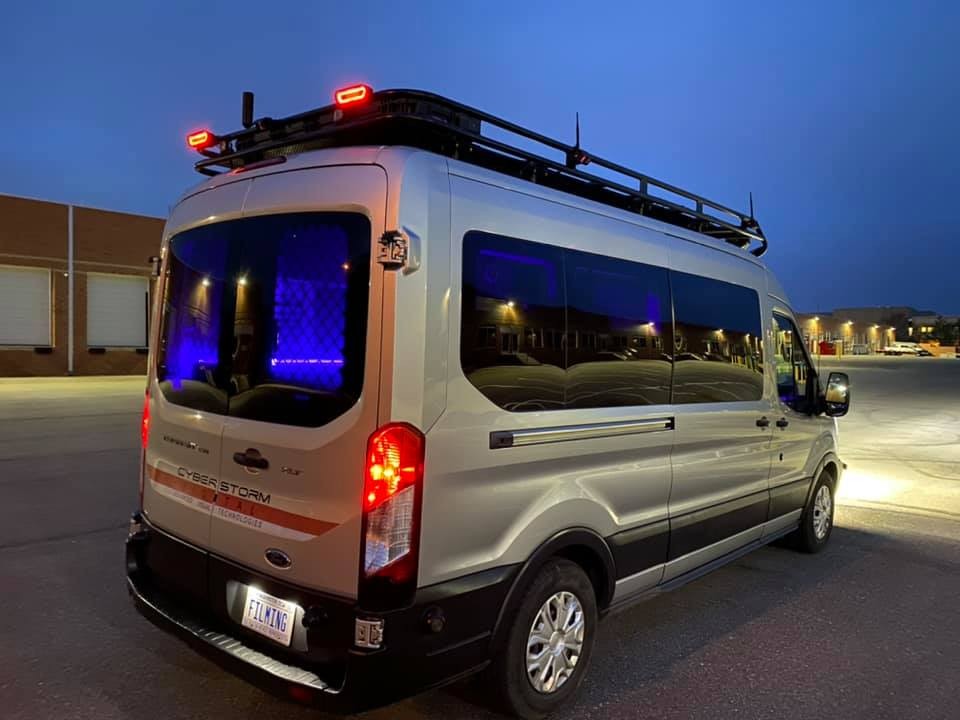
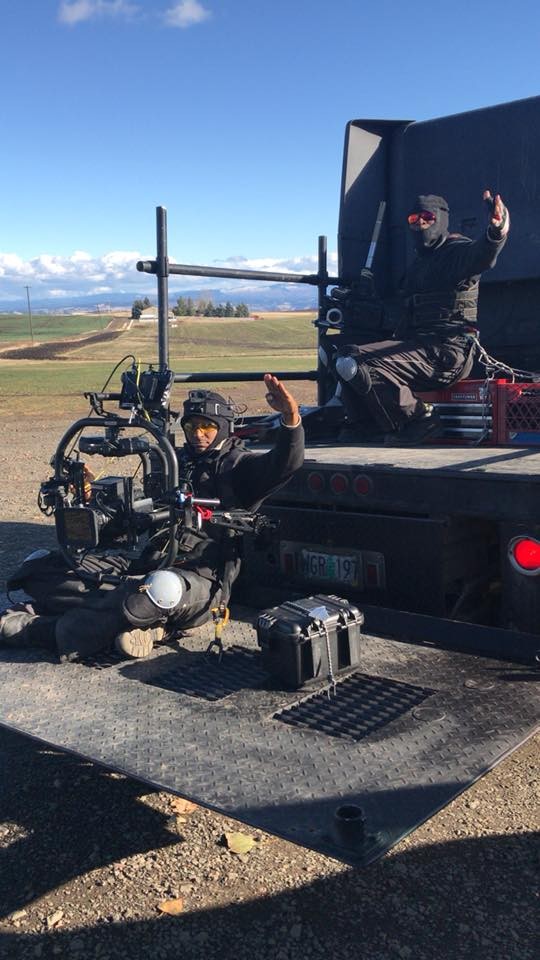
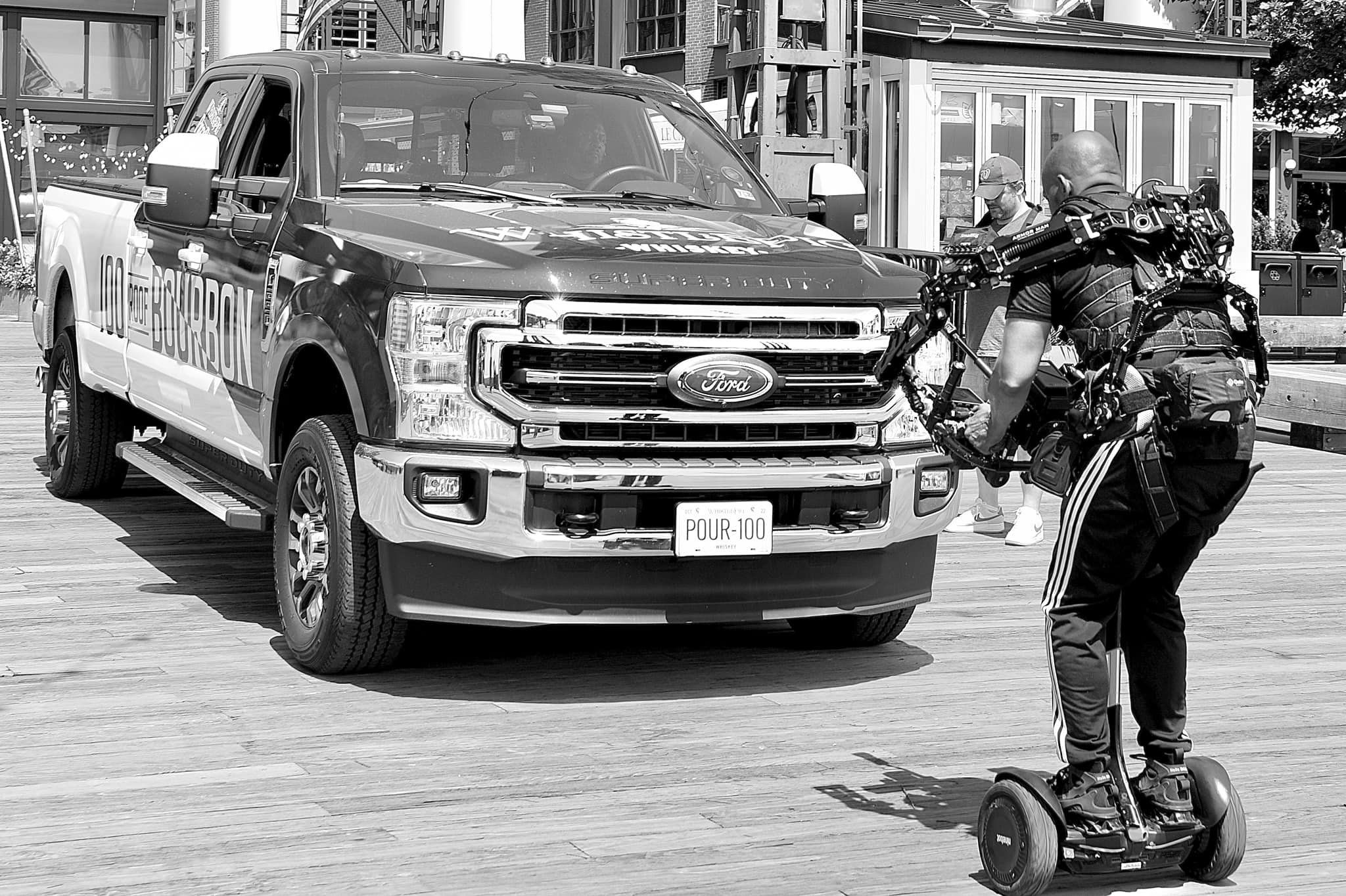
I purchased a 2015 Ford Transit 350 XLT Midroof truck and turned it into a mobile command center, I bought a segway and EXO suit and created a fast-moving Steadicam system straight out of a sci fi film. I began to brand myself as a futuristic film-making machine on the front end while, on the back end, becoming more financially literate and networking savvy; the goal was to re-invent myself every four years while creating a strong network of fellow creatives.
In doing this, my circles and networks began to change and evolve. In order to survive, thrive, and eventually grow, I needed to associate with more like-minded entrepreneurs who also survived solely on their craft. It was during this phase from 2017 till now in 2021 I began to see the biggest impacts and trajectory in my career as I began to build stronger bonds and establish longer history in the field of film. The stage was being set for finally reestablishing my early 90’s success when the unthinkable hit.
Covid 19!
That shutdown we all experienced became the defining moment for me. I had come so far and made so many leaps FWD, only now to be kicked back to the beginning was completely unacceptable. Where others ran away from the fire, I ran into it. There was an ever-increasing need for remote video services, streaming, and camera work.
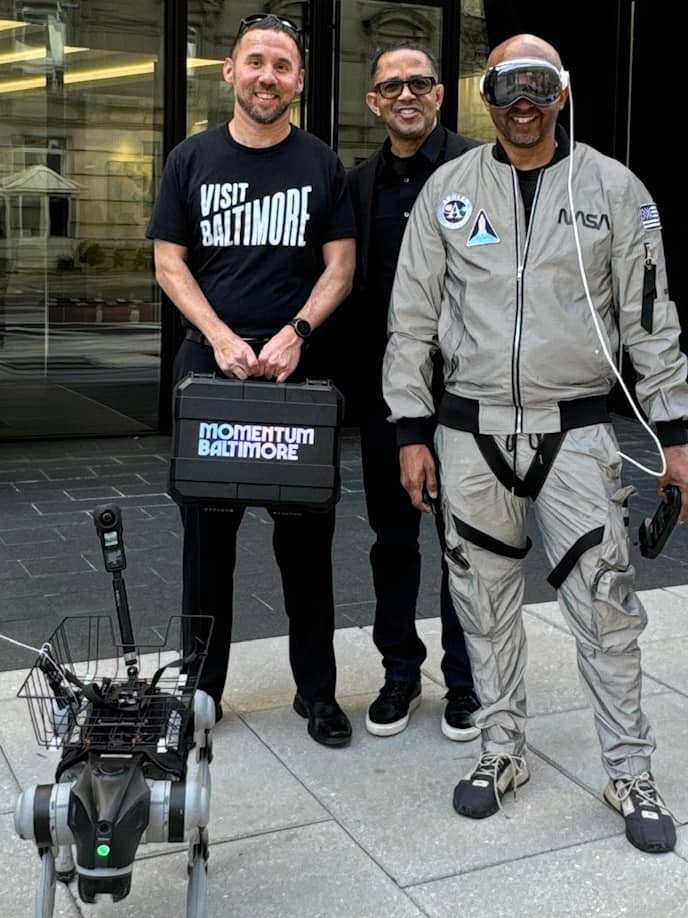
However, while most of the world was hunkered down, I was the one taking the calls and doing the work that others were fearful of doing. I didn’t know it at the time, but it was the perfect storm for me. My mobile command center came into play a lot more as a remote studio. I began streaming for a lot of clients who needed to continue reaching their audience. I still went out in my advanced tech, suited up in an astronaut suit, and did work, and business exploded x3.
It was the exact moment when preparedness met opportunity, and branding pointed clients to me. From 2021 to 2023, my profits moved into mid-six figures. Making up for all the losses from the decades before in a short time. I learned that you may not know how your dream will manifest, but if you stay the course, believe and invest in yourself, and never give up… the universe has no choice but to grow the seed you planted and nurtured.
Today, in 2024, I have more contracts, resources, and opportunities than ever before, and as a result, I have been able to outsource my overflow to other growing filmmakers who share my similar path. I have begun to move into Embodied AI robot cinematography and AR/VR. Everyone’s journey is different. What worked or didn’t work for me may work or not work for you, but the key is always to find your niche, do that only, and crush it.
But this long journey has put me in a place to earn a full-time living from my creative work and soon to be able to even retire from it.
As you know, we’re big fans of you and your work. For our readers who might not be as familiar with what you do, what can you tell them about what you do?
I am known as the cinematographer of the future. Half man, half machine, as I’m known for embracing the latest technologies and applying them to film/TV production in sometimes non-traditional ways.
I enjoy combining emerging technologies to help create stories in more speedy and efficient ways. As a Tony Stark of film, I have an arsenal of Iron Man-like tools that allow me to take camera movement and camera operation into new futuristic realms and applications.
I’m most proud of the impact and outreach my career path has taken. My involvement in several different projects has changed not only the trajectory of my life but also the lives of the people around me and my clients.
Seeing the success stories of the people I interact with and knowing that staying true to your own passion despite the struggles can and does eventually lead to a very fulfilled life brings me much joy daily.
How can people work with you, collaborate with you, or support you?
Follow me on my social media, and share your stories with me.
The strength of success is not based on the equipment you have or the past achievements you have made but on the strength of your extended lifelong network. Building relationships is the cornerstone of success.
Contact Info:
- Website: cyberstormdigital.com
- Instagram: https://www.instagram.com/cyberstorm_digital
- Facebook: https://www.facebook.com/BLACKMAGICTIM/
- Linkedin: https://www.linkedin.com/in/blackmagictim
- Youtube: https://www.youtube.com/c/Blackmagictim?sub_confirmation=1
- Other: https://linktr.ee/blackmagictim