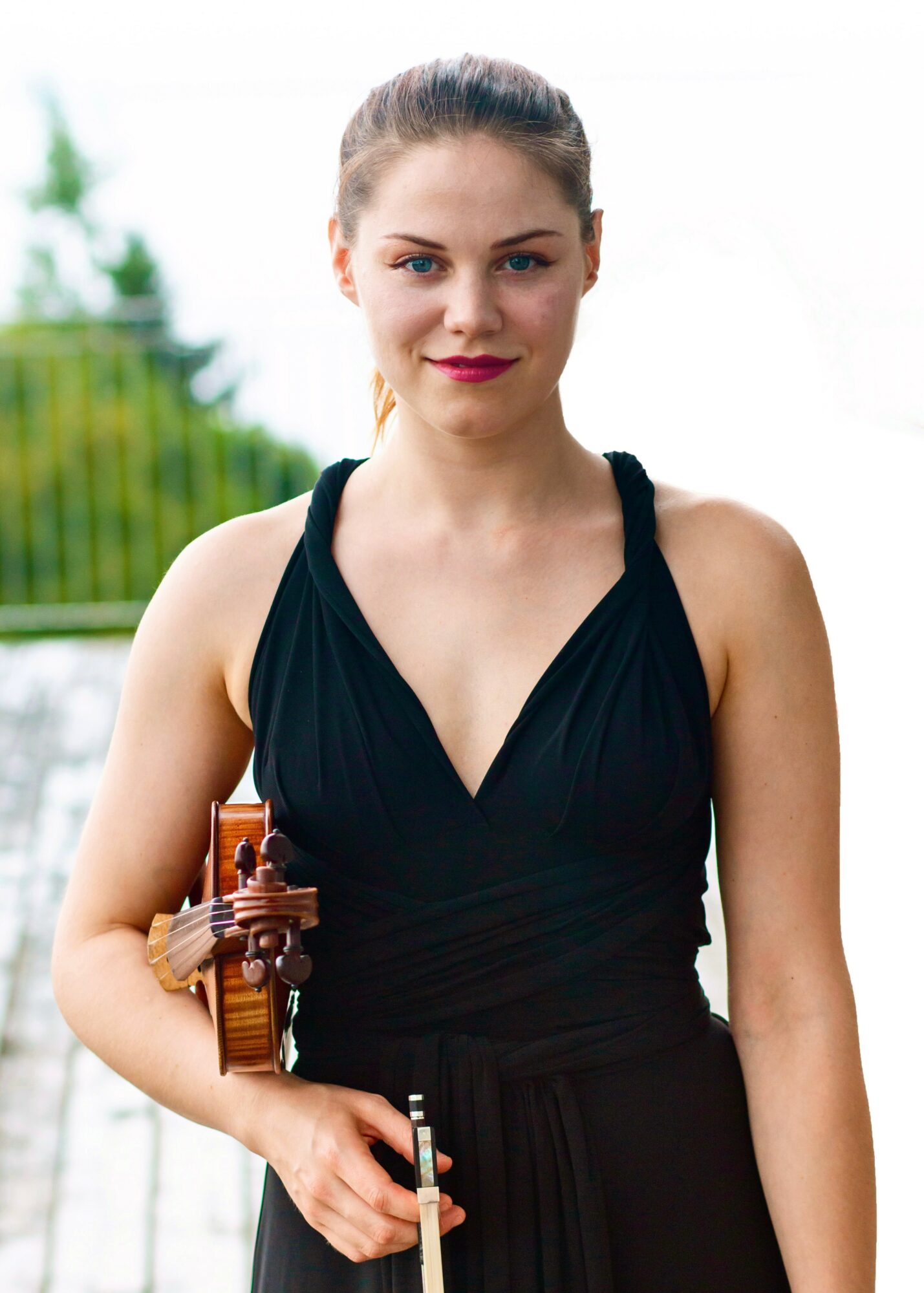
Holly Nelson shared their story and experiences with us recently and you can find our conversation below.
Hi Holly, thank you for taking the time to reflect back on your journey with us. I think our readers are in for a real treat. There is so much we can all learn from each other and so thank you again for opening up with us. Let’s get into it: What is a normal day like for you right now?
I typically wake up around 7 AM and immediately make coffee in my espresso machine. It is one of my most treasured possessions, not only because of the much-needed jolt of caffeine it provides, but also because it was a wedding gift from my beloved grandmother, Theresa Arnold, who passed away a few years ago. I think of her fondly every time I use it.
I often start practicing promptly at 8AM, which is when my landlord allows me to start! (This is part of the reason that my husband, who is also a violinist, and I chose to rent our half of a house in Takoma Park. We were able to negotiate a very generous ‘practice hours’ policy with our landlords- 8 AM to 10 PM!) The fact that the house has a tree-lined yard attracted us too, because we love to grill and host parties in our front yard when the weather is nice!
When I practice, I like to use a timer on my cell phone for 1 hour intervals. I usually put the time in my google calendar. Sometimes I label each practice session in my phone with the rep that I’m working on to keep track throughout the week of how much time I have spent on each piece. I am so used to practicing with this system that if I don’t use a timer and put it in my calendar, I almost wonder, “did I really practice just now, or not?” While I’m practicing, my metronome (which is an app on my phone called Tempo,) is almost always on my stand. I often use voice memos on my phone to record myself and listen back as well. Sometimes I use the Cleartune App (also on my phone) to practice along with drone pitches, especially if I am practicing an especially awkward section of music in a challenging key. After each hour long interval, I take a short (10-15 minute) break and do some stretches. This helps to prevent repetitive-motion/ repetitive stress injuries, which can be common in professional musicians.
I typically break around 1PM for lunch, which I usually eat at home. It’s almost always something that I have cooked during the week. Now that it’s autumn, I have been getting a lot of mileage out of my crockpot. Recently, I made German-style pork and sauerkraut that I serve with mashed potatoes.
If it’s a Thursday, I head to the Levine School of Music campus located in downtown Silver Spring around 1PM to rehearse with my duo partner, pianist Luke Ratcliffe, for several hours. We met around the time that I began teaching at the Levine School of Music in 2024 when I gave my new-faculty recital at Levine and Luke was suggested by the school as a collaborative pianist for the program. We enjoyed working together on that project so much that we decided to officially form a professional duo in 2025. It has been a wonderful, artistically satisfying collaboration ever since. As a relatively new ensemble, we are making an ambitious push to learn a lot of new repertoire and give as many performances as possible this academic year. We have numerous recitals scheduled in DC, VA and MD this year and in 2026.
I generally teach my Levine violin and viola students from around 4-8 PM every day, then head home and try to squeeze in another hour or so of practice time before 10 PM. Recently, I have been trying to coax myself into doing some exercise (like Pilates or strength training) for 30 minutes after 10 PM, but I often need to spend that time grading assignments for the musicology course I am teaching online at NOVA (Northern Virginia Community College,) where I recently joined the music faculty as Assistant Professor of Violin at the Alexandria campus.
On Fridays and Sundays I don’t teach, so I usually spend the day practicing, cleaning my house and doing meal prep for the coming week if I don’t have a concert. However, I often DO have concerts on Fridays or Sundays, so on a concert day, I try to sleep in so that I have extra energy for the performance. Then, I prep all the things that I will need to bring with me for the concert: my paper scores, ipad and apple pencil for last minute annotations on digital scores, a bluetooth page-turner pedal, my outfit ready in a dress bag — usually some kind of a glamorous, long gown; because why not have fun dressing up for concerts? —plus a sturdy metal music stand to support my ipad, a tripod and iphone holder attachment if I plan to record the concert, charger cables for my ipad and phone, snacks, my makeup kit, and some kind of sparkly hair clip for doing my concert hair. There really is a mountain of stuff that I need to bring with me!
I typically go to bed around 11:00 or 11:30 PM. Sometimes I like to knit in bed to help me fall asleep. Then I wake up and do it all over again the next day!
Can you briefly introduce yourself and share what makes you or your brand unique?
I am a classically-trained violinist who has appeared in concert as a soloist, chamber and orchestral musician throughout the United States. I recently completed my Doctor of Musical Arts (DMA) degree as a Dean’s Doctoral Fellow at the Peabody Conservatory of Music at Johns Hopkins University in 2025, where I studied with violinist Vadim Gluzman. In 2024, I spent nine months in Buenos Aires, Argentina as a Fulbright Research Grant recipient. While I was there, I studied tango music performance practice and pedagogy. Playing tango music is now a large part of my musical career, alongside classical music.
I currently teach at Northern Virginia Community College (NOVA) in Alexandria, VA and at the Levine School of Music in Washington, DC.
I currently perform with several ensembles. I have professional duos with pianist Luke Ratcliffe and guitarist David Steinhardt, both phenomenal performers that also happen to be wonderful people and thoughtful, creative collaborators. In both of my duos, I primarily focus on classical music although I often sprinkle in some tango repertoire, especially in my guitar duo, in which Astor Piazzolla’s ‘Histoire du Tango’ has become one of our signature pieces. Recently, I have started working with a fabulous baroque trio alongside two incredible early music specialists: soprano Kerry Holahan and harpsichordist and Peabody Conservatory professor Mark Janello. The violin I play in the baroque trio has strings made of sheep gut, (as opposed to the modern violin I play which has strings made of chrome, aluminum and silver,) and for baroque playing I don’t use a chin rest or shoulder rest. The baroque bow I play on looks strikingly different from a modern bow. Recently, I have also started collaborating with two sensational Argentinian musicians, bandoneonist Emmanuel Trifilio and guitarist Christian Perez. Our new tango trio’s focus is primarily on performing milonga (danceable) tango repertoire. I also perform frequently with the Tango Mercurio ensemble run by the fabulous bandleader and bandoneonist Heyni Solera. We always have a blast performing together at tango milongas (social dance events) and sometimes I bring along my tango shoes to dance a few tandas once we are done with our set and the tango DJ takes over!
As former concertmaster of the Pan- American Symphony Orchestra, a DC-based ensemble dedicated to performing Latin American orchestral repertoire, I have appeared as soloist at the Kennedy Center and at Wolf Trap. Other concerto engagements in 2024 included performing Las Cuatro Estaciones Porteñas for Violin and Orchestra by A. Piazzolla (arr. L. Desyatnikov) with the Peabody Symphony Orchestra and Florence Price’s Violin Concerto no. 2 with the Durham Symphony Orchestra in NC. In 2024, I had the honor of giving the Maryland premiere of John Williams’ violin concerto Treesong with the John Williams Project Orchestra at the Peabody Institute with the composer himself in attendance.
In 2022, I received the Peabody Institute of Music’s Presser Award, which “is designed to especially encourage and support the advanced education and careers of truly exceptional graduate music students who have the potential to make a notable contribution to the field of music.”
From 2016-2017 I performed frequently at Carnegie Hall, the Metropolitan Museum of Art and Jazz at Lincoln Center as a violin fellow with The Orchestra Now, and was formerly a member of the Chamber Orchestra of New York and the Binghamton Philharmonic Orchestra (NY). I was a featured artist at the opening gala of the Whitney Museum of American Art’s Biennial in 2010 in New York City as part of Rashaad Newsome’s piece FIVE, and also appeared in recital at New York University, the Fox Performing Arts Theater in El Paso, TX, National Sawdust in Brooklyn, NY and at the Atlantic Music Festival. Other festival appearances include Britten Pears in England, Banff and Domaine Forget in Canada and The Lucerne Festival and Tibor Varga Academy in Switzerland. Additionally, I have had the opportunity to perform in France, Austria, Luxembourg, Germany, China and Taiwan.
I have taught at the University of Cincinnati College-Conservatory of Music and the University of Maryland-Baltimore County and have held artist residencies and presented music workshops at Duke University, UNC Chapel Hill and Fordham University, among others.
Okay, so here’s a deep one: What did you believe about yourself as a child that you no longer believe?
When I was a child, the concept of a ‘fixed mindset’ was often reinforced to me— likely inadvertently— by my family and teachers. If something felt difficult for me, either in music, school or in some other area of my life, the message I often received was “well, maybe that’s just not your forte.” There were many things that came easily to me as a kid— especially visual art, music, acting, foreign languages, writing and history— so it was easy for me to accept that other things that I did not immediately excel at or feel drawn to— like math or sports— were ‘just not meant for me.’ Now, as an educator myself, I feel that cultivating a ‘growth mindset’ is one of the most important things that a teacher or parent can do for a child. After nearly thirteen years of teaching professionally, I have seen time and time again that students are not limited by anything other than what they believe is possible for them to achieve, along with how much time, effort, patience and creativity they are willing to invest in improving.
Adopting this growth mindset has helped me to overcome plateaus as a performer as well as in other areas of my life. For example, after years and years of believing that I was simply not destined to be athletic and that I didn’t (or couldn’t) enjoy any sports, I discovered skiing at the age of 24. It has turned into one of the greatest joys in my life besides music. This in turn inspired my interest in a whole slew of other outdoor activities such as hiking and kayaking, as well as yoga and pilates, which help me to stay healthy and injury-free. My husband just signed the two of us up for beginner tennis lessons, which I look forward to trying.
What did suffering teach you that success never could?
When I was in my late teens/ early 20’s, I was living in NYC and struggling to survive financially while completing my undergraduate degree in music at the Mannes College of Music. My family sent me money when they could, but they were also struggling to stay afloat financially. I worked as a nanny, as a restaurant hostess, taught violin lessons at various music academies, performed as a freelance violinist and worked as a student assistant to the ESL teacher at Mannes, all while trying to juggle practicing and attending classes. Every month I was barely making enough to pay for the rent of my tiny room in an apartment, let alone food.
I have a vivid memory of stepping outside my conservatory one day around lunchtime with several classmates and looking up at the beautiful, sunny, clear blue sky. In those days, (2006-2010,) Mannes was located in a gorgeous historic townhouse in a very posh area of the Upper West Side. As I stepped out onto the street, my stomach grumbled violently. My friends suggested going to the deli down the block for lunch. I went along with them, but panic started to set in when I went to the ATM inside the deli and tried to withdraw $20 only to receive a message that my bank account balance was at -$58. I felt humiliated. My friends, who were mostly from wealthy families— as were many of the students at Mannes and the other NYC conservatories— had all seen the message on the ATM screen. They offered to pay for my $12 sandwich, but I refused, not wanting to feel like a charity case. I excused myself and went back to a practice room at Mannes where I called my parents. I asked if they could send me $100, which they balked at. They explained that they had a mountain of bills to pay and that I would need to tough it out for a while longer until they could send some money. Later that afternoon, I went to a grocery store, Fairway, and asked an employee what they did with their unsold bakery items at the end of each day. He told me that they put them in a clean garbage bag and put them on the street around midnight. He added that technically they weren’t allowed to give the bakery items to anyone, but that people would often collect the bakery items from the bag after they were put out on the street.
That night, I waited outside Fairway until midnight, shivering along with several men who, given their grizzled appearance, I guessed were unhoused. I remember hearing them negotiate with one another about who would get what. “I call the raisin bagels. You can have the baguettes. I don’t like that crap anyway.” The whole scenario was somehow darkly amusing to me. I asked them if I could please have one of the challah loaves and a pumpernickel, which were my favorite. The guys, who this was clearly a routine for, chorused “yeah, yeah, the new chick can have a challah, sure, sure., and a pumpernickel.” Right after midnight, I was startled when the corrugated metal roll-up door of the shop front suddenly thundered open. An employee wearing a deli apron tossed an enormous, shiny black garbage bag out on to the sidewalk. “Here you go.” The men waited politely while one of them carefully untied the bag. He handed me the challah and pumpernickel loaves first. “There ya go, sweetheart. Enjoy.”
That night, as I sat in the subway with the two loaves in my backpack on my way home, I cried- partly out of gratitude to the man who had given me the bread first, even though his situation was arguably far more desperate than my own, and partly out of frustration and resentment that despite working so hard, I was still struggling to make ends meet.
Although it was a difficult lesson, that period of my life taught me that I am more resilient than I had previously thought. I had a fairly privileged upbringing in rural Connecticut, where I was fortunate to attend a very good public school and had loving, attentive parents who always made sure that there was food on the table despite our financial struggles. My time surviving as a freelance musician in NYC taught me grit and resourcefulness. It taught me that pursuing a dream often involves sacrifice- sometimes extreme sacrifice- of personal comfort, effort and time.
That period of hardship also informed many of my major life decisions going forward. For example, I only accepted graduate school admission offers that included benefits like free housing or a sizable graduate stipend in addition to a full scholarship package.
However, this experience did not make me completely risk-averse in my career, partly because I trust that no matter what situation I find myself in, I will discover a way to make it work.
Sure, so let’s go deeper into your values and how you think. Is the public version of you the real you?
Yes and no!
When I am performing, I suppose I seem very glamorous and confident to the audience. I often wear long, formal gowns when I am performing classical music, or if I am playing with a tango ensemble, I typically wear something hip and a bit edgy. I usually have a full face of makeup and have my hair styled. Of course, appearing poised and confident is part of the stagecraft of being a professional musician, and having a great concert outfit can help with confidence. No matter how you actually feel internally during a concert, you need to try to project poise and confidence.
However, when I am home practicing or grading papers for my college students, you will often find me wearing yoga pants, a hoodie and my husband’s flip flops (which I love to steal from him because they are so comfy!) Not glamorous, but very cozy!
When I am teaching, I tend to be fairly serious and restrained, although I do like to joke around with my students at times, and I often incorporate games into the lessons of my young students to make learning the violin fun for them. When I am home relaxing with my husband, he would tell you that I am extremely silly and love to play pranks on him, such as the other day when I secretly put a potato into the pocket of his jacket while he was watching a movie to see how long it would take him to notice.
Okay, so let’s keep going with one more question that means a lot to us: When do you feel most at peace?
I feel most at peace when I have just finished a demanding concert cyle in which all of the performances were a success, I feel that I played my personal best, my musical colleagues are all satisfied, the booking agents have already asked us to return next season and now it’s time to go out for a great meal to celebrate. In the ultimate-peacefulness fantasy version, I am on a post- concert cycle ski trip with my husband, enjoying a beer at the top of the mountain and enjoying the beautiful view after having skied fresh powder all morning.
Contact Info:
- Website: https://www.hollynelsonmusic.com/
- Instagram: @hollynelsonviolin
- Facebook: https://www.facebook.com/holly.nelson.743055/
- Youtube: https://www.youtube.com/channel/UCsB2HqPTsEIcqkcD5jSGoVQ
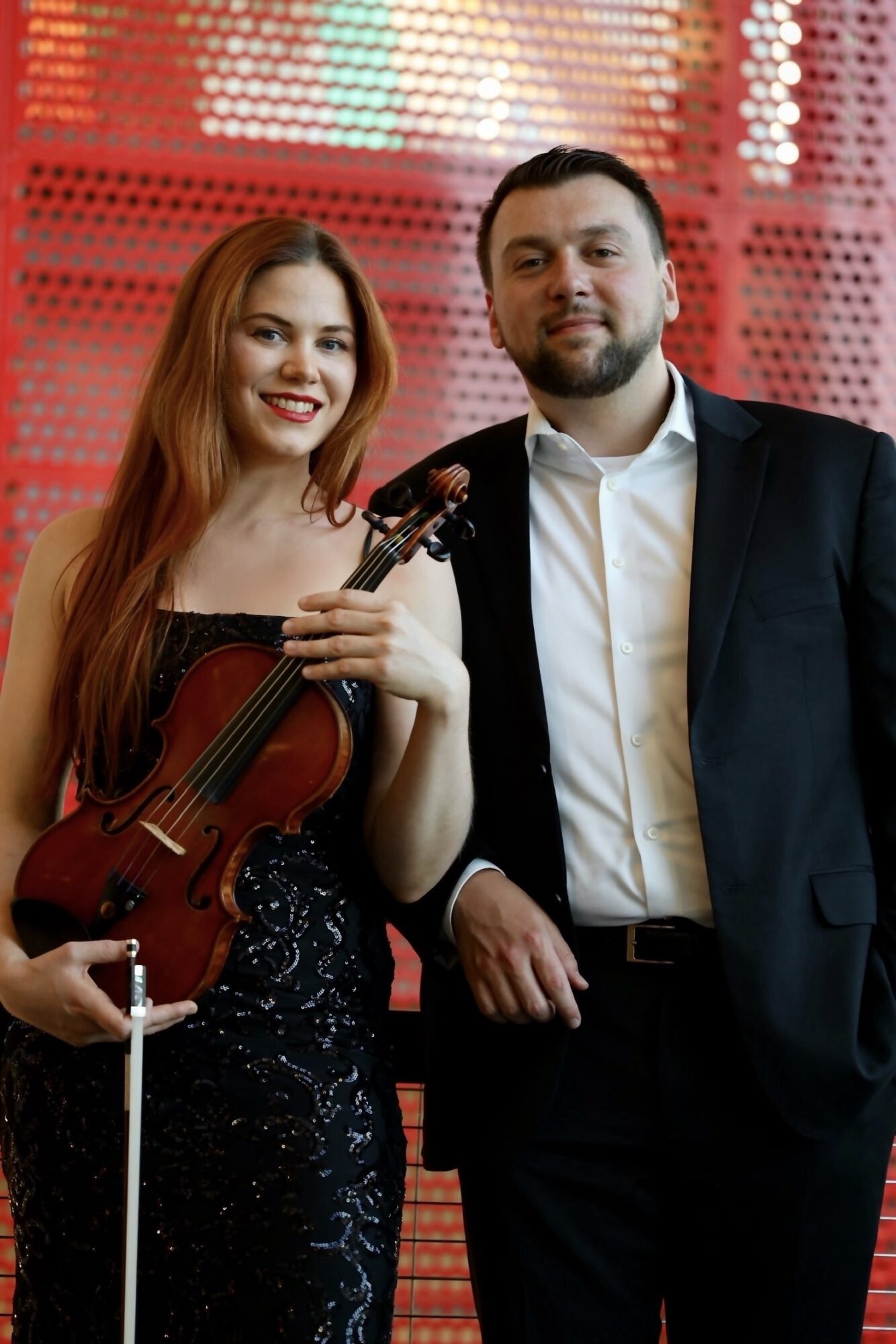
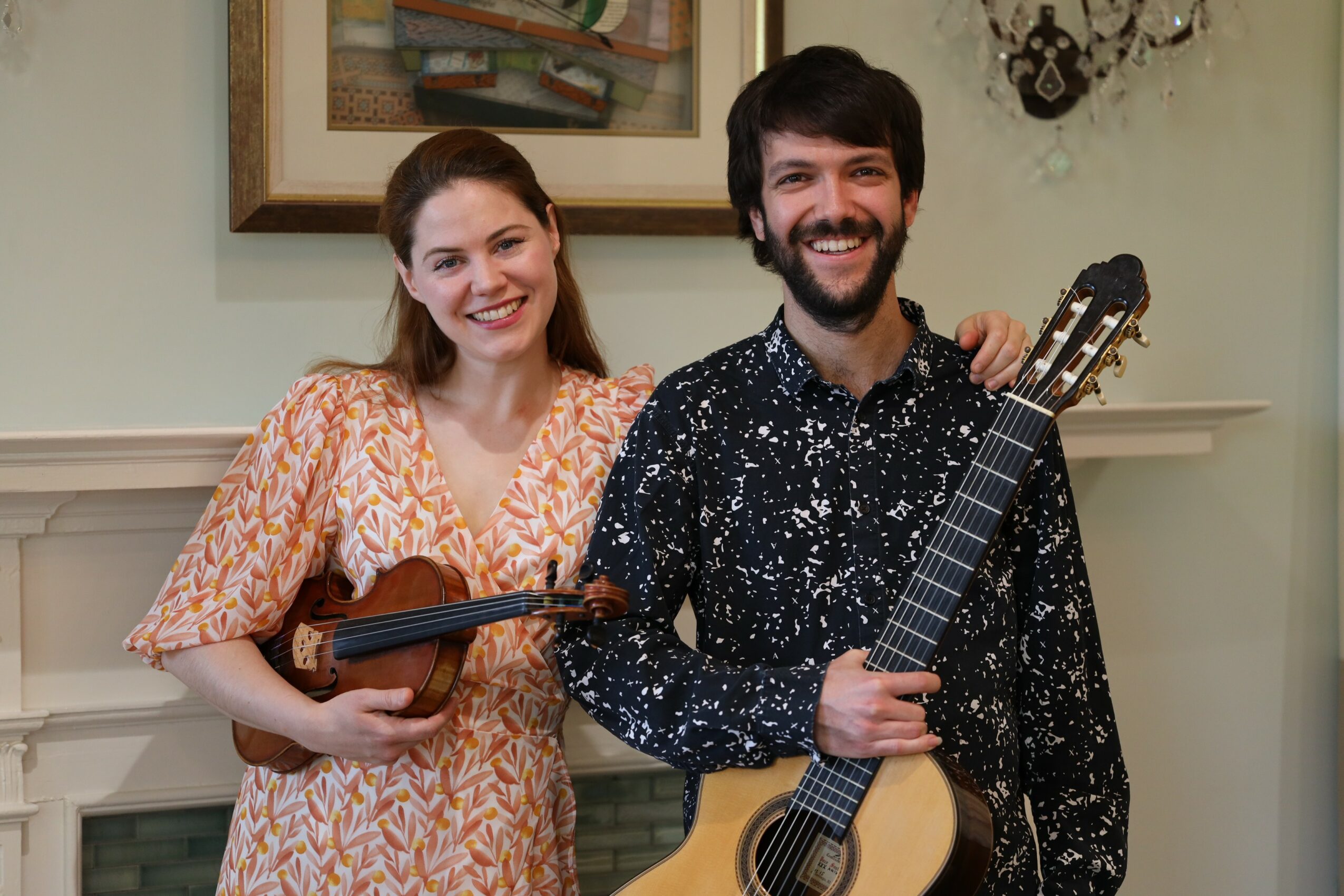
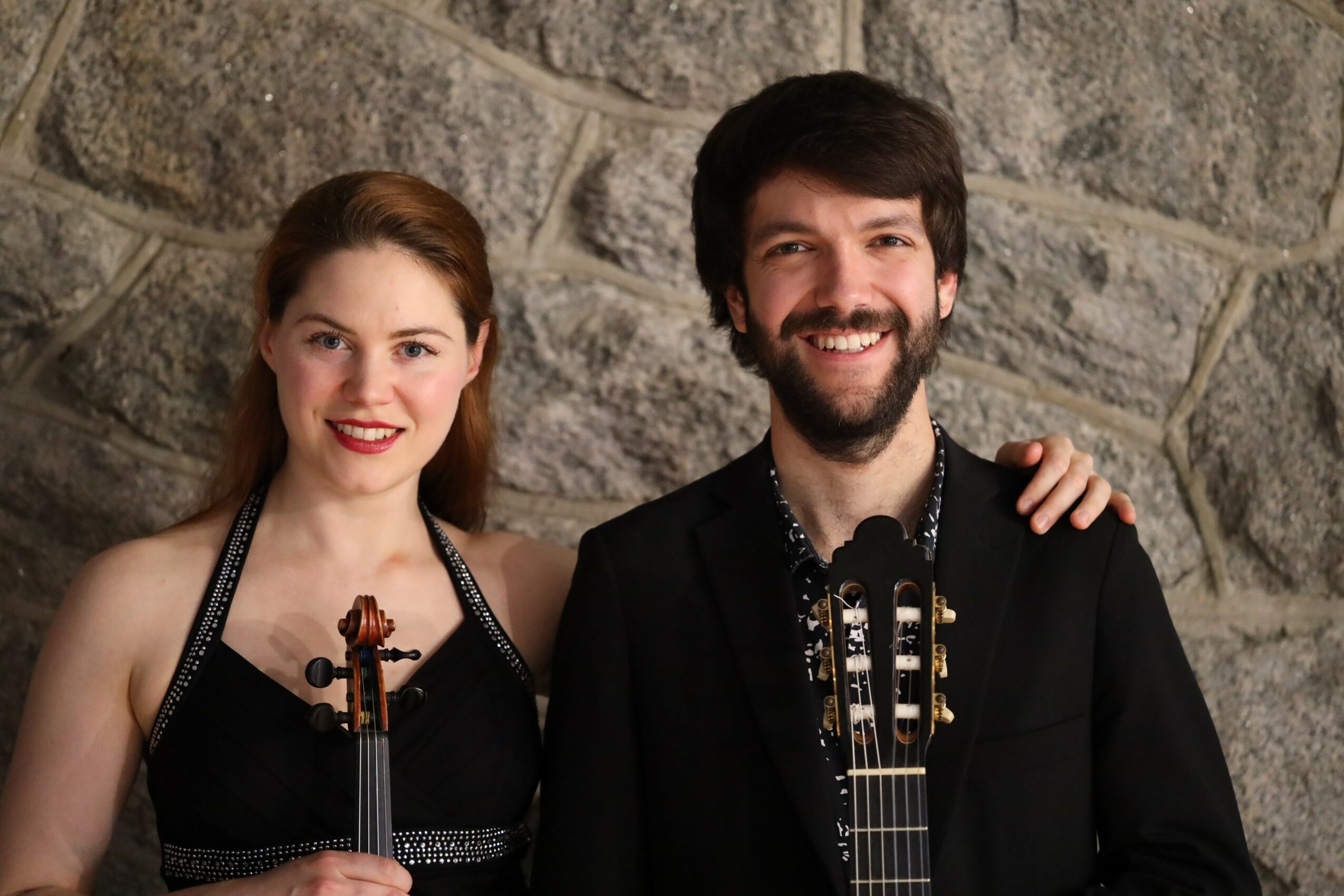
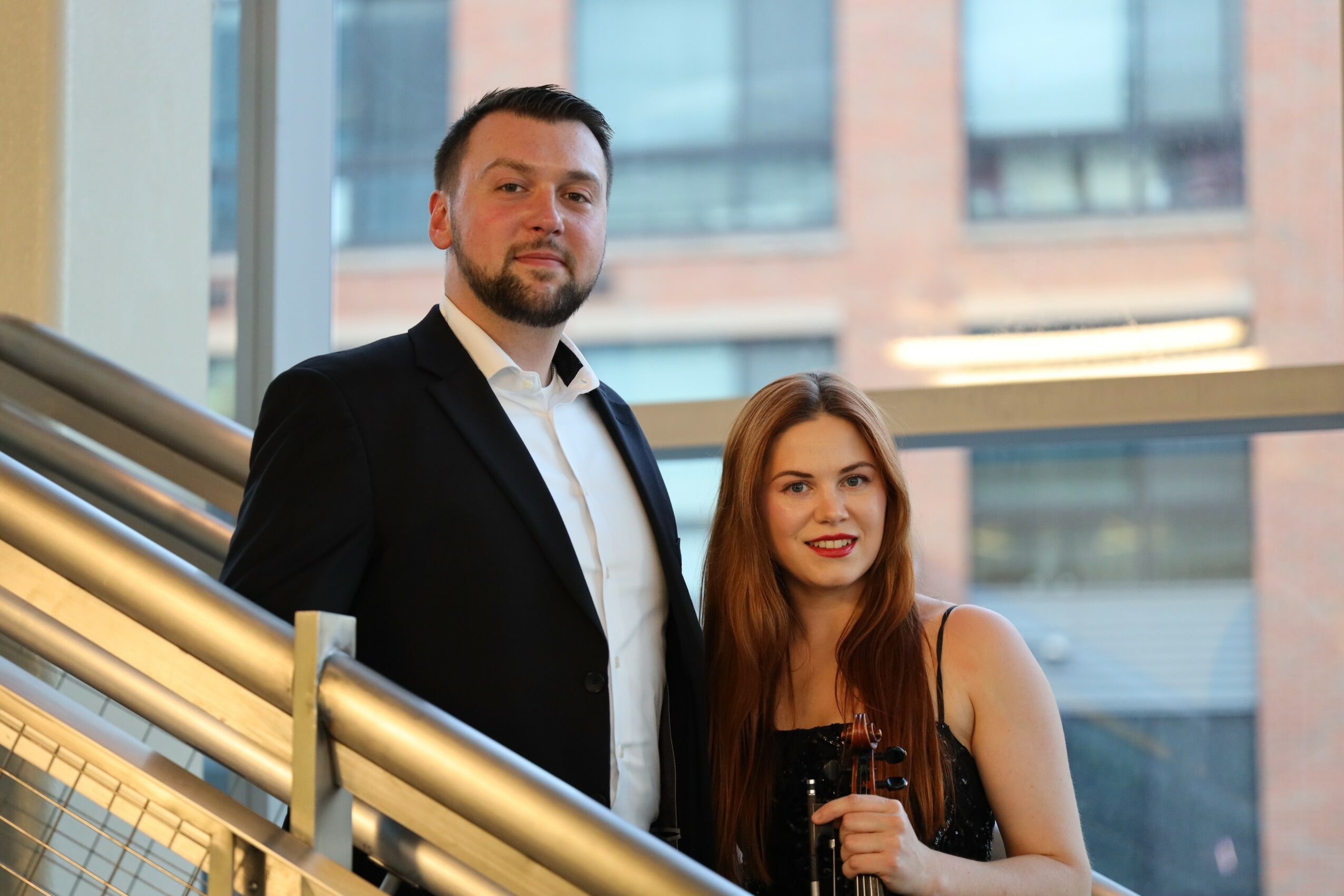
Image Credits
Martin Chalifour
Yan Izquierdo