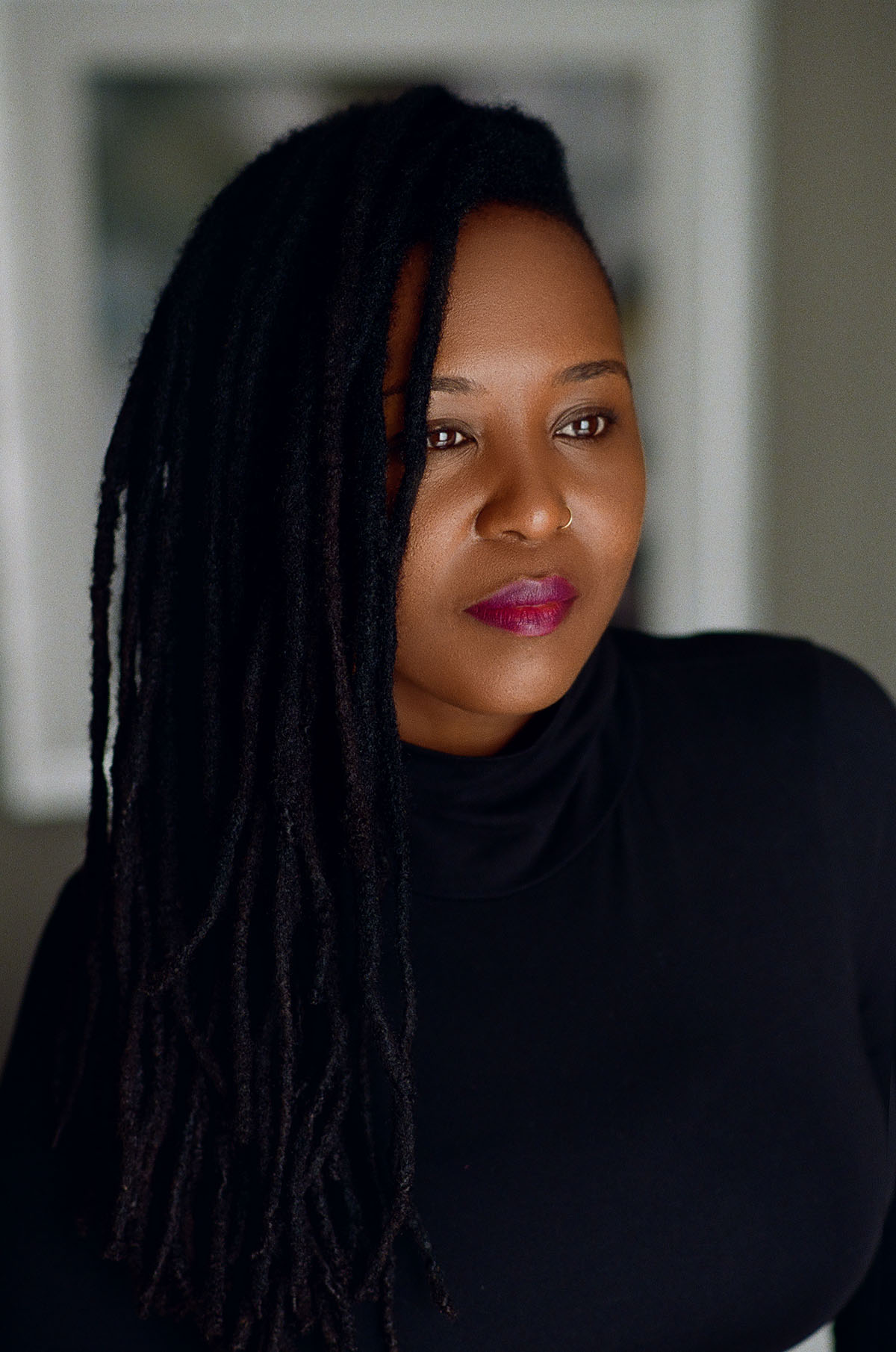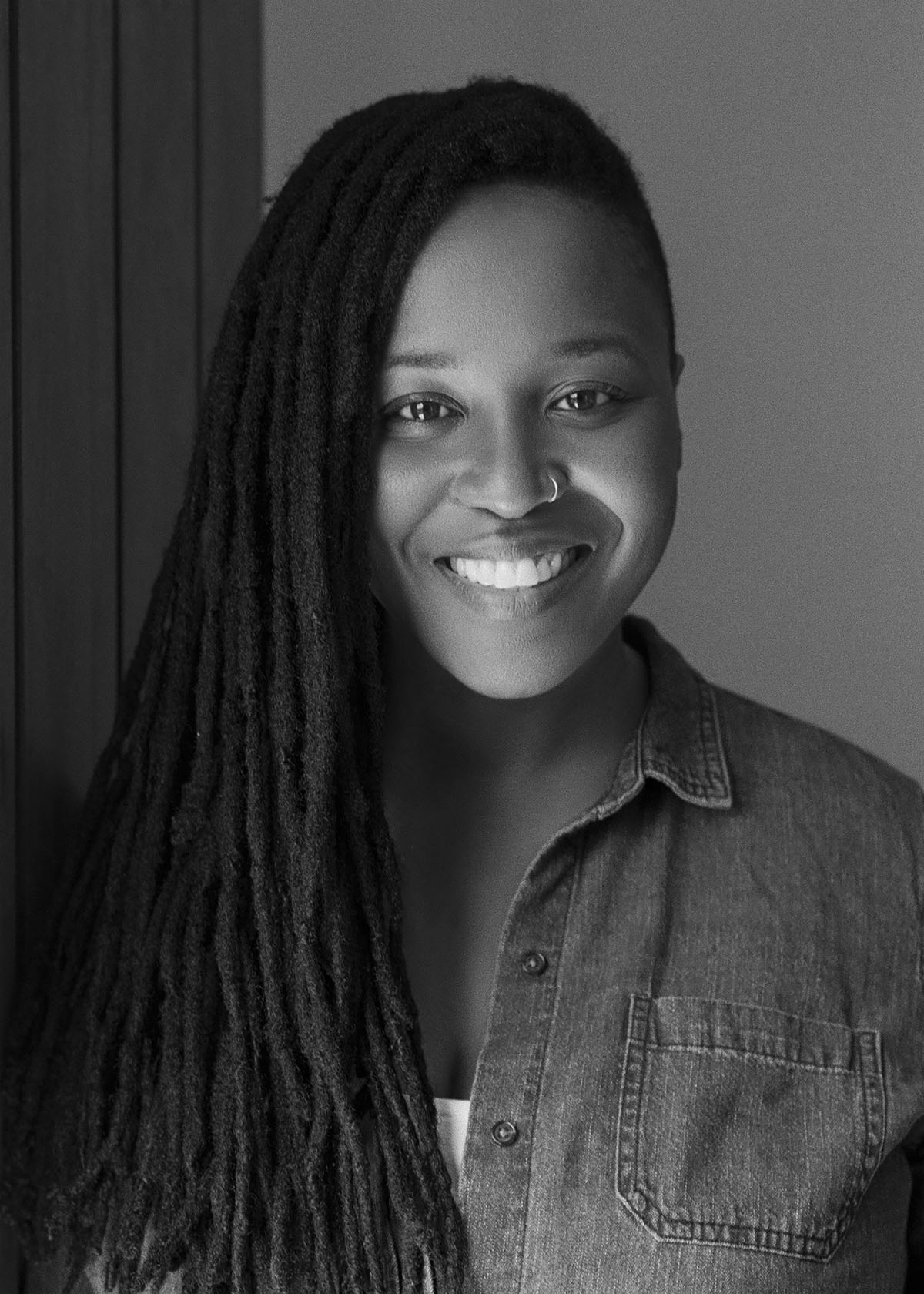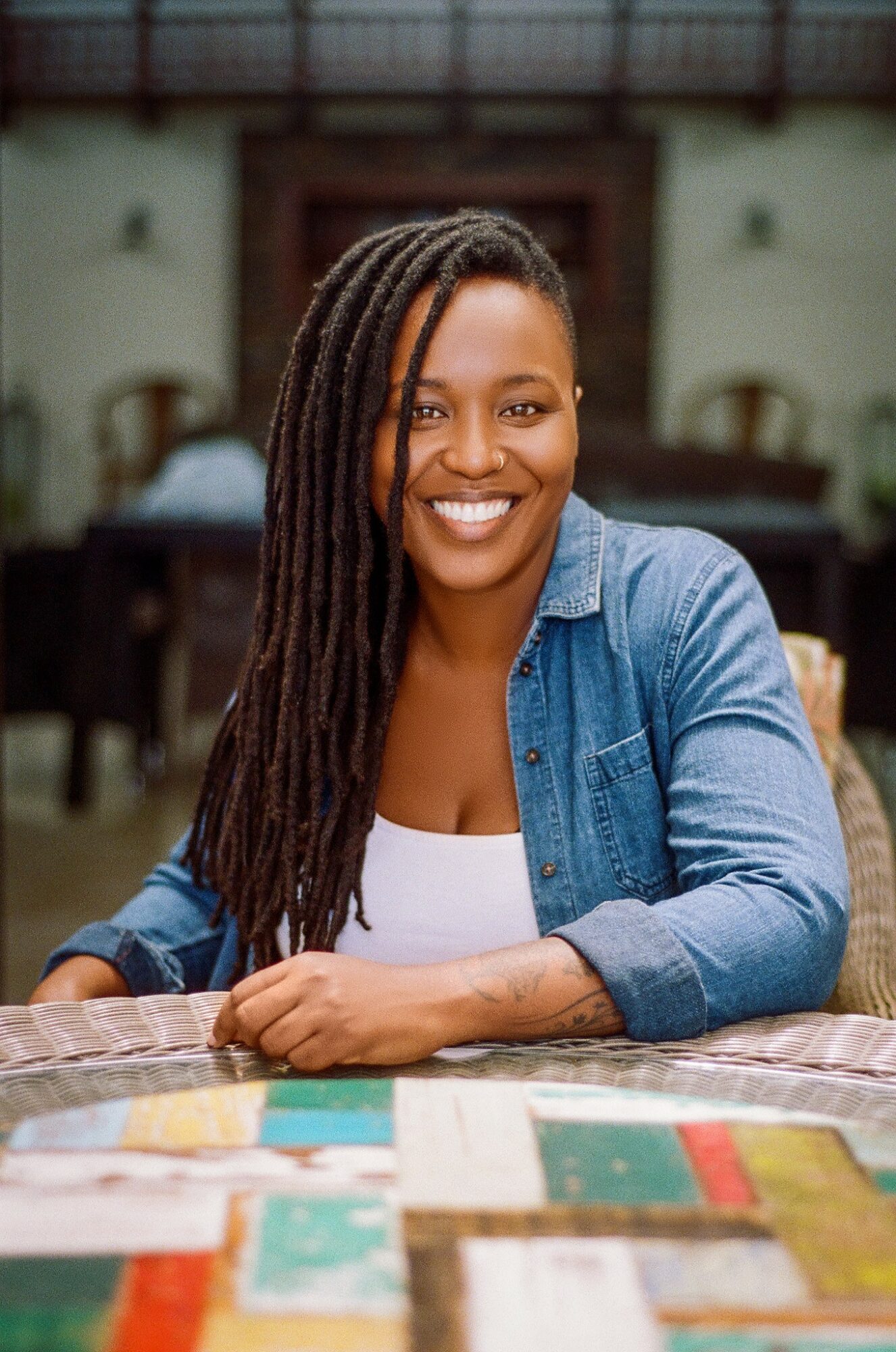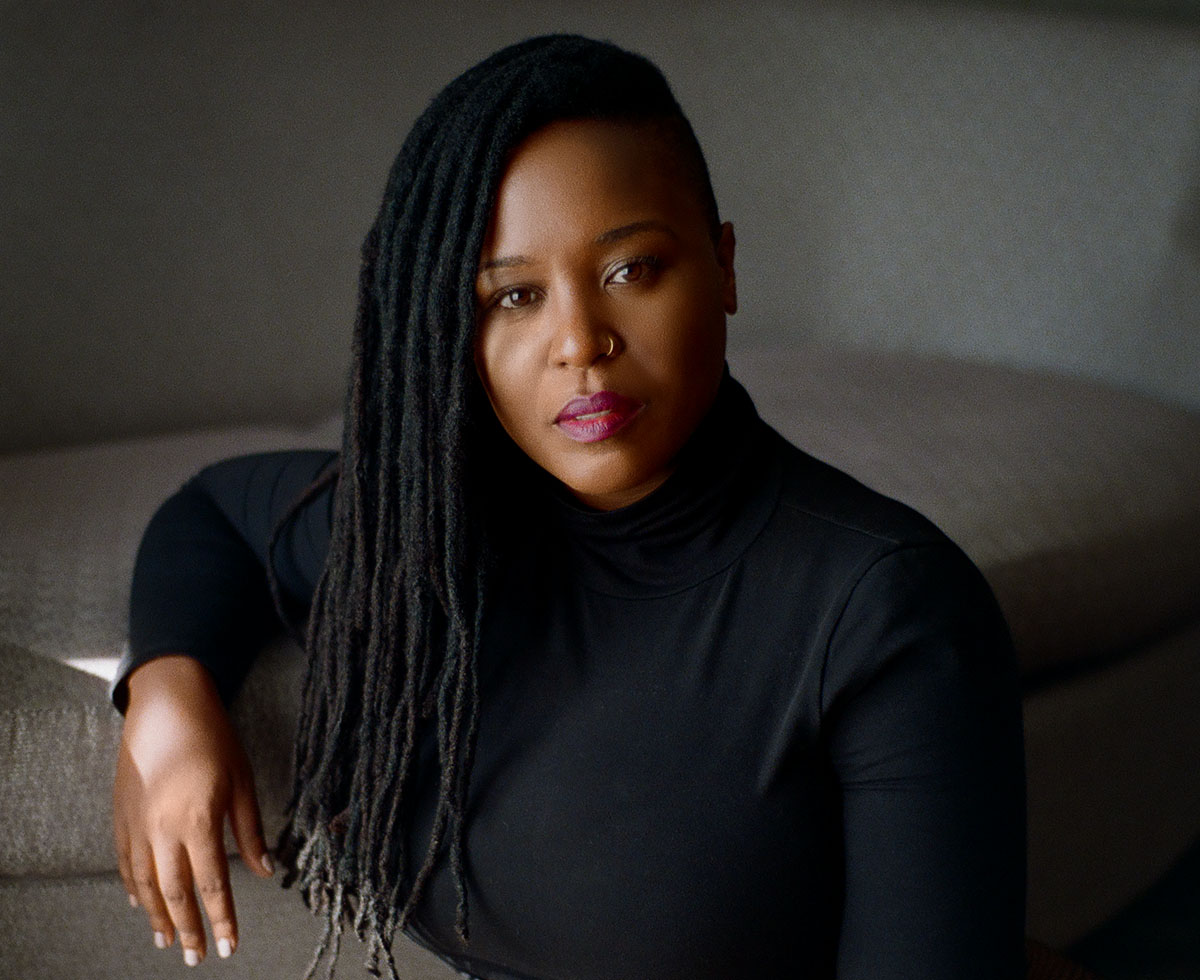
Today we’d like to introduce you to Patria Alexander.
Alright, so thank you so much for sharing your story and insight with our readers. To kick things off, can you tell us a bit about how you got started?
My story starts on an island.
I grew up in Dominica, in the Caribbean, and around the age of five I became completely transfixed by the nurses I saw in our community. Women in white. Graceful, purposeful, deeply respected. I didn’t have the words for it then, but I knew, the way children sometimes know things before they can explain them, that I wanted to become one of them.
I also grew up in a kitchen that knew things. Soursop leaf steeped for sleep. Bitter melon for the blood. Sorrel on the table every December. The women who kept those traditions didn’t call it medicine. They just knew. I carry both of those things into my practice today, the women in white, and the kitchen that knew.
I came to the United States, earned my nursing degree at the University of the Virgin Islands, then served eight years in the U.S. Army National Guard, including a combat deployment. After that, I worked in pediatrics and maternal health, led hospice teams, taught nursing students, and built a portrait photography studio along the way. Life was full, and I kept moving through it.
But the moment that genuinely changed the direction of my work was personal. When my brother was diagnosed with a mental health disorder, I watched stigma silence my entire family. I watched the confusion, the grief, the absence of anything that felt culturally grounded or safe. There were no guidebooks that fit us. No one who could hold the full picture, the family story, the Caribbean roots, the weight of what we don’t say out loud. That experience broke something open in me, and redirected everything.
I didn’t just want to treat symptoms anymore. I wanted to build something that didn’t exist when my family needed it.
That is how DepthWorks Psychiatry was born, it is a boutique telehealth psychiatric practice, serving high-achieving women who are carrying more than anyone realizes. Women who look composed on the outside and are quietly depleted on the inside. Often bicultural women, Caribbean-rooted women, women who were raised to be the strong one. I currently serve patients in Virginia via telehealth, with licensure pending in Maryland, Washington D.C., and Delaware, an expansion that feels long overdue.
What makes my practice different is something I developed called the Narrative Mapping Protocol, a clinical method I created that brings a patient’s story, their cultural background, their nervous system, and their symptom history all into the same room before I ever make a prescribing decision. Most psychiatric care treats the diagnosis in isolation. I treat the whole person, in context. Who they had to become to survive shapes what they’re carrying now, and that matters deeply to how I prescribe and how I care for them.
I also spent years as a portrait photographer before returning fully to psychiatry. Through that work, I watched something I’ve never forgotten: women who held entire worlds together would step in front of a camera and, briefly, soften. They allowed themselves to be seen outside of their roles. That taught me something I now bring into every session – that healing often begins the moment a woman sees herself as a whole person, not just the strong one.
I’m now also a Doctor of Nursing Practice candidate at Radford University, still learning, still building, still tending to what my grandmother’s kitchen already knew.
DepthWorks is the practice I would have wanted my family to find. That’s where it started. That’s where it continues.
Can you talk to us a bit about the challenges and lessons you’ve learned along the way. Looking back would you say it’s been easy or smooth in retrospect?
Smooth is not the word I would use.
There is something quietly ironic about building a practice for women who were raised to carry everything in silence, and realizing, somewhere along the way, that I am one of those women. I have been strong because I had to be. I have kept moving because stopping felt dangerous. I understand my clients not just clinically, but personally.
Immigrating to the United States means constantly proving yourself in rooms that were not built with you in mind. Healthcare is no exception. I navigated nursing school, the military, and graduate training while also being a Black Caribbean woman in spaces that did not always reflect me or value what I brought. That takes a particular kind of endurance that does not show up on a resume.
My brother’s diagnosis was one of the hardest seasons of my life. Watching stigma fracture a family, watching the people I love not know where to turn, watching capable and intelligent women absorb pain they had no language for, that grief sat with me for a long time. It still does, honestly. I just learned to build with it rather than around it.
And then there is the work of building something intentional in a system that rewards volume. Psychiatry can be a fast-moving, transactional field. I chose to go the other direction – low-volume, depth-oriented, boutique care, which means I had to build something almost entirely from the ground up, without the shortcuts. That is slower. It is also the only way I know how to do this with integrity.
None of it was smooth. But I don’t think it was supposed to be. Everything I’ve been through lives inside how I practice now.
Alright, so let’s switch gears a bit and talk business. What should we know?
DepthWorks Psychiatry is a boutique telehealth psychiatric practice currently serving women in Virginia, with licensure pending in Maryland, Washington D.C., and Delaware. Everything about how I built it was intentional — the name, the approach, the pace, the kind of care I offer. Nothing about it is accidental.
I specialize in supporting high-achieving women who are functioning well on the outside and quietly exhausted on the inside. Often bicultural women. Caribbean-rooted women. Women who were raised to be resilient, to achieve, to hold the family together, and who are now carrying the long-term cost of all of that without a space that truly sees them. I understand this woman deeply. I am her, in many ways.
What sets DepthWorks apart is both how I practice and what I’ve built to guide that practice.
I am not a high-volume medication management provider. I do not see back-to-back patients for fifteen minutes each. My appointments are spacious, collaborative, and designed to understand not only what someone is experiencing, but who they’ve had to become in order to carry it. That distinction matters enormously in psychiatric care.
The clinical framework at the center of my practice is something I developed called the Narrative Mapping Protocol, a prescriber-led methodology that brings a patient’s story, their cultural context, their nervous system, and their symptom history into the prescribing process. Most psychiatric care looks at the diagnosis in isolation. I look at the whole person in context: the biology, the family system, the cultural inheritance, the body’s signals, the story beneath the symptoms. I use all of that to make more precise, more humane clinical decisions. It is the most distinctive thing I do clinically, and I believe it represents a genuinely different way of practicing psychiatry.
Beyond that, my approach is integrative. I prescribe medication when it is needed, carefully and with clear rationale. But I also draw on herbal and plant-based support, somatic and nervous system awareness, hormonal literacy, particularly around PMDD, perimenopause, and postpartum mood, and what I call visual psychiatry. That last piece grew directly from my years as a portrait photographer. I have watched women step in front of a camera and briefly allow themselves to be seen outside of all the roles they carry. That experience shaped a clinical tool I now use to support identity reconstruction, helping women see themselves beyond survival, beyond role, as whole people.
What I am most proud of, brand-wise, is that DepthWorks feels like a place rather than a transaction. The brand carries what I would describe as quiet authority: warm, intelligent, culturally attuned, and deeply serious about the work. It does not look or sound like a typical psychiatric practice. It is not supposed to. It was built for women who have been over-processed by systems that did not really see them, and who deserve something entirely different.
I want readers to know that this kind of care exists. If you are a woman who has been told your anxiety is manageable, your exhaustion is normal, or your cultural context is beside the point, there is a space built specifically for the version of you that those conversations missed.
Risk taking is a topic that people have widely differing views on – we’d love to hear your thoughts.
I think about risk differently than most people probably expect.
I do not think of myself as a thrill-seeker. I have never taken a risk for the rush of it. But I have taken risks consistently, and often, because the alternative was staying somewhere that no longer fit who I was becoming. For me, risk has always been less about bravery and more about integrity.
The most literal risk I ever took was joining the U.S. Army National Guard and deploying. That is not a metaphor. That is a young woman from a Caribbean island choosing to put her body in harm’s way because she believed in something and needed to prove, mostly to herself, what she was made of. I survived it. I grew in it. And it gave me a kind of steadiness under pressure that I draw on in clinical work every single day.
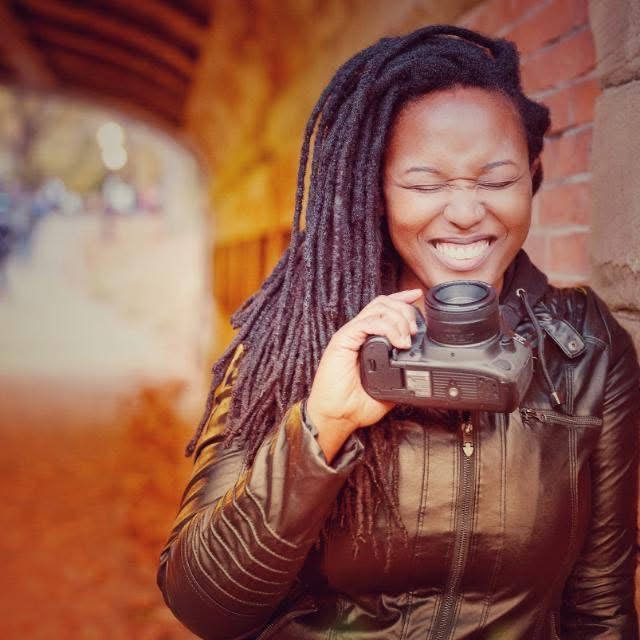
One of the quieter risks, but one I am deeply grateful for, was the three years I stepped away from nursing entirely to teach myself photography. I built a portrait studio. I learned a new language, the language of light and composition and presence. Most people around me did not understand it. Leaving a stable healthcare career to follow a creative pull does not fit neatly into anyone’s idea of a smart professional move. But I knew that if I did not honor that part of myself, it would cost me something I could not name and could not get back.
Those three years changed me. I watched women soften in front of my lens in ways they could not soften anywhere else. I learned to see what people carry beneath the surface. I developed a way of paying attention that I now consider one of my greatest clinical assets. That detour was not a detour at all. It was formation.
The most professional risk I ever took was building DepthWorks the way I built it. Private pay. Boutique. Low-volume. Intentionally counter to how most psychiatric practices are structured. Every business advisor will tell you that limiting your volume limits your revenue. Every system in healthcare is built to reward speed and scale. I chose depth over scale anyway, because I could not in good conscience do the work any other way. That was a real financial risk, and it still requires discipline to hold.
Choosing not to accept insurance is a decision a lot of people question. It means a smaller pool of potential clients, and it means some women who need this care cannot access it yet. I hold that tension honestly. It also means I can give each person the time and attention the work requires, without a billing system dictating what care looks like. I made the choice that honored the model, and I continue to build toward broader access over time.
The other risk I have taken is an intellectual one: creating something original. The Narrative Mapping Protocol is mine. I built it because nothing I found in existing frameworks fully captured how I understood what my patients were carrying. Putting that into the world, staking your clinical identity on something you created from the ground up, is a particular kind of vulnerable. It invites scrutiny. It invites dismissal. I did it anyway, because I believe in it, and because the women I serve deserve a methodology built with them in mind.
My view on risk, ultimately, is this: the riskiest thing I could have done was stay safe. Stay in a system that did not reflect my values. See patients in volumes that prevented real care. Build something generic because something original felt too exposed. Ignore the creative voice that had something essential to teach me.
That version of safety would have cost me everything that matters.
Pricing:
- Depth Evaluation (Initial Visit, 90 minutes): $495. A comprehensive, unhurried evaluation covering psychiatric history, cultural context, hormonal factors, narrative and identity mapping, and a personalized treatment plan.
- Integrative Follow-Up (Ongoing Care, 50 minutes): $395. Ongoing sessions integrating medication management, narrative-informed psychotherapy, and integrative guidance.
- Medication Management (Established Patients, 25 minutes): $295. Focused psychiatric oversight for women in a maintenance phase who want attentive, whole-person follow-up, not just a refill.
- Free 15-minute consultation available at depthworkspsychiatry.com
Contact Info:
- Website: https://depthworkspsychiatry.com/
- Instagram: @depthworkspsychiatry
- Facebook: DepthWorks Psychiatry
- LinkedIn: https://www.linkedin.com/in/patria-alexander-698698138/