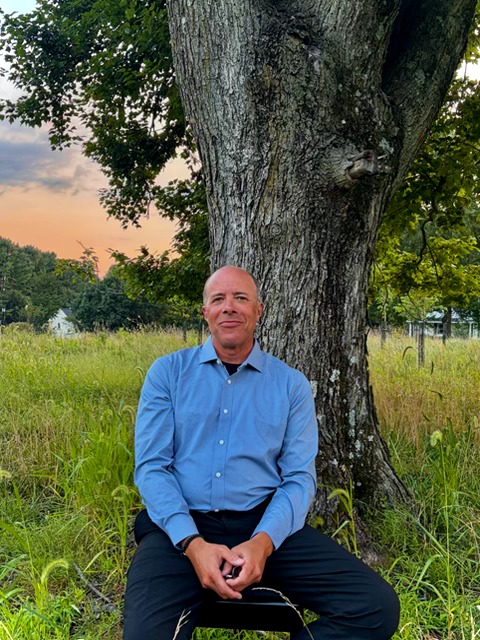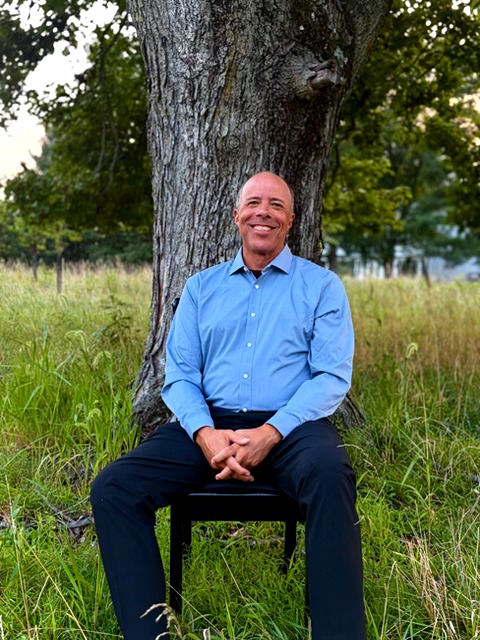
Today we’d like to introduce you to Kevin Turner.
Hi Kevin, we’d love for you to start by introducing yourself.
I didn’t grow up wanting to be an acupuncturist. I fell into the profession first as a patient.
During my 20’s, I began to suffer from periodic, nasty migraines. After a particularly painful episode I went to my doctor hoping to find some lasting solution to this recurring ailment. Unfortunately, this was 1994 when most migraine treatments dealt with the pain AFTER the migraine happened rather than helping to prevent them from happening in the first place (I was prescribed Tylenol with Codeine). A friend, who had been receiving acupuncture for shoulder pain, suggested I give it a try. I not only noticed an immediate and lasting difference with the migraine symptoms but also just felt better with life. I was hooked with the medicine as a patient. Becoming an Acupuncturist took some more time.
At the time, I was working a job that I enjoyed, but it was normal to work 80+ hours a week. It was my Acupuncturist who connected the dots of my stressful work-life and my diet of caffeine, fried foods and alcohol with the potential of an early grave. As I began to feel better from the treatments, I also began to ponder for the first time of what I wanted to do and be in my life. Studying acupuncture became a very natural progression for me as I was fascinated with both the complexity and simplicity of this medicine. But it was the quiet, sturdy humility of my acupuncturist that most moved me into this profession. I wanted to assist others to achieve similar changes within themselves that he was able to do for me.
In my 20+ years of practicing Chinese Medicine, I’ve come to specialize in treating pain on the body, mind and spirit levels. This passion started in acupuncture school, volunteering in a drug treatment clinic for people recovering from all sorts of addictions. Several years into my private practice, I had the privilege of working with military veterans suffering from post traumatic stress at the VA Medical Center. Both experiences were incredibly humbling for me as I began to better understand the different textures and nuances of emotional and spiritual pain. Most recently, I worked four years as the staff acupuncturist at a pain management clinic in Baltimore. During those years, I regularly witnessed physical pain in patients that would leave me breathless and drained. I also experienced a much more assembly line-process to patient care that didn’t jive with the kind of practitioner I want to be. I finally decided that while I’m not a natural business person, I’d rather go back to the ups and downs of owning my own acupuncture practice, thus enabling me to be a better practitioner for my patients.
Can you talk to us a bit about the challenges and lessons you’ve learned along the way. Looking back would you say it’s been easy or smooth in retrospect?
God, no, this has not been a smooth road.
Coming out of acupuncture school I was filled with all the naive vigor and confidence that comes from being a newly licensed practitioner. I thought that I was ready to “heal” whoever came to see me, to “fix” whatever came my way, to be some miracle-worker for people who hadn’t found relief to their symptoms in spite of everything they had done.
But it is hard to be with the intense pain that some patients carry and not be overwhelmed by the sadness, anger, frustrations, despair, and the hopelessness that can accompany that pain. I have had more than a few times when I had to cry in my office or in my car because a patient’s story has brought me to my knees.
Thus, I think that it’s a natural act of self-preservation for a practitioner to disengage from a patient or to not even “go there” with the patient when their pain is that large. But I learned very quickly that patients knew when I wasn’t truly with them. They could hear in my voice or see in my eyes (if I was even able to look them in their eyes) that my supposedly comforting words of “I understand” or “I hear you” were coming from my head and not my heart. And I realized that these patients either weren’t getting better or they simply wouldn’t return for future treatments.
If I truly wanted to help people in pain, I had to figure out a way be with them in the basements they’d dug for themselves as a means of survival without taking on the weight of that pain. It is a skill and a discipline to be able to look into a patient’s eyes, to truly listen to a their story, to walk into their fire and not be burned by it. And that only comes from the experience of doing it again and again. As well, I’ve needed to develop practices to help keep myself grounded and sane. Meditation, listening to music, walking the dogs, and watching stand-up comedy have all been my medicines to keep my head above the water.
Which is not to say that I no longer cry after being with a patient (just yesterday, I needed some time sitting in my car before being able to drive home). And I hope that I never become so “Zen” (for lack of a better word) that I no longer need to cry, or punch a pillow, or howl into my Scream Jar. But I’m happy that I can now hold the space for pretty much anyone who needs the outlet to cry, punch a pillow, or scream to someone.
We’ve been impressed with Pain Relief Acupuncture, but for folks who might not be as familiar, what can you share with them about what you do and what sets you apart from others?
Hopefully, the name of my business, “Pain Relief Acupuncture”, explains what I specialize in. What I would like for you to know is that “pain” can be physical, mental, and/or spiritual, and that each can carry a similar weight. A person’s addiction pain can be equal to another person’s PTSD pain which can be equal to another’s chronic low back pain. One of the beauties of acupuncture is its versatility in being able to treat patients on all three levels simultaneously. It can be a wonderful and powerful medicine.
That being said, I purposefully stay away from words like “fix” and “cure”. I believe that I’m good at what I do and I believe that I have a good track record of patients feeling better. But A) I don’t want set up unfair expectations from the patients, because B) the patients are equally responsible for their own healing. Treatments are more of a partnership between the patient and practitioner. I need to learn from the patient what is “wrong” with him/her in order to learn how I can help. Then through the process of the treatments, the patient takes the lead in discovering how they can help themselves. The process can take time and even work. But I believe that the change that is created, the healing that happens is more sturdy and sustainable in the long run.
How can people work with you, collaborate with you or support you?
I am just one of literally hundreds of licensed Acupuncturists practicing in the DMV. We all have our strengths and specialties be they pain, women’s health & fertility, side effects of chemotherapy and radiation, gastrointestinal disorders, respiratory and immune issues, mental health, and the list goes on and on. If I am not the right fit for you, then I encourage you to contact one of them.
Two great resources are The Maryland Association of Acupuncture and East Asian Medicine, https://www.marylandacupuncturesociety.org,
and The Maryland Board of Acupuncture, https://health.maryland.gov/bacc/Pages/Index.aspx.
Pricing:
- Check your health insurance to see if you have acupuncture benefits.
- Out-of Pocket $140/60-min treatment