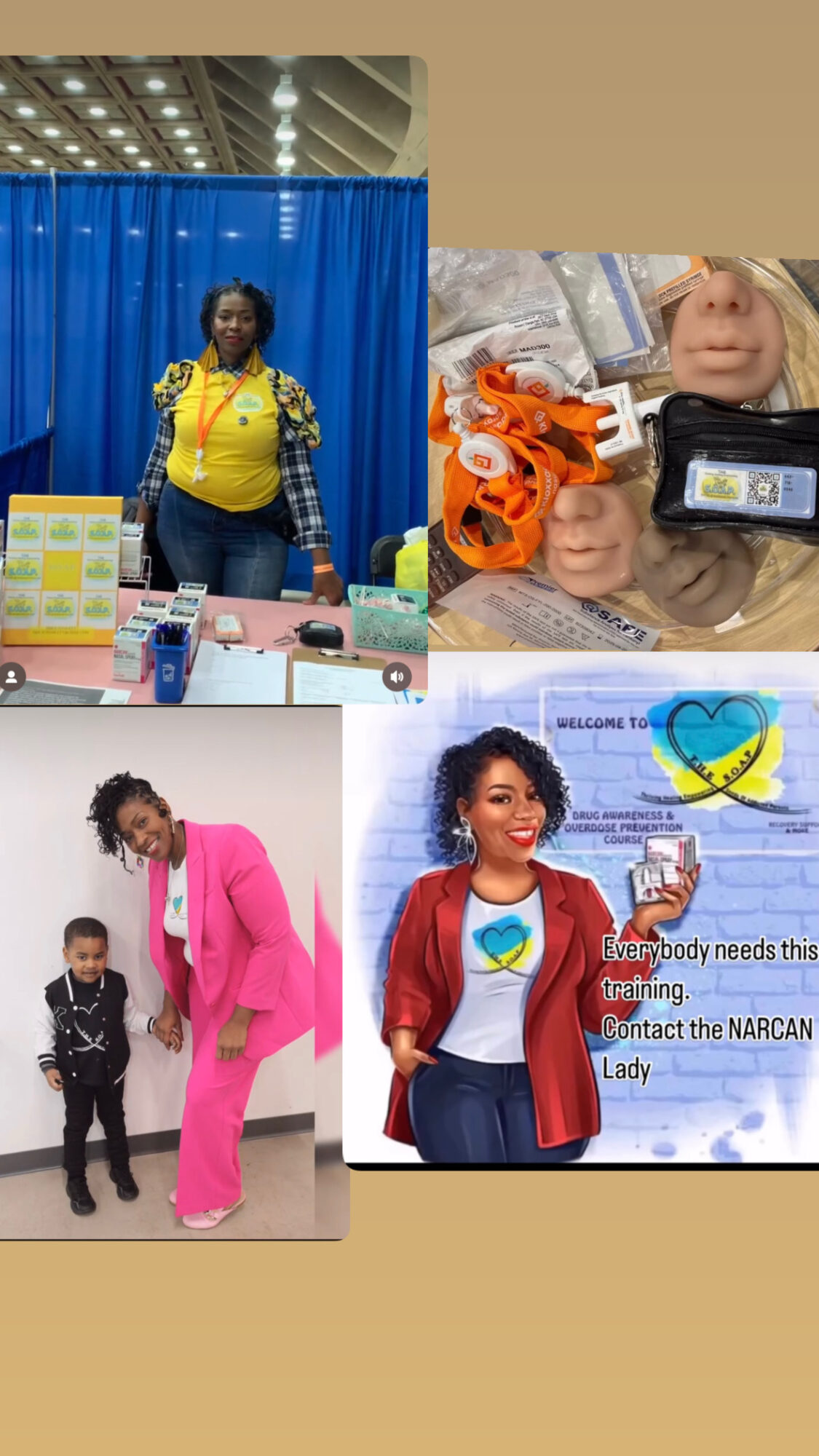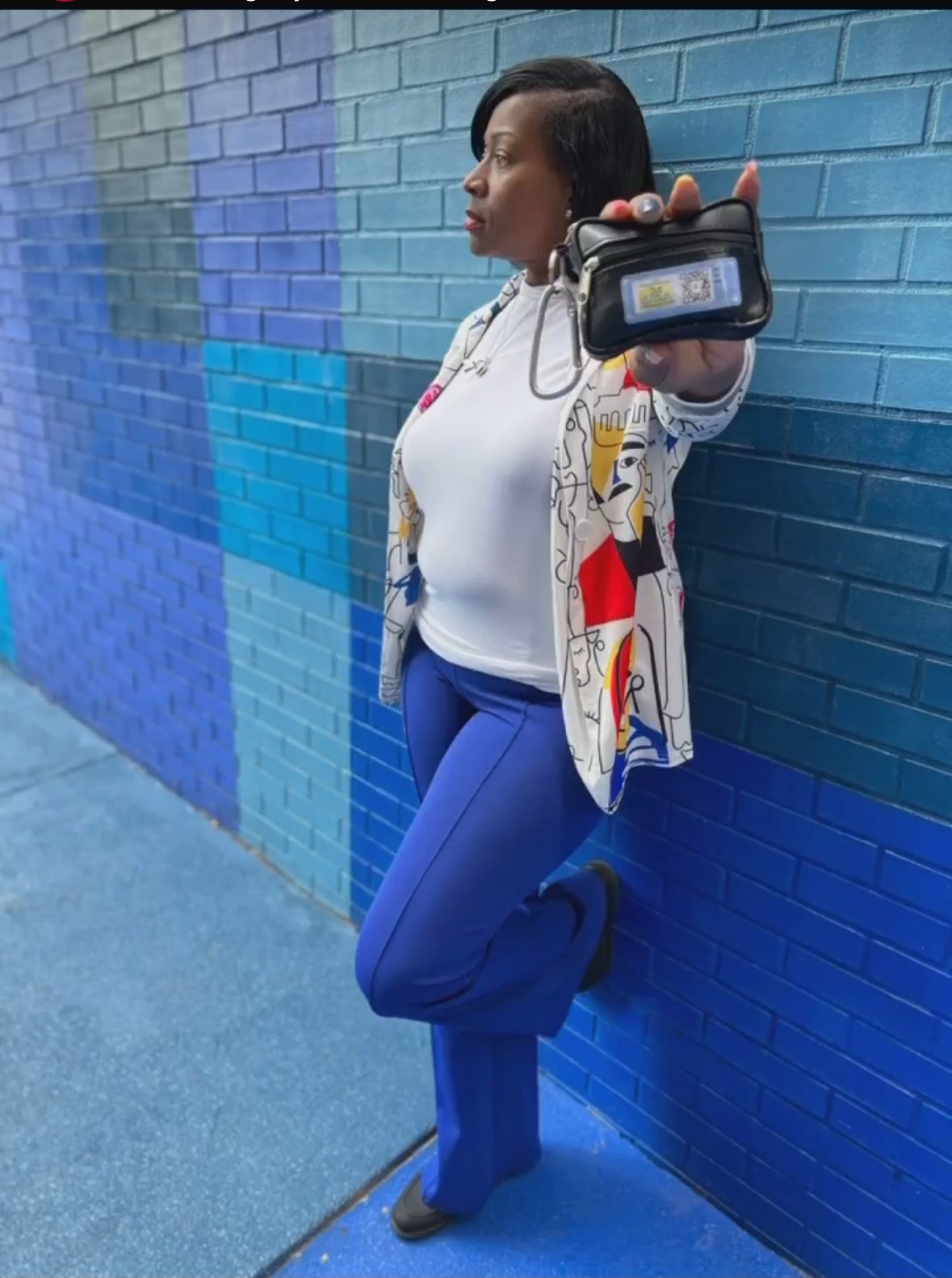
Today we’d like to introduce you to Erica Hamlett.
Hi Erica, so excited to have you on the platform. So before we get into questions about your work-life, maybe you can bring our readers up to speed on your story and how you got to where you are today?
How I Got Started – The Story Behind T.H.E. S.O.A.P. Thriving Healing Empowering Seeds of Addicted Parents.
Before my organization ever had a name, it was simply my lived experience as the child of parents who struggled with substance use. At 15 years old, my mother finally entered treatment after years of trying. When she did, I noticed something: there were no meaningful opportunities, activities, or supports to help bring families back together during or after treatment.
Children were often left out of the recovery process — just as we were left out during our parents’ active addiction. I later learned that unless there were court-ordered interventions, children and families are offered little to no support.
I remember visiting my mother during her recovery, along with my grandmother. We would plan visits, and my grandmother would cook for everyone in the recovery facility. But most families didn’t visit, and when they did, their children didn’t visit. That struck me deeply. I couldn’t understand how this made sense.
I was older, but I saw all ages at NA (Narcotics Anonymous) meetings — and still, there was nothing specifically for us as teens and definitely not younger children. No spaces, no conversations, no healing. It was as if we didn’t matter. As if we didn’t need recovery and healing, too.
Even the thought of being neglected yet again broke my heart. But it sparked the flame!
Both of my parents were substance users until, but I was about 15, when my mother finally chose treatment — something I initially met with skepticism. My father was still actively using, and at the time, I was six months pregnant. I had already seen too much, with no voice to advocate for the help I deserved, I honestly just wasn’t convinced. My trauma turned into a “whatever” attitude, which I know better understand was fear.
By then, I had just become a mother myself, and something in me shifted. I found my voice — at least somewhat. My mom started attending NA meetings. I started following her not just to meetings, but reading the literature and listening to the stories. It gave us time to reconnect, and I wanted to understand why.
Why did she use?
Why did she start in the first place?
Why couldn’t she stop, at least for me?
And now, why did it seem like she was chasing meetings the way she once chased drugs?
I was desperate for answers, for knowledge. In chasing her recovery alongside her, In 1993, I began to dream of something different: a safe healing space where children like me could tell our stories and begin to heal our wounds.
That’s where the seed for T.H.E. S.O.A.P. was planted:
Thriving because for too long, I was just surviving — my parents’ addiction, the trauma, the silence, the shame.
Healing because even when our parents enter recovery, we still carry invisible wounds.
Empowering because children of addicted parents deserve to be seen, heard, and supported.
Seeds because we are the next generation — with the right care, we can grow and break cycles.
I created what didn’t exist. In 2018, I officially launched the organization because I didn’t want another child to feel invisible the way I did. My mission was to focus on the entire family, especially the children who stood on the frontlines of their parents’ addiction with no voice, no outlet, and no resources.
Whether or not parents choose recovery, children still need healing. They still matter.
What began as a thought when I was 15-34 years ago, has now grown into a mission to provide support, resources, peer leadership, and family recovery planning for those too often left out of the conversation.
We are intentional about what children of addicted parents need. For example, we give stuffed duffle bags because many children have to leave their homes and enter temporary care with nothing, not even a bag to carry their belongings. We provide duffle bags filled with essentials: snacks, underwear, clothing, a pillow, pajamas, art supplies, and hair products. Whatever it takes to ease that painful transition.
This is how T.H.E. S.O.A.P. was birthed, out of lived experience, resilience, and a deep desire to help children of addicted parents not just survive, but truly thrive.
My Journey
So, my story is this: over 30 years ago, I was a teenage mother on the path to my own recovery and healing, because I was the child of addicted parents. I was unsure of what I would become.
But today, I am the founder of T.H.E. S.O.A.P. — Thriving Healing Empowering Seeds of Addicted Parents, a CHW-Certified Community Health Worker, Baltimore’s first female violence hospital responder, and was the 1st Mobile Career Navigator for the Mayor’s Office of Employment Development.
I’ve been honored to be featured in a national monument (More Than Conquerors: A Monument for CHWs) in Baltimore, and in an art piece at the Baltimore Museum of Art. I am also Co-founder of Mindful Pivots, a mental and behavioral health clinic.
Most importantly, I am a mother, daughter, grandmother, and advocate — with a mother who is now 33 years clean.
Has the path been easy? What challenges have you faced?
The biggest challenge has always been stigma and shame.
People often don’t understand that children deserve education about addiction and drugs and that comes with honest difficult conversations. Kids see substance use in their homes and communities every day, but they live with the “Don’t ask don’t tell” So, without explanation or conversation we’ve navigated through our lives somewhat lost but certainly misguided.. It has been both difficult and beautiful to educate and empower people by simply creating safe spaces to talk and speak about our experiences.
Another challenge is that I’m building something that, in many ways, doesn’t exist. I’ve had to fight to create programs and spaces for children of addicted parents, to explain why they matter, why their healing matters, and why we can’t keep ignoring them. Even though over 8 million children live in homes with a caregiver who uses substances, people struggle to see the urgency.
I call these kids the true, first responders. When a parent overdoses, when the high is too much, when things go too far, the children are there. They see it all. They feel it all. And too often, they’re the ones taking care of siblings or even their parents.
That’s why I believe children should be Narcan-trained. People push back on the idea, doubling down on the need vs the data and the math aint mathing. Now if a child can operate a cell phone or fix a bowl of cereal, and they live in a home with substance use, they should know how to save a life. We don’t argue about fire safety or calling 911 during a heart attack. But addiction is so stigmatized that people would rather let a child watch their parent die than equip them with knowledge and training to possibly save them. Make it make since
The stigma, the silence, and the shame create unsafe barriers at every level. There’s limited funding for family recovery services and not enough support groups, Al-Anon, Alateen, or city programs for children. In 2017, there were almost no programs in Baltimore for families, and only a few recovery facilities offered family services. That’s why I’m building what we need from the ground up.
Addiction is a disease. When someone you love has cancer, you show up, you learn, you educate yourself. It should be the same for addiction, especially for the children.
A Turning Point
On Thursday, July 10th, 2025, my organization responded to a mass poisoning/overdose in the well known open air drug market in Baltimore at Penn North area.
It was like a scene out of a movie, 27 reported overdoses, and by grace of God, no fatalities. That experience showed me we are not as prepared as we think we are, but in the moment, there was no time to waste. I was grateful to help provide Narcan and test strips from our organzation to save lives. But I also couldn’t stop asking: What does the aftershock look like for the families and the children who witnessed it?
The Beautiful Part
The beauty of this work is always the children and youth I get to walk with. The ones who light up when they’re heard, sometimes for the first time. The ones who show up in circles, in trainings, in open conversations with honesty, curiosity, and a deep desire to understand.
They want the information. They want the conversation to continue. They want to heal.
That’s the beauty. That’s the blessing.
So yes, this journey has been both a blessing and a pain. But I’m not stopping. I’m coming in “shaking the table” until we can talk about substance use and addiction in our homes and communities as openly as we talk about any other illness.
Not until healing for entire families becomes part of the recovery conversation.
Not until funding for family recovery and support is just as important as treatment beds.
It’s been hard. But it’s worth every moment. And I’m just getting started.
We’ve been impressed with THE SOAP & Mindful Pivots, but for those who aren’t familiar, what sets you apart?
1. Who We Are / What We Do
T.H.E. S.O.A.P. (Thriving, Healing, Empowering Seeds of Addicted Parents) specializes in supporting children, youth, and families impacted by substance use. What started as a program for children of addicted parents has grown into a full-circle wellness and recovery initiative, now partnered with Mindful Pivots.
2. What We Offer
We provide trauma-informed support groups, peer leadership programs, family recovery services, therapy, life skills, wellness coaching, workforce development, such as phlebotomy training. We provide situational and drug awareness, overdose response training CPR & 1st aide. As a state registered ORP we are able to give Narcan for free. We help rebuild families from the inside out, ending the cycle of generational addiction.
3. What Sets Us Apart
We don’t just serve the individual in recovery we serve the family system, especially the children. As someone with lived experience, I lead with empathy, healing, and practical tools. We meet families where they are and walk the journey with them even if their loved one never chooses recovery.
4. What We’re Known For
We’re known for being real. For creating safe spaces where families can talk about the things no one talks about overdose, shame, trauma, grief, and healing. I’m proud that we’ve filled gaps and created what didn’t exist, especially for children.
5. What We Want the World to Know
Addiction impacts entire families. If you’re struggling with the ripple effects of someone else’s substance use, you deserve support, too. We are going to have the conversation difficult or not. Our doors are open. Healing is possible. And we walk that path together.
Is there anyone you’d like to thank or give credit to?
There’s no way I could have built this alone.
My mother, who has over 30 years in recovery, continues to encourage and support me. She reminds me why our story matters.
My children, who’ve witnessed this mission grow and supported me every step of the way.
My grandchildren, who give me hope. My grandson once attended our Thrivers event and saw me teach overdose training. He said, “Gha, you have a whole school!” That vision pushes me forward.
My best friend Miquel Wilson (who we lost July 16,2025) and his family for being my safe space and leaving such an impact that I vowed to create THE SOAP In the early days, this work was completely self-funded. We made “a dollar out of fifteen cents.” Today, I’m grateful for support from:
Obasi Foundation
Baltimore Children & Youth Fund (BCYF) – Grassroots Awardee
Baltimore City Health Department’s Mini-Grant
The Enough Grant – Governor Wes Moore’s first child poverty initiative
The Y of Central Maryland – for community-based partnerships
Beyond funding, Turnaround Tuesday for their willingness to support and blessed with true community support, to families who invite us to speak, those that request Narcan training, or call me “the Narcan Lady.” I am truly honored. From 2017, we all now better understand the need, but it is still more work to be done
But perhaps our greatest supporters are the children — both the youth and adult children of addicted parents who finally feel like they have a voice. They show up, speak up, and advocate not just for themselves, but for others walking the same path.
There is joy in advocacy. Joy in freedom. Resilience in healing.
We are all thriving — because surviving just isn’t enough.
And last but not least, thank you to people like you — who share our stories, echo our call for more support, and keep this movement alive.
Contact Info
Say it with me: Why couldn’t she stop for me? T.H.E. S.O.A.P. — Thriving Healing Empowering Seeds of Addicted Parents
Erica Hamlett thesoapllc@gmail.com 443-718-0540