Today we’d like to introduce you to Chi Akano.
Hi Chi, we’re thrilled to have a chance to learn your story today. So, before we get into specifics, maybe you can briefly walk us through how you got to where you are today?
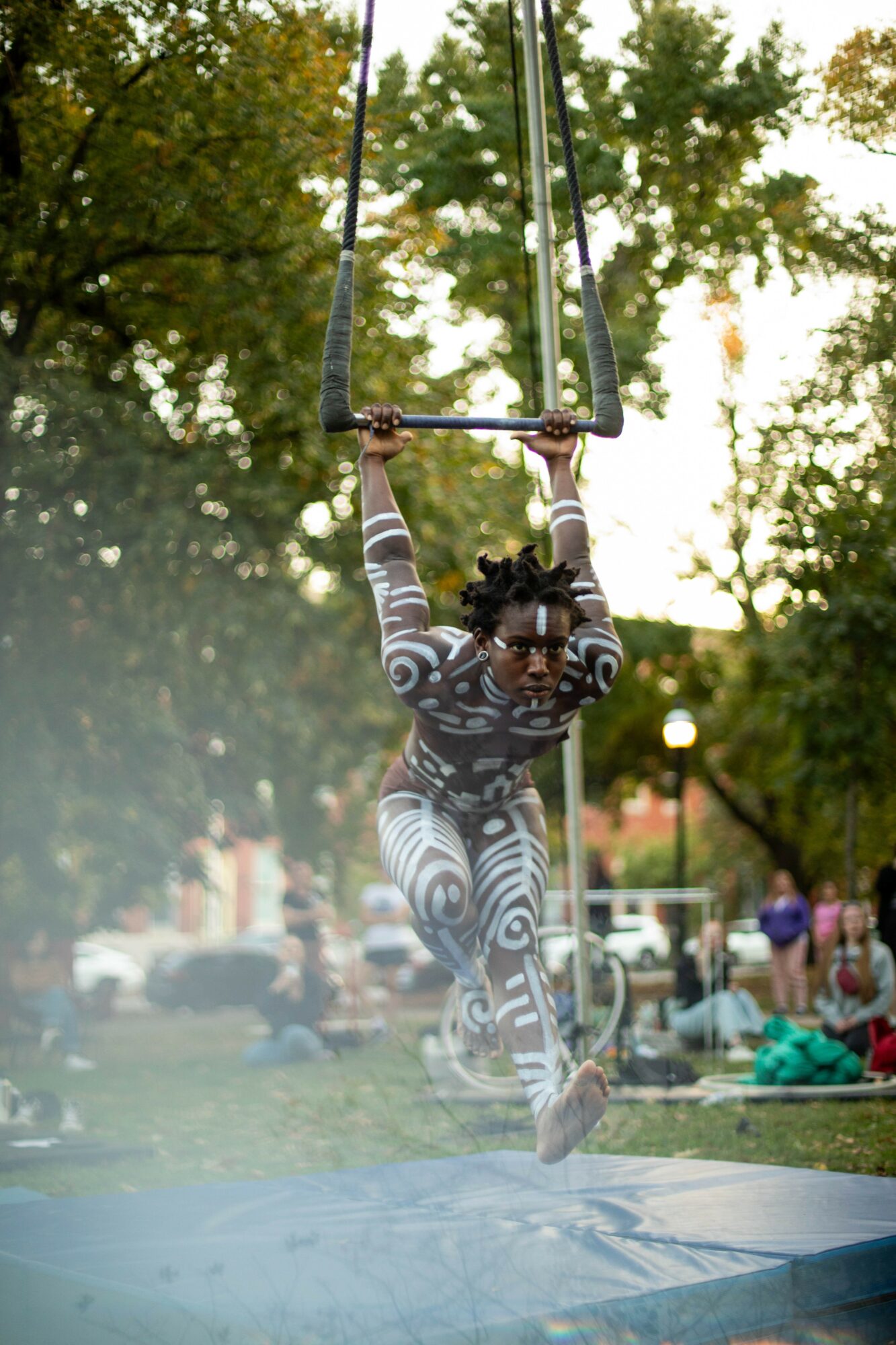
I am a 23-year-old Nigerian-American acrobat born and raised in Baltimore. My movement journey began as an outlet to cope with the mental health challenges I was facing at the time. It started with yoga,gentle stretching on a mat to relieve stress. Yoga as a practice, as a relationship between my mind and my body, grew into pole fitness, and pole then blossomed into circus, which is where I find myself today.
For me, circus became a way of processing and understanding the world around me. It gave me the opportunity to express myself in a way other mediums couldn’t. I found it to be a beautiful combination of theater, dance, and acrobatics. It brought back the sense of play that we often lose as we grow older and become calloused by the world. It provided me relief in a very dark period of my life, and it taught me patience, discipline, and hope. It’s now my desire to pass that along to others, to spread that joy.
In a time when we are all weighed down by uncertainty and grief, play is no longer just a luxury; it becomes an act of survival. In those moments of joy, connection, and awe, we remember our humanity and the humanity of our neighbors. The sense of accomplishment you get from doing something you once thought was impossible and the smiles I’ve seen on people’s faces in class—those are constant reminders that this work matters. The world could use more smiles.
As I’ve continued in this field, I’ve also noticed that I didn’t often see people who looked like me in circus spaces. That pushed me to dig deeper into the roots of acrobatic and dance traditions in African culture, especially through capoeira. The more I learned, the more my respect and dedication to the craft grew. I no longer see myself as a minority but as the continuation of a legacy that has always been here. I use my art to uplift that history, honor my community in Baltimore, and empower others to take up space.
Alright, so let’s dig a little deeper into the story – has it been an easy path overall and if not, what were the challenges you’ve had to overcome?
Many of my obstacles and challenges have been financial. Circus is a very expensive art form, so simply getting access has been one of my biggest hurdles. Between the high cost of training and the time it takes to develop the skills, circus spaces often feel exclusive; as a result, there is a serious lack of diversity.
While I have found community in circus, my experience has also been isolating. It’s not uncommon to be the only Black person in the room. I used to question whether circus was something that was really “for me.” I didn’t grow up doing this. I didn’t know anyone who grew up doing this. Arts were never really valued or emphasized in my family, so even believing I could be a circus artist took time.
That’s one of the reasons I started Free to Fly. I can only imagine what having a space to express myself freely would have done for me when I was younger. It’s important that we cultivate play, connection, awe, and wonder in our communities, especially now. I want more people to have access to that experience without the high barrier to entry that exists in most arts and movement spaces.
Circus has the power to build resilience, connection, and creativity—things we desperately need more of in our communities. That’s why social circus programs are so essential here; they can give people a positive outlet for their emotions and channel their energy in healthy ways.
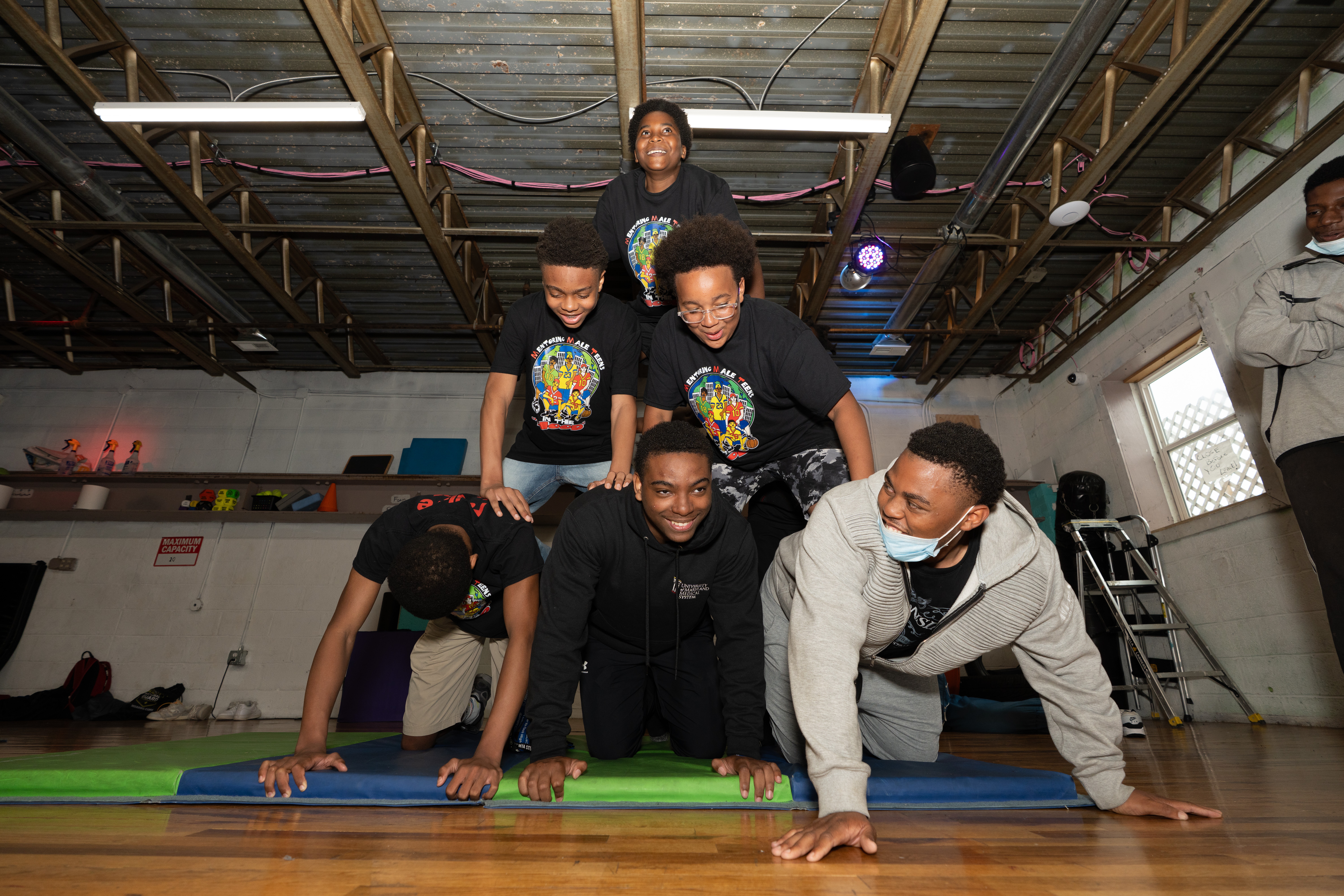
Learning how to create and manage a youth social circus program has been a journey, to say the least. I’ve had to learn everything from grant writing to program development to event management. This path has taught me to wear many hats in addition to being a circus artist—but it has also shown me just how necessary this work is.
We’ve been impressed with Free to Fly Circus , but for folks who might not be as familiar, what can you share with them about what you do and what sets you apart from others?
Free to Fly Circus is a Baltimore-based social circus organization dedicated to making circus arts accessible to underrepresented communities. Through workshops, performances, and community programs, we use movement as a tool for healing, self-expression, and empowerment. Our mission is to create spaces where people can play, take up space, and realize their potential, regardless of background or experience.
What has been the most important lesson you’ve learned along your journey?
The biggest lesson I’ve learned is how to overcome fear. Fear is something we all experience; it can stop us from doing what we really want and make us feel isolated or ashamed. Circus forces you to face that fear. It asks you to confront what’s holding you back and move through it over and over again.
At first, you learn this physically, training your body, committing to the work. But eventually, it becomes deeper than that. Circus changes your relationship with yourself and with the world. It makes you braver. It teaches you to take action even when you’re uncertain.
Once you begin to move through fear, you learn patience. Progress is not linear, and things don’t happen overnight. But through discipline, consistency, and hope, you start to see growth. Circus has taught me that if you plant a seed and water it every day, eventually something will grow.
That lesson has shaped me into the person I am today, and it’s the lesson I want to share with others, especially my community. Because when people learn to trust their bodies, take risks, and believe in their own potential, everything changes.
Pricing:
- Follow our Instagram for more information about upcoming workshops and classes
Contact Info:
- Website: https://www.thebodypoem.com/
- Instagram: https://www.instagram.com/thee.body.poet/
- Other: https://www.instagram.com/free.cirq/