Today we’d like to introduce you to Robert Atkinson.
Robert, we appreciate you taking the time to share your story with us today. Where does your story begin?
Note: this is from a zine I published a few years ago, so it’s a bit long.
How I Became @Baltimore.Saltbox
I grew up where snow came in two categories: real and lake effect. Don’t ask me to tell you the difference because I can’t. Maybe the flakes produced by the moisture coming off Lake Michigan are different than in your garden variety Alberta Clipper, but snow is snow, and we had a lot of it in southwest lower Michigan. Snow management is a way of life, a survival skill, and a point of pride in a place where six inches may drop on your house over the course of an hour at any given moment for five months of the year.
I moved to Baltimore from the Midwest a dozen years ago with strong ideas about how to deal with snow, regardless of its origin. Don’t get me started on dibs for shoveled out street parking spots (big nope) or folks who leave piles of snow on their cars that fly off on the poor unfortunates stuck driving behind them (RUDE!). They’re closing schools because of how much snow? Really?
Which brings us to the Baltimore Saltbox.
For years, I don’t remember paying them any particular attention even though there was one directly across from our rowhouse in Hampden. Then, one day, I noticed it was gone, leaving only a square patch of dead grass. The saltbox never came back. Did we not use it enough? We have a parking pad in the back and buy pet-safe ice melt to protect our dog’s paws, so maybe someone needed our box elsewhere. Who figured that out?
Questions percolated. Why did some boxes stay all year while other ones were taken away? Why all of the different font styles? Shouldn’t they come with a little shovel instead of Royal Farms plastic cups? Who designed these things, and when were they first used in Baltimore? Are they for the road or the sidewalk, or both?
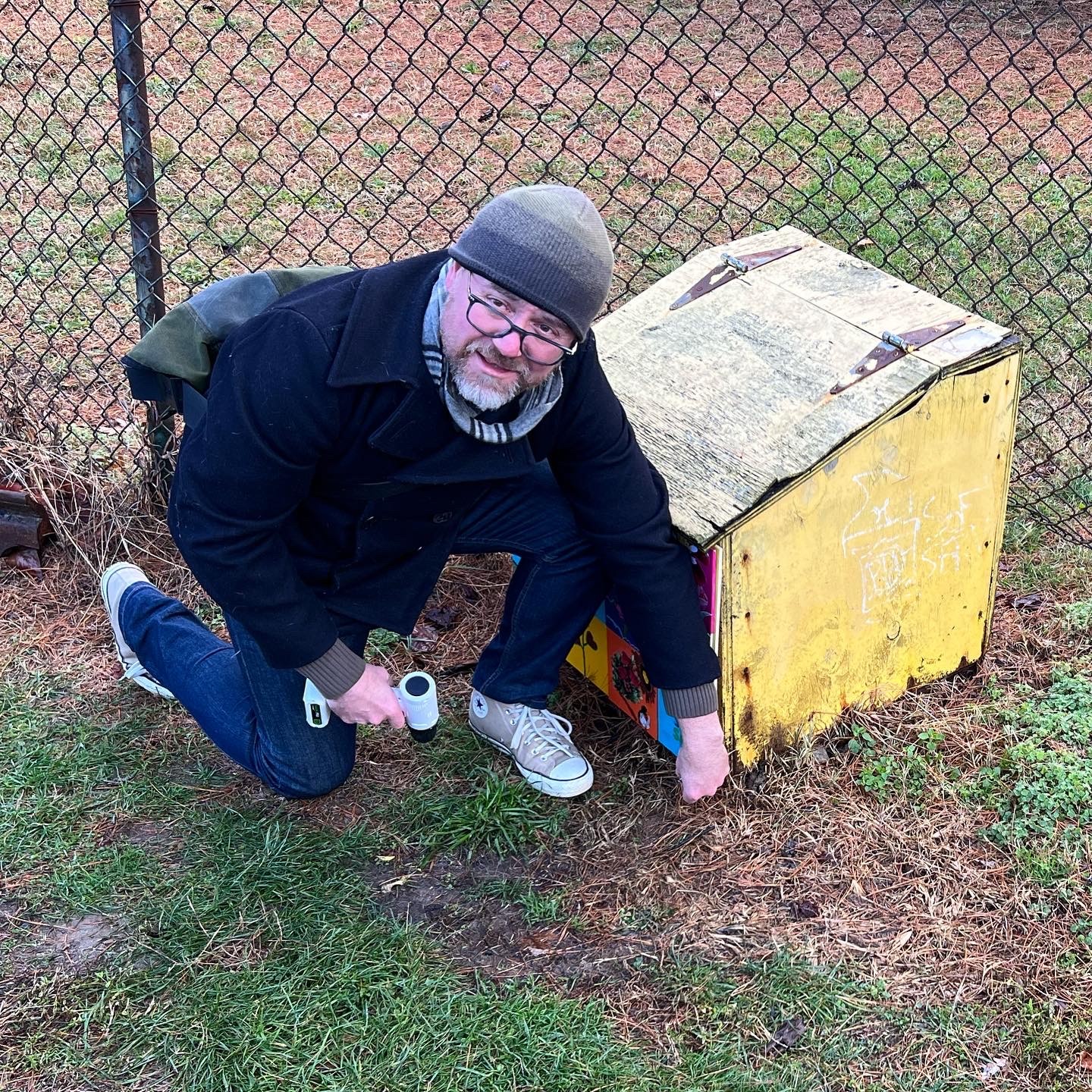
A switch flipped, and I started noticing – really noticing – the saltboxes. Each is different depending on placement and exposure to weather. Each represents a battle between a corrosive (salt) and materials (wood, paint, and nails) that corrode. That tension gives each saltbox its terroir. I was smitten.
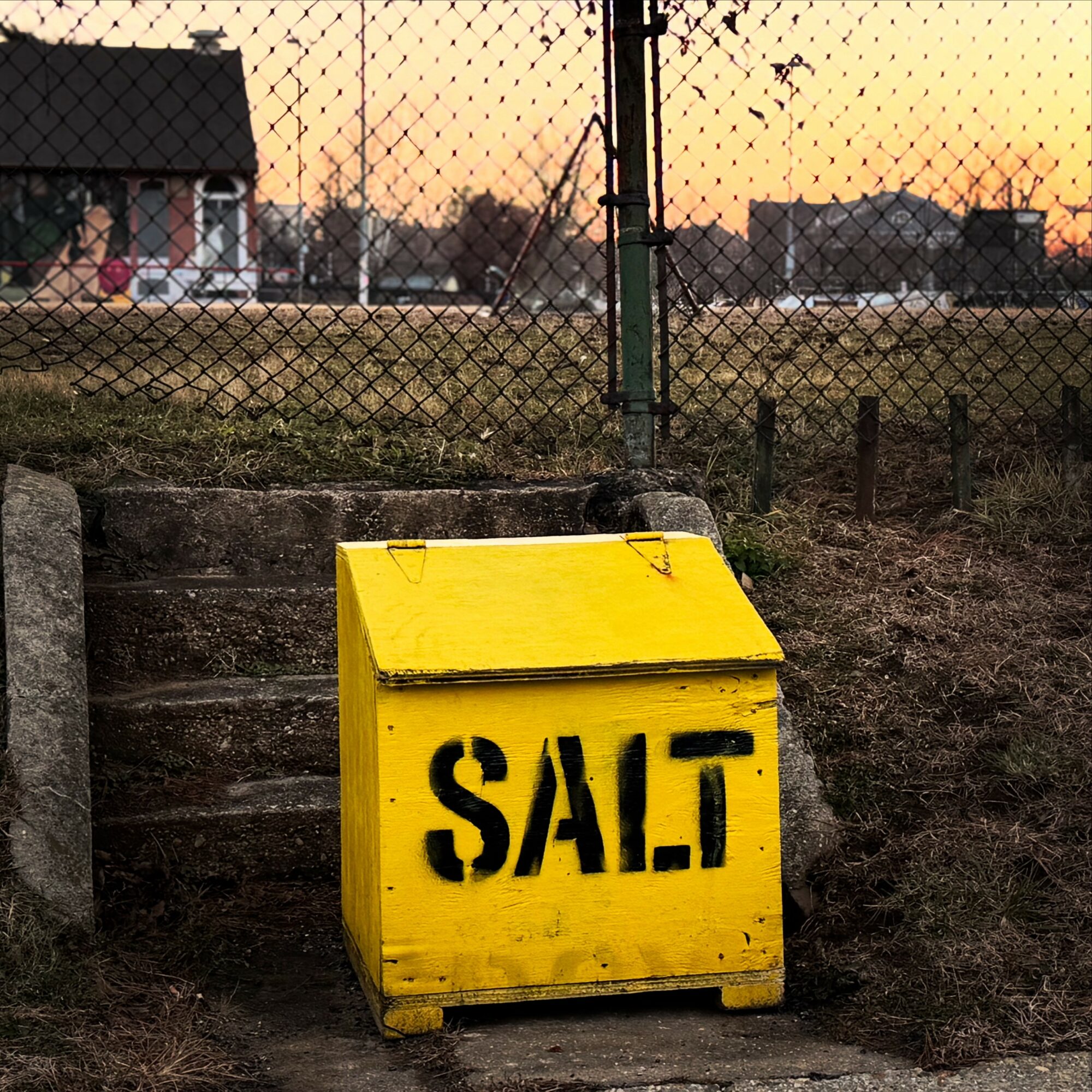
In 2017, I started taking pictures of saltboxes during dog walks around Hampden and posting them on my personal Instagram. I’m as good a photographer as an iPhone makes me but the OSHA yellow and its fading variations do what they’re supposed to and stand out, making for interesting contrasts.
In 2018, I rolled the saltbox pics into their own Instagram account – @baltimore.saltbox – and, at the urging of a few friends. IG followers reached out with stories, lore, and the same questions I had. To me, like the Utz girl and the Natty Boh Gent, the yellow boxes with black block letters are iconic Baltimore symbols and deserved to have their story told and their lore collected. I visited the Pratt Library and exchanged emails with representatives of the city, who seemed confused by my interest.
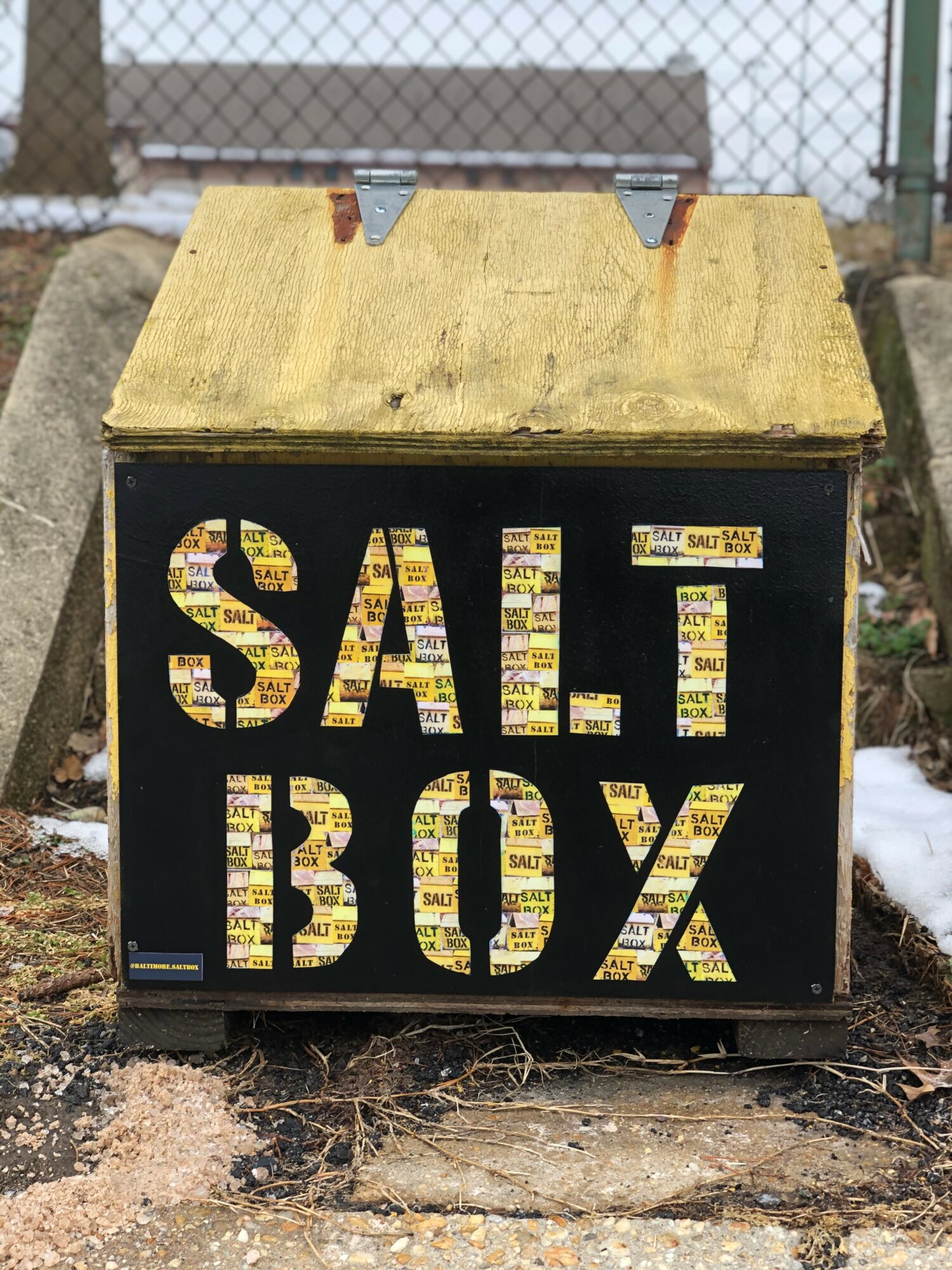
Enter Juliet Ames. If you’re reading this, it’s probably because in January 2021, Juliet took a break from creating amazing jewelry from broken plates to cut the letters SALTBOX out of china, mount them on a board, and affix it all to a saltbox at the corner of W. 36th St. and Roland Ave. in Hampden. Baltimore social media fell madly in love, and more importantly, Baltimore’s Department of Transportation (DOT) chimed in with its blessing. I opened up my Google saltbox map to the public and deputized a few dozen people to do updates, adding both normal and art boxes.
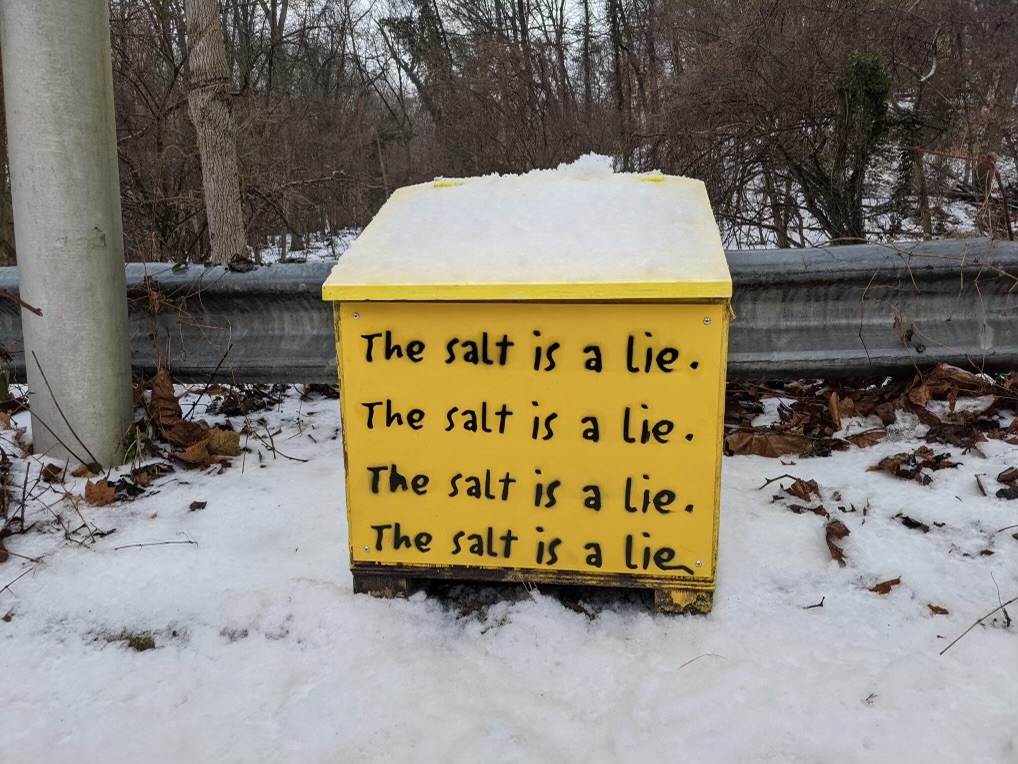
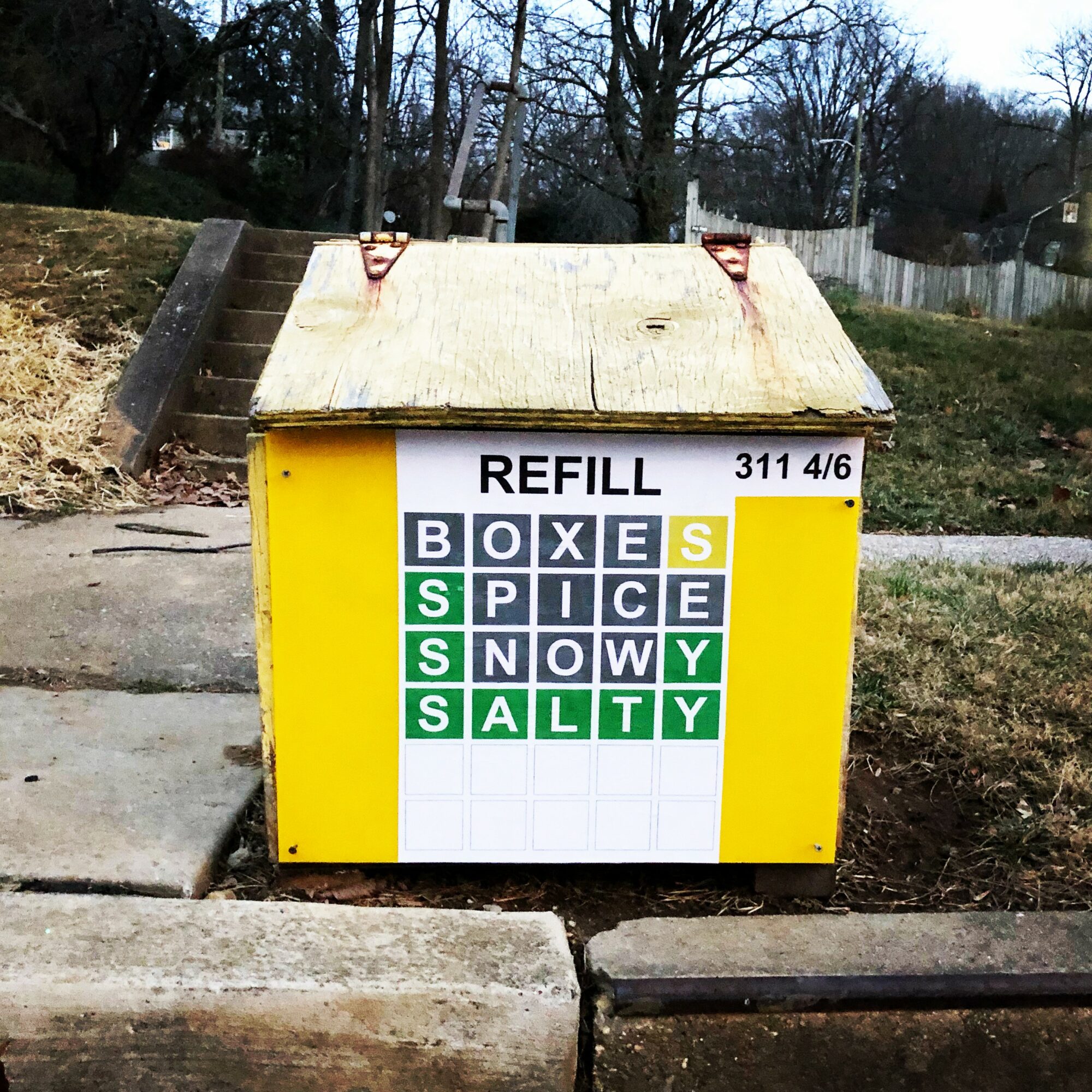
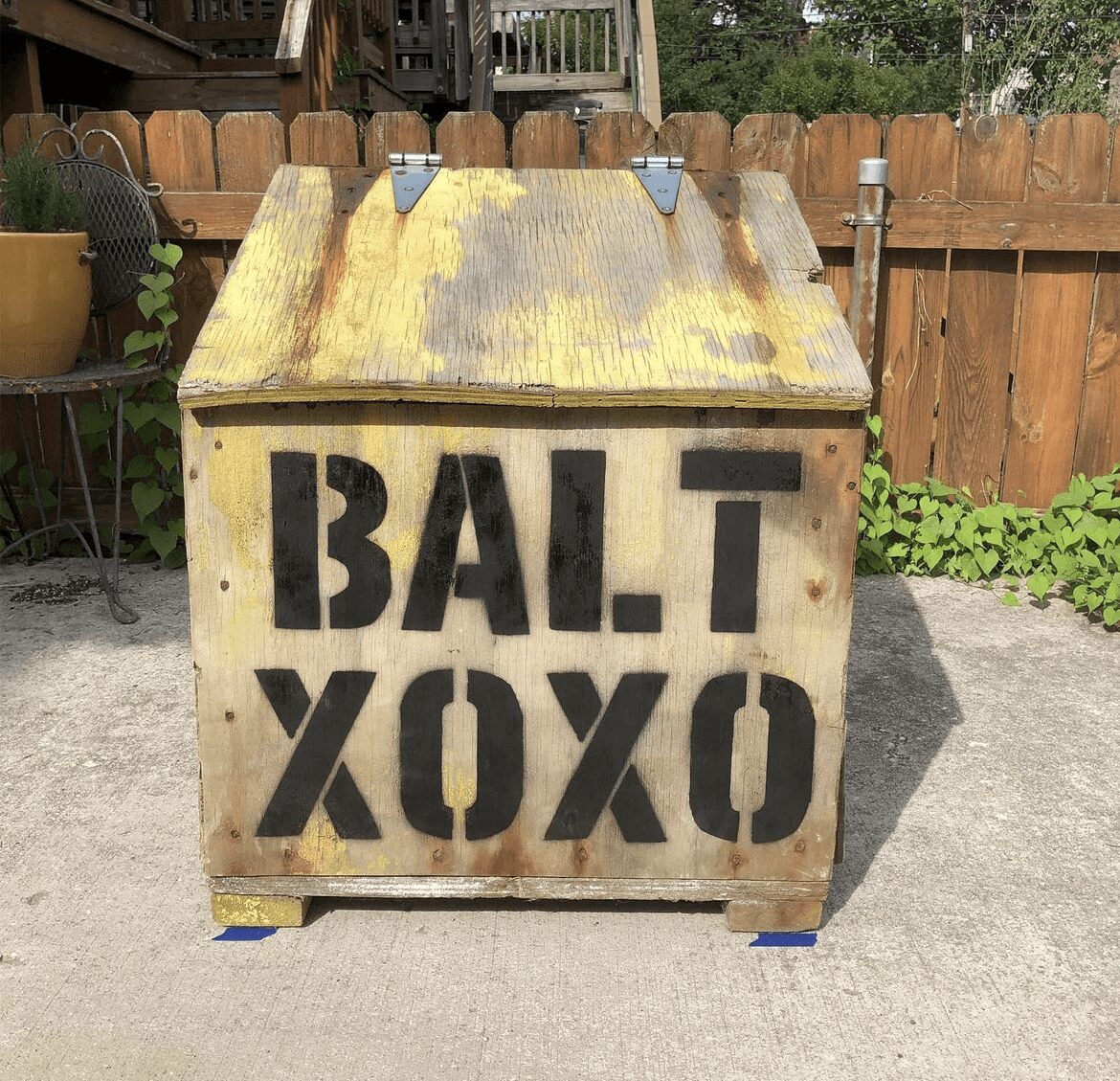
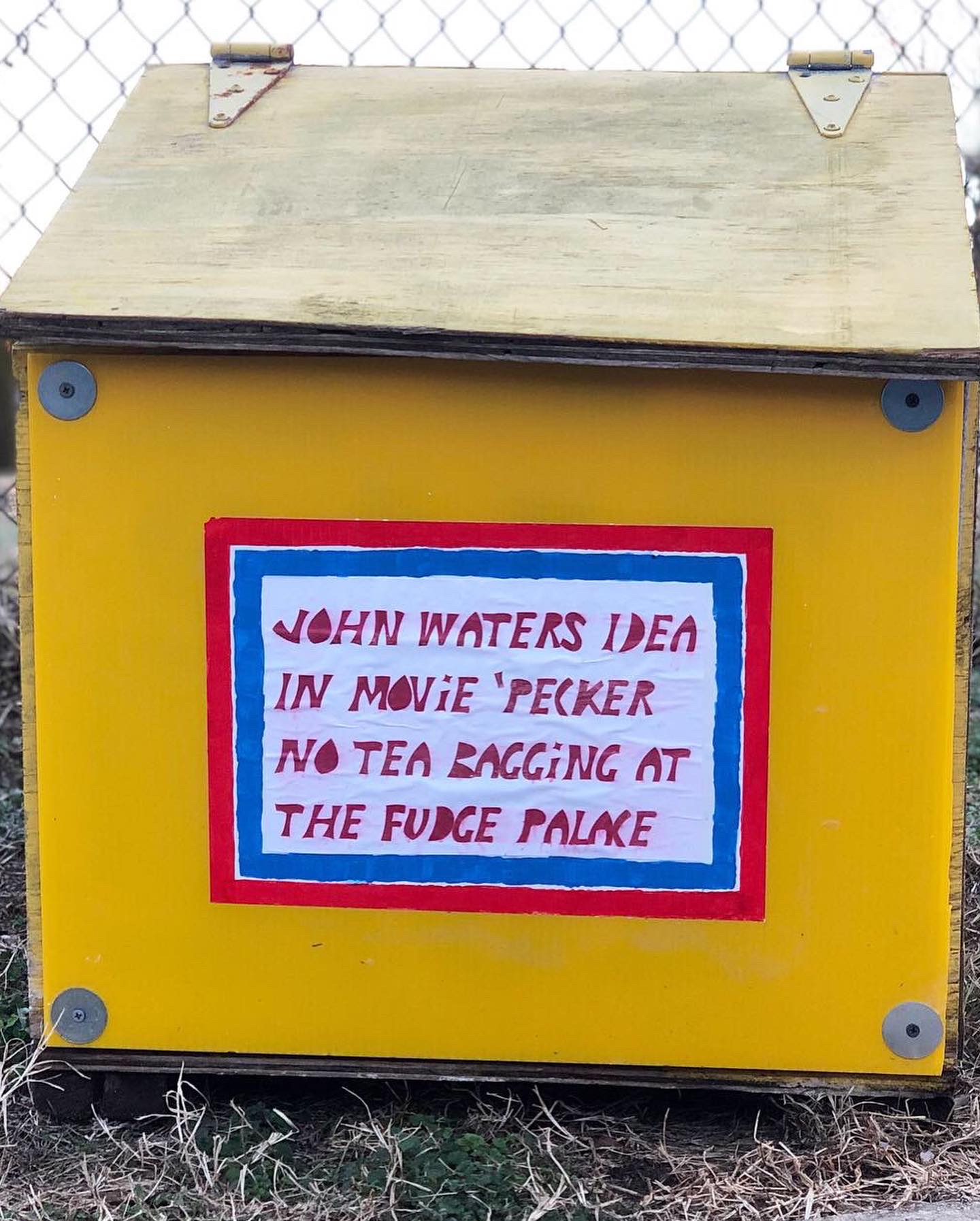
Saltbox art themes include visual puns (the “Shoe Box” replaces the word with a shoe drawing) and mashups with iconic local brands (the “Old Bay Box” looks like a can of the spice that locals put on everything from popcorn to crabs). The “Salt Waters” and “Divine” boxes feature the Pope of Trash himself, John Waters, and his muse Divine, respectively. Saltbox art also memorialized local historical figures like jazz greats Billie Holiday and Cab Calloway, and writer Edgar Allen Poe.
The media attention around the saltboxes opened a solid line of communication with DOT, who had their plates more than full with COVID-19 restrictions and the everyday stresses and issues of a typical government agency. They hadn’t asked for the extra attention, discussions, and meetings around, of all things, the saltboxes – a sub-set of a sub-set of DOT’s remit – and the DIY art that the citizenry suddenly decided to attach to them. My interpretation of DOT’s policy on handling the art boxes, which, by all accounts, took multiple meetings to hash out.
I’m sure it wasn’t obstacle-free, but would you say the journey has been fairly smooth so far?
This has been a joy, which is a luxury because it’s not my full-time job. The Baltimore Saltbox project is part public service to raise the profile of these unique local icons and part vehicle for charity fundraising for Moveable Feast of Maryland. I’m lucky to have Juliet Ames and the other amazing artists out there creating great art to shoot and inspire my to create my own saltbox art.
Can you tell our readers more about what you do and what you think sets you apart from others?
The Baltimore Saltbox project – primarily through the baltimore.saltbox Instagram account – documents the icon Baltimore Saltbox: their history, their place in Baltimore culture, and the art created on them.
Here’s what they are:
Baltimore’s Department of Transportation maintains hundreds of yellow wooden boxes filled with salt and placed strategically throughout the city to help Baltimoreans treat sidewalks during snow and ice storms. A fixture of Baltimore neighborhoods since at least the late 1950s, most boxes have SALT BOX in black block letters stenciled on them. Several different fonts are used for the lettering. Exposure to the elements, and the corrosive nature of salt, give the boxes various degrees of weathered patina. Some boxes stick around all year while others disappear in the spring and reappear in the fall. Sometimes they are put back in the same place, sometimes not.
My goal was to establish these yellow boxes as a symbol of Baltimore. We’ve appeared in national media outlets such as The New Yorker, Good Morning America, and The Rachel Maddow Show.
What quality or characteristic do you feel is most important to your success?
Community. The artists and the people who love Baltimore and its culture made this possible.
Pricing:
- Baltimore Saltbox T-Shirt $28.49
- Baltimore Saltbox Tote $24.49
- Baltimore Saltbox Onesie $25.99
Contact Info:
- Website: https://baltimoresaltbox.com/
- Instagram: https://www.instagram.com/baltimore.saltbox/
- Other: https://www.bonfire.com/store/baltimore-saltbox/