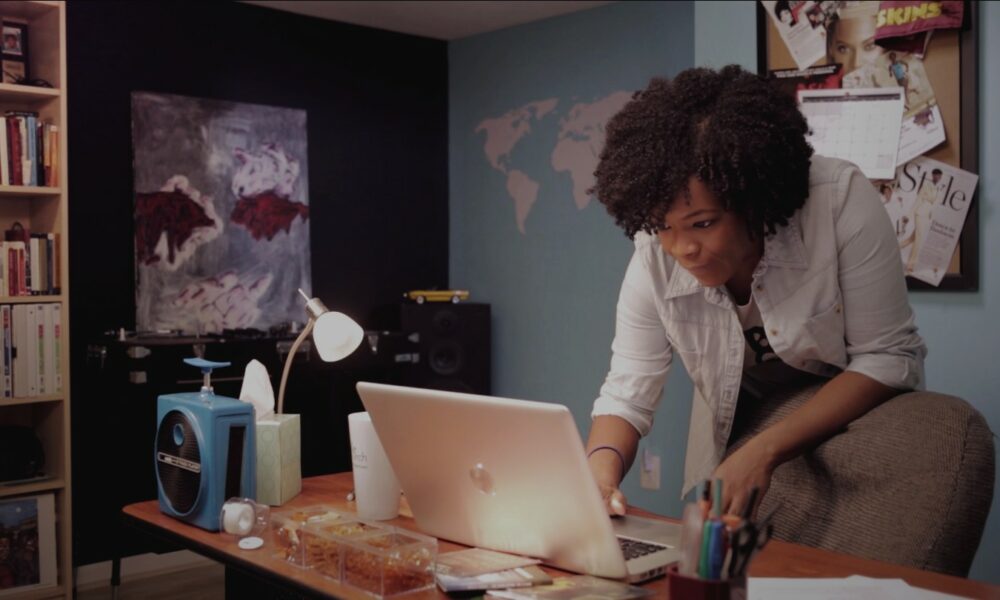
Today we’d like to introduce you to Kayona Ebony Brown.
Alright, so thank you so much for sharing your story and insight with our readers. To kick things off, can you tell us a bit about how you got started?
Writing has always been a part of my life, ever since I was a kid, so despite having a ton of other interests, the storyteller in me has always found a way to embrace these experiences as just part of the bigger story and part of the greater journey.
I’d been navigating the freelance arena while building my catalog as a screenwriter and director (getting mostly corporate video gigs) when the pandemic hit. Now, for most people, the pandemic was a bad thing, but for me, it was life-changing in a good way because all the Hollywood big shots were sitting at home, not on set where they would normally be too busy to read anything by someone like me.
But because they were at home with nothing else to do, a pilot I’d written at the start of the lockdown got into the hands of some very influential people at big companies. This eventually led to my first truly notable industry job, which was with CBS for Super Bowl LV, where I wrote a piece that started Academy Award-winner, Viola Davis.
Since then, I’ve done a ton of cool work, including a lot more on the sports side of things, while continuing to grow on the film and TV side of things. I’m currently in development on my feature directorial debut, a drama set in the world of music.
Alright, so let’s dig a little deeper into the story – has it been an easy path overall and if not, what were the challenges you’ve had to overcome?
It was bumpy and stagnant until it wasn’t. The specifics of the struggle are not worth mentioning because most artists’ struggles are virtually the same. But what is worth talking about is how, as artists, we tend to hold ourselves back simply because we are never taught how to think. We know how to use our minds to create art, but not how to use it to create the life we want.
Around 2020, I started reading more about this kind of approach to neutral thinking, and it has helped me tremendously. Now, even when things aren’t ideal, I tend to handle it differently than before. It’s a lot easier to not unravel because I’m not focused so much on the destination, but rather looking at the whole picture and seeing these small bumps as just part of the bigger journey.
Appreciate you sharing that. What else should we know about what you do?
I am a storyteller. I’m hesitant to label what that specifically looks like because I use my writing across various platforms and mediums. Maybe the best way to describe my work would be to say what excites me the absolute most: tv and film. And as far as what I’m most proud of?
I’m always most proud of the next thing. Since it’s too early to share what my next this is, I can share what my last thing was: a Women’s History Month feature for the NFL called Diary of a Forgotten GOAT, the story of football legend, Linda Jefferson.
http://nfl.com/videos/the-diary-of-a-forgotten-goat-linda-jefferson-x6586
What were you like growing up?
I grew up an only child to a mother who was way ahead of her time, so when she was pregnant, she didn’t paint the room pink or blue to try and put limits on me before I was even here like most parents do. She painted the room yellow.
So when I came around, she allowed me to just be a kid, not a “girl,” which means I was allowed to play sports and create music and get into science and engineering, and all kinds of other things that girls are typically steered away from. I believe this contributed to my having a certain confidence and fearlessness that I probably wouldn’t have otherwise had.
Contact Info:
- Website: http://kayonaebonybrown.com
- Instagram: @kayonaebonybrown
- Facebook: @kayonaebonybrown
- Twitter: @iamkayona