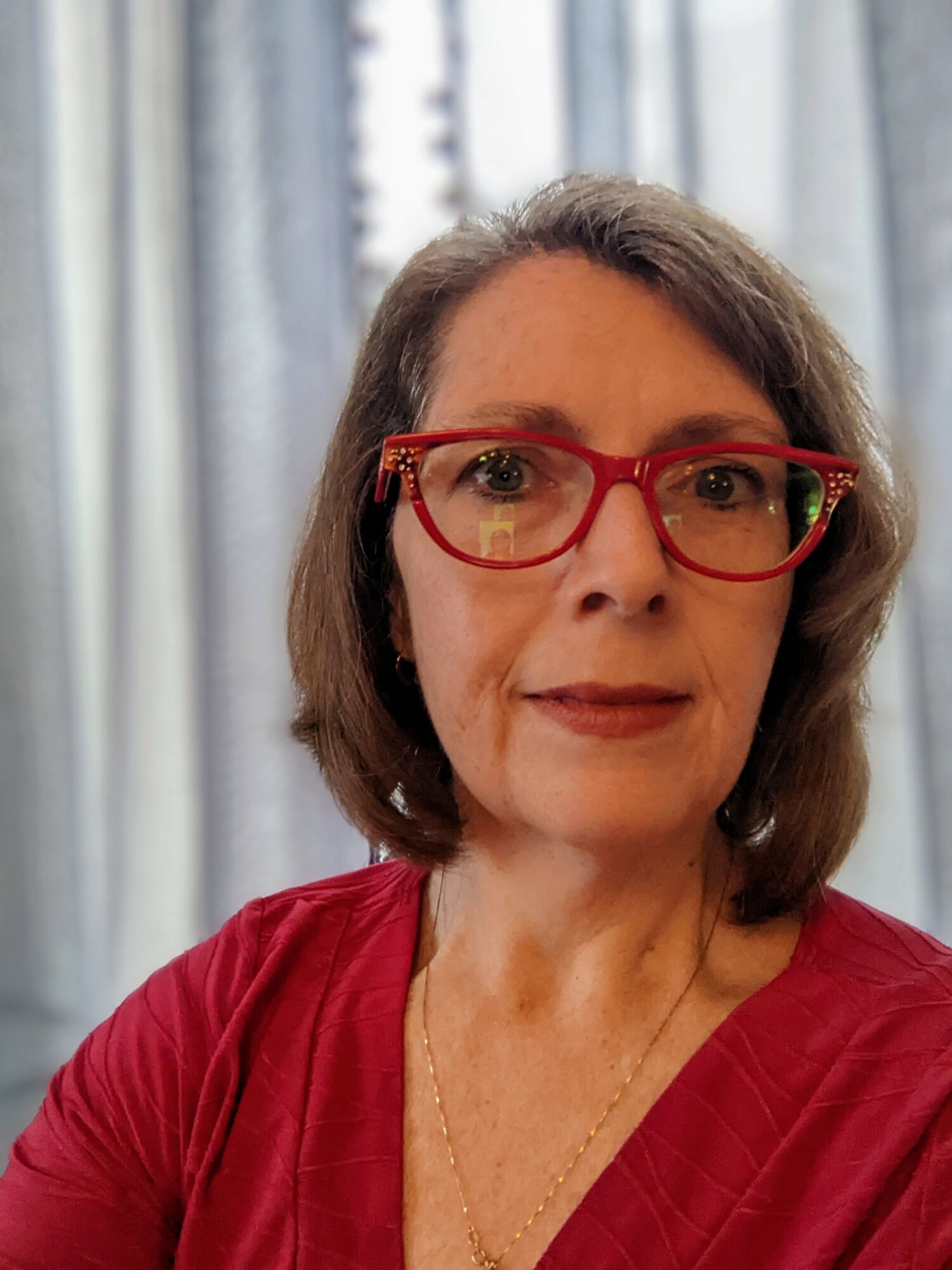
 Today we’d like to introduce you to Virginia Crawford.
Virginia, we appreciate you taking the time to share your story with us today. Where does your story begin?
Writing is a necessity. There are so many things that don’t make sense to me, so many things I can’t understand and don’t know what to do with. Putting these things into poems is what I can do. Not that this has any immediate impact on the world. As much as I might want them to, poems can’t go back in time and prevent human trafficking or solve poverty or homelessness. But in writing about such things, I hope to show some of the suffering happening all around us and ask why. Why do we still have these problems? In many ways, we live in a brutal culture that seems built to create suffering rather than relieve it. It’s painful to see so much suffering. I’m not a billionaire or even a millionaire, so I can’t wave my bank card and provide relief, food, medication, education, housing… But I can write about the suffering I see and contribute to the creation of a more compassionate society.
An important shift in my writing happened when I took a class in college with Martin Espada. His poems and the poems he assigned were about experiences of others. Until then, I primarily wrote about my own experiences. The idea that poems could be about, for example, the horrors a lawyer who works with immigrants’ witnesses was mind-blowing. That propelled me toward much of what I write about now.
I’ve had two books of poetry published, and a third manuscript is out hoping to find its home.
Alright, so let’s dig a little deeper into the story – has it been an easy path overall, and if not, what were the challenges you’ve had to overcome?
It’s fair to say publication is a struggle. I’d always imagined I would publish a book well before I was 30. While I had published many individual poems in journals by then, I’d had to wait, maybe another decade, before Finishing Line Press published my chapbook, Touch. A friend suggested I enter their contest, and while I didn’t win, they still wanted to publish my work. I’d never particularly wanted to publish a chapbook, but that was what they did; that’s what I submitted, that’s what was published. I created my own book tour by contacting friends who ran reading series and researched places along the East Coast where I didn’t know anyone. In the end, I promoted my book in every state from Virginia to New York, plus Vermont. Those were a few of the happiest months of my life. I absolutely love to read to audiences, and this had the benefit of a few dollars as well. It may have paid the cost of gas for the trip and a few boxes of wine at home, but poetry is not a way to make a fortune. Even though the numbers were small, it was fabulous to be paid for my poems. My first full-length book took more than another decade to appear. In the interim, my husband and I survived my treatment for breast cancer and parenting teenagers. (Does that ever really end?) Apprentice House Press published questions for water, and I’m waiting to hear if they are interested in my next book, Chronic.
Persistence is essential. If you want to be published, you have to endure rejection. It is simply what happens before your work finds its place. You must also continue to improve your work. There’s a particular line in yourself that you have to find in terms of criticism and revision. Really evaluate the advice you receive. Will it make the work stronger? Clarify? Add depth? If so, then maybe it’s good to take that advice. But sometimes, you’ll hear advice that indicates the reader is not understanding the poem. For example, my husband, also a poet, Sam Schmidt, is often my first reader. And I frequently use his suggestions. Occasionally he has offered advice that I knew was not right for the poem. That is the internal line I’m talking about. You need to find and listen to that part of yourself. Often a friend in our critique group, a woman, will understand and agree that I should not take my husband’s advice. No matter how close you may be to someone, that doesn’t mean they will completely understand everything you write or that you should always take their advice. Sometimes, years later, my husband will re-read or hear me read that poem again and recognize that his advice was not right for it. And he admires me for not crossing that line.
Thanks for sharing that. So, maybe next you can tell us a bit more about your work?
I remember my second-grade bliss at underlining the subject once and predicate twice. Since then, I’ve always been interested in language and its ability to connect us. You can understand so much about another person through their writing. Words became a kind of magic that let us into each other’s minds, lives, experiences.
For a long time, I felt the need for a positive or at least resolved ending. My husband pointed out how that might be limiting my work. I had also wanted to avoid anything political. That’s hard for me to believe given what I’ve been writing the last two decades. I don’t set out with the intention to write something political, but that’s often where I find myself or where my poems are pointing. It’s the hungry person at my car window, the homeless veterans, the need for even pre-school children to practice active shooter drills.
These subjects can’t help but be political in America. My poems now include the cracked inflamed skin of the person at my car window, the terror of hearing sirens, and praying they’re not speeding toward another school shooting. The profound powerlessness of a parent who will say it’s been a good day because their child returned from school alive. Don’t ask them how they feel about tomorrow. I both love and hate these details. They provide an uncomfortable level of intimacy and immediacy that I hope will push people to political engagement and action. Sometimes I struggle to believe that it’s possible to create a kind society. Perhaps the fact that I write and share the poems are proof I believe it possible.
Writing and reading to audiences are when I feel most alive. Some of my most satisfying moments are watching faces in the audience respond as I read. That’s when I know they get it or not. I’ve taken them somewhere, provided enough detail that I feel them with me. That’s the connection I want to create in my poems.
In terms of paid work, the best job I ever had was through the Maryland State Arts Council’s Artists in Education program. But “job” is not the appropriate term. I taught poetry writing workshops in elementary schools across the state. It was enormously satisfying to see the pride children had in their writing at the end of our classes. And it was well-paid, but it’s a grant program – not something with a regular or reliable schedule. It’s deliberately designed not to be a “job.” I loved doing it, but I’ve always had to do something else as well. Very few jobs are flexible enough to give me several weeks a year to do what I view as my real job. Add motherhood and cancer treatment, and you have an odd, irregular work history. My last residency ended just as the pandemic hit America. During the pandemic, I started teaching English online part-time. We already had one child in college and the other preparing to go; it was clear I needed to do something else. When schools re-opened and needed to replace those teachers who weren’t coming back, I was able to get a full-time position teaching English as a second language to elementary students in Baltimore County. While I have a lot of teaching experience, I’m not a certified teacher. So now I’m working toward a second master’s degree, and three out of four of us are in college.
We’re always looking for the lessons that can be learned in any situation, including tragic ones like the Covid-19 crisis. Are there any lessons you’ve learned that you can share?
COVID illustrates our interdependence. COVID saved many a lot of gas money and driving time.
COVID showed me I’m pretty okay with staying home most of the time.
COVID showed our society’s weaknesses and inequities.
COVID showed me that I watch too much news.
COVID showed how singing from a balcony is giving a gift.
Contact Info:
- Website: virginiacrawford.com
- Facebook: https://www.facebook.com/crawford.virginia