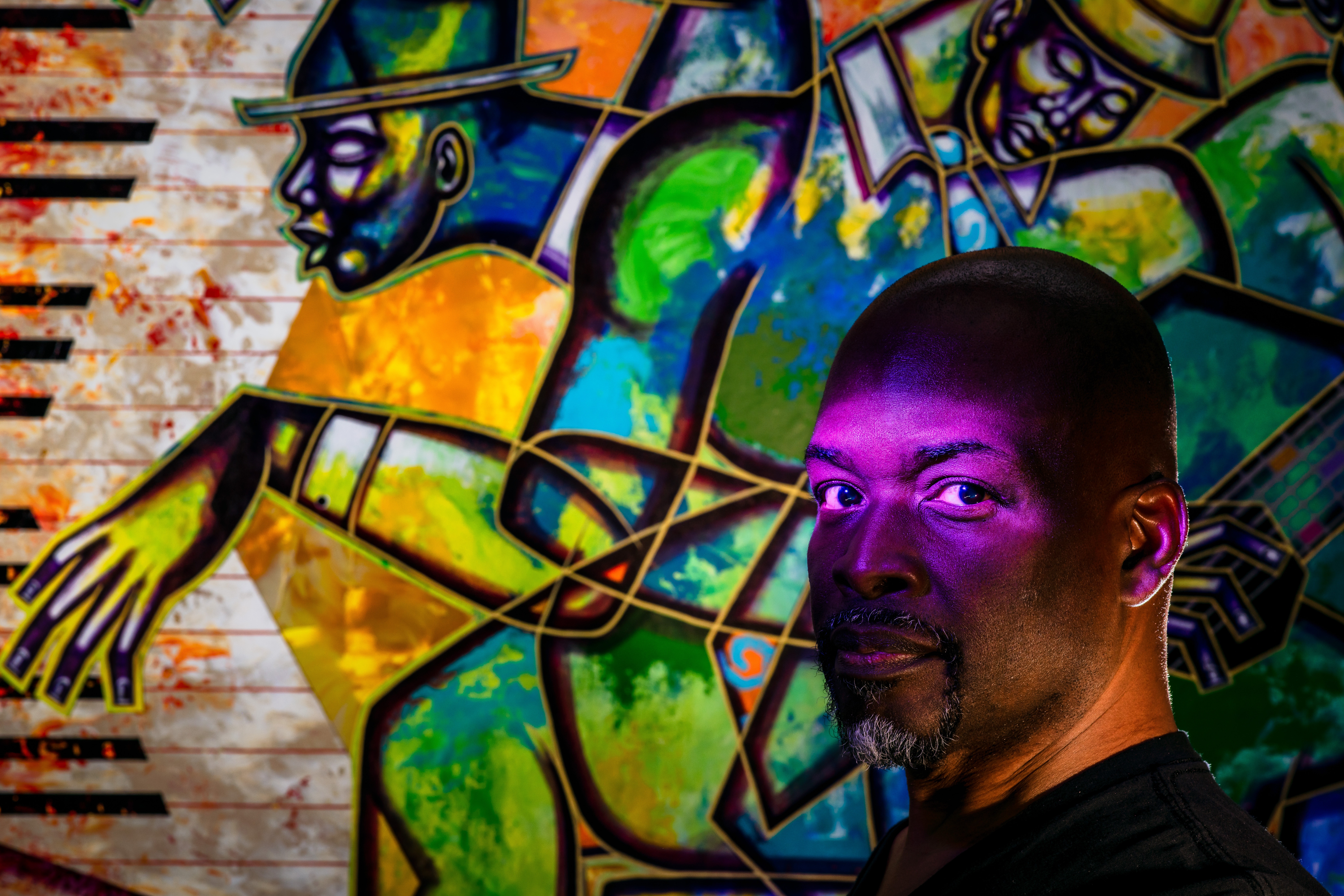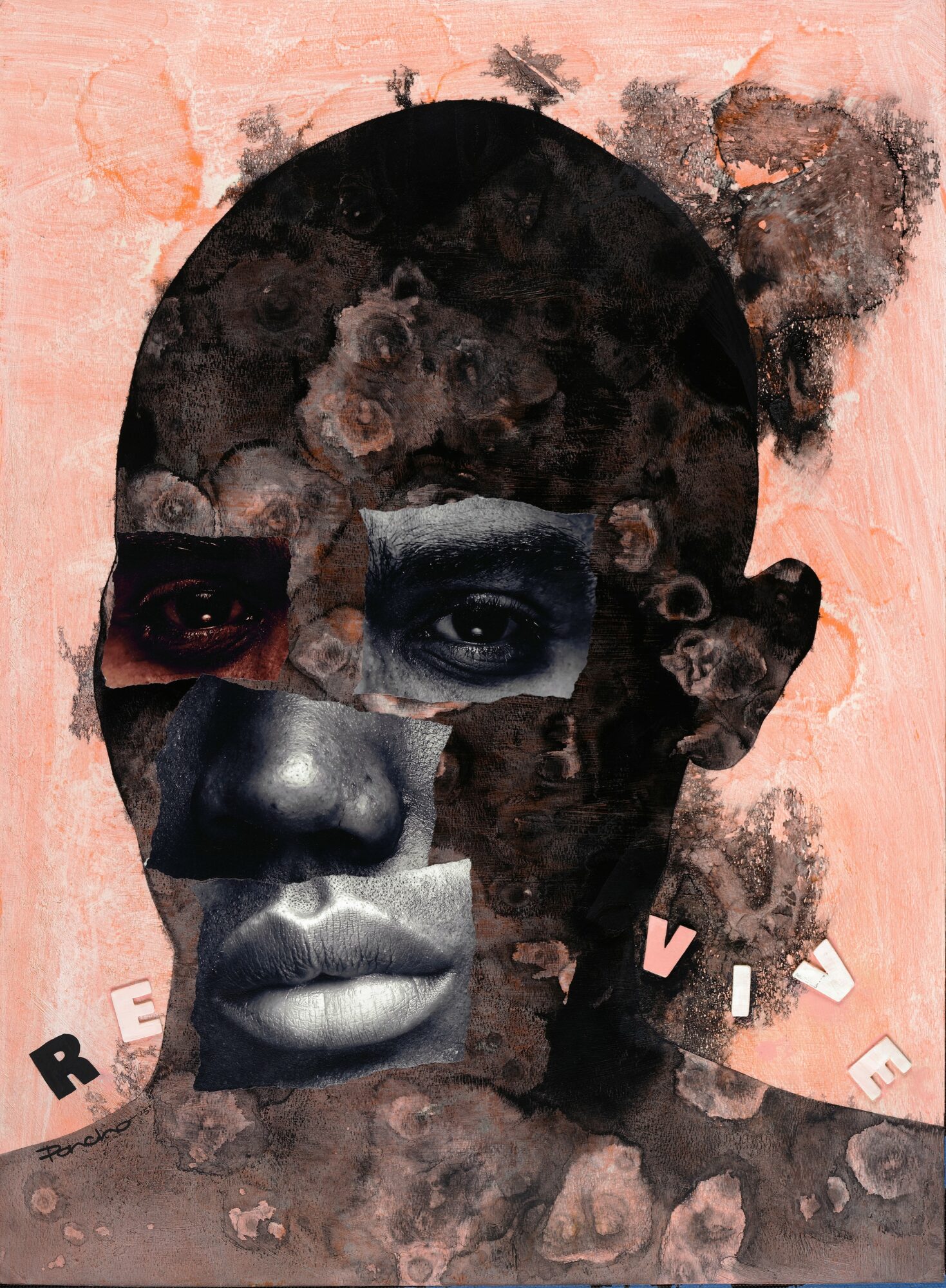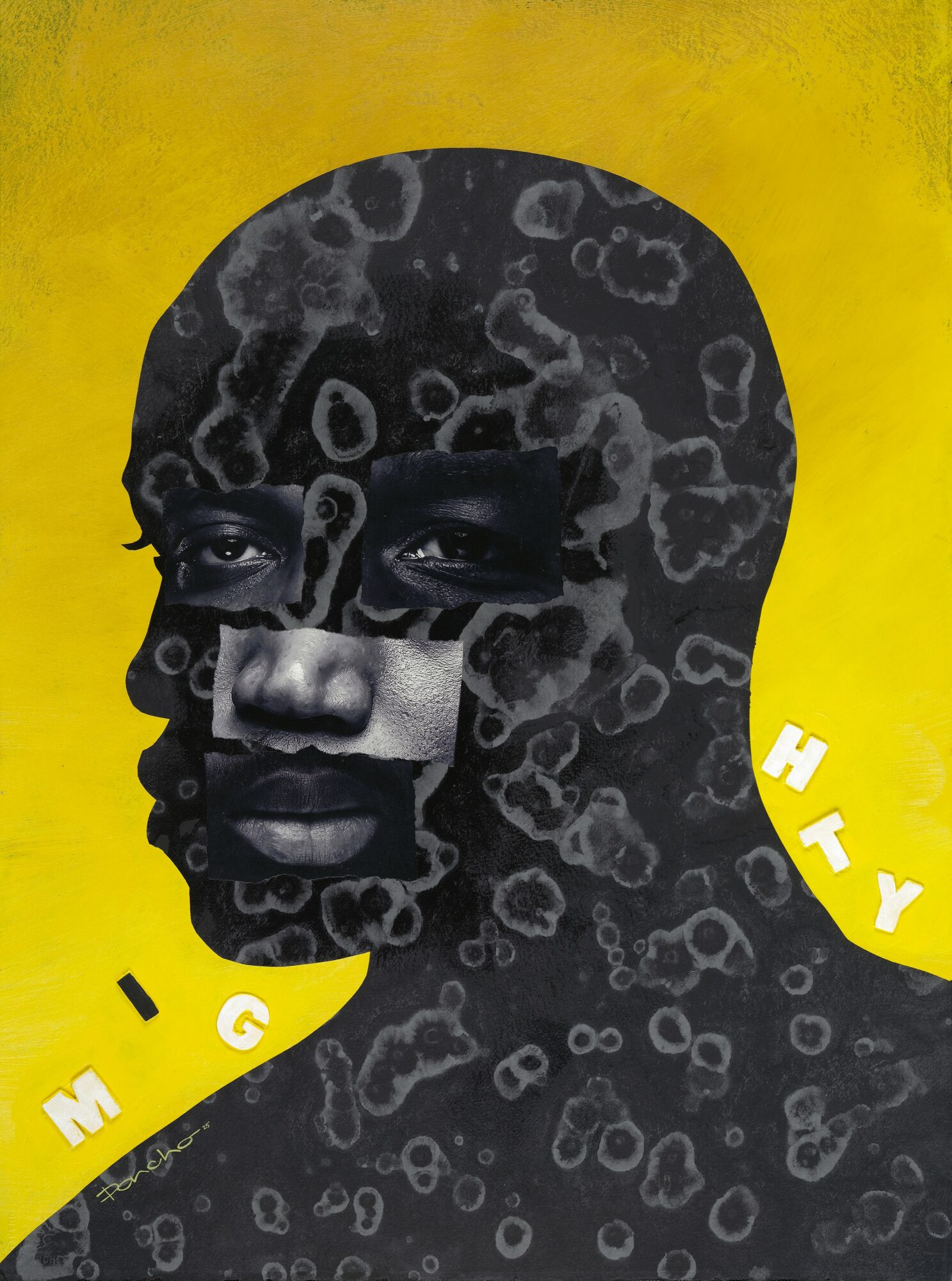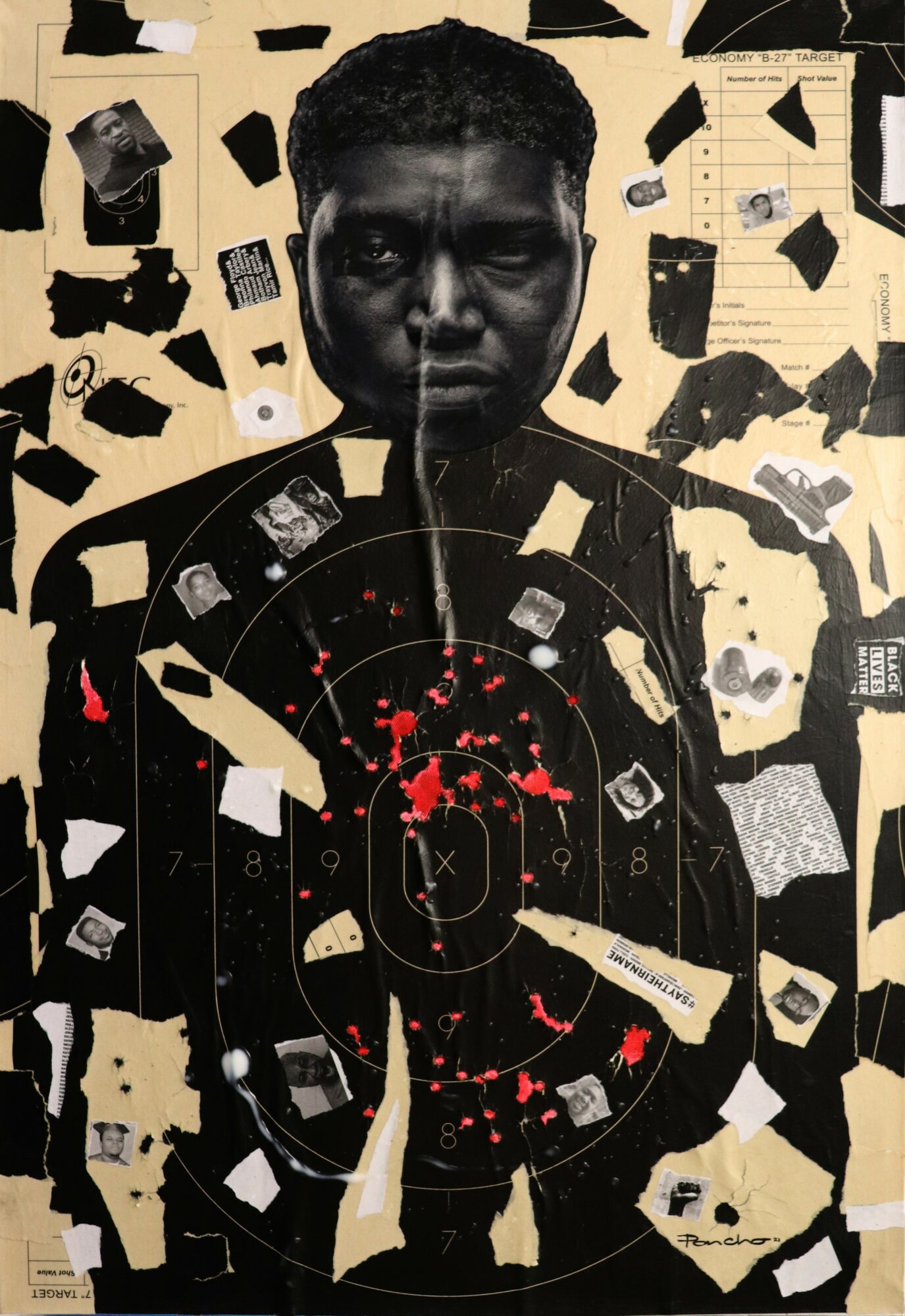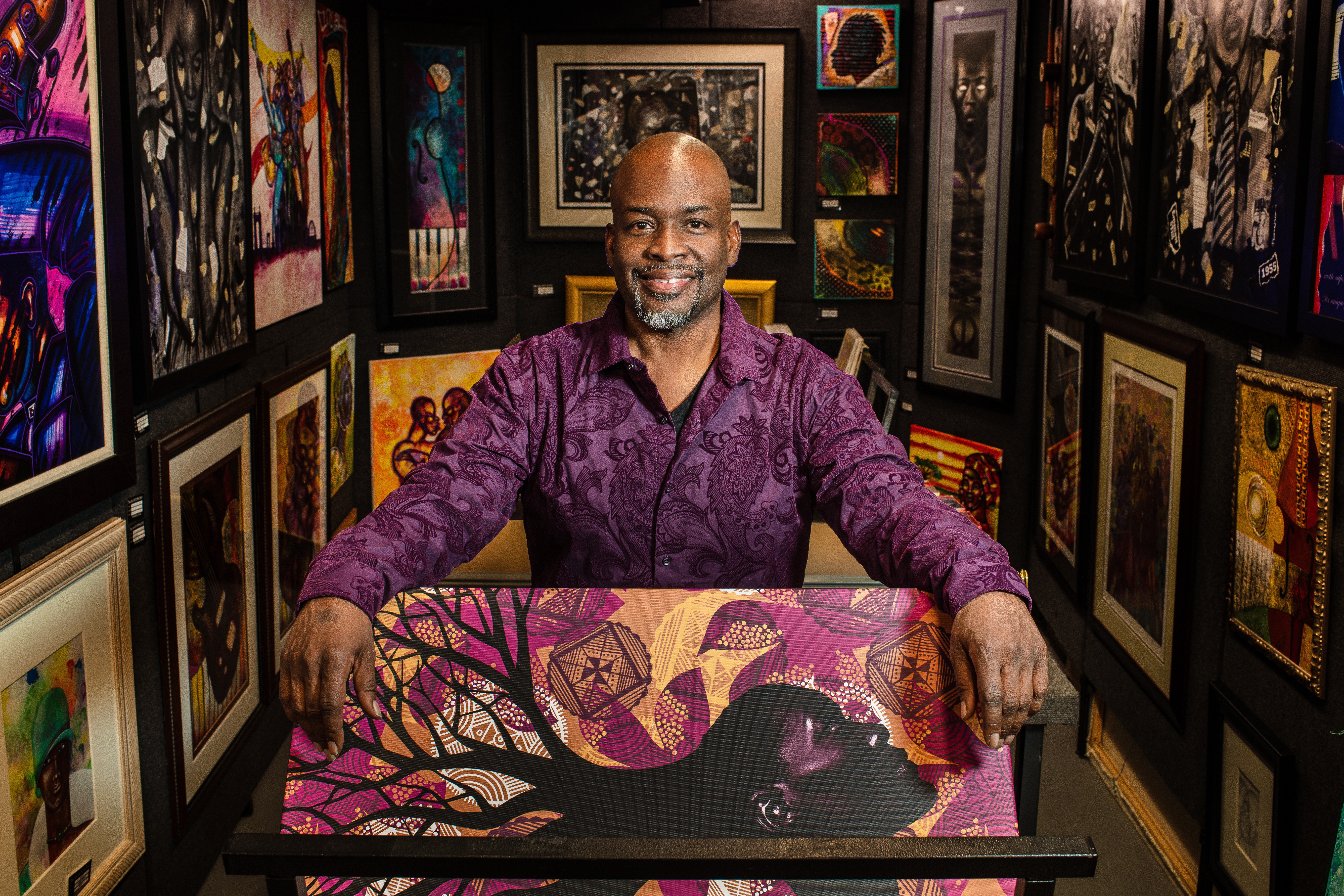
Today we’d like to introduce you to Larry Poncho Brown.
Hi Larry Poncho, we’re thrilled to have a chance to learn your story today. So, before we get into specifics, maybe you can briefly walk us through how you got to where you are today?
As Larry Poncho Brown continues to expand his influence beyond the studio and into the realm of cultural leadership, his curatorial aspirations are emerging as a defining chapter in his evolving legacy. Long recognized as one of Baltimore’s most respected visual artists, Brown is increasingly positioning himself as a curator, cultural strategist, and architect of spaces that amplify Black artistic voices, preserve cultural memory, and connect communities through art.
That vision is perhaps most visible through his role as co-founder of Creatively Black Baltimore, the ambitious Inner Harbor arts initiative that transformed the former Ripley’s Believe It or Not space into a vibrant 12,000-square-foot hub celebrating Black creativity, entrepreneurship, and cultural storytelling. Located in Baltimore’s Light Street Pavilion, the project quickly became more than an exhibition space — evolving into a cultural destination that blended fine art, immersive experiences, public programming, and community engagement. With redevelopment plans underway for the harbor area, Creatively Black Baltimore is expected to relocate to the Top of the World observation level at the World Trade Center Baltimore in September 2026, opening the door to a broader vision for international tourism, rotating exhibitions, and institutional partnerships.
Brown’s curatorial reach also extends beyond Baltimore through “Harriet: A Touch of Freedom,” an exhibition presented at the Harriet Tubman Museum and Educational Center in Cambridge, Maryland. Rooted in the enduring legacy of Harriet Tubman, the exhibition explores themes of liberation, resistance, spirituality, and ancestral memory through contemporary visual art. The exhibition is scheduled to travel to the Cayuga Museum of History and Art in July 2026, deepening the cultural dialogue between Maryland’s Eastern Shore and Auburn, New York — two locations forever connected through Tubman’s extraordinary life and legacy.
At the same time, Brown continues to maintain a strong presence as a practicing artist. In June 2026, he will be featured in “5 × 5 Baltimore: The Art of Black Men,” a major exhibition opening at the Eubie Blake Cultural Center. The exhibition brings together five prominent Baltimore artists alongside artists from Pennsylvania’s Lehigh Valley in a cross-regional exploration of Black identity, memory, resilience, and creative sovereignty.
For Brown, these projects represent more than exhibitions — they are part of a broader mission to create sustainable platforms for Black artists while documenting and preserving the cultural narratives often overlooked within mainstream institutions. His curatorial philosophy blends scholarship, accessibility, entrepreneurship, and community engagement, reflecting the same innovative spirit that has defined his forty-year artistic career. Whether organizing exhibitions rooted in historical consciousness or helping reimagine cultural spaces for future generations, Larry Poncho Brown is increasingly shaping not only what audiences see, but how Black art is experienced, interpreted, and remembered.
We all face challenges, but looking back would you describe it as a relatively smooth road?
In a time marked by increasing historical erasure, artists face the profound challenge of preserving truth, cultural memory, and identity in the face of political polarization, educational censorship, shrinking arts funding, and the commercialization of culture. Black artists in particular are often tasked with documenting histories, struggles, and contributions that institutions may overlook, sanitize, or attempt to remove from public discourse altogether. As social narratives become increasingly fragmented and attention spans shortened by digital culture, artists must fight not only for visibility, but also for historical accuracy, ownership of their narratives, and spaces where authentic stories can be shared without dilution. At the same time, many artists face economic instability, limited institutional support, and the pressure to create commercially viable work rather than socially or historically meaningful work. In this environment, the role of the artist becomes more urgent than ever — not simply as a creator of images, but as a cultural archivist, truth-teller, educator, and guardian of collective memory.
As you know, we’re big fans of you and your work. For our readers who might not be as familiar what can you tell them about what you do?
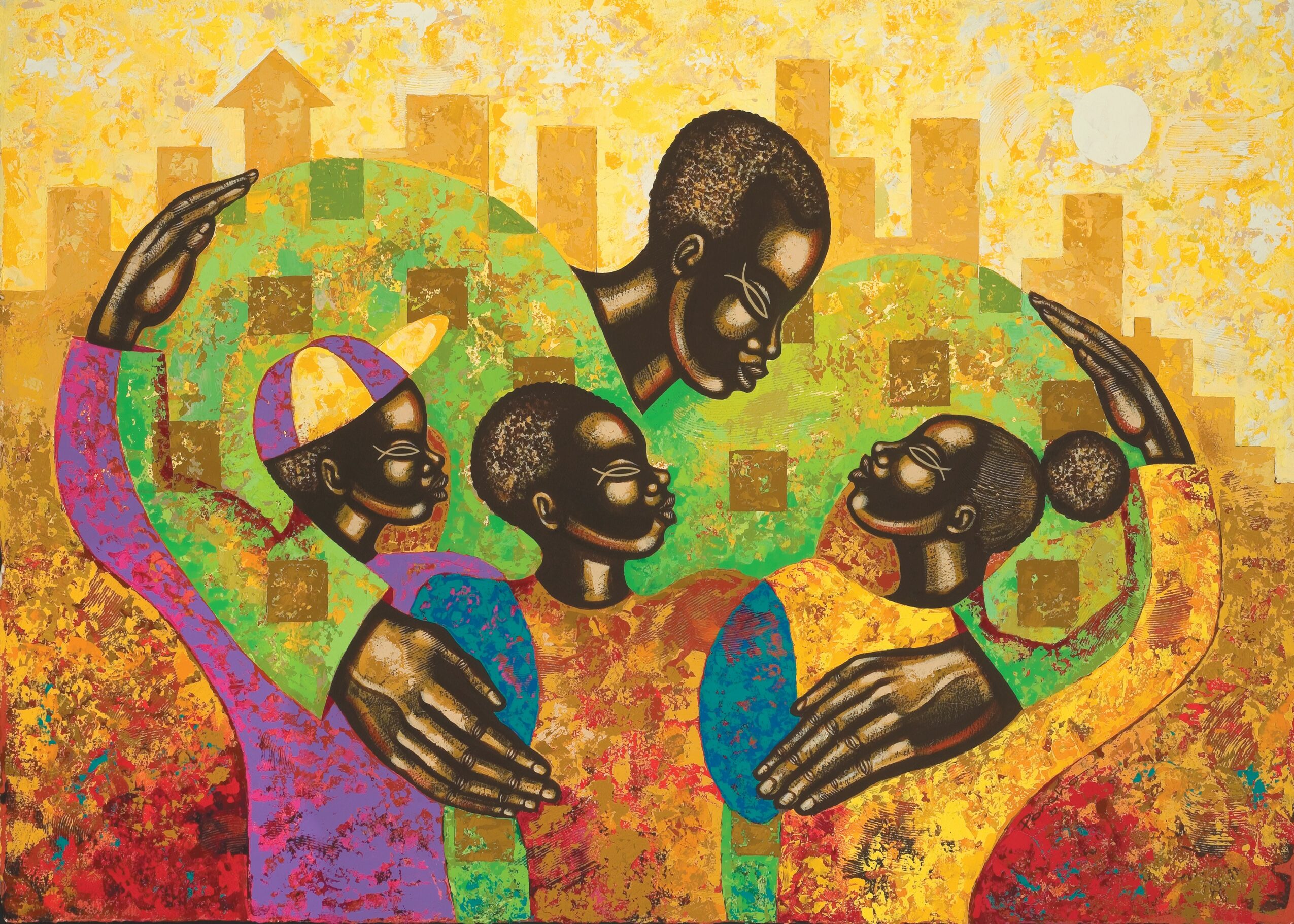
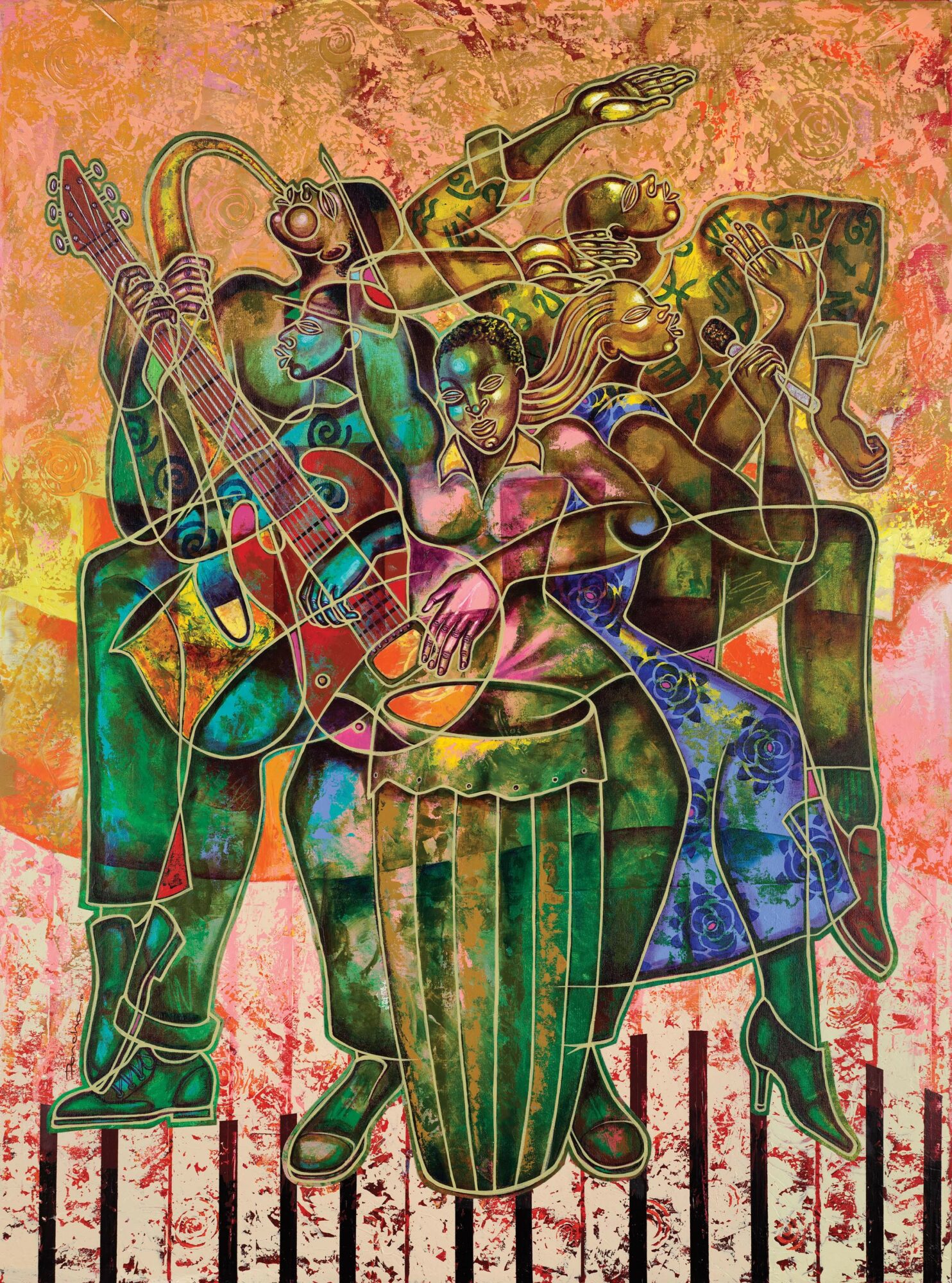
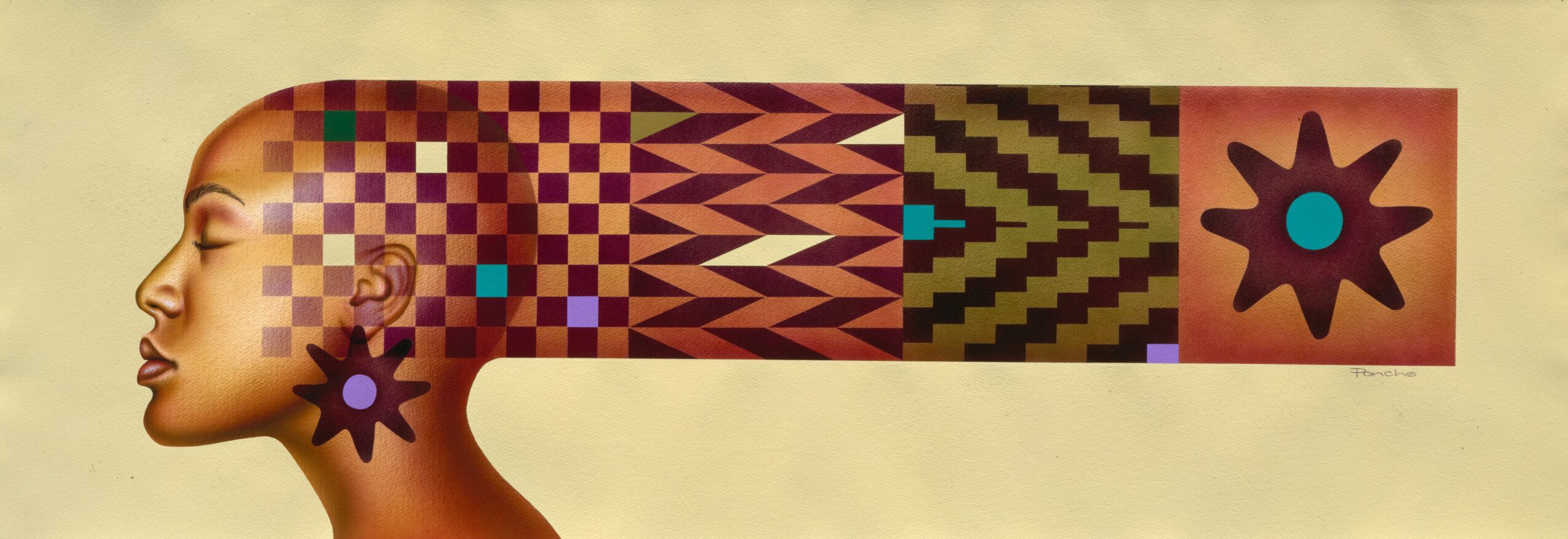
Larry Poncho Brown is an internationally recognized visual artist, author, cultural historian, and creative entrepreneur whose career has helped shape the landscape of contemporary African American art for more than four decades. Known for his bold visual storytelling, entrepreneurial innovation, and unwavering commitment to cultural preservation, Brown has evolved beyond the traditional role of artist to become one of the most respected voices in the business, legacy, and impact of Black art in America.
A graduate of the Maryland Institute College of Art, Brown began his professional journey as a sign painter and entrepreneur before building a nationally recognized fine art career that has spanned galleries, museums, television, publishing, licensing, education, and cultural consulting. His artwork has appeared in prominent media outlets including Ebony, Essence, Jet, and Upscale, as well as television productions such as Soul Food, The Wire, A Different World, and In the House.
Widely celebrated for imagery that reflects the beauty, resilience, spirituality, struggle, and triumph of Black life, Brown’s work bridges history, identity, music, family, and social consciousness through a visual language uniquely his own. His paintings and mixed-media works have been exhibited in galleries, museums, universities, and cultural institutions throughout the United States and abroad.
Over the course of his career, Brown has also become a leading advocate for artist empowerment and creative independence. Long before direct-to-consumer art sales became common practice, he pioneered innovative approaches to marketing and selling artwork outside the traditional gallery system—building a loyal collector base through live events, storytelling, publishing, wearable art, licensing, and online engagement. His groundbreaking approach to art entrepreneurship has made him a sought-after speaker and consultant for universities, museums, arts organizations, entrepreneurs, and emerging creatives seeking to understand both the creative and business sides of sustaining a long-term artistic career.
Brown is also the author of multiple books focused on art, entrepreneurship, and creative empowerment, including works that help artists navigate crowdfunding, branding, and career sustainability. Through his educational initiatives and mentorship programs, he has dedicated himself to helping artists build ownership, visibility, and generational legacy through their work.
Brown has worked to strengthen artistic exchange and opportunity between African American artists and creatives throughout the African diaspora. His commitment to community impact and arts advocacy extends beyond the canvas, positioning him as both a cultural ambassador and educator.
Today, Brown continues expanding his influence through “Poncho Knows,” a rapidly growing video series where he shares over 49 years of unapologetic insight into the realities of the art world, cultural legacy, artist survival, and creative entrepreneurship. The series reflects Brown’s evolution into a powerful thought leader whose voice resonates across generations of artists, collectors, institutions, and entrepreneurs.
More than an artist, Larry “Poncho” Brown represents a living archive of Black creative excellence, entrepreneurial resilience, and cultural storytelling. His work, voice, and legacy continue to inspire audiences worldwide while helping redefine what it means to build sustainable success as a contemporary artist in America.
What has been the most important lesson you’ve learned along your journey?
* Success in the art world is built as much on relationships and consistency as talent.
* Artists must learn the business of art, not just the craft of creating it.
* Ownership matters — controlling your brand, images, and story creates long-term sustainability.
* Culture has value, and Black stories deserve to be documented, preserved, and celebrated.
* Reinvention is necessary; surviving decades in the arts requires adaptability and innovation.
* Collectors connect to authenticity, storytelling, and emotional honesty.
* Community building can be just as important as selling artwork.
* Art can educate, heal, challenge, and preserve history for future generations.
* Institutions do not always validate greatness immediately; artists must often validate themselves first.
* Mentorship and sharing knowledge are essential to building legacy and empowering future artists.
Contact Info:
- Website: https://www.larryponchobrown.net
- Instagram: https://www.instagram.com/larryponchobrown/
- Facebook: https://www.facebook.com/TheArtofPoncho/
- LinkedIn: https://www.linkedin.com/in/larryponchobrown/
- Twitter: https://www.twitter.com/theartofponcho
- Youtube: https://www.youtube.com/c/larryponchobrown