Today we’d like to introduce you to Dalbin Osorio.
Hi Dalbin , thanks for joining us today. We’d love for you to start by introducing yourself.
I am the son of a Dominican immigrant mother who came to the United States with very little and built a life for our family through work that cost her more than she could fully say. In my teens, she worked as a housekeeper for families in Manhattan. She would carry bags of books home to our tiny apartment in the Bronx — books that the families on 86th Street had discarded after moving out of expensive apartments, or that they gave her because she had told them her son loved to read. Those bags shaped me. Every book I read as a teenager came from her labor and from her willingness to ask, on my behalf, for what families like ours were not expected to have.
I spent nearly two decades working across what looked like disconnected fields — public safety, housing, mental health, immigration, child welfare, education. Eventually I came to believe that literacy is the foundational lever. The thing that, when it works, opens everything else, and when it fails, forecloses futures. The work I had been doing across all those fields was the same work encountered at different points of entry into people’s lives.
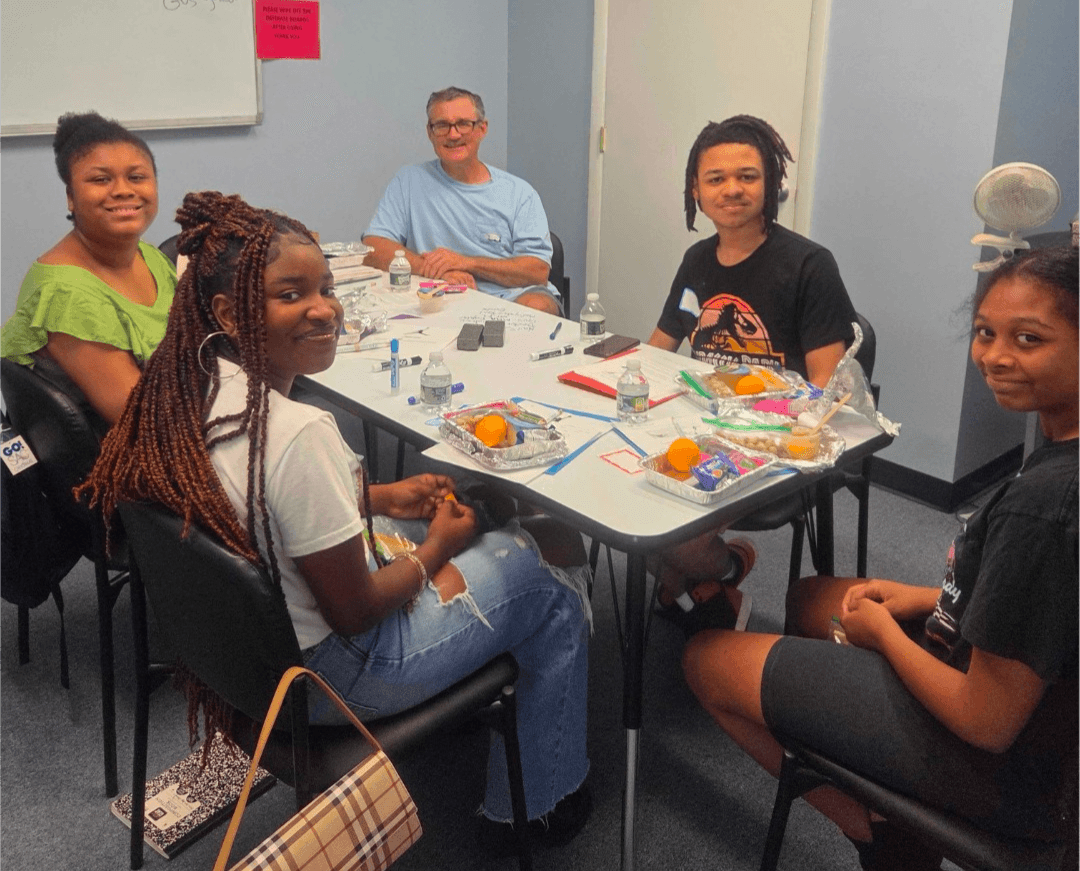
When the Dyslexia Tutoring Program reached out, I saw an organization with forty years of expertise that was ready for a new chapter. Today DTP serves children in Baltimore and across Maryland who would otherwise have no access to evidence-based literacy intervention. The Literacy Brigade, our partnership with Morgan State University, pays trained Black and Brown college students to deliver structured literacy instruction in Orton-Gillingham methodology. Enrollment grew forty percent in our first year together. Two cohorts of 23 scholars each are receiving high-dosage tutoring this summer — one at Camp Jemicy, one through our group instruction partnership with Caston Kids.
We are building something here that I believe can be a model for the country. The combination of community-based organization plus historically Black university plus evidence-based methodology plus paid practitioners from the communities served is not a pilot. It is a program. And it is working.
I am also completing my doctorate at the University of Miami this fall. Everything I am building rests on something simple. Every child deserves to be taught to read by someone who refuses to treat them as a problem to be solved. My mother taught me that by carrying bags of books across boroughs for years. I am still trying to honor what she did.
Would you say it’s been a smooth road, and if not what are some of the biggest challenges you’ve faced along the way?
No road is smooth, but I do not want to give you the generic version of that answer. Let me name two specific things.
In 2009, when I was twenty-four, I survived an arteriovenous malformation. A friend of mine, Alan, died from the same condition. I spent the months after his death trying to make sense of why I was still here when he was not. I never fully resolved it. What I did decide is that the time I have is not for accumulating things. It is for doing work that matters. Twenty years later, I am still trying to honor that decision.
The second thing is more recent and ongoing. I am a member of what I jokingly call The New 1% — Black male executive directors under 40 in the nonprofit sector. We are statistically rare. The rarity carries costs that the standard “diversity in leadership” conversation does not fully name. The peer set is thin. There are fewer Black male EDs to call when navigating hard decisions, fewer people in the room who understand the specific weight of running an established organization while being Black, male, and young in spaces that do not expect you. Being first in many of the rooms you walk into means you are establishing precedent constantly. People are learning how to be in relationship with you while you are also doing the actual work. That double labor is invisible from the outside, but it is real, and it accumulates.
That is the context I brought into DTP. The organization was forty years old and carrying inherited reputational damage in some of the Baltimore communities it most needed to serve. Trust had been broken in specific ways with Black professionals and Black families who had encountered the organization in its prior leadership. My first year at DTP was less about building new programs than about repairing relationships. The Black literacy community in Baltimore did not owe DTP another chance. The fact that two Black women leaders in the field eventually extended their institutional trust to a partnership with us is the only reason the Literacy Brigade exists. Without that early willingness on their part to give DTP another opportunity, none of what we have built since would exist.
The lesson from all of it is the same. The work I am able to do now sits on top of what other people decided to give me. Alan’s life, taken too early, gave me a sense of urgency about my own. The Black women leaders who could have walked away from DTP and would have been right to gave us the chance to become an organization worth their trust. I do not forget that. The Literacy Brigade is not just our work. It is the work that became possible because other people held the door open.
Thanks for sharing that. So, maybe next you can tell us a bit more about your work?
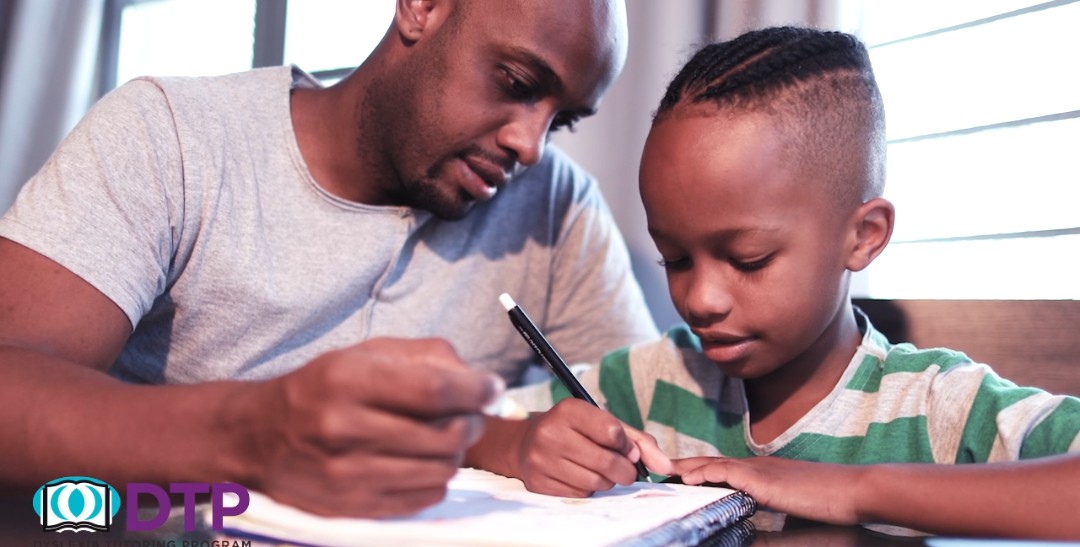
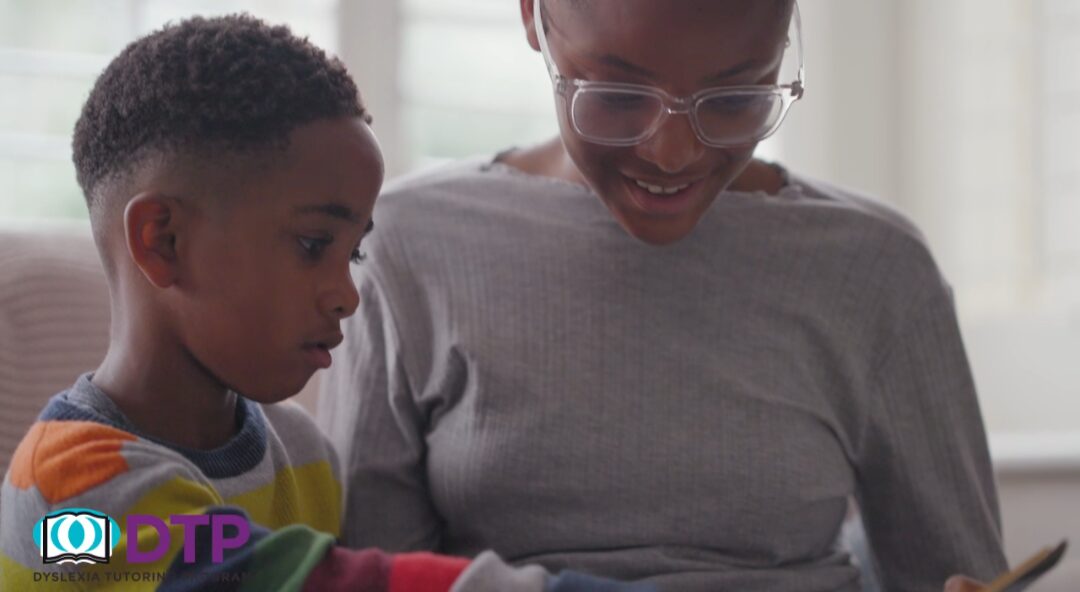
What I do is run an organization that teaches children to read.
That sentence is deceptively simple.
The work underneath it is more specific. The Dyslexia Tutoring Program is a forty-year-old Baltimore organization that has historically served children with dyslexia in this city and across Maryland. Under my leadership, we are formalizing a three-tiered service model that I believe will be the future of community-based literacy intervention.
Tier one is our traditional 1:1 low-dosage tutoring. A scholar and a tutor working together at a sustainable pace across the school year.
Tier two is high-dosage individual tutoring. Each SparkU tutor — a trained Orton-Gillingham practitioner from a partner university — is assigned a caseload of four scholars and provides individualized instruction to each one.
The Morgan State University partnership has been our incubation site for this tier. Tutors are paired with one scholar this year to ground the model. In the fall, that ratio expands to four scholars per tutor. My goal is to scale this regionally by Spring 2027 through partnerships with additional historically Black universities and Maryland-area institutions. I have begun those conversations with Coppin State, Bowie State, Towson, VCU, and Howard. Building a literacy practitioner pipeline that draws meaningfully from historically Black universities is one of the most important things we can do for the field.
Tier three is high-dosage group tutoring led by a Spark Mentor working with three scholars. Spark Mentors are experienced DTP tutors — three or more years of tenure, strong observation records, currently active in the classroom. They are our senior practitioners, and they are also mentors to the SparkU tutors coming through the pipeline. That mentorship structure inside the delivery model is what makes our approach genuinely unique. We are not just training college students to tutor children. We are building a developmental architecture where senior practitioners shape the next generation of literacy professionals while continuing to do the direct work that earned them their expertise.
The Literacy Brigade, our summer programming at Camp Jemicy, and our partnership with Caston Kids for group instruction are the proving grounds for this model. Forty-six scholars are receiving high-dosage instruction across two cohorts this summer. The data we are gathering will inform how we formalize the three-tiered model for broader replication. What we are building at DTP is not just a literacy program. It is the evidence base for a community-rooted approach that other organizations can adapt for their own contexts.
What I specialize in, beyond the operational work at DTP, is naming what the field has been unwilling to name about how community-led work gets received by institutions. I write publicly on Substack about the language philanthropy uses to keep Black-led organizations small. I am completing my doctorate at the University of Miami on Black father-led advocacy for neurodivergent learners, in collaboration with Brocklin Qualls at the Greater Washington Urban League. All of this is part of the same work.
What I am most proud of right now is Mason. We are holding back his last name. Mason has been a DTP scholar for five years, and during that time he was also a camper at Camp Jemicy. He is sixteen now. This summer he is back at Jemicy on the other side of the program, working as a counselor with the younger scholars who are where he was when DTP first met him. That arc is what we built the Brigade and the broader DTP model for. Children who came to us needing instruction can grow into young people who are themselves the next generation of practitioners and mentors. The arc from scholar to staff is not a side benefit of the program. It is the point. Mason at Jemicy this summer is the proof.
Are there any important lessons you’ve learned that you can share with us?
The most important lesson I have learned came from my grandfather, Papi Noel. He was Cuban, and he chose into our family — my mother is Dominican, and he married my grandmother and chose to be present for us in ways that shaped everything about who I became. He passed from Covid at the beginning of the pandemic, alongside so many others the world lost that year. The lesson he left me with is one I keep returning to.
Noel taught me what showing up looked like. The work is the work. You do it on the days you feel ready and the days you do not. You do it when people are watching and when no one is. You do it the day after a loss and the day after a win. The consistency is what builds a life. He never had to be my grandfather and he chose to be anyway, year after year, and the choosing was what taught me.
But I want to tell you something that has just landed for me as I sit with this question. The Literacy Brigade, our partnership with Morgan State and our model of paid practitioners from the communities being served, is named in honor of the 1961 Cuban Literacy Campaign. Dr. Gibson at Morgan State gave it the name from her own knowledge of the campaign, and I learned why she had chosen it months later during an interview with The AFRO. The connection between the Brigade and Cuba has been part of my public framing of this work for some time.
What I had not yet connected, until this moment, is that my grandfather was Cuban. He may have been the one who first told me about the Cuban Literacy Campaign years ago. I do not remember exactly when I learned about it. What I do know is that the man who taught me what showing up looked like was from the same island that produced one of the largest literacy movements in modern history. The work I am building now is in conversation with a lineage he carried in his blood. And I am only realizing that today, in real time, as I am trying to write this answer about him.
That is the deepest version of the lesson. The universe weaves connections you do not see until much later. My grandfather was teaching me about Cuban literacy work long before I knew I was going to spend my career building a program named after it. The man and the work were always going to be connected. It just took me until today to feel it.
I have a phrase for this. The universe be universin’. The universe tends to move as you dare it to, and it weaves connections you are not aware of until they show themselves. That is why I am so audacious about my own ambition. If I do not believe in what I am building, how can the universe be expected to meet me there? The work, the showing up, the audacity — all of it is daring the universe to keep weaving the connections it has already been weaving since before I knew they were there.
Papi Noel taught me that without ever saying it. He just kept choosing us. And the universe, in its time, kept choosing me back.
Pricing:
- Tutoring: Free
- Assessments: Free
- Phone Conversation to see if you Qualify: Free
- Application: Free
- Liberation: Free
Contact Info:
- Instagram: https://www.instagram.com/dtp_baltimore
- LinkedIn: https://www.linkedin.com/company/dyslexia-tutoring-program/
- Twitter: https://x.com/DTP_Baltimore