Today we’d like to introduce you to Alden E. Stoner.
Hi Alden E., we’re thrilled to have a chance to learn your story today. So, before we get into specifics, maybe you can briefly walk us through how you got to where you are today?
I am the CEO of Nature Sacred, a national nonprofit my parents founded in 1996 out of a deepening concern that technology was, at an accelerating pace, separating us from nature, to our own detriment. For nearly 30 years now, our work has been to guide communities, across the country, in the process of creating healing green spaces, what we call Sacred Places, in places where nature is lacking and acutely needed.
And so much of what we have learned about this work, we have learned in Baltimore.
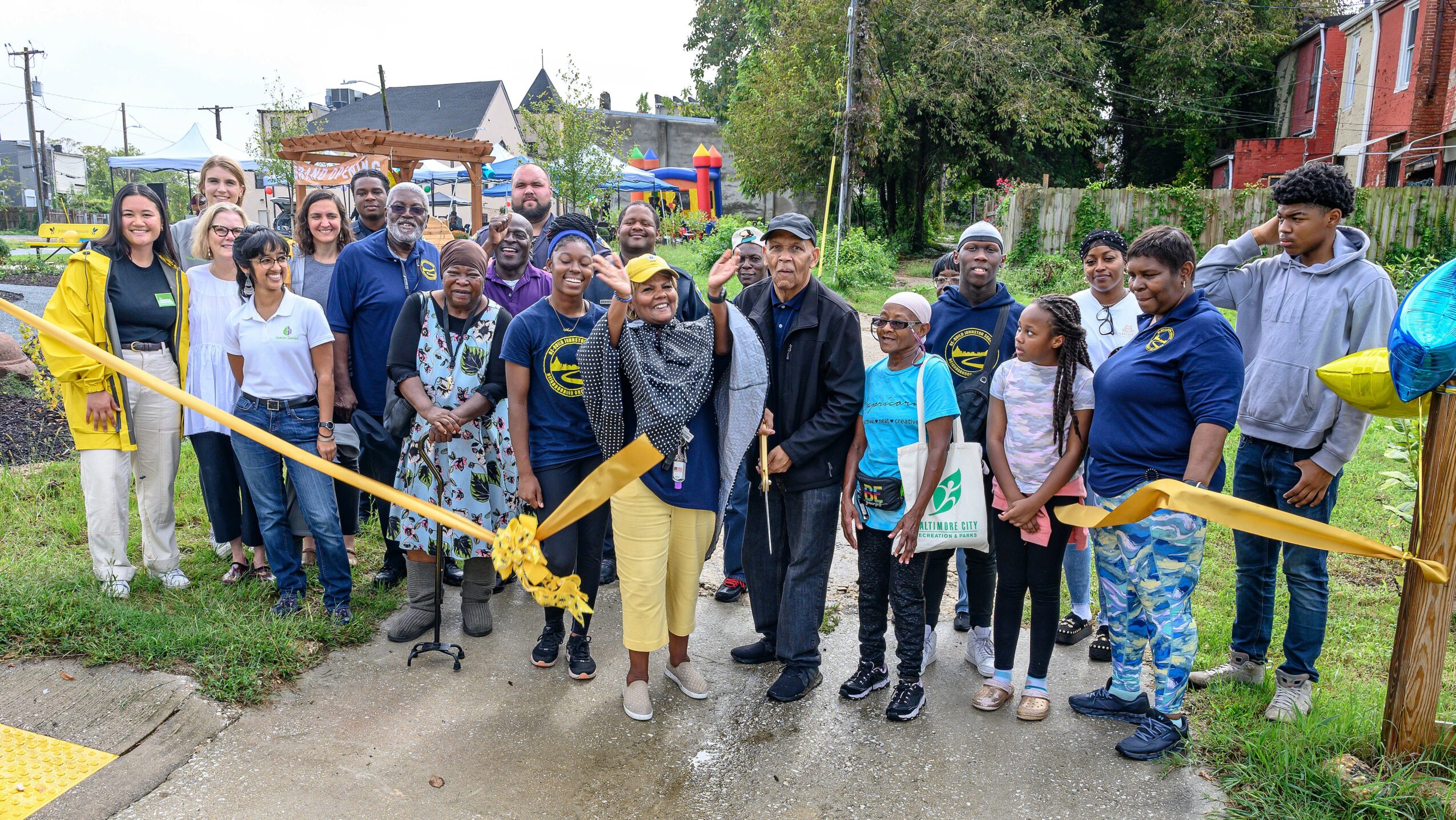
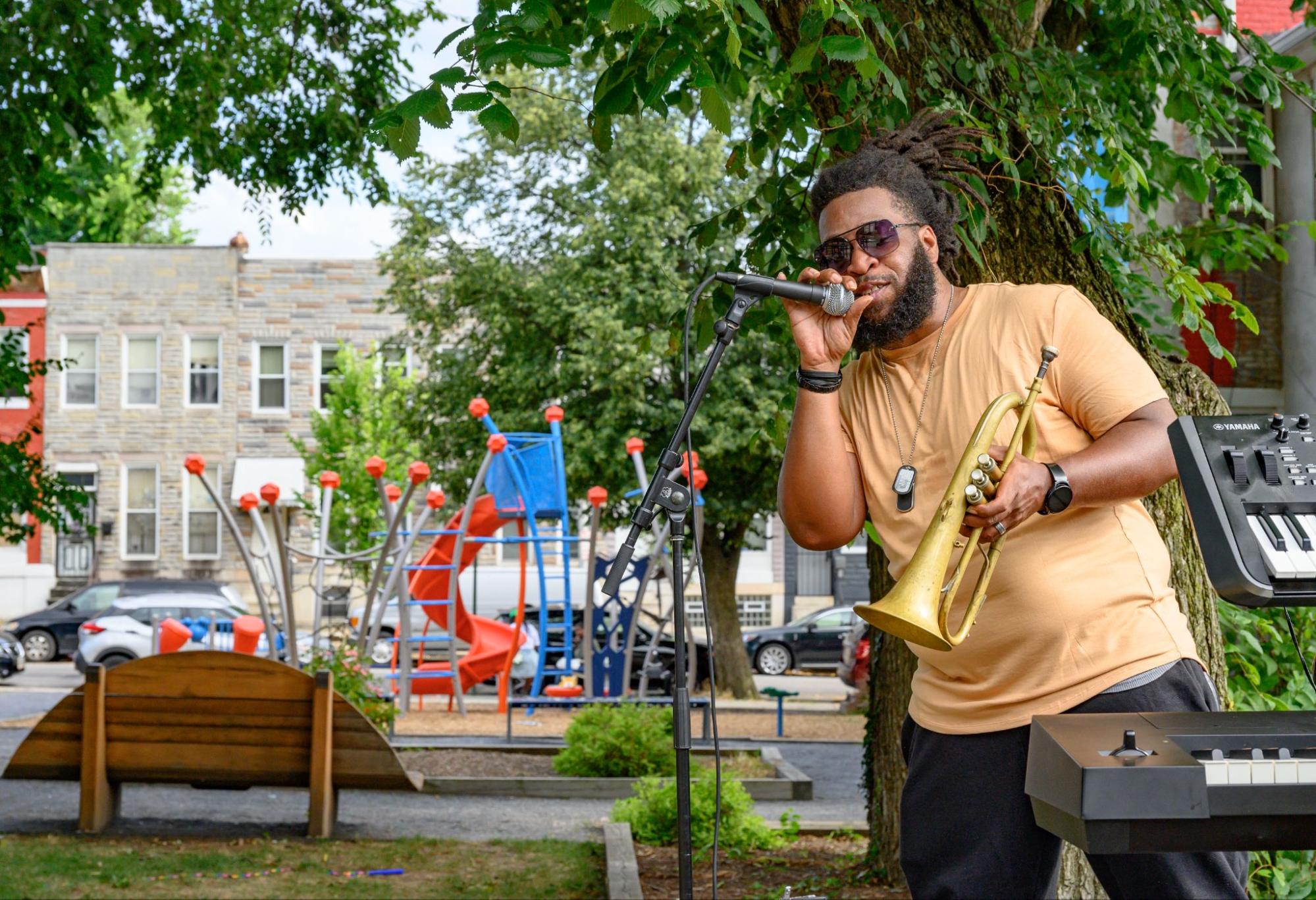
The Baltimore region is the largest node in our national network: 63 Sacred Places either open or in-development, more than anywhere else we operate. We call the people who tend these places Firesouls. They are, quite simply, some of the most extraordinary people I have ever had the privilege to know. Pastor Michael Martin tending the trails at Stillmeadow PeacePark in Southwest Baltimore. Annette March-Grier carrying the work forward at the Sacred Place at Roberta’s House. Bri Horne, at Pigtown Climbs. At Kirby Lane Park, Donald Quarles finding infinite opportunities to gather his community. Think Music in the Garden, and a block, slowly, filled with neighbors reconnecting with nature.
That I have come to do this work alongside them is something I could not, for many years, have foreseen. My path here was not a straight one. For years, I worked as a production company executive in Los Angeles, working for a company creating award-winning and meaningful films for social impact. I served on the Nature Sacred Board the whole time. And it was in that role that I found myself in Joplin, Missouri, in 2012, one year after a historic and devastating tornado claimed nearly 160 lives. There, I first met Chris Cotten, then head of the city’s Parks and Recreation Department. We were speaking with him about creating a nature sanctuary, with the express purpose of helping that community process and heal following an unfathomable trauma. What Chris had seen, what Joplin had endured, left a deep imprint on me.
A few years later, I left the film job—ready for a new challenge. And then, within days, Chris called. He had been diagnosed with PTSD, and his therapist had suggested that telling his story might help him heal. The first person he thought of, he said, was me. Six weeks later, my film crew and I were on the ground in Joplin filming a short documentary, Butterfly Angels, named for the butterflies many survivors reported having seen in the midst of the tornado. Between interviews and shoots, I spent hours on a bench in the memorial garden. And in that garden, something became clear for me. My next chapter.
As Nature Sacred turns 30 this year, the question I keep coming back to is not really about me. It is about what communities still need. And about the people, in Baltimore and in cities and towns across the country, who keep showing up to create it, cultivate it, steward it – nature.
Can you talk to us a bit about the challenges and lessons you’ve learned along the way. Looking back would you say it’s been easy or smooth in retrospect?
There is, I think, a peculiar challenge at the heart of this moment in the work. We have seen, in recent years, a remarkable expansion in media coverage and, as a byproduct, in societal awareness of the positive impact of nature on our health and well-being. But knowing something intellectually is often completely decoupled from behavioral change. We have built our days around screens instead of seasons, our nervous systems around notifications instead of rhythms; we know the cost of this, and yet we struggle, individually and collectively, to step out of it.
And beneath that, I think, lies a deeper conditioning still. The scientific advances of the past one hundred years have happened at a pace that would have been unimaginable to those who came before us, and the modern inventions and therapies enabled by that same ingenuity have conditioned us to believe that the most powerful and effective solutions to our problems emerge from a lab, from a string of code, from some piece of cutting-edge technology that did not exist before. How, then, can something as old as time really hold a key to some of the most pernicious challenges we face?
Appreciate you sharing that. What else should we know about what you do?
What every Sacred Place offers is, on its surface, deceptively simple: an intentionally, community-led designed green space; somewhere to sit, to journal, to be still, to spend time with someone. They are places designed for healing and for reflection, and for gathering and for connection. They are places that create the conditions for joy. The deeper work, the harder work, is in how those places come into being, and in who keeps them alive once they do.
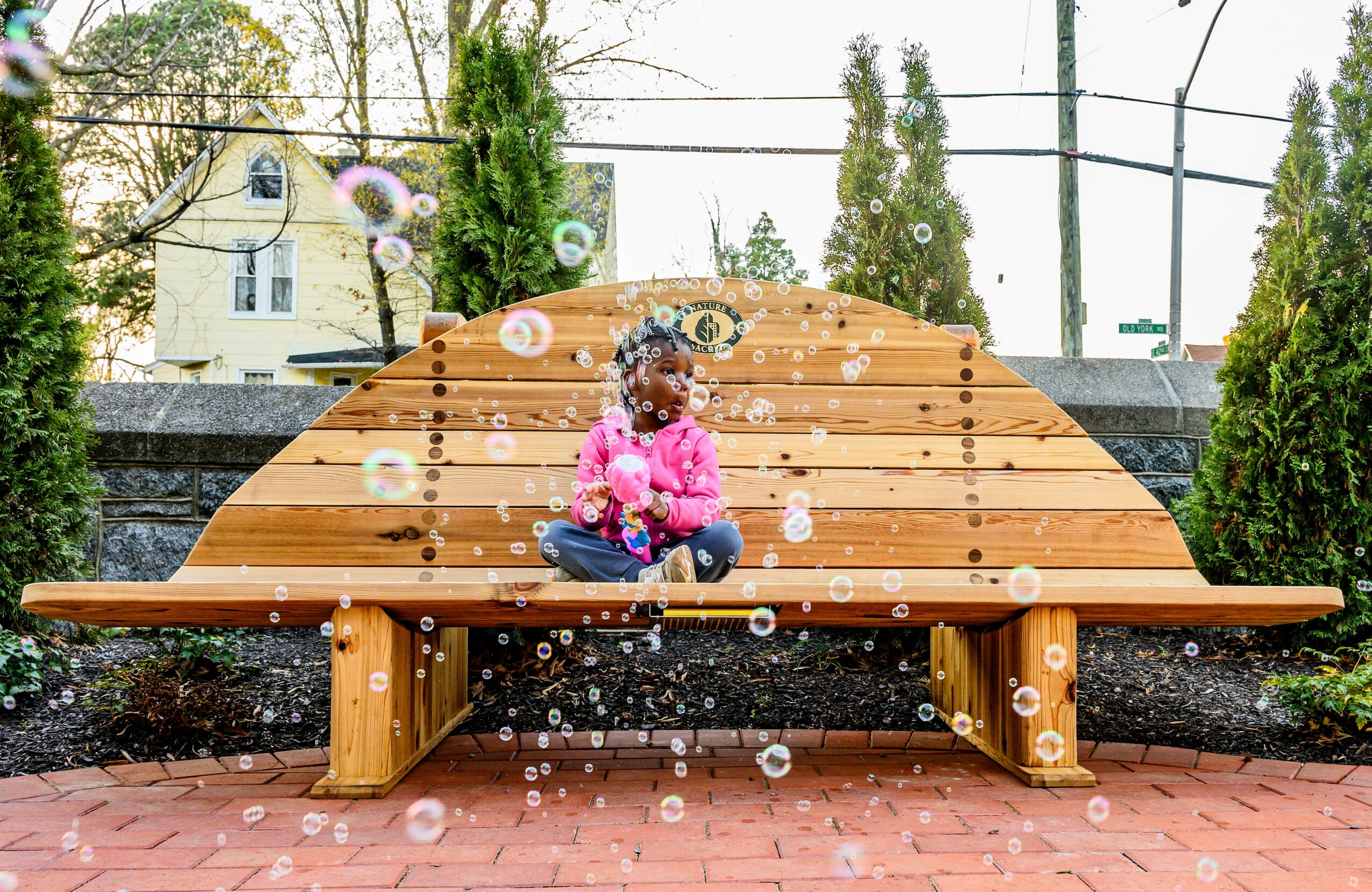
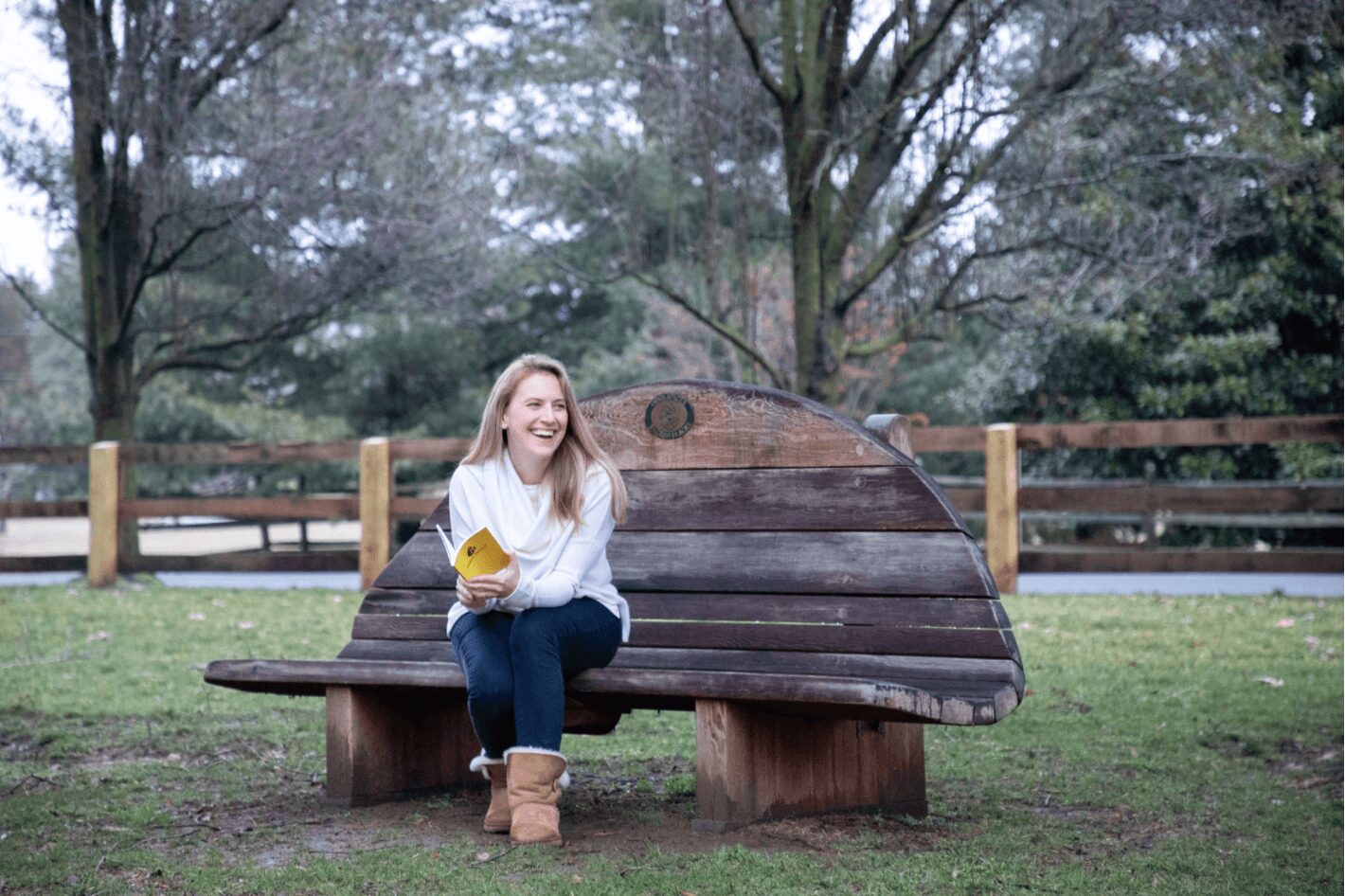
There are nearly 150 Sacred Places open across the country today. Each one is co-created with the community it will serve, and tended, over years and decades, by a Firesoul, a community leader who carries the work forward locally. Every Sacred Place includes a handcrafted wooden bench, and tucked beneath that bench, a Little Yellow Journal, anonymous, blank, and waterproof, where visitors are invited to write about whatever is moving them in that moment.
Baltimore is, by some distance, the densest part of our network. Having seen the potential of these Sacred Places, and the many roles they can play in the life of a community, we are eager to keep working with the network to imagine, and to activate, what is possible next. Baltimore is where that future is being shaped first, and a model for others.
For nearly thirty years now, visitors to these benches have been writing in the Little Yellow Journals, leaving an anonymous, accumulated record of gratitude and grief, love and loss, and of the kind of thinking that does not seem to happen anywhere else. From a bench at the Healing Garden & Labyrinth at Johns Hopkins Bayview Medical Center, here in Baltimore, one entry reads:
“I never thought that I would be sitting here, a person who survived war, death, poverty, self-doubt, and depression. Today, there is no doubt that I have a purpose. Seeing what others have written is moving. I truly believe that each of us is tethered and each other’s blessings.”
We didn’t change a word.
That accumulated archive sits alongside a growing body of research, in partnership with leading scientists, on how green space affects mental and physical health. Twenty minutes spent in nature is enough, the science shows, to measurably lower stress hormones. Journaling brings its own, well-documented benefits to mental health; so does meaningful connection with others. A Sacred Place quietly offers all three. People who live near green space report less depression, less anxiety, and stronger ties to their neighbors. Greening vacant lots in distressed urban neighborhoods has been shown to reduce violent crime by as much as 29 percent. Nature, it turns out, is not a luxury at all. It is essential infrastructure for the life of a community.
What I love most about this work, perhaps, is that so much of my time, my effort, my energy is given over to the creation of more meaning, and more joy, in the world. We talk about joy explicitly at Nature Sacred. We have come, over the years, to hold it as one of the central outcomes of this work, and not, as one might have expected, as the byproduct of getting other things right. We lead with joy, deliberately, even when the subject of the work itself is loss. A Sacred Place does not promise anything; it simply makes room. And people come, for a moment, for a season, for a lifetime, and find what they need. To be doing this work, every day, alongside the people who tend these places, is itself one of the great joys of my life.
How do you think about happiness?
My professional life is built around the idea that even a few minutes a day in nature can change us. I very often begin my early mornings, pre-sunrise (when I’m lucky, by moonlight), with a walk. I take every opportunity to visit and spend time in Sacred Places. I paddleboard on the Chesapeake Bay, where there is nothing quite like the quiet of being out on the water. And I take forest walks with my son, who, at 9, is a much better noticer than I am. He catches the things I would otherwise have missed entirely.
Beyond that: family. The Firesouls, and the team I have the privilege to work with. The wider community of supporters, with whom this work is possible, this movement has built over nearly three decades. And in a time of perceived unprecedented divisiveness, I am part of an organization that gets to help people, daily, create more opportunities to heal through the unifying power of nature.
Contact Info:
- Website: https://www.naturesacred.org
- Instagram: https://www.instagram.com/naturesacred/
- LinkedIn: https://www.linkedin.com/company/tkf-foundation
- Other: https://open.spotify.com/show/64anjkYEOZsBxMXljlh9sH