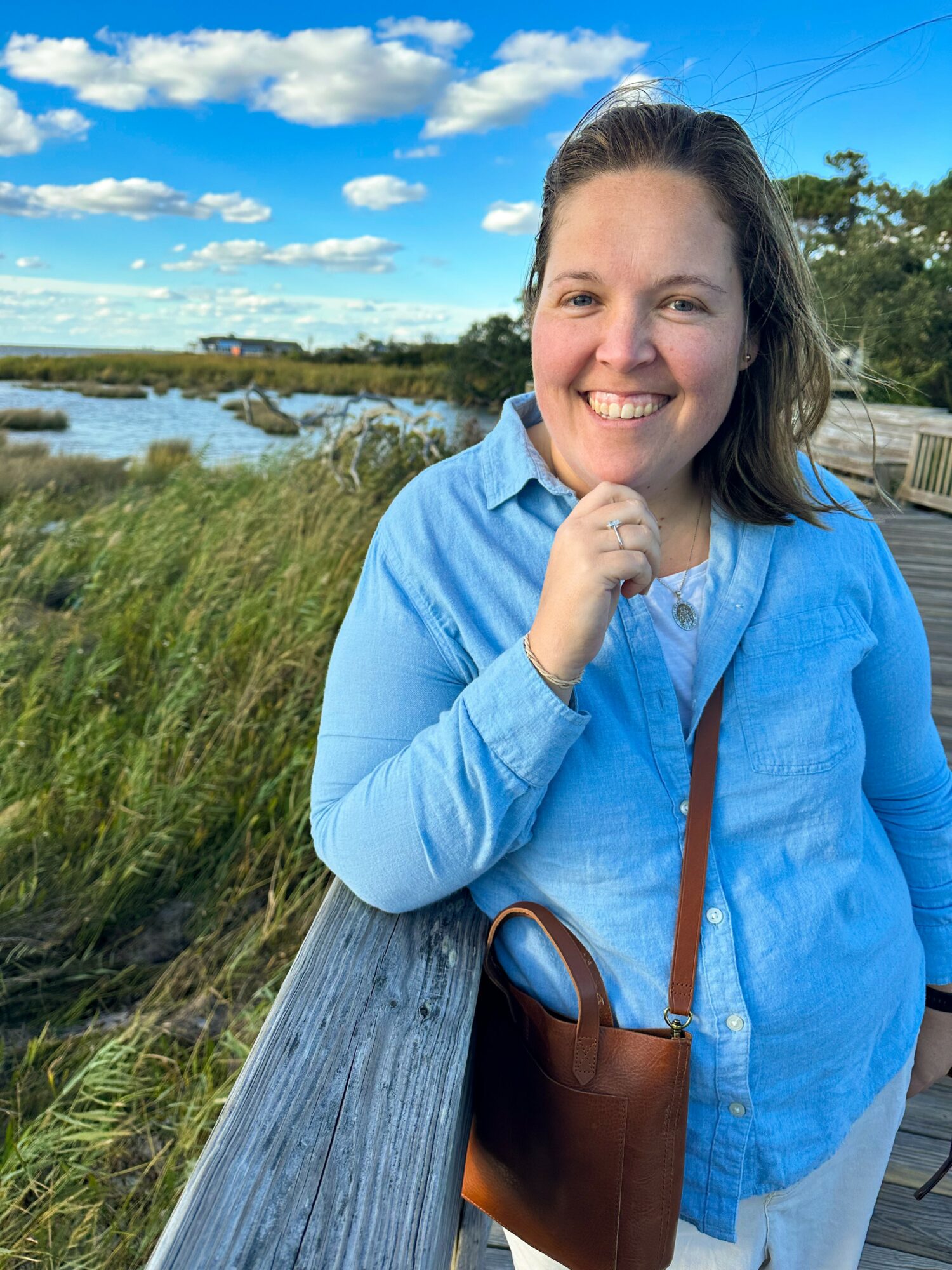
Today we’d like to introduce you to Victoria Woodruff.
Alright, so thank you so much for sharing your story and insight with our readers. To kick things off, can you tell us a bit about how you got started?
Mental health has always felt present to me long before it became my profession. I saw it in my college dorm in undergrad, within my own family, and throughout my community. Early on, I actually thought I wanted to go to medical school. While working at a research study through Johns Hopkins School of Public Health, I realized that the part of the work I loved most was not the medicine, but the people.
Each participant had lived through significant hardship, and hearing their stories and understanding how they got there and how they found ways to endure was incredibly powerful. That experience shifted my path. I began to see mental health as an anchor for so many larger social and public health issues, and I knew that was where I wanted to focus my energy.
I have always been an empath. I often describe it as a sixth sense, an ability to read emotional undercurrents and connect with people on a deeper level. Early in my career, learning how to hold that sensitivity without becoming overwhelmed was a challenge. Over time, I came to understand that it is a gift. Today, I feel incredibly fortunate to be able to truly see people, relate to them, and walk alongside them during some of their hardest moments. It is an honor I do not take lightly.
I also bring my own lived experience with mental health into the room. I understand how crippling anxiety and depression can be, and how frightening it feels when you do not have answers or a clear way forward. I did not start therapy because I believed in it. I started because a physician encouraged me to try. I was skeptical and guarded at first, but that experience changed me. It taught me how to sit with my emotions rather than fear them.
Having been on both sides of the couch, I believe I bring a level of empathy and understanding that allows clients to feel genuinely seen and supported. That perspective shapes not only how I practice therapy, but how I have built my business, with warmth, intention, and deep respect for each person’s story.
Alright, so let’s dig a little deeper into the story – has it been an easy path overall and if not, what were the challenges you’ve had to overcome?
Absolutely not. Life is rarely a smooth road, and my path has been no exception. There were challenges at every stage, from getting through college and figuring out graduate school, to simply surviving school while life continued to unfold in the background.
When I first began working in the field, one of the biggest struggles was learning how to be emotionally available to so many people each day and then come home and still show up fully for family and friends. In the beginning, it honestly felt impossible. Over time, I realized that this balance does not come naturally. It is something you grow into. When I talk with younger social workers now, the advice I give most often is to start slow, be patient with yourself, and allow time to develop that emotional endurance. It is an art to balance the depth of this work while staying authentic and present in your own life, but with time you do build that muscle.
Another major learning curve was business ownership. I did not go to school for business. I went to school to understand people. Starting a practice meant learning an entirely new skill set on the job, from operations to decision making to risk taking. To be honest, I am still learning every day. That growth has been humbling, but also incredibly empowering.
Mental health itself is also constantly evolving. There are new treatments, new challenges, and new social realities that require us to remain flexible and adaptive. Since COVID, for example, we have seen a dramatic rise in school refusal, and it is something the mental health community is actively working to better understand and address together. Being effective in this field means staying curious, collaborative, and open to change.
It has never been a straight path, and I do not expect it ever will be. But each challenge has shaped how I practice, how I lead, and how I show up for the people I work with. In many ways, the uncertainty has been one of my greatest teachers.
As you know, we’re big fans of Woodruff Counseling . For our readers who might not be as familiar what can you tell them about the brand?
I started Woodruff Counseling because I wanted the freedom to provide thoughtful, individualized care that truly meets people where they are. I do not accept insurance because therapy is still often treated as prescriptive and one size fits all, and I believe meaningful mental health care requires flexibility, creativity, and time.
For example, I cannot expect a seven year old to sit comfortably in an office and explain why they are overwhelmed with anxiety at school. But I can sit that same child down with our in office golden retriever, Ellie, or step outside into a less sterile environment where play and conversation feel natural. Whether I am working with children or adults, my goal is always to create an environment that supports the individual rather than forcing the individual to fit the environment.
My practice focuses primarily on treating anxiety disorders, mood disorders such as depression and bipolar disorder, and supporting people through major life transitions. I am known for blending strong clinical foundations with a very human approach. I am trained in evidence based therapies, particularly Cognitive Behavioral Therapy and Acceptance and Commitment Therapy, and I also incorporate nature informed therapy when appropriate. That allows me to use tools like the outdoors, movement, play, and experiential work alongside traditional interventions.
Ellie, my golden retriever, is very much a part of the practice and has been warmly embraced by both adults and children. Her presence helps people feel more at ease, lowers anxiety, and often opens the door to connection in a way that words alone cannot. That integration of evidence based care with warmth, flexibility, and creativity is what sets Woodruff Counseling apart.
Brand wise, I am most proud that my practice feels approachable, grounded, and real. I am a therapist who works to understand the root of the problem and then guides clients with practical tools they can begin using in their daily lives. That might mean learning ways to regulate emotions, shift unhelpful thought patterns, or identify changes that help someone feel less stuck and more aligned with the life they want to build.
Clients often tell me they appreciate my direct but supportive style. I aim to be a clear and honest mirror while remaining deeply compassionate. At its core, Woodruff Counseling is about offering effective, personalized care in a space where people feel seen, supported, and empowered to make meaningful change.
Do you have any advice for those looking to network or find a mentor?
Mentorship and networking are essential in social work, not just early in your career, but throughout it. Even after completing supervision, staying connected to others in the field is critical for growth, support, and perspective. This work can be emotionally demanding, and it is not meant to be done in isolation.
What has worked best for me has been being intentional about professional relationships. I used professional associations to connect with others who were interested in thoughtful discussion, consultation, and shared learning. Over time, those connections developed into small peer groups where we meet regularly to talk through challenging cases, support one another, and stay grounded in the work. I currently meet with several colleagues twice a month, and those relationships have been invaluable.
For those who are new to the field or considering a path in mental health, my advice is to reach out. Connect with clinicians in practice, attend professional events, and engage with organizations such as mental health associations or community based nonprofits. Many organizations are eager for volunteers, interns, or committee members, and those roles often provide meaningful exposure, mentorship, and learning opportunities.
Networking does not have to feel transactional or intimidating. The most meaningful connections tend to come from shared values, curiosity, and a genuine desire to learn. There is a significant need for support in mental health, and as a result there are opportunities for mentorship and connection at every stage of a career. Staying engaged with the community not only strengthens your professional skills, but also helps sustain you personally in this work.
Pricing:
- For pricing you can visit our website https://woodruff-counseling.com
- For a free 15 minute consultation visit our website at https://woodruff-counseling.com
- You can schedule an appointment to be seen virtually or in person at our Towson Office online through our website https://woodruff-counseling.com/schedule-online/
Contact Info:
- Website: https://woodruff-counseling.com/
- Facebook: https://www.facebook.com/WoodruffCounselingLLC/
- Youtube: https://www.youtube.com/@WoodruffCounseling