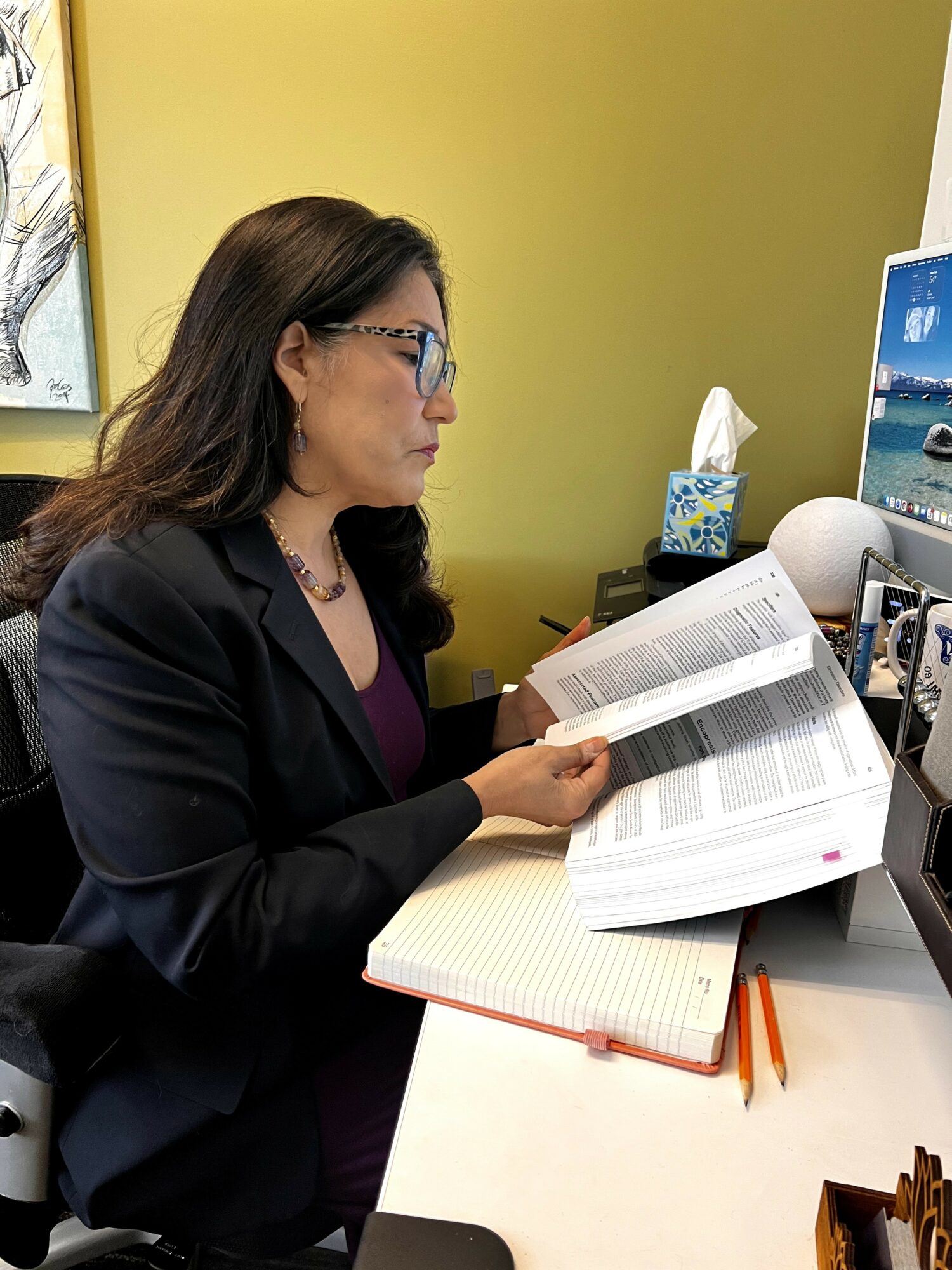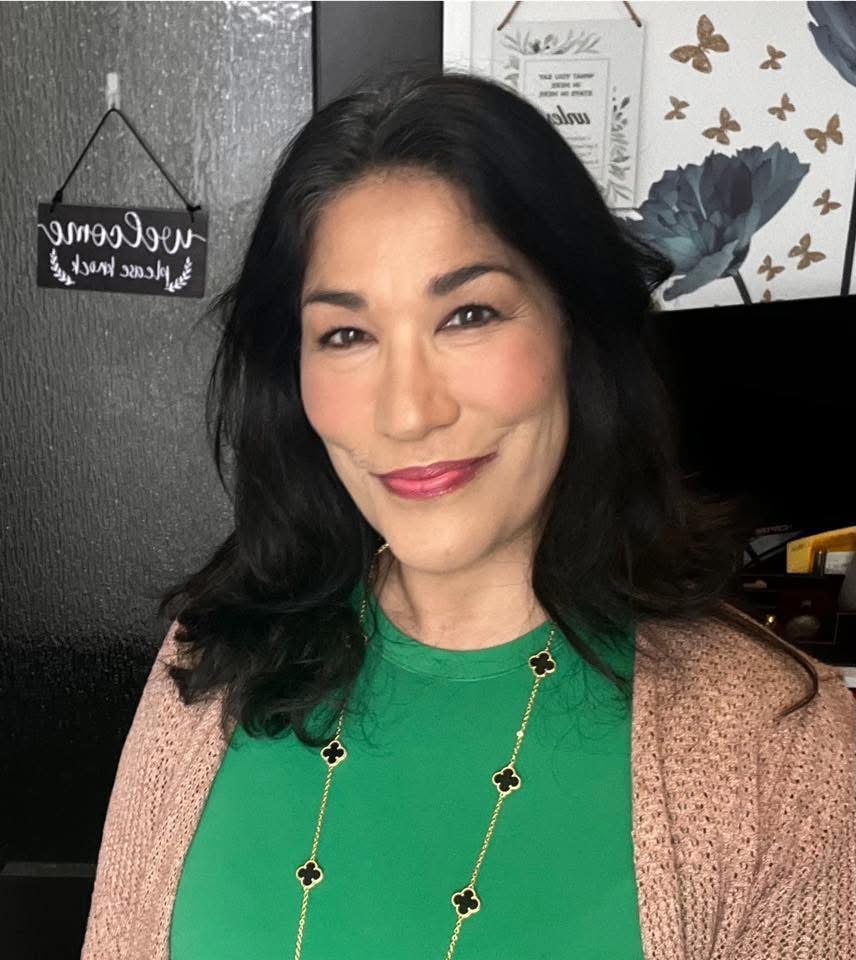
Today we’d like to introduce you to Laura A Valdes-Borsum.
Hi Laura A, can you start by introducing yourself? We’d love to learn more about how you got to where you are today?
I am first-generation American, born to Dominican parents who moved to the United States to build a better life for their family. Growing up in a small, predominantly white town, I always felt like an outsider. My two sisters and I were raised in a home where only Spanish was spoken—my parents wouldn’t even answer us if we tried speaking English to them. This was the Dominican way, and they wanted us to hold onto our culture and language. But outside our home, I encountered the painful reality of being different. When we spoke Spanish in public, people stared at us with disgust. When I spoke Spanish to my parents in front of friends, I was told I was being rude—even though I was simply obeying my family’s rules. I experienced bullying in middle school, and later in community college, a girl threatened to “knife my face.” My mother had to walk me to class until the threats stopped. I know what it feels like to doubt yourself, to feel like you don’t quite belong, to feel lucky that anyone wants to be your friend.
Despite having a happy childhood with loving parents—my father was a urologist and my mother stayed home with us—I carried that feeling of being on the outside looking in. I majored in Psychology in undergrad because I loved helping people, but I didn’t pursue it further at the time. Instead, I got married at 25 and chose to be a stay-at-home mom, homeschooling my two daughters for years. Eventually, I worked in sales for a bed and breakfast and later in property and casualty insurance, but I felt unfulfilled. I needed purpose.
At 48, I finally listened to that calling. I went back to school and earned my first Master’s degree in Psychology, only to discover the university had misled me—I couldn’t practice counseling with that degree. So I went to another university and earned my Master’s in Community Counseling. I was 50 years old, finally doing what I was meant to do. I began my residency in Sterling, Virginia, and I absolutely loved this work.
But just as I was beginning this new chapter, my husband asked for a divorce. That same year, my father passed away. Suddenly, I was pursuing my dream career alone, grieving the passing of my father, as a single mom to two teenage daughters who needed me more than ever. I was starting over professionally and personally at the same time, learning to support my girls through their own challenging years while building a new life for all of us.
Then life threw another curveball. I developed a severe back injury that made it impossible to commute the hour each way from Frederick to Virginia. For three years, I lived in crippling pain. I couldn’t sit, stand, or walk for more than 15 minutes without breaking down in tears. I kept one patient pro bono via phone and video just to stay connected to the work I loved, but inside, I was falling apart. I didn’t recognize myself. I had dark thoughts about whether life was even worth living if this was my quality of life. But I had a family and pets who depended on me, and my chiropractor—who had been helping but couldn’t fully fix the problem—finally convinced me that spinal surgery was my only hope. I was terrified. I researched for months. I found out who the spinal surgeon for the Baltimore Ravens was and consulted with him. Finally, I decided to bite the bullet. It was the best decision I ever made. The results were incredible, and I got my life back. I was concerned about my mother living alone after my father passed, and decided to relocate her from her home that was a 90 minute drive, to Frederick, MD to live with me.
After recovering, I worked at an outpatient center for substance abuse and addiction, providing Intensive Outpatient Programs and individual trauma-focused counseling—including Spanish-language IOP groups, which were desperately needed. During this time, I completed my supervision hours and became a Licensed Clinical Professional Counselor in Maryland. I then spent two years working with BetterHelp online, which allowed me to fully embrace my specialty in trauma therapy across diverse populations. However, I missed the in-person connection. With the help of one of my daughters, I opened Mindful Haven Therapy in Frederick, MD on October 1, 2023. Now, with 10 years of counseling experience, I provide both in-person and virtual therapy to clients of all ages and backgrounds, in English and Spanish. My primary modalities include EMDR, Cognitive Behavioral Therapy, Mindfulness Therapy, Multicultural Counseling, and Trauma-Focused Cognitive Behavioral Therapy.
This doesn’t feel like work—it feels like purpose. Seeing my clients transform, watching them realize they have control and options, helping them heal from their deepest wounds—that’s everything to me. My journey taught me that life can knock you down from multiple directions at once—you can lose your marriage, your health, your sense of self—but with the right support and tools, you can rebuild stronger than before. I understand what it’s like to start over, to wonder if you’re strong enough, to fear you won’t make it through. And I also know that you can. I work with many clients going through divorce, major life transitions, chronic pain, and moments where they feel like they’re starting from scratch. I’ve been there. I know the way forward exists, even when it feels impossible.
I want to reach as many people as I can in my corner of the world and make a positive difference in their lives by helping them find their own answers and teaching them how to use the tools they discover in our work together.
I’m sure it wasn’t obstacle-free, but would you say the journey has been fairly smooth so far?
It has been anything but smooth. One of my biggest obstacles was feeling like an outsider for most of my life. Growing up as a first-generation Dominican-American in a predominantly white town, I experienced discrimination, bullying, and the constant sense that I had to work twice as hard just to belong. Those experiences stayed with me, even as an adult. They taught me resilience, but they also planted seeds of self-doubt that took years to overcome.
Then there was the challenge of pursuing my dream later in life. Going back to school at 48 felt daunting. I was misled by my first university, which told me I could practice counseling with a Psychology Master’s degree—only to find out that wasn’t true. So I had to start over at a different school, earning a second Master’s degree in Community Counseling. At 50, I finally began my residency, and I was thriving. But just as I was hitting my stride, my back injury changed everything.
For three years, I lived in constant, crippling pain. I couldn’t sit, stand, or walk for more than 15 minutes without crying. I kept one client, at her request, and I continued to counsel her, but chose to do it pro bono. This small bit of counseling work allowed me to maintain some connection to the work I loved, but inside, I was struggling in ways I never imagined. I lived with a version of myself I didn’t recognize or like. The pain gave me no hope. I had dark thoughts—thoughts about whether life was worth living if this was going to be my quality of life forever. But I had a family who needed me, pets who depended on me, and something deep inside that refused to give up.
My chiropractor had been helping, but he finally told me the truth: the only real solution was spinal surgery. I was terrified. I worried it would make things worse. I spent months researching, and eventually consulted with the spinal surgeon for the Baltimore Ravens. Finally, I decided to take the leap. It was the scariest and best decision I ever made. The surgery gave me my life back.
That experience changed me as a therapist. I now understand, on a visceral level, what it’s like to live in darkness, to lose hope, to wonder if you’ll ever feel like yourself again. And I also know what it’s like to fight your way back. That’s why I do this work. I’ve been there. I know the way out exists, even when it feels impossible.
Great, so let’s talk business. Can you tell our readers more about what you do and what you think sets you apart from others?
Mindful Haven Therapy is more than just a counseling practice—it’s a sanctuary. The name itself was created by my daughter after we talked about what I wanted this space to symbolize for my clients. “Mindful Haven” represents a safe, personal sanctuary for practicing mindfulness and finding support for mental health. It combines mindfulness—the practice of being present—with “haven,” meaning a place of safety and refuge. It’s a space and state of being that fosters mental peace, well-being, and a sense of security. That’s exactly what I’ve created here in Frederick, Maryland.
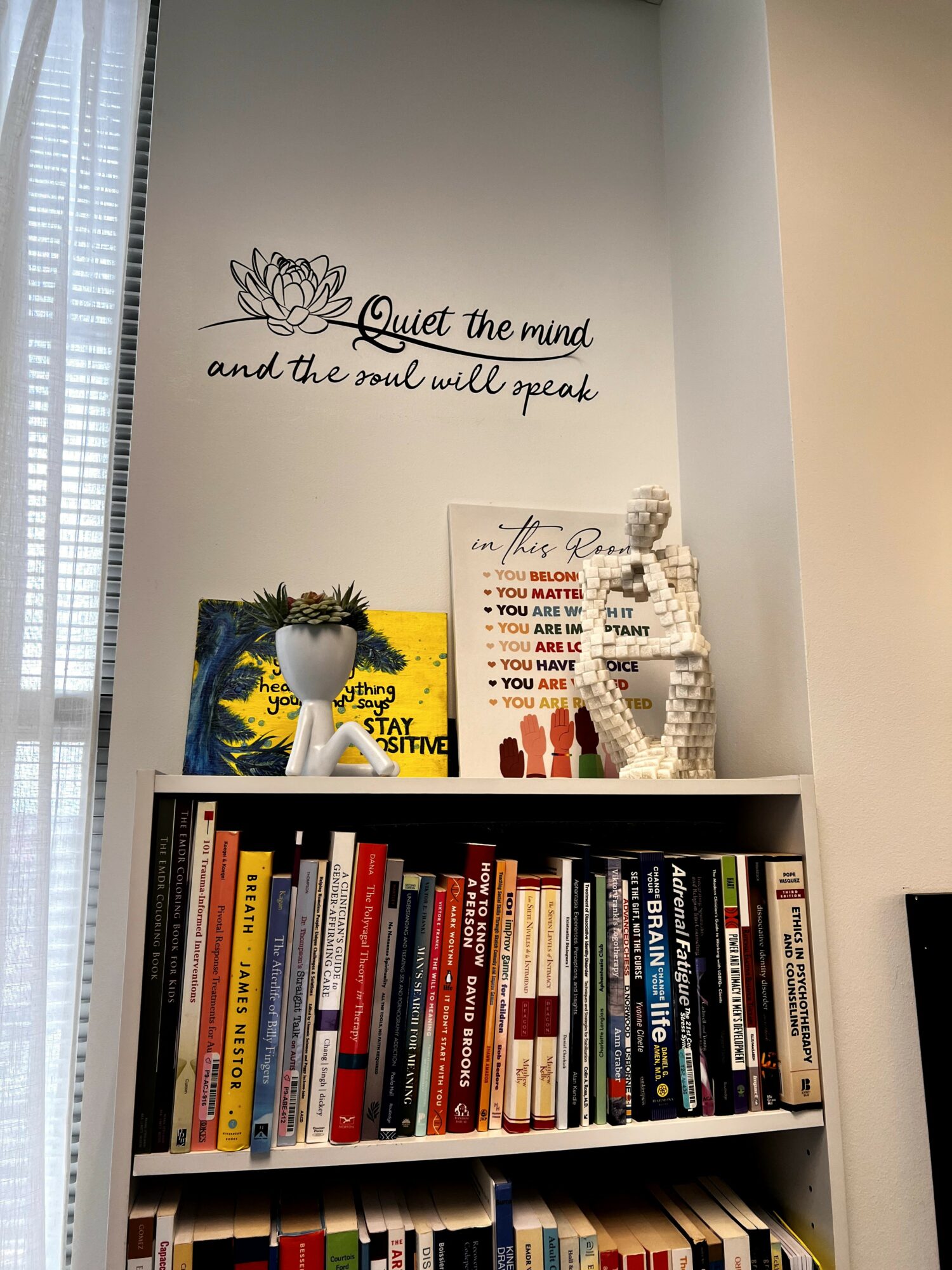
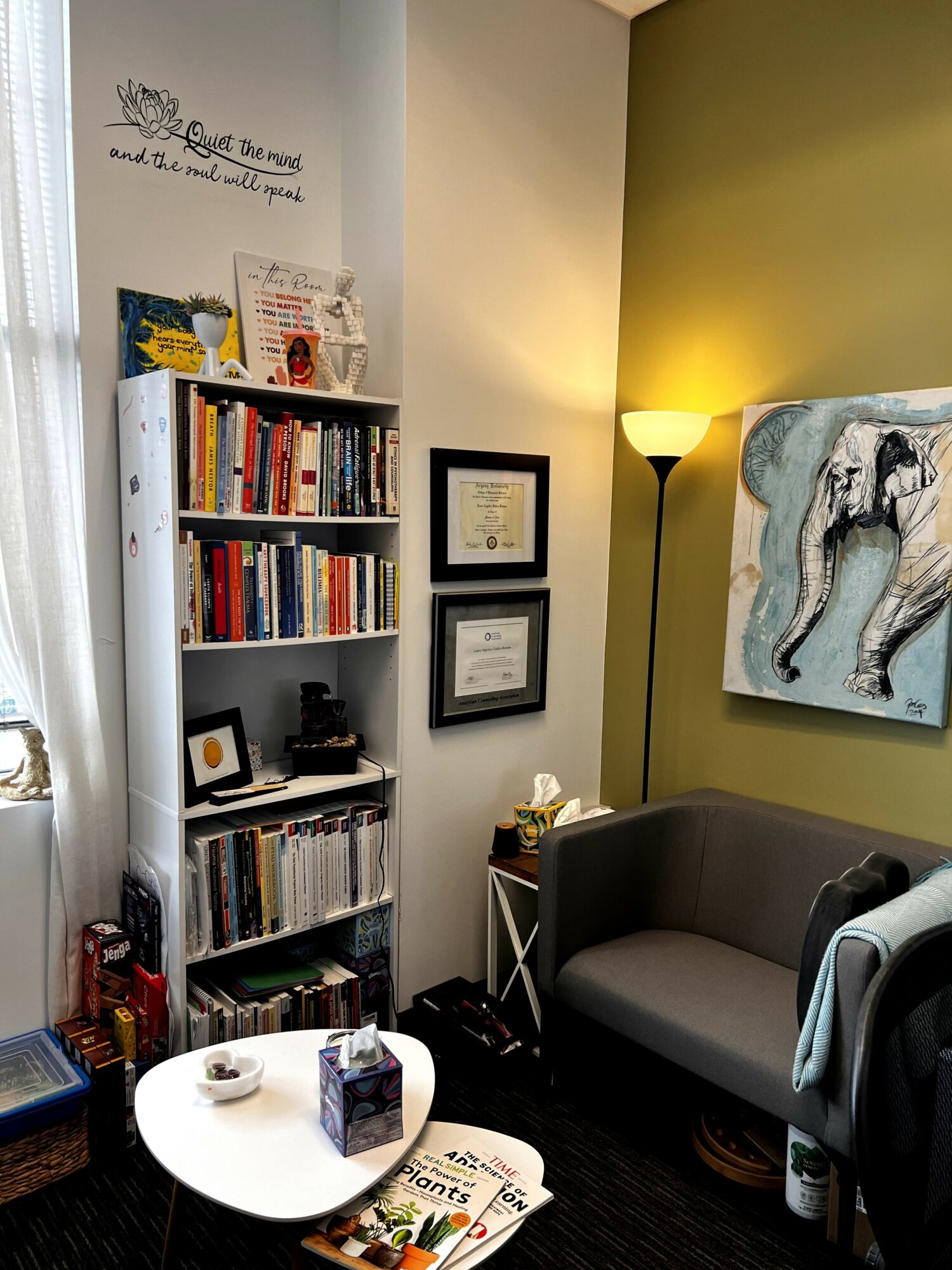
When clients walk into my office, they’re greeted by a warm, calming environment designed intentionally to help them feel safe from the moment they arrive. Natural light floods through the windows. A comfortable gray couch is piled with vibrant throw pillows, including one that simply says “It’s OK”—because sometimes people just need that reminder. The walls feature thoughtful artwork and affirming messages that reinforce what I want every client to know: “In this room, you belong. You matter. You are worth it. You are important. You are loved.” There’s a gentle water fountain with warm amber lighting, symbolizing the flow and movement of healing. On the wall, a lotus flower accompanies the quote, “Quiet the mind, and the soul will speak.” Every detail is purposeful, creating an atmosphere where people can finally exhale and begin their healing journey.
What sets Mindful Haven apart is the depth and breadth of what I offer. I specialize in trauma therapy, which encompasses so many different populations and experiences—childhood trauma, abuse, PTSD, complex trauma, medical trauma, and more. My primary therapeutic modalities include Eye Movement Desensitization and Reprocessing (EMDR), Cognitive Behavioral Therapy (CBT), Mindfulness Therapy, Multicultural Counseling, and Trauma-Focused Cognitive Behavioral Therapy (TF-CBT). These evidence-based approaches allow me to meet clients where they are and give them tools that create real, lasting change.
I work with all ages—children, teens, adults, and seniors—and offer both in-person sessions and virtual counseling, giving clients the flexibility they need. But one of the things I’m most proud of is that I provide all of my services in both English and Spanish. For many Spanish-speaking individuals and families in Maryland, finding a therapist who not only speaks their language but truly understands their cultural context has been nearly impossible. I’m here to fill that gap. Culturally competent, bilingual mental health care isn’t a luxury—it’s essential, and it’s what I provide every single day.
I work with people navigating major life transitions—divorce, loss, career changes, starting over after feeling like their whole world has shifted. I work with people who feel like outsiders, who’ve never quite felt like they belong, who carry invisible wounds from discrimination or feeling different. I work with trauma survivors who thought they’d never feel safe again. What makes my practice unique is that I’ve lived many of these experiences myself, and while I don’t center my story in sessions, that lived experience informs everything I do. I know what it’s like to rebuild your life from scratch. I know what hopelessness feels like, and I know the way out exists.
My tagline is “Healing minds, transforming lives,” and that’s not just words—it’s what I witness every single day. I’ve seen clients who couldn’t leave their homes due to anxiety start living full lives again. I’ve watched people process decades-old trauma and finally feel free. I’ve seen teenagers who felt invisible discover their voice and worth. I’ve helped parents navigating divorce learn to co-parent with grace while healing their own hearts. This work is my purpose, and Mindful Haven is where that purpose comes to life.
What I want readers to know is this: if you’ve been searching for a therapist who will truly see you, who will create a safe space where you can show up exactly as you are, who has the training and experience to help you heal from trauma, and who offers services in Spanish or understands what it’s like to navigate multiple cultures—Mindful Haven Therapy is here for you. Whether you’re in Frederick or anywhere else in Maryland, whether you prefer in-person or virtual sessions, I’m here. You don’t have to carry this alone anymore. Healing is possible, transformation is real, and you deserve a haven where you can finally find peace.
In terms of your work and the industry, what are some of the changes you are expecting to see over the next five to ten years?
The mental health field is at a turning point, and I see several major trends shaping the next decade. As immigrant populations grow and our communities become more diverse, the demand for therapists who understand cultural context and can provide services in multiple languages will skyrocket. For too long, many communities—especially Latino, Asian, and other immigrant populations—have been underserved because mental health care wasn’t accessible in their language or didn’t honor their cultural values. I see this changing rapidly. Bilingual, multicultural therapy won’t be a “nice to have”—it will be expected.
The pandemic forced mental health care to go virtual, and we’ve discovered something important: it works. Telehealth removes barriers for people in rural areas, those with mobility challenges, busy parents, and anyone who might not have accessed therapy otherwise. I believe hybrid models—offering both in-person and virtual care—will become the standard, giving clients flexibility and expanding access dramatically.
We’re also seeing a cultural shift, especially among younger generations, where seeking therapy is normalized rather than shameful. This is huge. As stigma decreases, more people will seek help earlier, before crises develop. I’m hopeful that within 10 years, mental health care will be viewed the same way we view physical health care—something everyone should prioritize.
More professionals are recognizing that trauma underlies so many struggles—addiction, relationship issues, chronic pain, anxiety, depression. Schools, workplaces, and even medical offices are beginning to adopt trauma-informed approaches. I see this expanding significantly, with trauma therapy modalities like EMDR becoming much more widely available and integrated into standard care. Particularly in immigrant and minority communities, there’s growing awareness that trauma isn’t just individual—it’s passed down through generations and shared across communities. Understanding how historical trauma, discrimination, and displacement affect mental health will become central to effective treatment.
I’m hopeful we’ll see mental health support embedded in schools and workplaces as preventative care, not just crisis intervention. Imagine a world where kids learn emotional regulation skills in elementary school, where companies provide regular mental health check-ins as part of employee wellness. We’re moving in that direction. The more aggressive hope? That insurance companies will finally catch up and provide better, more equitable coverage for mental health services, making quality care accessible to everyone, not just those who can pay out of pocket. We’re not there yet, but the momentum is building.
This is an exciting time to be in mental health counseling. The need has never been greater, but neither has the awareness, acceptance, and innovation in our field.
Contact Info:
- Website: https://www.mindfulhaventherapy.com
- LinkedIn: https://www.linkedin.com/in/laura-a-valdes-borsum-84651b335
- Other: https://www.psychologytoday.com/profile/255925