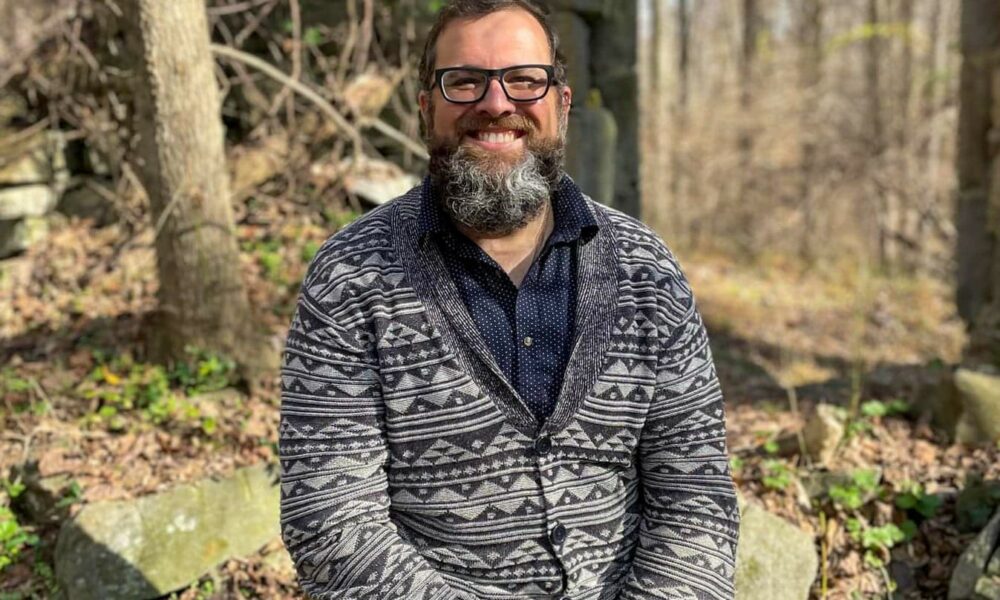
Today we’d like to introduce you to Ron Padrón.
Hi Ron, we’d love for you to introduce yourself.
I’m originally from Florida and moved up to Maryland in 2012 for work after finishing graduate school for higher education administration. I worked primarily with students at risk of failing out of school and those who did, but were looking to come back to school. In doing this work, I noticed how this population of students was disproportionately those from marginalized and underrepresented backgrounds – BIPOC, queer, disabled and neurodivergent, students from lower socioeconomic backgrounds, etc. Looking to find ways to combat that was my entry point for work with diversity, equity, inclusion, and accessibility (DEIA). It started from a very academic place because that is how I tend to operate – I see a problem or an obstacle, and I want to learn as much as possible about it before moving forward.
I was raised in a Roman Catholic family and was an altar server in elementary school. My mom and grandparents are from Cuba, and I remember going to things like the Three King’s Day parade in Little Havana and the shrine to Santa Barbara in my grandparent’s house. I remember the way faith played a central part in navigating several family and health crises when I was young. I even wanted to become a priest when I was little. By the time I was in high school, however, I had started to realize I wasn’t like all the other boys. This was in the 1990s, and there wasn’t a lot of gay representation, and what there was tended to be very negative, so I had a hard time figuring myself out. My first real exposure to being gay was the murder of Matthew Shepard because it became a national story. Realizing I was gay caused me to no longer feel welcome in the church, and I started looking for something else to meet that spiritual need. A friend introduced me to Wicca, and I studied and practiced it for a few years, but it never really fit.
A defining event for me and my relationship to DEI work was the shooting at the Pulse nightclub in Orlando. It was an inflection point for me in understanding my identity and navigating the world. I lived in Orlando for several years before moving to Maryland, where I came out of the closet. When people ask me where in Florida I’m from, I tell them Orlando because that is where the person I am now was born. Pulse was the first gay club I went to when I came out. My last two years there I lived down the road from the club. The attack itself, the way it was politicized, and the outcome of the 2016 election shortly after sent shockwaves through many of my communities and altered how I navigate DEIA work, shifting it from being focused on institutions to communities. It also altered my personal relationship to this type of work. Although I’m Cuban-American, my skin is white, so folks tend to see a large white guy who, more often than not, they would generally read as straight. This event really led me to interrogate several of the privileges I hold and how, when, and why I mask some of my identities. It made me want to be more intentional about living more authentically as a queer, chronically ill, gay man.
When my DEIA work shifted to being community-centered, it also stopped being something that was academically driven and became more of a spiritual calling. This helped me to reconnect with a spirituality that had been dormant for a long time and I started doing more coalition building and collaborating with other folks in my community. Through this I’ve been introduced to many interesting paths ranging from shamanic practices to Druidry to various flavors of the folk Catholicism I’d grown up with.
White Rose Witching started at the beginning of 2020 as a personal visual diary and blog to help me collect some of these disparate threads. It has since grown into something I never expected or imagined but has become such an important part of my life. I’ve been able to meet and work with some amazing people and have been blessed with several opportunities to lead workshops on various topics, from queer ancestors to spiritual activism. What has come out of the synthesis of all these experiences is a focus on sacred queer spirituality as a lens for healing, resilience, activism, and community building.
Would you say it’s been a smooth road, and what are some of the biggest challenges you’ve faced along the way?
It’s been an unexpected and bumpy road. I had to do a lot of healing around some of the things I’d internalized about being gay and the religious trauma around that, and that was not something I expected to be confronted with. It’s an ongoing process, too. I also decided to return to school to learn how to better serve my community and to seek ordination. I’m enrolled in a Community Ministry program through Cherry Hill Seminary and am pursuing ordination through the Sacred Well Congregation. While I’m excited by this work, it is challenging to do it while working full-time and trying to spend time with my family. Over the last decade, I also developed a chronic illness that has limited my ability to engage in certain activities. This was a real blow to me psychologically. I went from being someone who saw their physical strength and adventurous spirit as a core part of their identity to someone who would unexpectedly be unable to function for days at a time. I would often get depressed because of this, and it was hard to find the motivation to do anything.
Thanks for sharing that. So, maybe next you can tell us a bit more about your work?
White Rose Witching is focused on spiritually-driven community healing and activism. My work focuses on sacred queer spirituality, and I offer workshops on that topic ranging from connecting with queer ancestors to processing what spirituality looks like from the margins. I also offer workshops on spiritual activism, spiritual resilience in social justice work, trauma-informed spirituality, and creating more accessible spiritual spaces. Everything I offer strives to be collaborative, rooted in deepening connections within our communities, and invites us to be self-reflective and open to critique.
Through the workshops and blog, I try to do a few things. I write a monthly Queer Ancestor Spotlight highlighting a queer person or place with links to do more reading. These spotlights range from someone folks might be familiar with to some lesser-known but still vitally important figures or events in queer history. I also write personal reflections on the intersection of identity and spirituality that document my personal growth and invite readers to reflect on their paths. Finally, I often write pieces pushing back against the toxic positivity of the “thoughts and prayers” and “love and light” approaches to spiritual activism and challenge folks to consider what concrete actions they can take in addition to the spiritual work of pursuing justice. I also hope to begin providing DEIA consultation services for spiritual and interfaith organizations in 2023.
How can people work with you, collaborate with you, or support you?
I’m always looking to collaborate with folks interested in exploring the intersections of spirituality, social justice, art, performance, etc. I recently co-hosted a workshop with an artist based out of Frederick, MD, called “Ancestors and Art,” where I talked about the various ways ancestor veneration can manifest, and they talked about art as the expression of abstract experiences and spiritual insight. I love getting to do work like that and would love to find ways to do more queer-focused collaborations with queer artists, drag performers, and queer historians.
A great way folks can support me is by granting access to their spaces. For example, through a mutual contact, a friend and I were able to host a queer-history lecture at one of the historic sites of the Maryland National Capital Park and Planning Commission. The lecture was called “The Queer Chesapeake: LGBT History in the Mid-Atlantic,” and we’ve been told was the first public-facing queer programming in the Commission’s history. Being given a chance to make queer life, history, and experience more visible in other spaces would be amazing.
I’m also talking with someone I met through this work who currently lives in Ohio about starting a punk spirituality zine in 2023. We’ll be looking for folks who want to participate and contribute through short essays, art, and poetry. The best way to contact me with through my website: www.
Contact Info:
- Website: https://www.
whiterosewitching.com/ - Instagram: https://www.
instagram.com/white.rose. witching/ - Facebook: https://www.
facebook.com/whiterosewitching - Twitter: https://twitter.com/
WRWitching


Image Credits
Ron Padrón