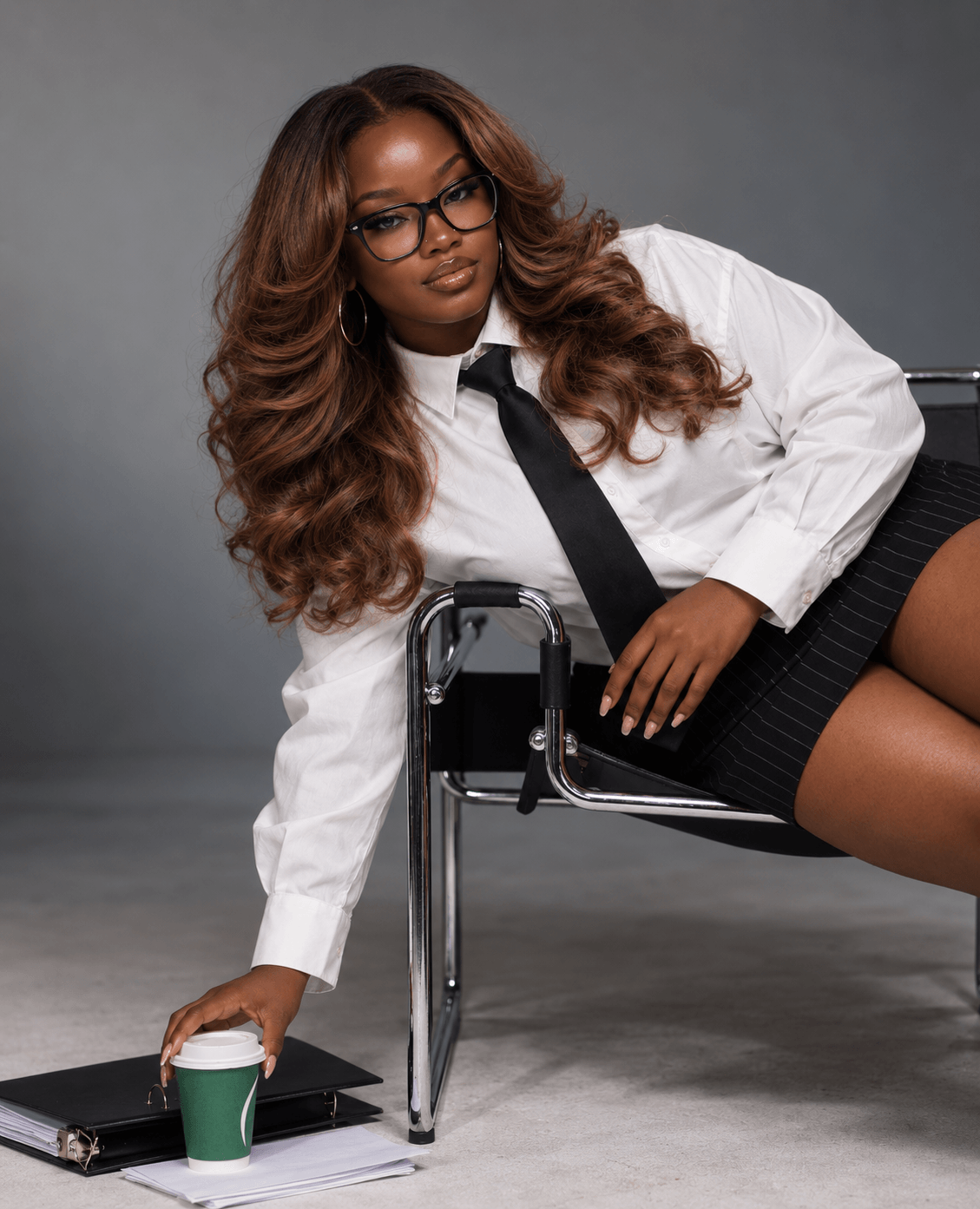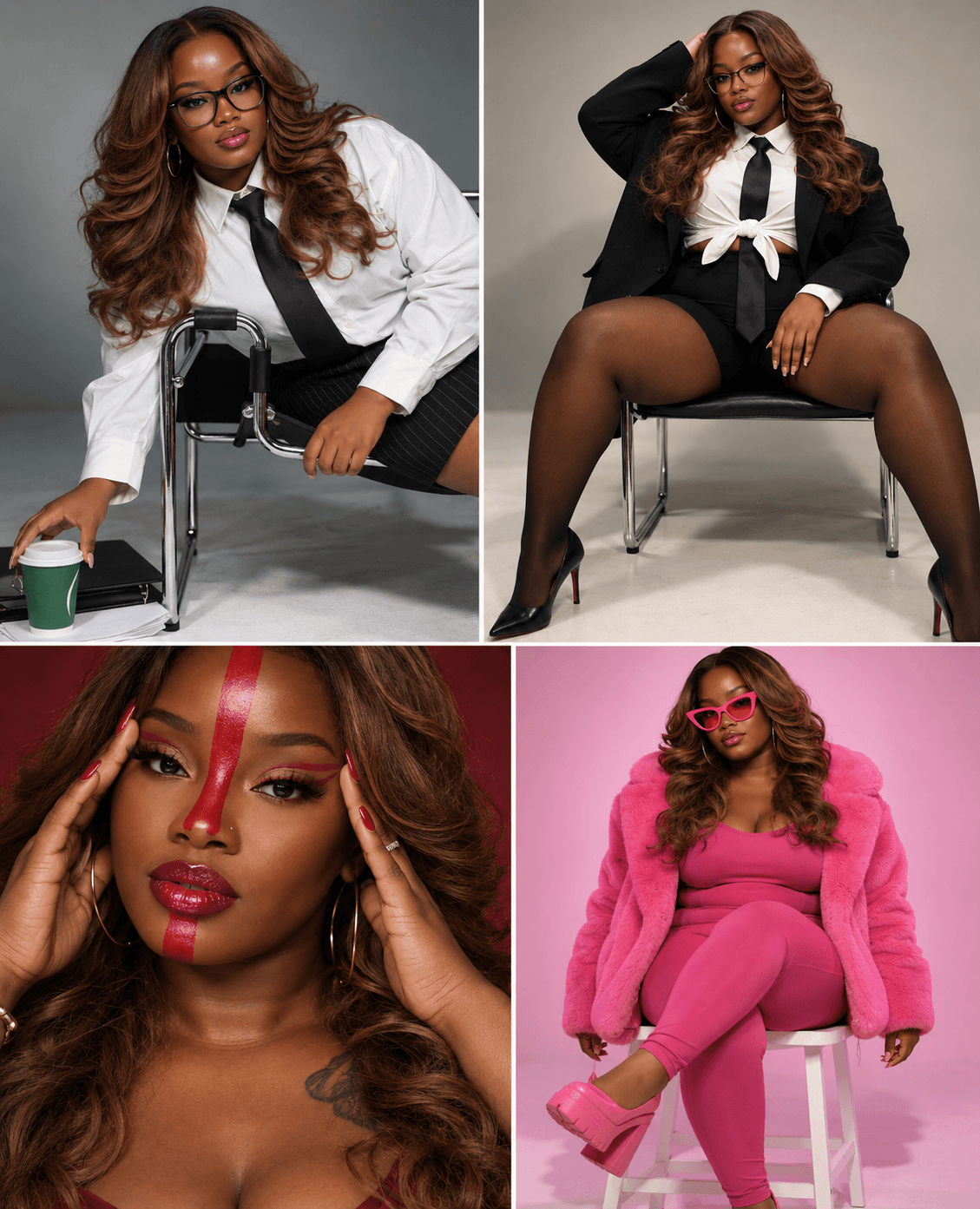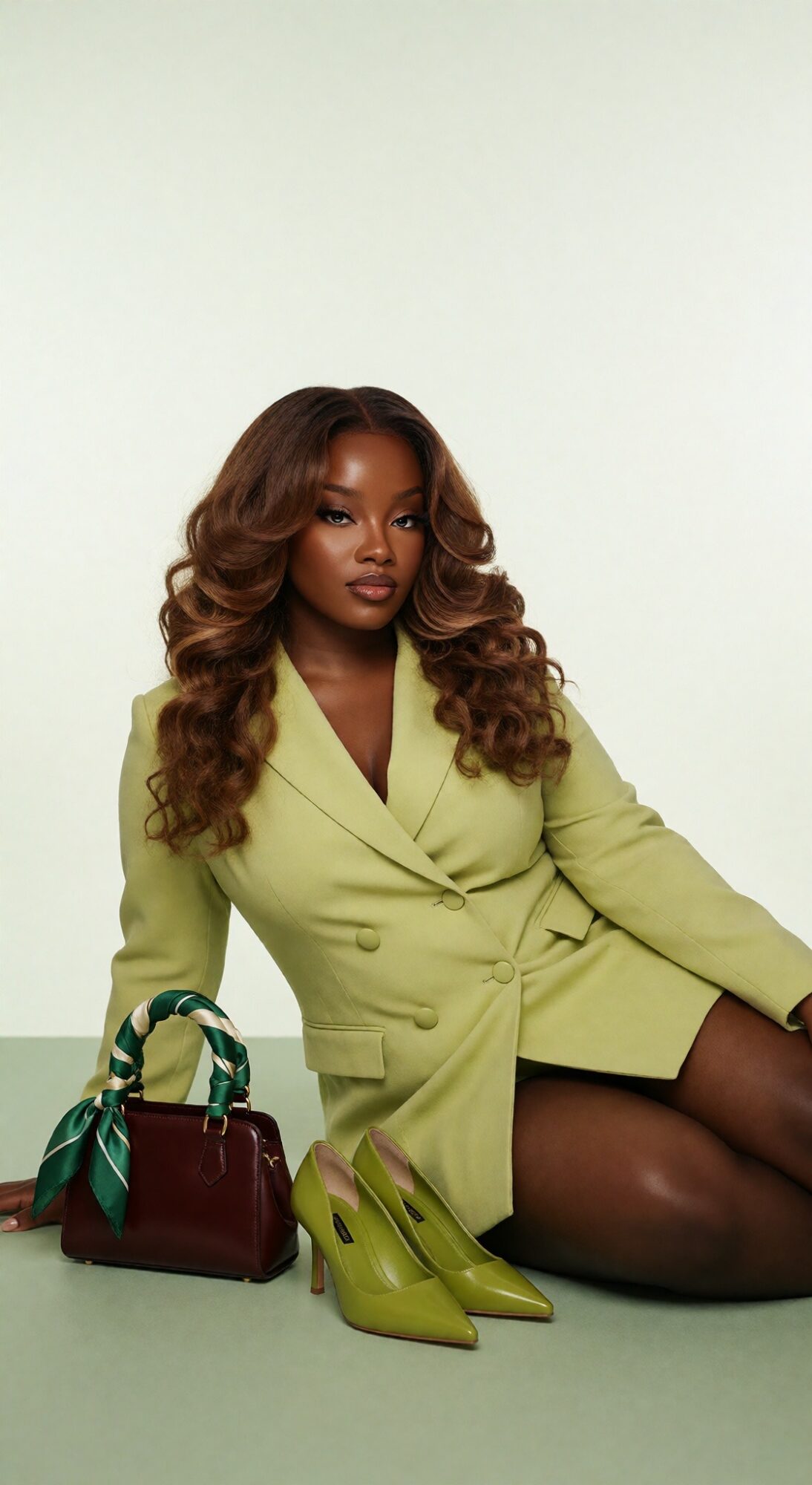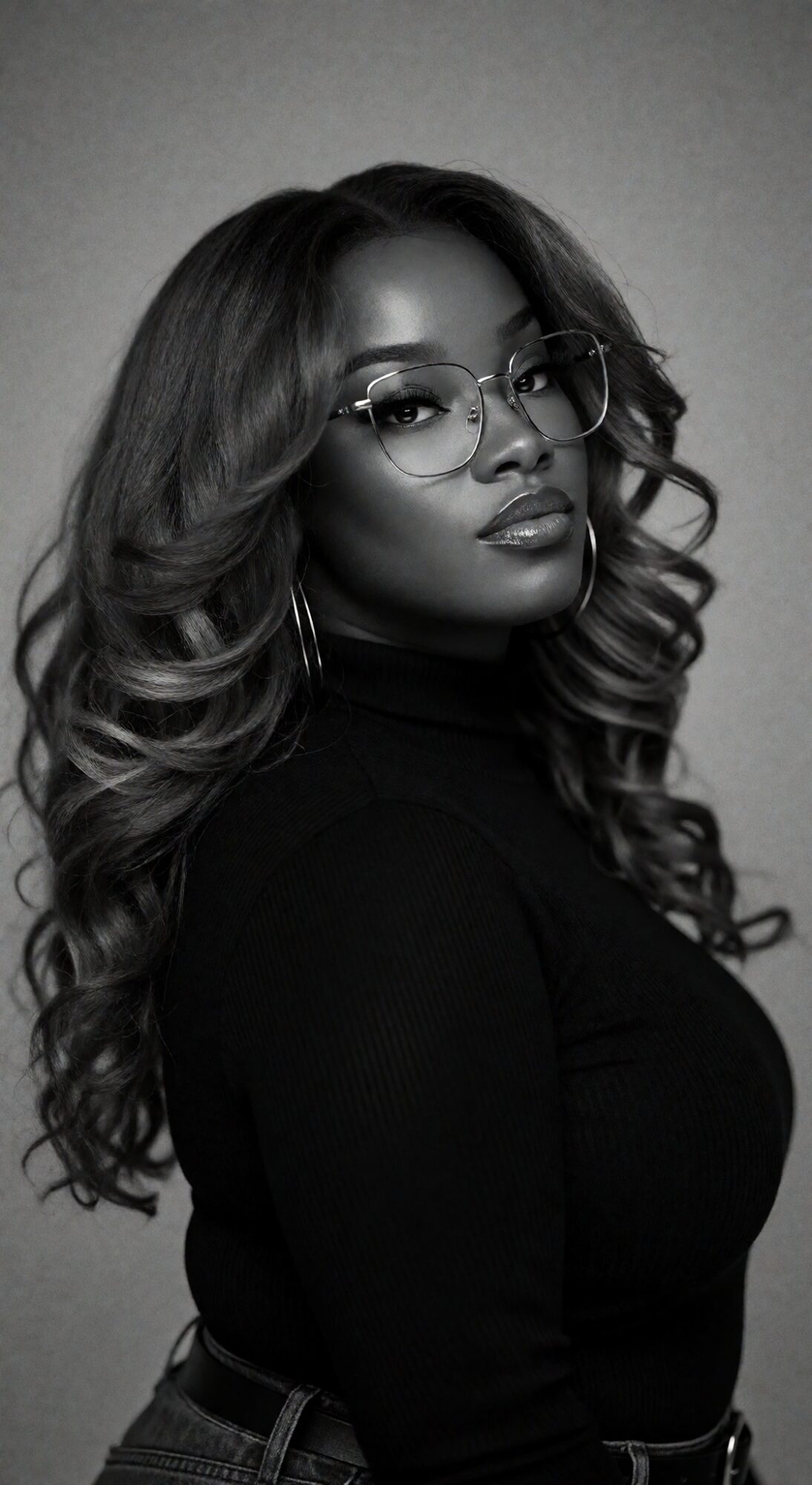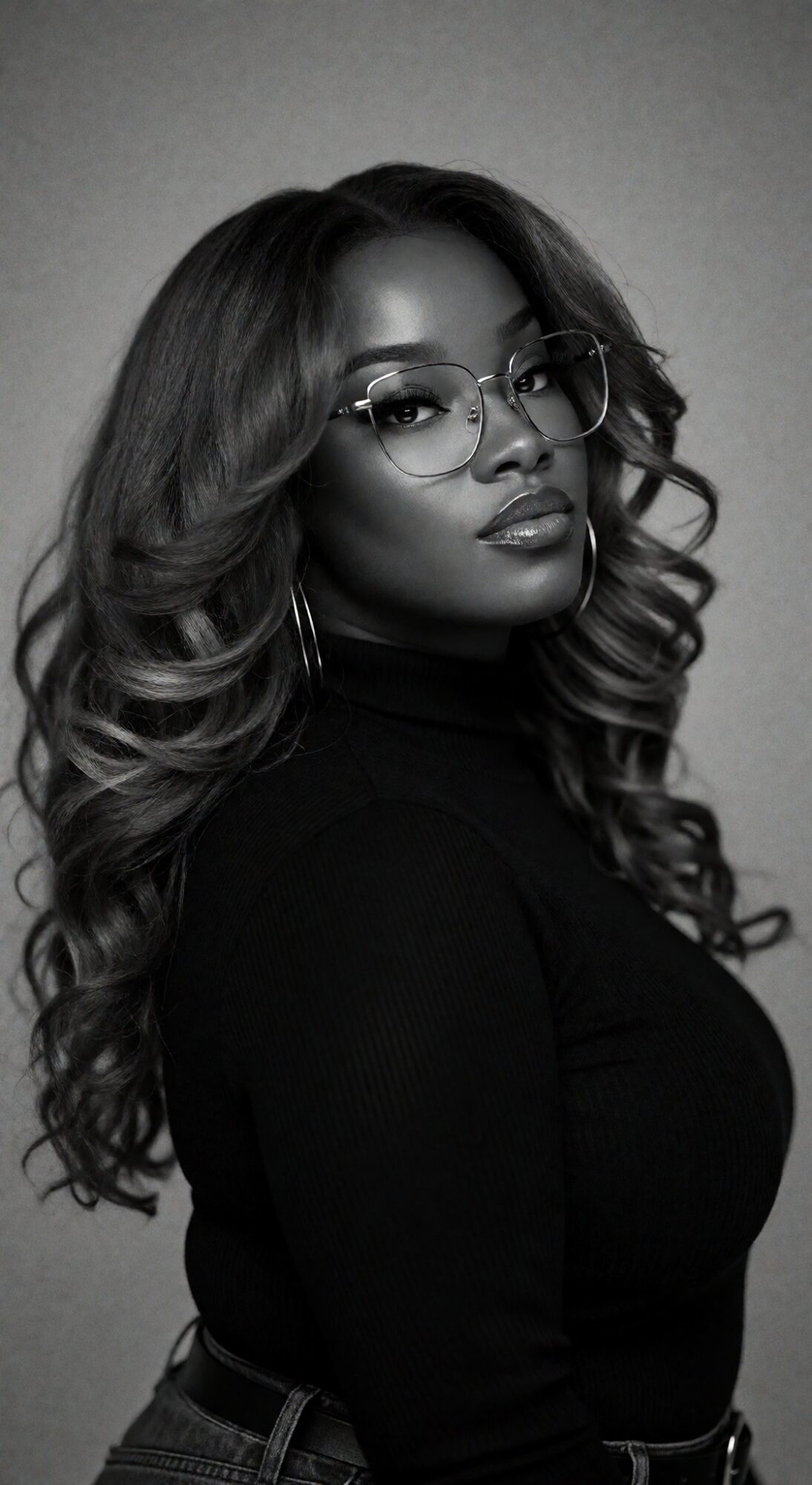
Today we’d like to introduce you to Julie Webb.
Alright, so thank you so much for sharing your story and insight with our readers. To kick things off, can you tell us a bit about how you got started?
I would say my story started long before I ever stepped in front of a professional camera. It began in childhood.
Growing up in a multiracial family, I became aware very early that beauty could look different depending on who was defining it. I noticed that my features, my body, and eventually my identity as a Black woman did not always align with the image of beauty that was celebrated in mainstream media—or even with some of the standards I saw within my own community.
As I moved through high school and college, that awareness became even stronger. I didn’t see enough women who looked like me: petite, plus-size, naturally curvy, confident, expressive, and unapologetic about taking up space. I realized that I didn’t want to spend my life trying to shrink myself—physically or figuratively—to fit someone else’s definition of what was beautiful.
So instead of waiting for representation, I decided to become part of it.
I began modeling by collaborating with local photographers and businesses throughout the Maryland, D.C., and Virginia area. What initially started as creative expression grew into opportunities to promote fashion, beauty, photography, and lifestyle brands while developing my own identity as a model and content creator.
Over time, those local collaborations evolved into opportunities to work with nationally and internationally recognized names, including L’Oréal Paris, Lancôme, Viktor&Rolf, Good Molecules, and other brands across beauty, skincare, hair, fashion, and lifestyle.
One of the experiences that meant the most to me was having the opportunity to walk during New York Fashion Week. At 4’9″ and plus-size, I don’t fit the traditional measurements the fashion industry historically expected from models—and that’s exactly why that moment was so important to me. I walked for a designer who embraced inclusivity across body types, heights, and identities. It reminded me that sometimes leadership isn’t about waiting for an industry to change. Sometimes it’s about showing up exactly as you are and becoming visible enough to help change it.
Today, modeling and influencing are about much more than taking beautiful pictures for me. They’re platforms for creativity, entrepreneurship, representation, and self-expression. I’ve learned how to turn my individuality into something that connects with other people, while continuing to evolve as a woman, professional, creator, and entrepreneur.
We’re also living in an interesting era where AI, algorithms, filters, and social media can manufacture almost any version of perfection imaginable. I think authenticity becomes even more valuable because of that. Technology can create an image, but it cannot replace the experiences, personality, imperfections, culture, confidence, and story that make a person who they are.
My journey has taught me that I don’t have to fit into one box—and neither does anyone else. I can be feminine and ambitious. I can be petite and plus-size. I can be a model and a business professional. I can love beauty and fashion while also being intelligent, innovative, independent, and career-driven. None of those identities have to compete with one another.
If anything, I’ve learned that the things that once made me feel different became some of the very things that made me memorable.
So where I am today isn’t the finish line. I’m still building, experimenting, creating, traveling, collaborating, and discovering new versions of myself. But I’m doing it without asking permission to take up space.
And I think that’s the most exciting part of my story: I’m still writing it.
I’m sure it wasn’t obstacle-free, but would you say the journey has been fairly smooth so far?
Absolutely not—and I think some of the most meaningful parts of my journey came from the road not being smooth.
Being 4’9″, plus-size, curvy, and a woman of color meant that I didn’t always fit the traditional image some designers, photographers, brands, or organizations had in mind. There were opportunities I wanted badly and spaces I believed I was qualified to be in, but I simply wasn’t what they were looking for at the time.
One of the hardest parts was watching peers receive opportunities that I was also working toward and wondering, “What am I missing?” Sometimes we had similar experience, creativity, or capabilities, yet our journeys looked completely different. Early on, rejection could make me question whether I needed to change myself in order to succeed.
Eventually, I realized that being different wasn’t something I needed to correct.
I’ve also had to learn how to navigate personalities within creative spaces. Confidence can sometimes be misunderstood, especially when you’re a woman who is comfortable with herself and isn’t afraid to advocate for her ideas. I’ve encountered situations where collaborations changed, relationships became uncomfortable, or the energy shifted without much explanation. Those experiences made me more intentional about protecting my creativity, choosing the people I collaborate with, and understanding that every room isn’t necessarily a room I’m supposed to remain in.
There were moments when I asked myself, “What do I emit when I walk into a room?” And over time, my answer changed. Instead of wondering whether I was somehow too much, I started recognizing that I carry a certain light because I’m willing to show up fully as myself.
I will put myself out there—full face forward—and show people my creativity, personality, fashion, confidence, and capabilities. I want women who are shorter, curvier, plus-size, darker-skinned, unconventional, or simply different from what they traditionally see represented to know that they don’t have to minimize themselves to be worthy of visibility.
There have also been very real business challenges. Throughout my career, I’ve experienced a mixture of paid opportunities, gifted partnerships, collaborations, and periods when opportunities weren’t as consistent as I wanted them to be. Social media itself has changed dramatically. Algorithms change. Trends change. Consumer behavior changes. Brand expectations change. And now AI is changing the creative landscape again.
I’ve had to rebrand and reinvent myself several times—not because I wanted to become someone else, but because I had to learn how to evolve without losing myself in the process.
That distinction has been incredibly important to me.
I’ve overcome challenges physically, mentally, creatively, and emotionally. Rejection taught me resilience. Comparison taught me patience. Difficult collaborations taught me boundaries. Reinvention taught me adaptability. And being underestimated taught me that sometimes the best response isn’t explaining your value—it’s continuing to build until your work speaks for you.
I’m still learning, and I’m still evolving. There will always be challenges when you’re trying to enter new rooms, create relationships, and build something independently.
But I’ve learned that networking isn’t simply about knowing people. It’s about creating genuine relationships, positioning yourself in the right spaces, and understanding the value you bring into those spaces.
Because ultimately, when you’re building your network, you’re also building your net worth—and I’ve learned never to let someone else’s inability to see my value determine the value I see in myself.
As you know, we’re big fans of you and your work. For our readers who might not be as familiar what can you tell them about what you do?
I think the best way to understand my work is to first understand how I view art.
To me, art isn’t limited to something hanging in a gallery. Art is how we view ourselves, how we perceive other people, how we communicate without speaking, and how we transform an idea or emotion into something another person can experience.
Growing up in the inner parts of Baltimore City played a major role in developing that perspective. Baltimore is a city where art and culture are constantly speaking to you. You can experience it through music, fashion, murals, architecture, dance, photography, food, hair, language, and even the way people carry themselves. Creativity was always somewhere around me, and that taught me that there isn’t just one way to be an artist.
Eventually, I realized that I was one of my own canvases.
Modeling became a form of visual storytelling for me. Content creation became another. Fashion, beauty, hair, skincare, travel, wellness, food, and lifestyle became different mediums through which I could communicate pieces of myself while connecting with other people.
What I specialize in is creating content that feels aspirational without making people feel like they have to become someone else to experience it.
Whether I’m creating beauty content, modeling a look, experimenting with fashion, wearing a new hairstyle, traveling somewhere new, discussing wellness, or simply showing another side of my personality, there is usually a deeper message underneath it: **you are allowed to explore yourself.**
I want my work to challenge the idea that beauty has a standard measurement. Beauty doesn’t begin at a certain height, stop at a certain clothing size, belong to one complexion, or require one body type. It can be soft. It can be bold. It can be unconventional. It can evolve. And most importantly, it can belong to you before anyone else validates it.
As a 4’9″, plus-size Black woman, simply showing up confidently in certain spaces can become its own statement. I’m not trying to convince people that I fit the traditional mold of a model. I’m showing that the mold was never big enough to represent everyone in the first place.
That’s also what I’m most proud of.
Of course, I’m proud of the brands I’ve had opportunities to collaborate with and the milestones I’ve reached throughout my modeling and content creation career. But I’m even more proud that I reached those milestones without completely reconstructing myself to become more acceptable to an industry.
I’ve learned how to evolve without erasing myself.
And I think that’s what ultimately sets me apart.
I’m not interested in creating a perfectly curated version of a woman who doesn’t exist. Especially in a world of filters, algorithms, AI-generated imagery, and constantly changing beauty trends, I’m interested in the human experience behind the image. I want people to see confidence, creativity, femininity, intelligence, humor, imperfection, resilience, curiosity, and growth.
I also don’t believe women have to choose one identity. I can be a model and a professional. I can understand business and still love fashion. I can discuss wellness and then obsess over a new beauty product. I can be independent and still embrace softness and femininity. I can walk into a room as a creator, a leader, a student, or simply a woman who is still discovering new things about herself.
There is strength in being multidimensional.
So when someone encounters my work, I hope they see more than a photograph or a piece of content. I hope they see permission—permission to experiment, to evolve, to take up space, and to redefine beauty for themselves.
Because ultimately, my greatest creation has never been a photograph, an outfit, or a social media post.
It has been becoming the woman I once needed to see.
What do you like and dislike about the city?
What I love most about Baltimore is that everything feels bigger here—and I don’t necessarily mean in size. I mean in personality.
We have big attitudes, big hair, big fashion, big creativity, big personalities, big art, and definitely big plates of amazing food! Baltimore has this energy that constantly encourages people to do more, discover more, create more, influence more, and ultimately become more.
Creativity is everywhere.
It’s in our murals, our music, our fashion, our neighborhoods, our food, our festivals, our history, and especially our people. Baltimore has always felt like a city where individuality isn’t something you necessarily have to explain. People here have personality, and they’re going to give it to you whether you asked for it or not—and I love that about us.
I also love how many different cultures, communities, backgrounds, and identities exist within and around the city. Baltimore is a melting pot, but somehow we still maintain a personality that is unmistakably our own. There can be so many different rhythms happening at once, yet when it matters, there’s still this feeling of **one drum, one beat, one sound.**
And then there’s the history. Baltimore has played an extraordinary role in America’s story, but we’re also constantly creating new stories. I think sometimes people forget that Baltimore isn’t simply a historic city—we are still innovators, artists, entrepreneurs, chefs, musicians, creators, professionals, and visionaries actively shaping what the city becomes next.
As far as what I like least about Baltimore, strangely enough, my answer isn’t really about Baltimore itself.
It’s the way Baltimore is sometimes portrayed.
For years, certain television shows, movies, social media conversations, and news coverage have created a very specific image of the city. While some of those stories represent real experiences and shouldn’t be ignored, they don’t represent the entirety of Baltimore.
We are so much more than one narrative.
There is beauty here. There is luxury here. There is Black excellence here. There is culture here. There is innovation here. There are incredible restaurants, museums, neighborhoods, businesses, creatives, educational institutions, waterfronts, and communities filled with people doing remarkable things.
Baltimore certainly isn’t perfect—no city is—but I wish more people would experience it beyond what they’ve been told about it.
Come experience the food. Experience the art. Experience the culture. Talk to the people. Explore beyond the places you’ve seen portrayed on a screen.
You might discover that Baltimore is much bigger than the story you’ve been given.
And like I said, everything is bigger in Baltimore.
Contact Info: