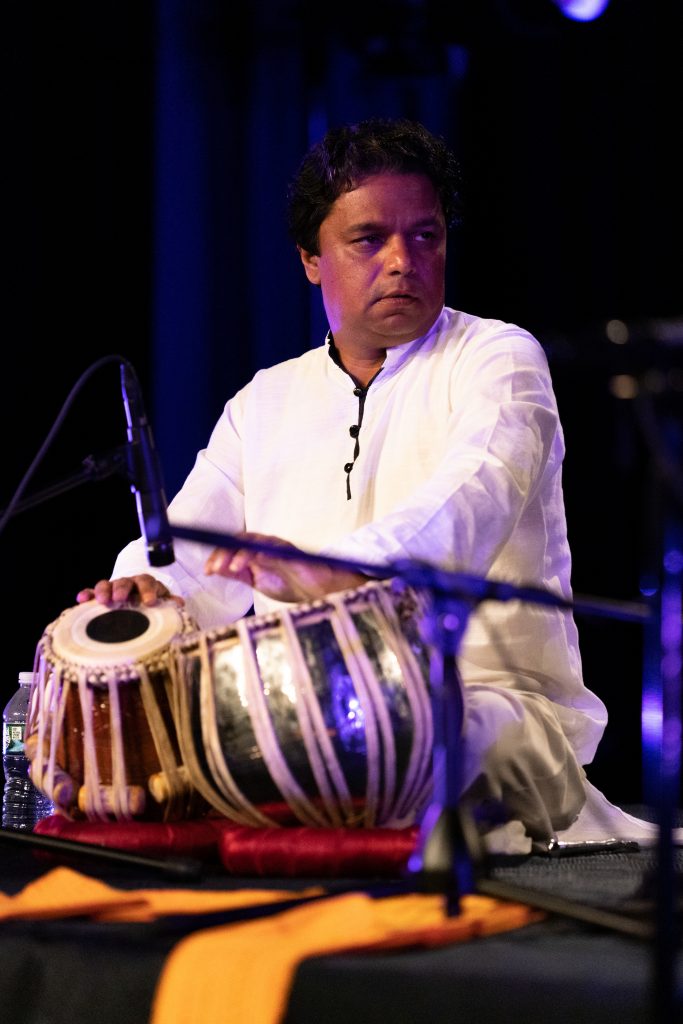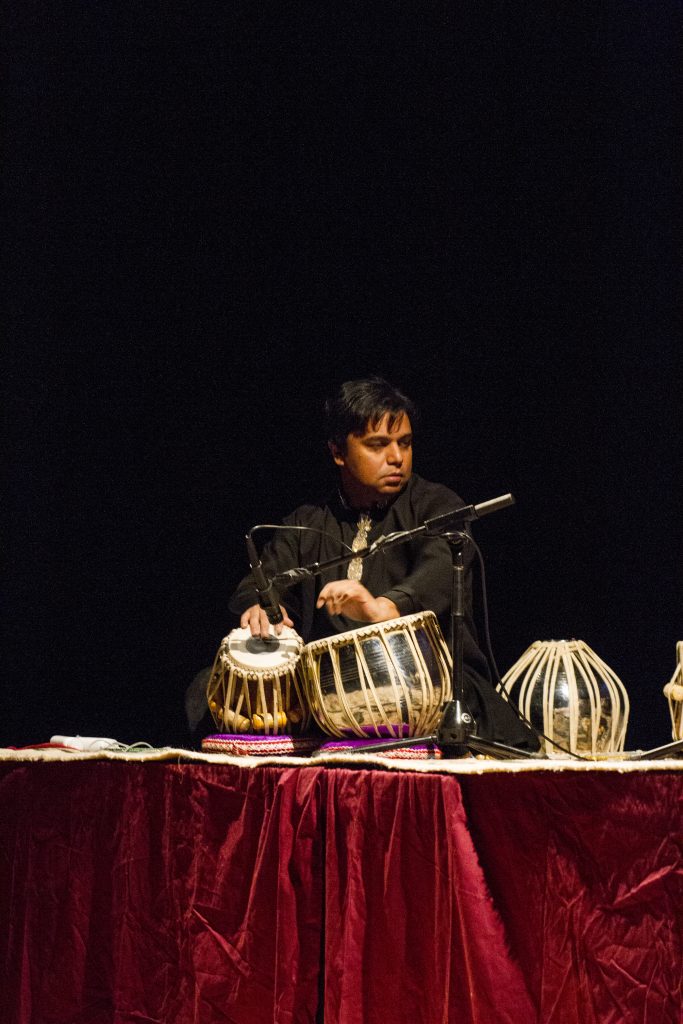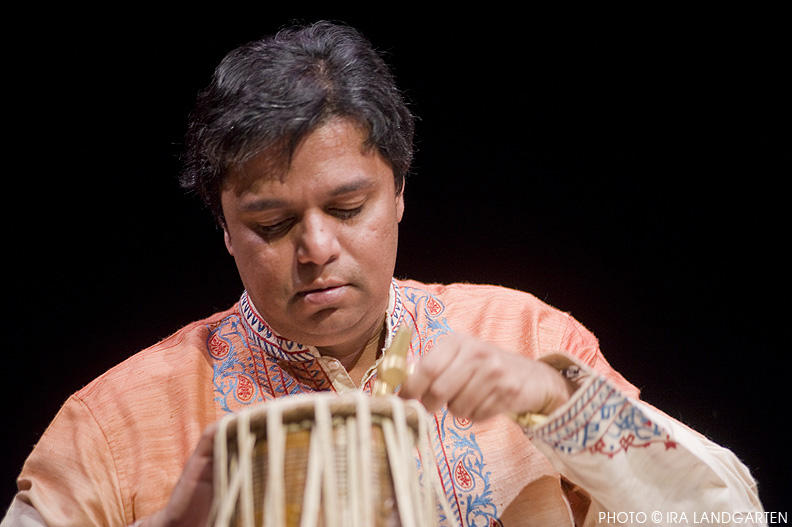
Today we’d like to introduce you to Enayet Hossain.
Hi Enayet, we’d love for you to start by introducing yourself.
I never set out to become a professional musician.
That may be the simplest way to explain my journey.
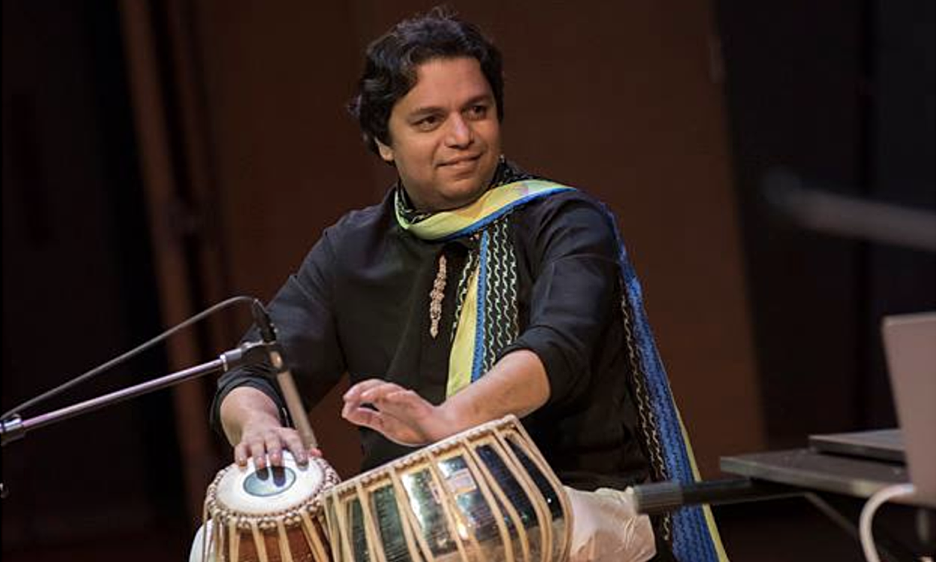
When I was six years old, my father, Ustad Hamid Hossain, began teaching me tabla. My parents were not trying to make me a musician. They simply wanted me to know my heritage, understand my family’s musical tradition, and learn an art form that had been passed down through generations.
My grandfather, Ustad Kader Buksh of Murshidabad, was part of that tradition, and my father carried it forward as a musician and teacher in the United States. I was born in Bangladesh and raised in America, so Indian classical music became an important bridge between my family’s history and the life I was growing up in.
At that age, however, I wasn’t thinking about any of that.
I was just a kid.
My mother made sure I practiced, but not because she expected me to become a professional musician. She wanted me to learn. Of course, for a six-year-old, there was one very practical motivation: I had to finish my tabla practice before I could watch cartoons.
At the time, I didn’t realize that those lessons would eventually shape my entire life.
When possibility became reality
As I became older, the tabla gradually changed from something I was learning into something I genuinely loved.
Then something unexpected began to happen.
I started performing with legendary musicians while I was still in my teens. One of the most important experiences came when I was 17, in Washington, D.C., performing with the great sitarist Ustad Vilayat Khan.
I was young, and I was nervous.
Here I was, sitting beside one of the most respected musicians in Indian classical music.
But the performance went well. Afterward, Ustad Vilayat Khan told my father that I was extremely talented for my age and possibly one of the youngest tabla players he had performed with.
That moment was a turning point for me.
Until then, I had been learning music because it was part of my life. Suddenly, I began to think, maybe I really do have the ability to do this.
That realization gave me confidence.
It also gave me responsibility.
I understood that talent alone wasn’t enough. I would have to continue learning, practicing, listening and developing my own voice.
Still, becoming a professional musician was far from certain.
##Two worlds, and then three
I studied computer science at the University of Maryland, Baltimore County. Technology was something I genuinely enjoyed, and for a while I imagined that it might become my professional path.
At the same time, music was pulling me in another direction.
I found myself living two lives: the life of a college student and the life of a working musician.
There were periods when I would attend classes during the week and travel for performances on the weekends. I remember one particularly intense stretch when I performed roughly 25 concerts in about a month and a half while finishing my degree.
It was exciting, but it was also demanding.
That experience taught me something important about being a musician. Music needs time. It needs space to breathe. It needs time for ideas to develop and for musicians to think creatively.
I didn’t want music to become something I simply repeated.
I wanted it to remain something I discovered.
My parents, understandably, were not always thrilled about the idea of music becoming my career. They knew the life of a musician could be full of ups and downs. There are no guarantees, and the path can be unpredictable.
But eventually I realized that music wasn’t something I was going to leave behind.
It had become part of who I was.
## Three cultures, one identity
Being connected to three cultures — India, Bangladesh and the United States — has shaped me in ways I didn’t fully appreciate when I was younger.
I don’t see those identities as competing with one another.
I see them as a strength.
India gave me the musical tradition that became my foundation. Bangladesh is where my family’s roots began. America is where I grew up, studied, built my career and encountered a wide range of musical and technological influences.
Each culture has given me something different.
Together, they have helped shape the way I see music and the world.
That perspective has also influenced the way I approach collaboration.
## Learning to listen
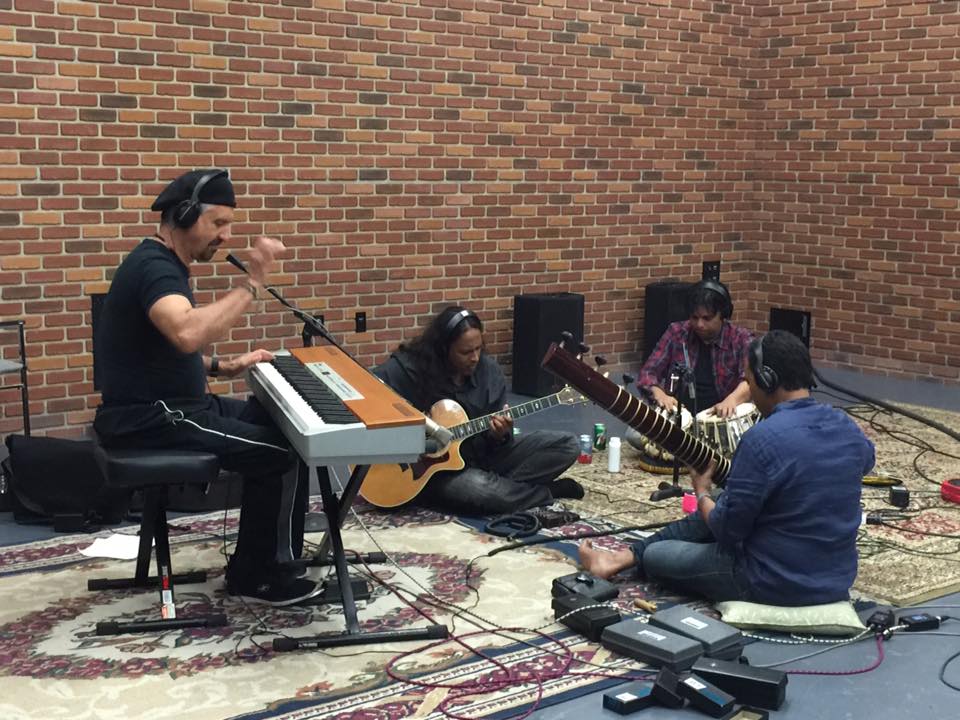
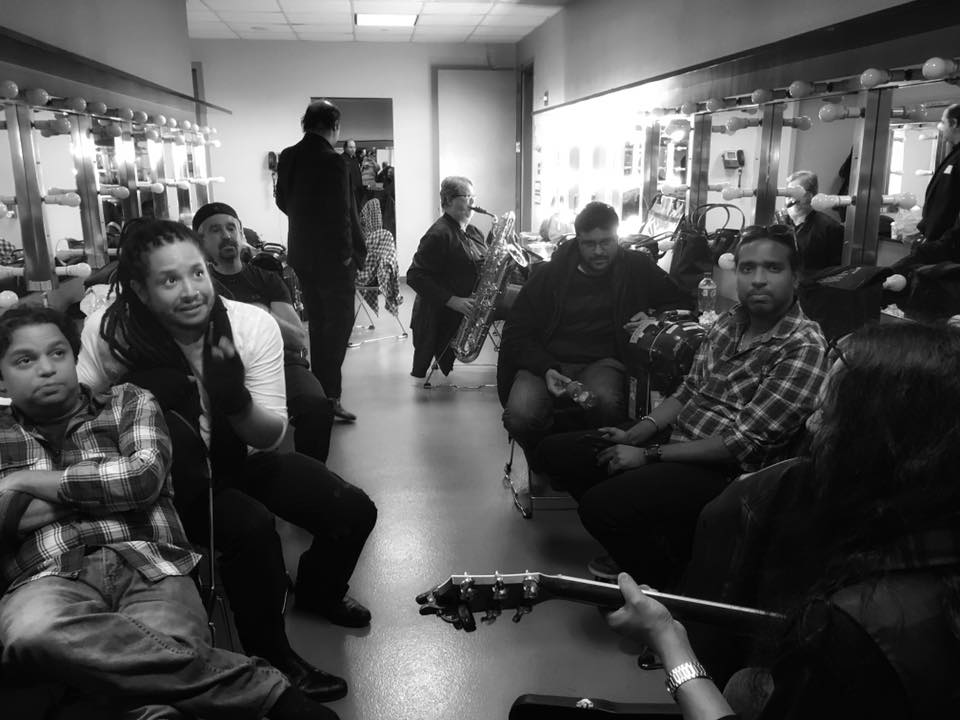
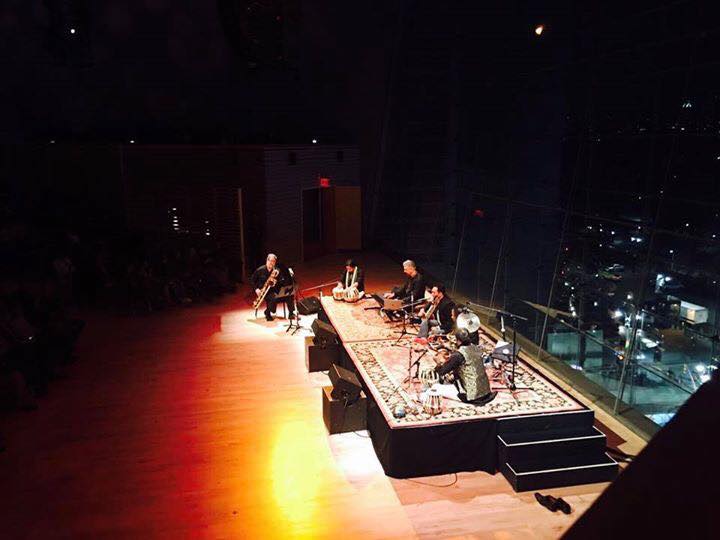
My work with Melodic Intersect became another major chapter in that journey.
The group grew from my desire to explore Indian classical music alongside jazz and other contemporary influences. But for me, fusion was never simply about combining instruments or putting different musical styles next to each other.
The real challenge is communication.
Indian classical music taught me how to develop an individual musical voice. Working in an ensemble taught me something equally important: how to listen.
When several musicians are creating music together, the question is not simply, “What can I play?”
The better question is:
**”What does the music need from me?”**
Sometimes that means taking the lead.
Sometimes it means supporting another musician.
Sometimes it means creating space.
And sometimes it means not playing at all.
That understanding has had a profound influence on me.
I’ve learned that great music isn’t always about demonstrating how much you know. Sometimes it is about knowing when to step back and allow someone else to speak.
That has made me a better musician — and, I think, a better listener.
## The performance I will never forget
I’ve been fortunate to perform in many memorable places, but some experiences stay with you for reasons that have little to do with the size of the stage.
One of those moments happened in Varanasi, where I performed in the middle of the Ganges River at midnight.
Thousands of people were gathered along the riverbanks.
It was an extraordinary setting. There was a huge audience, yet there was also a sense of stillness and quiet as people listened.
For a musician, there are moments when the environment becomes part of the music.
That was one of them.
It reminded me that music can create a space that exists only for a moment — a place where people can forget everything else and simply listen.
Those are the experiences that stay with you.
## When music met technology
My background in computer science never really left me.
Over the years, I began looking for ways technology could help preserve and explain Indian classical music.
That work led to projects such as *Tabla Volume 1: A Journey Into Eastern Percussion* and Sangeetpedia, a multimedia resource devoted to Indian classical music and its vocabulary, with more than 1,500 terms and supporting educational material.
For me, technology was never meant to replace tradition.
It was a way to make tradition more accessible.
Indian classical music is incredibly rich, but for someone who has never grown up around it, the terminology, structure and concepts can seem intimidating.
I wanted to help open that door.
The computer became another tool for communicating music.
## A difficult pause
Then came COVID.
For a performing musician, the pandemic brought live music to a sudden stop.
Concerts disappeared. There were far fewer opportunities to perform, and substantial projects became difficult to move forward.
It was a challenging period, but it also gave me time to reflect.
When everything becomes quiet, you start asking yourself what really matters.
For me, the answer was clear: music, creativity, education and the responsibility to keep the tradition moving forward.
That last part has become increasingly important to me.
## Tradition without becoming frozen in the past
I’ve always remained deeply connected to tradition.
My approach begins with the traditional way of understanding the music, respecting the discipline, the language and the history behind it.
But I don’t believe tradition should be frozen in time.
We live in a different world.
Technology has changed.
The way people discover music has changed.
The way people listen has changed.
Audiences are more global, more connected and often less familiar with the traditions that created the music they are hearing.
So I’ve always tried to ask one question:
**How can I remain true to the tradition while presenting it in a way that connects with the modern world?**
That philosophy has influenced everything from my performances and recordings to my work in education and technology.
It is also the reason I am comfortable exploring new musical ideas without abandoning the foundation from which I came.
My approach is always traditional.
But I try to present that tradition for modern times.
## What I hope to leave behind
Over the years, I have been fortunate to perform with remarkable musicians, collaborate across genres, record extensively and build projects that have allowed me to explore Indian classical music from different perspectives.
But when I think about what I want my contribution to be, I don’t think first about accomplishments.
I think about continuity.
I want to help make sure that the tradition I inherited remains alive.
Not only preserved in archives.
Not only remembered as history.
But heard.
Experienced.
Studied.
Reinterpreted.
Shared with new audiences.
That is especially important to me as I think about the next generation.
A tradition survives when people are able to connect with it.
That connection may begin with a live performance. It may begin with a recording. It may begin with a lesson, a digital platform or simply hearing a sound that makes someone curious enough to ask, “What is that?”
That curiosity is the beginning.
Looking back, what makes me smile is that none of this was really planned.
My parents didn’t set out to make me a professional musician.
They wanted me to know my heritage.
I didn’t set out to build a career in music.
I studied computer science.
I didn’t set out to become a fusion musician.
I simply wanted to explore what could happen when different musical worlds met.
And yet, somehow, all of those paths came together.
The little boy who had to finish his tabla practice before cartoons became a musician, an educator, a collaborator and someone who continues to look for new ways to share an ancient musical tradition with a modern audience.
The journey has never been about leaving tradition behind.
It has been about carrying it forward.
One generation to the next.
One musician to another.
One beat at a time.
We all face challenges, but looking back would you describe it as a relatively smooth road?
My journey wasn’t without challenges. From an early age, I had to learn how to balance school, academics and the discipline of daily music practice, often moving between two very different worlds. Growing up in the United States while studying a deeply traditional Indian classical art also meant finding my place in India and Bangladesh, where there were very few musicians with a background like mine — someone born in Bangladesh, raised in America and trained in the Indian classical tradition. I often had to navigate multiple cultures and learn different languages, including Bengali, Hindi and Urdu, simply to communicate comfortably with musicians, teachers and audiences abroad. There was also the challenge of being taken seriously as a Westerner performing serious Indian classical music. I had to demonstrate through my playing, my dedication and my understanding of the tradition that respect for the music is not determined by where you were born. In many ways, those challenges became part of my education. They taught me how to adapt without losing my identity, and how to remain grounded in tradition while finding my own place within it.
Thanks – so what else should our readers know about your work and what you’re currently focused on?
What sets me apart is my ability to move naturally between tradition, innovation and cultures. I am deeply rooted in the rigorous discipline and philosophy of Indian classical music, while my upbringing in the United States and my Bangladeshi heritage have given me a broader, global perspective. I don’t see tradition and modernity as opposites; I see them as opportunities to build something meaningful together. My work brings together performance, education, technology and cross-cultural collaboration, allowing me not only to perform the tradition but also to reinterpret it, explain it and make it accessible to new audiences. That combination of being a traditionalist, a technologist and a bridge between cultures is what makes my approach distinctive.
Do you have any advice for those just starting out?
My advice is to always have a backup plan. For me, that meant getting an education and earning a degree while pursuing music. A career in the arts can be unpredictable, so having a strong foundation gives you security while you follow your passion. Beyond that, be persistent. You will encounter people who tell you that you won’t succeed or that you will never go anywhere. Don’t let their opinions define your future. Listen to constructive advice, but don’t listen to negativity. Believe in yourself, stay committed, and understand that talent alone isn’t enough — you have to put in the work, stay disciplined and keep moving forward.
Contact Info:
- Website: https://www.enayethossain.com
- Instagram: https://www.instagram.com/enayet.hossain1/
- Facebook: https://www.facebook.com/enayet.hossain1/
- Youtube: https://www.youtube.com/@aimrec
- Other: https://open.spotify.com/artist/06Y7z6IFWzqlHRV49kMgKl