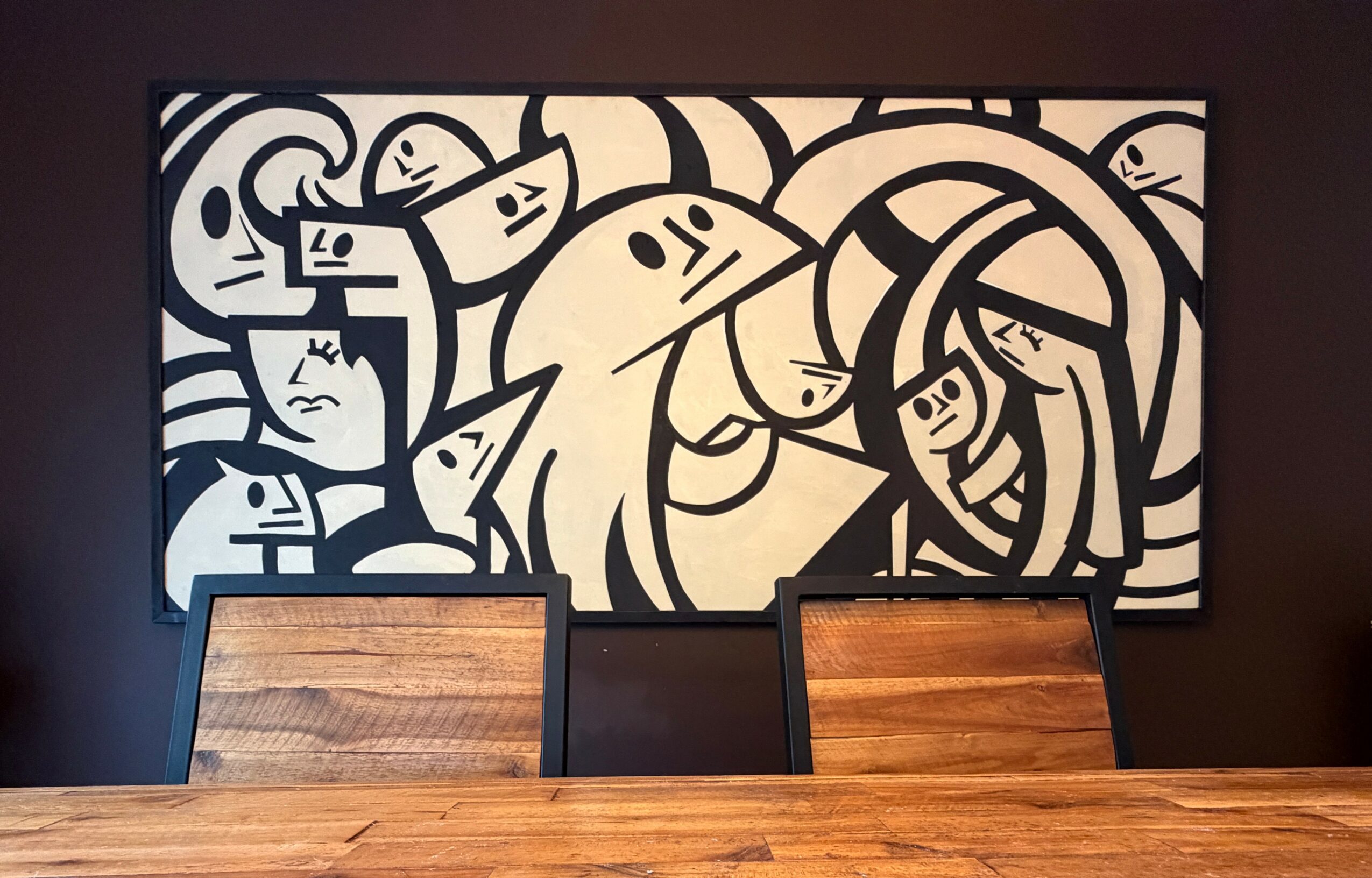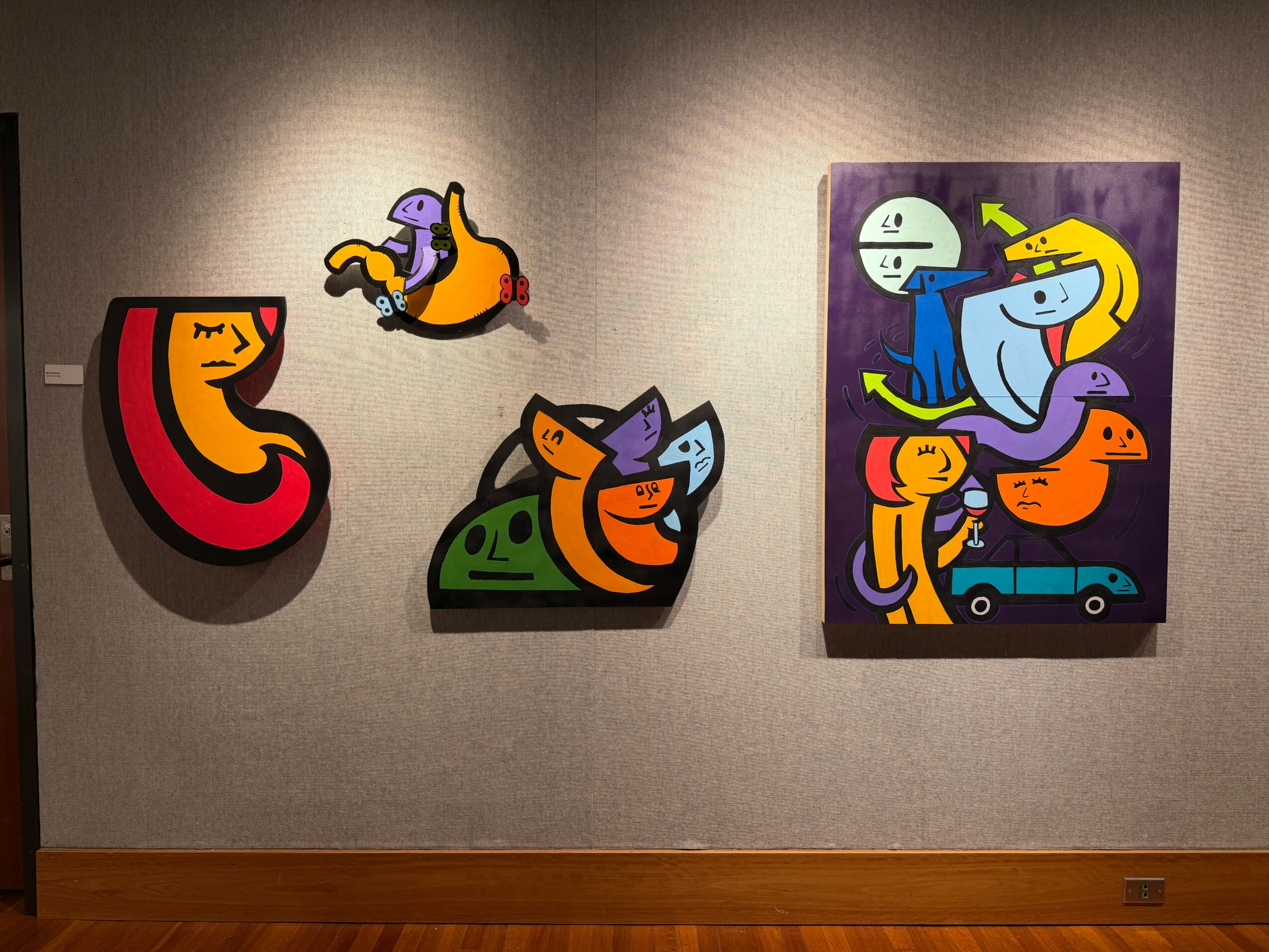
Today we’d like to introduce you to Bill Watson.
Hi Bill, can you start by introducing yourself? We’d love to learn more about how you got to where you are today?
My journey as an artist has been a pretty winding road. I’ve never really been someone who could fit neatly into one category. I’ve always been curious and interested in making things, whether that meant drawing, designing, building something, experimenting with color, or figuring out how an idea could become a finished piece. Looking back, I think that curiosity has been the thread running through everything I’ve done.
For many years, I worked as an illustrator, motion graphics artist, and art director in the video production industry. That gave me the opportunity to work creatively for a living, but I was also developing my own work as a fine artist. The commercial work taught me a tremendous amount about visual communication, composition, color, storytelling, and—probably most importantly—how to take an idea that exists in your head and actually make it happen.
Over time, my personal artwork became more and more important to me. I found myself increasingly drawn toward abstraction, geometry, color, and the relationships between shapes. I like the tension between something that feels very controlled and something that still has a sense of spontaneity. My work has evolved quite a bit over the years, but that interest in color, form, and visual problem-solving has remained pretty constant.
My path also eventually led me into teaching, arts advocacy, and curating. Those experiences changed the way I look at art. Being around so many different artists and seeing how differently they approach their work has made me more curious about my own process. As a curator, I spend a lot of time thinking about how people encounter art, but as an artist I’m still very much interested in the experience of simply making something and seeing where it takes me.
I don’t think of those different parts of my career as separate lives. The illustrator, the designer, the art director, the curator, the advocate, and the guy who goes into the studio and starts messing around with paint are all the same person. Each one has influenced the others.
And honestly, I still feel like I’m figuring it out. I think that’s one of the things I enjoy most about being an artist. I don’t necessarily want to know exactly where the work is going. I want to be surprised by it.
I’m sure it wasn’t obstacle-free, but would you say the journey has been fairly smooth so far?
No, not at all. It’s been more of a slog, honestly.
The art market is always challenging, and making a living as an artist can be pretty unpredictable. There have definitely been times when I wondered if I was on the right track, especially when the work wasn’t getting the response or finding the audience I had hoped for.
A big part of the struggle has also been figuring out my own artistic voice. I’ve stumbled around quite a bit trying to figure out what I really wanted to say and how I wanted to say it. I’ve tried different things, changed direction, second-guessed myself, and probably overthought it more times than I’d like to admit. But I think that’s part of the process. You don’t just sit down one day and discover your voice. You find it by making a lot of work, making mistakes, and eventually noticing what you keep coming back to.
And then there’s the whole question of making a living. My work in illustration, motion graphics, and art direction gave me a creative career, and later I got into gallery management and curation. I really enjoyed that side of the art world, and it gave me a completely different perspective on artists and how people experience their work. But the reality is that all of those things take time and energy, and there have definitely been periods when my own studio work had to take a back seat.
So, no, it hasn’t been an easy road. There have been plenty of wrong turns, detours, and moments when I wasn’t sure where I was going. But maybe that’s the point. I’m still on the road, still figuring it out, and still making the work. And after all these years, I think that’s what matters most.
Appreciate you sharing that. What else should we know about what you do?
I’ve never been very good at staying in one lane. My career has taken me from illustration and animation to painting, murals, public art, installation, video, and plenty of experimenting along the way. My work has changed quite a bit over the years. Before I got into the geometric abstracts I’m probably best known for, I spent a good deal of time painting urban landscapes and female figurative work.
The geometric paintings grew out of my interest in color, shape, and creating the illusion of space. I like taking fairly simple geometric forms and seeing how much I can do with them through color, scale, and placement. I tend to use very saturated colors, and I like work that has a strong visual impact. Even though the finished paintings can look fairly straightforward, there’s usually a lot more planning behind them than you might expect.
I spend a lot of time working out a piece digitally before I ever pick up a brush. I’ll work through the composition, colors, shapes, and details until I have a pretty good idea of exactly what I want. Once I start painting, things can move pretty quickly because most of the decisions have already been made. One interesting thing about my process is that I don’t actually see pictures in my head. I never have. When I’m developing an idea, it’s more like I have a very detailed written description of what I want the image to look like. The digital drawings give me a way to turn that description into something I can actually see.
Right now, I’m working on a new series called Spirit People, and it’s taking me in a very different direction. The idea came out of a much more emotional place and deals with emotions and the ways we express them, especially things that can be hard to put into words. The work is still carefully planned, but the ideas behind it are much more personal. It’s been interesting to see where that takes me.
My background in illustration, animation, motion graphics, and art direction has obviously influenced the way I work. I think a lot about composition, movement, and where the viewer’s eye goes. And working in gallery management and curation has given me another perspective on art. I spend a lot of time looking at other artists’ work, talking about it, and thinking about why something works. You can’t do that for years without some of it finding its way into your own thinking.
I’m probably most proud of the fact that I’ve just kept making things. The work has changed a lot over the years, and I’m sure it will change again. I’m okay with that. I’d rather keep moving than spend the rest of my career trying to repeat something I already figured out.
Ultimately, I don’t want my work to require a lot of explanation. I want it to grab you first. Maybe it’s the color, maybe it’s the geometry, or maybe it’s something more personal. If someone stops, looks twice, and spends a little time with it, I’m pretty happy with that.
Before we let you go, we’ve got to ask if you have any advice for those who are just starting out?
Get involved with your local arts community. Go to openings, meet other artists, volunteer, join committees, and support arts organizations. You’ll make friends, find collaborators and mentors, meet gallery owners and curators, and learn a lot just by being around other people doing the work.
And honestly, it’s not entirely altruistic. A stronger arts community creates more opportunities for everyone, including you. The more you get involved and support other artists, the more connected you become.
The other thing I’d say is don’t be too hard on yourself. Finding your artistic voice can be a long, grueling process. You’re going to question yourself, make mistakes, and wonder if you’re doing it right. Keep making the work. If making art really is your calling, it’s worth sticking with it.
Contact Info:
- Website: https://watsonscribbles.com
- Instagram: Instagram.com/WatsonScribbles/
- Facebook: https://facebook.com/WatsonScribbles/