Today we’d like to introduce you to A.J. Ali.
Hi A.J., so excited to have you on the platform. So before we get into questions about your work-life, maybe you can bring our readers up to speed on your story and how you got to where you are today?
My story has taken a lot of twists and turns, but when I look back on it now, I can see a common thread running through almost all of it: storytelling, service, resilience, healing, and love. All of those twists and turns led to being honored with a Joseph R. Biden Presidential Lifetime Achievement Award — but in my sixties, I feel like my best work is just getting started.
And, as I prepare to release my newest book, a novel called *Sunset in Malibu*, I’m realizing that the storytelling part of my journey began much earlier than I ever really understood.
My mother taught me how to read and write long before I learned those things in school. By the time other kids were learning the basics, I was already writing stories.
But there was a reason.
My father mistreated and physically abused my mother, sometimes so badly that she ended up in the hospital. As a little boy, I couldn’t stop what was happening to her. I couldn’t fix it. But I could write.
So I would write stories for my mom to try to cheer her up.
Looking back at my life now, I realize I’ve been doing therapeutic writing for almost my entire life.
I didn’t have a name for it then. I was just a little boy trying to make his mother smile and give her a moment of relief from something painful. But I learned very early that words could take someone someplace else. A story could create hope. It could make you laugh when life wasn’t very funny. It could help you imagine something better than what was happening around you.
That has stayed with me.
I’m a U.S. Air Force veteran, filmmaker, author, speaker, entrepreneur, and the Founder and CEO of L.O.V.E. Is The Answer. I’ve worked in media, film, television, photography, business, education, and community engagement. But underneath all of those titles, I think I’m still that storyteller trying to use what I create to help somebody.
One of the defining moments of my adult life came here in Howard County in 2012, when I had an encounter with police that left me feeling profiled, humiliated, and deeply concerned about the relationship between law enforcement and the communities they serve.
I could have allowed that experience to make me bitter.
Instead, I eventually decided to do what I had been doing since childhood.
I turned pain into a story.
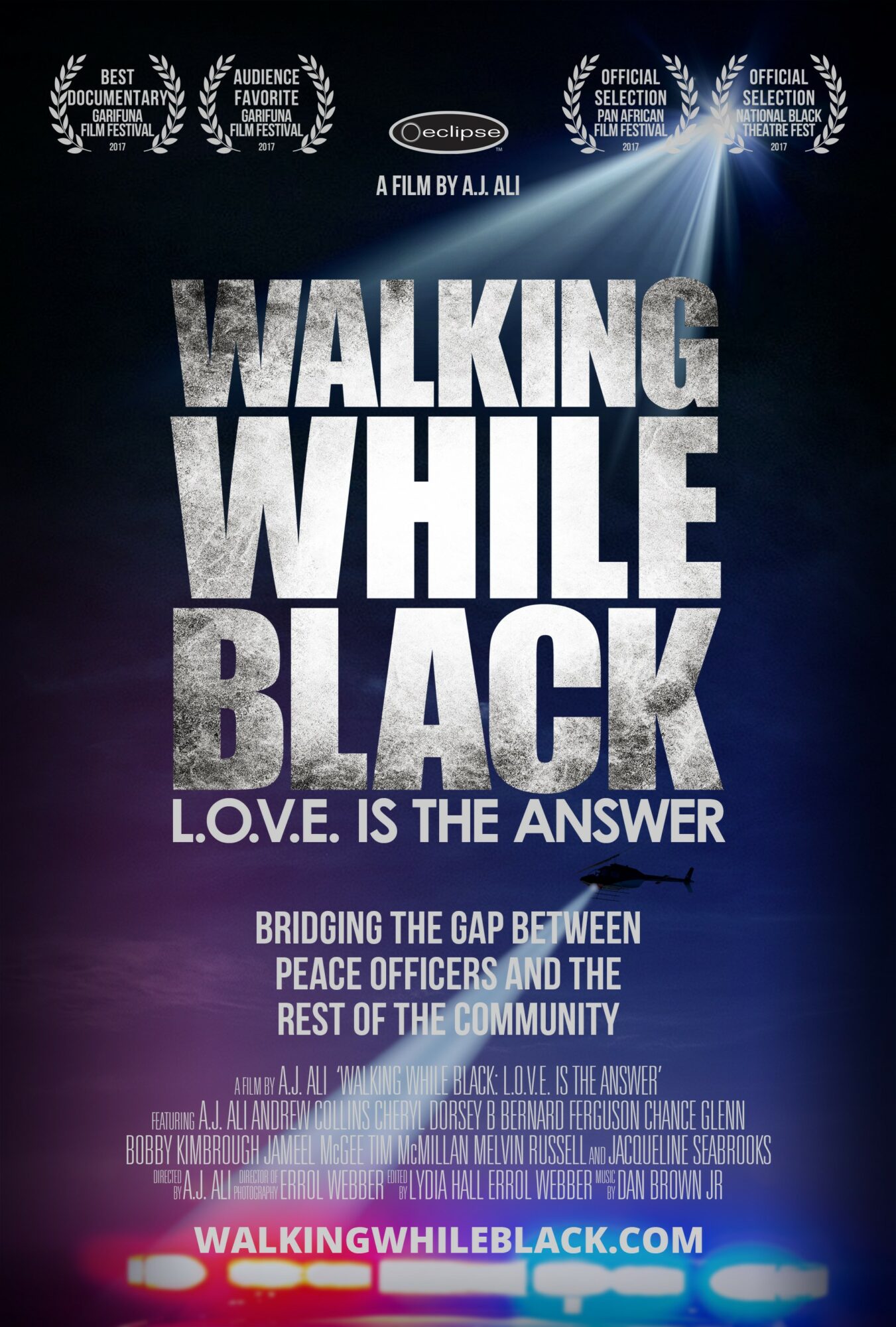
That journey led me to create and direct the documentary *WALKING WHILE BLACK: L.O.V.E. Is The Answer*. What began as an exploration of racial profiling and police-community relationships grew into something much bigger. I traveled around the country listening to police officers, community members, young people, families, faith leaders, activists, educators, and others.
I came to understand that beneath so many of our conflicts is a basic human problem: we simply don’t know each other well enough.
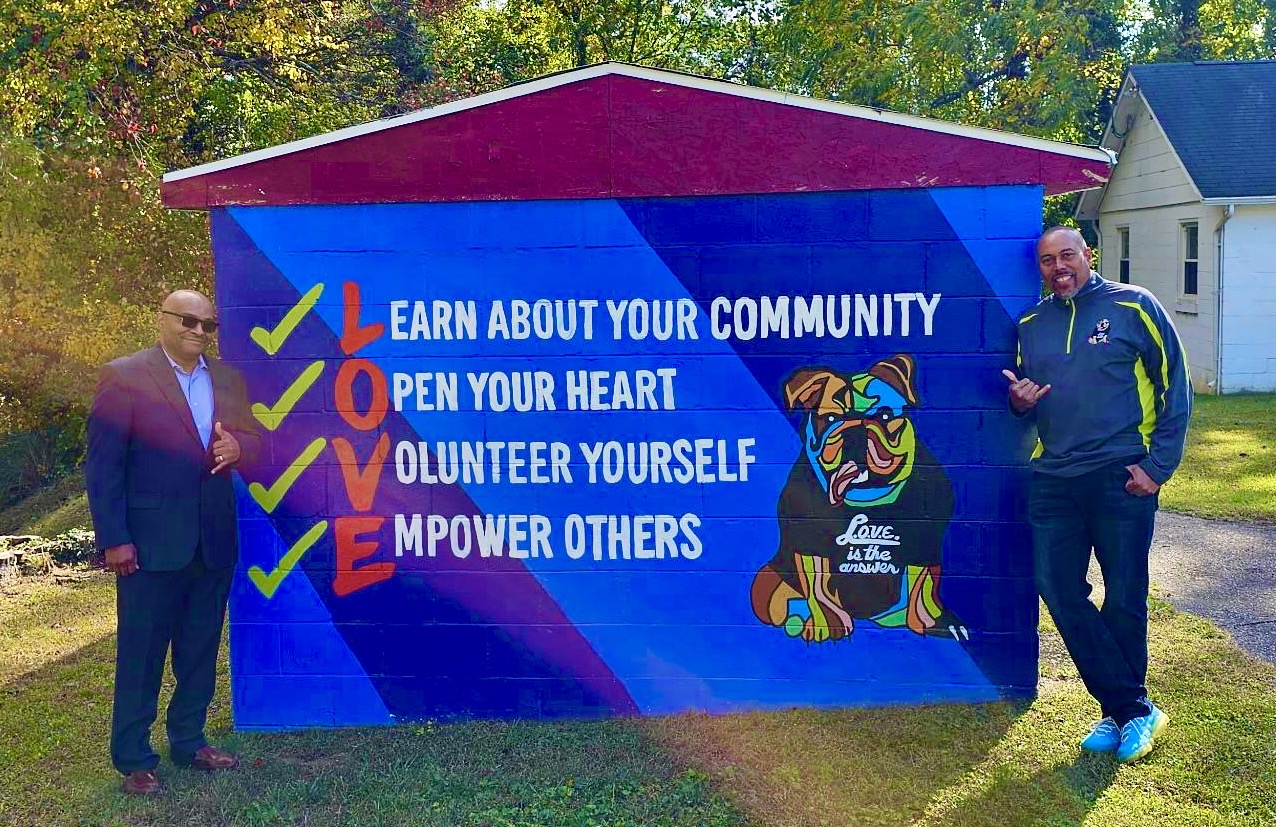
Out of that journey came the L.O.V.E. Principles:
**LEARN** about people.
**OPEN** your heart to their needs.
**VOLUNTEER** to be part of the solution in their lives.
**EMPOWER** others to do the same.
Those four principles became the foundation for nearly everything I do today.
What started with a film grew into books, leadership programs, youth programs, community experiences, workshops, Aloha Walks, police-community engagement initiatives, and the *L.O.V.E. Is The Answer* TV Series, which I host.
We work with people from all walks of life because I don’t believe L.O.V.E. belongs to one group, one profession, one political perspective, or one community. These are human principles. They can transform a police department, a company, a school, a neighborhood, a family, or simply the relationship between two people.
And now I’m entering what I consider the next chapter of my life and professional career.
My newest book is *Sunset in Malibu*.
For years, I’ve taught the L.O.V.E. Principles directly through documentaries, nonfiction books, classes, workshops, community programs, and television. With *Sunset in Malibu*, I’m bringing many of those same principles to people in a completely different way.
I’m wrapping them inside an entertaining fictional novel.
*Sunset in Malibu* follows four former foster kids who forged an unbreakable friendship in high school. They survived childhood together, and two later served side by side as Army battle buddies. Now back home and in their early twenties, all four remain inseparable.
Mully, the heart of the group, has overcome incredible challenges to become a professional golfer. Then a frightening crisis changes everything and sends these friends on an unexpected journey together.
It’s a story about friendship, sacrifice, trauma, hope, purpose, healing, and the kind of love that shows up when somebody needs you most.
What they discover along the way is something none of them knew they were searching for, and everything they needed.
I believe the book has therapeutic qualities, and perhaps now I understand why that came so naturally to me.
I’ve been writing that way since I was a child.
Back then, I was writing stories for my mother because I wanted to help her escape her pain for a little while.
Today, I’m writing for people I may never meet.
Someone may pick up *Sunset in Malibu* because they heard it was a good novel. I want them to fall in love with these characters. I want them to laugh with them, hurt with them, root for them, and not want to put the book down.
But I also hope something else happens.
Maybe somewhere inside that story, they recognize a little bit of themselves.
Maybe they think about a friend they need to call.
Maybe they begin looking at something painful in their own life differently.
Maybe they recognize that asking for help is an act of strength.
Maybe they realize that serving someone else can help heal something inside themselves.
Maybe they simply come away believing that tomorrow can be better than today.
That’s the power of storytelling that I first discovered as a little boy writing for my mom.
And that, to me, is the next evolution of L.O.V.E. Is The Answer.
I’m still trying to help people **LEARN**, **OPEN**, **VOLUNTEER**, and **EMPOWER**. I’m just using fictional characters and an entertaining story as another doorway into those principles.
We’re planning to release *Sunset in Malibu* on Kindle and in paperback by the end of September. Soon, people will be able to visit **[www.trylovenow.com](http://www.trylovenow.com)** to learn more about the book and order it.
When I think about the road that brought me here, I’m grateful for all of it, even the painful parts.
I’ve learned that we don’t always get to choose what happens to us.
But we do get to choose what we do with what happens to us.
As a little boy, I responded to pain by writing stories for my mother.
As an adult, I responded to a painful experience with police by making a film that ultimately became a movement centered around L.O.V.E.
And now, with *Sunset in Malibu*, I’m returning in some ways to where this whole journey began.
A story.
A person who may be hurting.
And the hope that something I write might help them feel a little better, see life a little differently, and believe in what comes next.
I guess I’ve been preparing to write this book almost my entire life.
Would you say it’s been a smooth road, and if not what are some of the biggest challenges you’ve faced along the way?
It definitely has not been a smooth road.
In some ways, struggle has been part of my story from the very beginning.
I grew up watching my mother endure terrible abuse from my father. There were times when he hurt her badly enough that she ended up in the hospital. As a child, you don’t have the power or the tools to understand something like that, much less stop it. Writing became one of the ways I coped. I would write stories for my mother to try to cheer her up, and looking back, I can see that I was learning very early how powerful storytelling could be as a form of healing.
Later in life, I faced a very different set of challenges.
My military service left me dealing with PTSD, along with anxiety, depression, and a host of other mental and physical health issues. Over time, those challenges became significant enough that I was eventually rated as a 100% disabled veteran.
That has affected every part of my life.
There have been periods when simply getting through the day required more energy than people around me probably realized. There have been sleepless nights, difficult stretches emotionally, physical limitations, and moments when I had to fight through things internally while still trying to show up for my family, my work, and the people who were counting on me.
I’ve also faced the kinds of setbacks that come with trying to build something meaningful from the ground up: financial struggles, professional disappointments, rejection, projects that didn’t work out the way I hoped, opportunities that disappeared, and times when the vision was much bigger than the resources available to make it happen.
Then there was the 2012 encounter with police here in Howard County that changed the direction of my life.
That experience hurt deeply. It made me angry, frustrated, and disillusioned. But eventually I had to decide what I was going to do with that pain.
I chose to turn it into something constructive.
That decision ultimately led to *WALKING WHILE BLACK: L.O.V.E. Is The Answer* and everything that grew from it.
One of the biggest lessons I’ve learned is that healing is not linear.
You can be strong and still struggle.
You can accomplish great things and still have difficult days.
You can help other people while still working through your own wounds.
And sometimes the person who looks like they have everything together is fighting a battle nobody else can see.
That understanding is very much a part of *Sunset in Malibu*.
The characters in the novel are dealing with trauma, loss, fear, uncertainty, and wounds that are not always visible. They love each other fiercely, but they are also trying to figure out how to survive, how to heal, and how to be there for one another when life becomes overwhelming.
That is one reason the book feels so personal to me even though it is fiction.
I know what it is like to carry things that other people may not see.
I know what it is like to keep moving forward when part of you wants to shut down.
And I know how powerful it can be when somebody simply shows up for you at the right moment.
So no, the road has not been smooth.
But I’ve come to understand that some of the hardest parts of my life have also given me the greatest capacity for empathy, compassion, and storytelling.
I would never wish trauma, illness, depression, anxiety, or hardship on anyone. But I can choose what I do with what I’ve lived through.
For me, that has meant trying to turn pain into purpose and, more recently, turning some of those life lessons into a novel that I hope will entertain people, move them, and maybe even help someone who is going through a difficult season of their own.
In many ways, *Sunset in Malibu* is another step in that lifelong journey of trying to make something healing out of something painful.
As you know, we’re big fans of you and your work. For our readers who might not be as familiar what can you tell them about what you do?
At my core, I’m a storyteller.
I’ve spent more than 40 years working across media, film, television, writing, photography, live events, education, and community engagement. I’ve produced, directed, written, hosted, taught, and created projects in a lot of different formats, but the common thread has always been the same: I want the things I create to mean something.
I don’t just want to entertain people. I want to move them.
I want somebody to watch one of my films, read one of my books, attend one of my programs, or experience something I’ve created and walk away feeling differently about themselves, another person, or what is possible in their life.
That is probably what I’m best known for.
My documentary *WALKING WHILE BLACK: L.O.V.E. Is The Answer* grew out of one of the most painful experiences of my life and became an award-winning film focused on healing relationships between police and communities. The film won Best Documentary and Audience Favorite at the Garifuna International Film Festival and received a Special Hero Award from the MY HERO International Film Festival. I was also honored with the NAACP Howard County Branch Platinum Award for Contributions to the Community Through Arts & Entertainment.
Earlier in my career, I received a Hollywood FAME Award for my work as a producer, and one of the honors that means the most to me personally is receiving the Presidential Lifetime Achievement Award for my lifetime of service.
I’m grateful for every award, but I try not to measure the value of my work by trophies.
The things I’m most proud of are the moments when someone tells me something I created helped them heal, helped them forgive somebody, helped them see another human being differently, or inspired them to serve.
That is the real award.
The work that began with *WALKING WHILE BLACK* grew into the L.O.V.E. Is The Answer book, educational programs, leadership training, youth programs, community experiences, speaking, and now the *L.O.V.E. Is The Answer* TV Series, which I host.
But creatively, I feel like I’m entering one of the most exciting periods of my life right now because of my new novel, *Sunset in Malibu*.
This book represents a different side of me.
For most of my professional life, I’ve used nonfiction to communicate ideas, whether through documentary films, books, interviews, television, training, or real-life community experiences.
With *Sunset in Malibu*, I get to do something I’ve wanted to do for a long time. I get to take many of the same ideas about healing, friendship, service, purpose, sacrifice, hope, and love and put them inside a story that is simply fun to read.
The reader doesn’t have to sign up for a class.
They don’t have to watch a documentary about a difficult social issue.
They can just fall in love with four friends and go on a journey with them.
But underneath that entertaining story is something deeper.
I call it therapeutic storytelling.
That concept is very personal to me because, looking back, I realize I’ve been doing therapeutic writing since I was a little boy.
My mother taught me to read and write before I ever learned those things in school. When my father would mistreat or beat her, sometimes severely enough to send her to the hospital, I was a child who had very little power to change what was happening.
But I could write her a story.
I could try to make her smile.
I could give her a few minutes where her mind was somewhere other than the pain she was experiencing.
All these years later, I’m still doing that.
Only now, instead of writing a story for one person I love, I have the opportunity to write a story for potentially millions of people I may never meet.
That is what excites me so much about *Sunset in Malibu*.
I want people to read it because it’s entertaining. I want them laughing, crying, rooting for the characters, and turning pages because they have to know what happens next.
Then, maybe without even realizing it, I want the story to touch something deeper.
Maybe it helps someone dealing with trauma.
Maybe it reminds somebody how important their friendships are.
Maybe it helps someone recognize that the strongest person in the room might need help too.
Maybe it causes someone to pick up the phone and call a person they love.
Maybe it gives somebody hope.
If that happens, then I’ve done what I set out to do.
I think what sets me apart creatively is that I don’t see a wall between art and service.
To me, filmmaking can be service.
Writing can be service.
Television can be service.
Entertainment can be service.
A story can change somebody’s day, and sometimes it can change somebody’s life.
At 62, after decades of creating things in so many different forms, I feel like *Sunset in Malibu* is not the culmination of my creative career.
It feels like the beginning of an entirely new chapter.
We plan to release the novel on Kindle and in paperback by the end of September, and soon people will be able to visit **[www.trylovenow.com](http://www.trylovenow.com)** to learn more and order it.
I’ve been a filmmaker, producer, television host, author, educator, and entrepreneur.
But when you strip all of those titles away, I’m still that little boy writing a story and hoping it makes somebody feel better.
That may be the thing I’m most proud of.
Are there any apps, books, podcasts, blogs or other resources you think our readers should check out?
Anything related to David Goggins. Ha! I also love reading autobiographies. I just finished Bob Parsons book. He is the creator of GoDaddy and PXG golf clubs, which I use when I play golf weekly. I read the occasional fiction book. The latest, Theo of Golden, was a beautiful story. I also love anything that makes me laugh or help me become a better human being.
Contact Info:
- Website: https://www.trylovenow.com
- Instagram: https://www.instagram.com/aj_ali_loves/
- Facebook: https://www.facebook.com/ajaliloves
- LinkedIn: https://www.linkedin.com/in/ajali/
- Youtube: https://www.youtube.com/@trylovenow