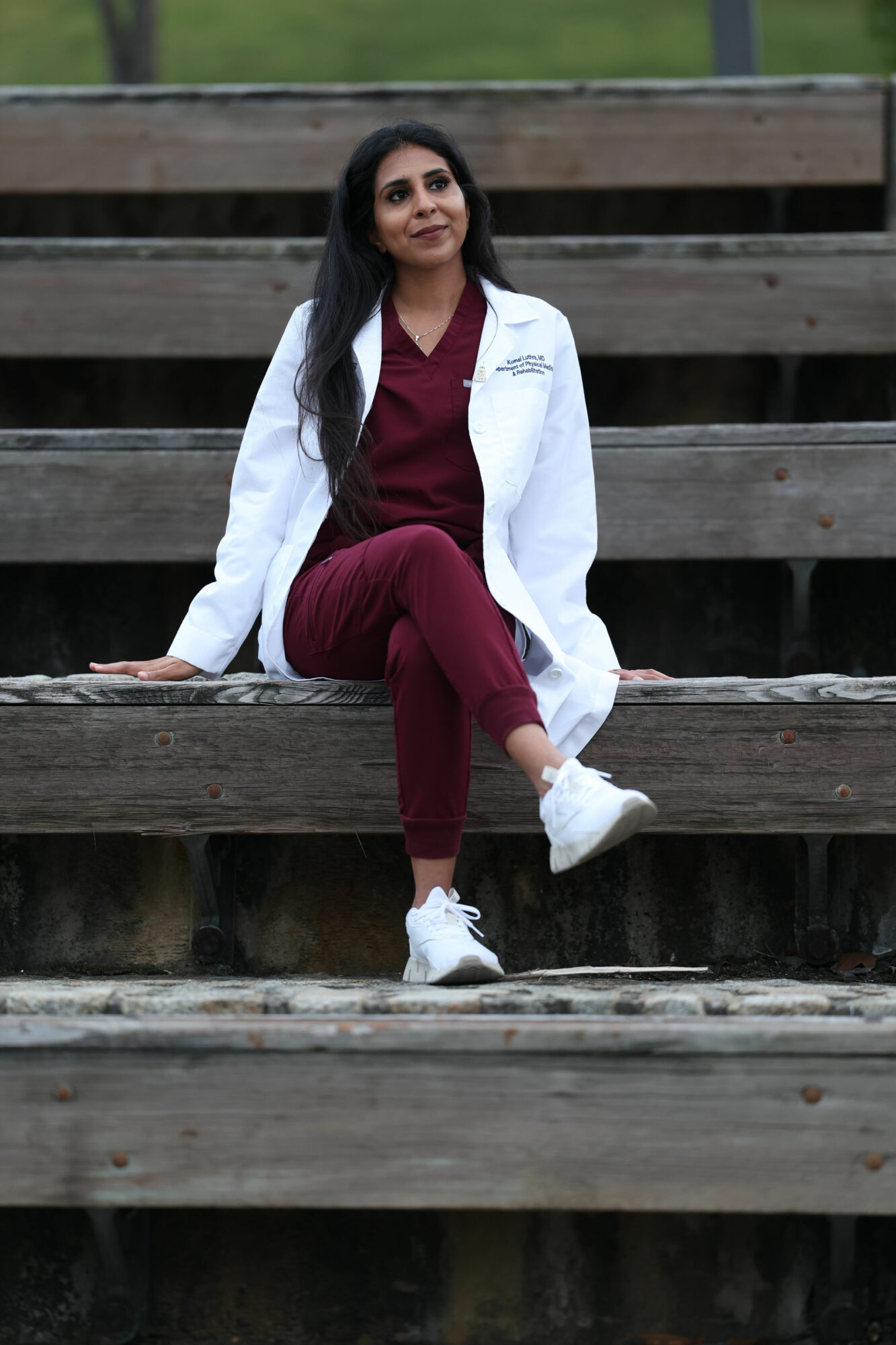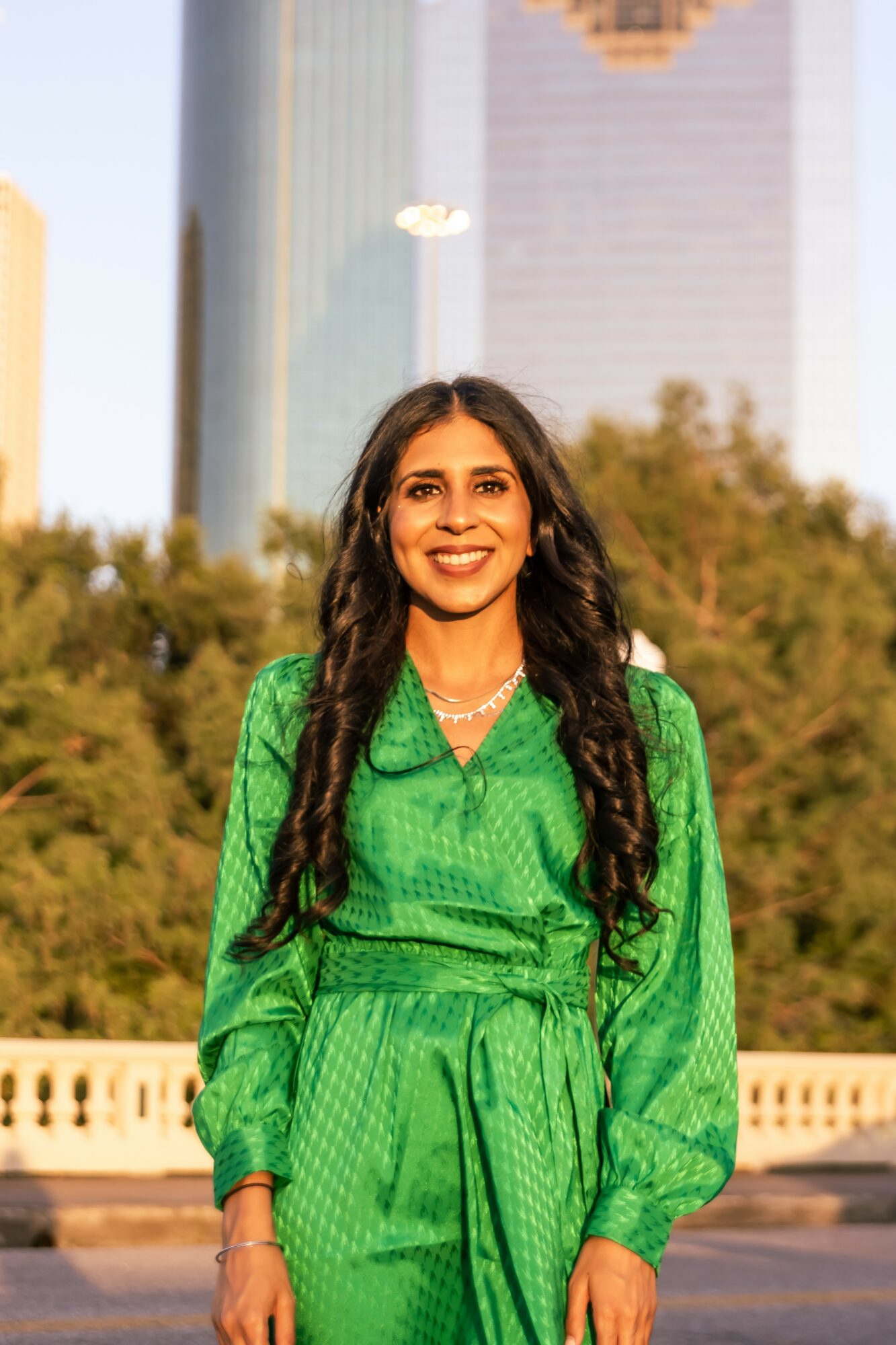
Today we’d like to introduce you to Komal Luthra.
Hi Komal, thanks for sharing your story with us. To start, maybe you can tell our readers some of your backstory.
Growing up, I was surrounded by stories of transformation. At the dinner table, my father, a gastroenterologist, would recount moments when timely intervention had saved a life. My mother, a psychotherapist, spoke of patients who arrived overwhelmed by depression and slowly rediscovered hope through patience, trust, and care. These stories were never framed as heroics; they were shared as reflections of responsibility, humility, and commitment to others. Listening to them, I began to understand that medicine and mental health care were not just professions, but lifelong commitments to showing up for people during their most vulnerable moments.
Long before I understood the demands of medical training, I knew I was drawn to a life of service. I loved science, but what truly captivated me was its power to improve health and quality of life. By the age of twelve, I had already decided I wanted to become a physician to not simply to treat illness, but to make a tangible difference in how people experienced their lives.
That interest deepened when I began shadowing physicians as a teenager. One patient changed the way I understood recovery and healing from a traumatic injury. He was a teenager suffering from complex regional pain syndrome (CRPS) after a motorcycle accident. I watched as chronic pain took away his independence, reshaped his daily routine, and isolated him from the activities that once defined his identity. It became clear to me that pain was not just a physical sensation; it was also emotional and social. While observing a pain management physician, I saw how comprehensive, compassionate care could help patients improve function and reclaim pieces of their lives that pain had taken from them. That experience sparked my interest in a specialty that focuses on function and quality of life.
Today, I am a Physical Medicine and Rehabilitation resident at Johns Hopkins, training in an environment that values multidisciplinary collaboration and patient-centered care. Serving as Chief Resident gave me the opportunity to shape educational experiences for my peers. My interest in pain medicine has grown alongside my involvement in clinical research, where I focus on understanding chronic pain through an evidence-based lens. Alongside my current residency training and research pursuits, I am working to obtain an additional board certification in lifestyle medicine. I will soon continue this journey through a fellowship in Interventional Pain Medicine at Harvard – Beth Israel Deaconess Medical Center in Boston, where I hope to refine my skills and contribute to the evolving conversation around how we treat pain. My vision is to integrate lifestyle medicine with interventional procedures to understand the root cause of pain and offer comprehensive treatment strategies.
Medicine, however, is only one part of how I define purpose. Outside the hospital, mentorship has become a cornerstone of my identity. I founded Mentorship in Medicine, a program which supports students navigating the often-challenging path toward a medical career, particularly those who may not have access to resources. I am also deeply engaged in storytelling through social media, where I create content about medicine, wellness, personal growth, and resilience and host multiple podcast series. In these spaces, I aim to make medicine feel more human and transparent and promote work-life balance. Creativity is another vital outlet for me, and I hope to one day launch a South Asian clothing brand that celebrates culture, identity, and self-expression. Alongside these activities, community service remains central to my life, grounding me in the reminder that service extends far beyond hospital or clinic walls. These pursuits reflect my belief that the most meaningful impact is created at the intersection of medicine, humanity, and community.
Balancing residency with leadership, mentorship, and creative projects has been both challenging and rewarding. It has taught me discipline and adaptability. More importantly, it has reinforced a lesson I first learned through my parents’ stories: impact is rarely about recognition. It is about presence, consistency, and the willingness to walk alongside others through difficult moments. My journey continues to be shaped by the patients who trust me with their stories, the mentors who challenge me to grow, and the communities that remind me why this work matters. In honoring those influences, I always strive to build a career and life rooted in service, authenticity, and purpose.
Can you talk to us a bit about the challenges and lessons you’ve learned along the way. Looking back would you say it’s been easy or smooth in retrospect?
I was four years old when I learned how abruptly life can change.
My grandfather and I were driving back to my grandparents’ house. I was looking forward to finishing the dinosaur puzzle structure we had started earlier that week. We were only a few pieces away from finishing it, and I was ready to place the dinosaur on my shelf in my room. As we approached an intersection with a green light, an eighteen-wheeler suddenly crashed into us at full speed on my side of the car. In an instant, everything became a blur. I turned toward the driver’s seat and saw my grandfather unconscious. There was shattered glass all over him, and blood trickled down from his forehead. I turned to my right and saw the whole vehicle door was compressed inward. Panic set in as questions raced through my mind faster than I could process them—what had just happened, how was I going, where were my parents, and what about my grandfather? I remember looking down and seeing the Skittles I had been eating moments earlier scattered across the floor like fragments of something broken. That day, my grandfather passed away.
At four years old, I didn’t understand death in the way adults do. I only knew that someone I loved was suddenly gone and would not be coming back. It was my first encounter with loss, and although I could not articulate it then, it became one of the earliest challenges that shaped how I would come to view life.
In the years that followed, that experience quietly influenced my outlook. It taught me that life is fragile, unpredictable, and never guaranteed. It showed me that moments we assume will repeat themselves may never return, and that presence matters more than perfection. I learned to value time, relationships, and the responsibility we carry to live fully and intentionally. The loss also strengthened my faith in that there was purpose in surviving, in moving forward, and in using the time I was given to contribute something meaningful to the world.
Obstacles do not always arrive with warning, and we are rarely prepared for the ones that change us most. Yet over time, I came to understand that challenge can be both painful and formative. That early loss instilled resilience, gratitude, and a sense of responsibility to live with purpose. It reminded me that strength is not the absence of hardship, but the choice to keep moving forward in its aftermath.
Today, I carry that lesson with me as a quiet compass. In facing life’s inevitable challenges, I strive to honor my grandfather’s legacy by choosing presence over distraction, courage over fear, and purpose over complacency. The obstacle that once felt incomprehensible became a foundation for how I meet adversity and choose to live.
Thanks – so what else should our readers know about your work and what you’re currently focused on?
I am a 4th year Physical Medicine and Rehabilitation resident physician currently completing my residency training, where I care for patients with complex functional needs across both inpatient and outpatient rehabilitation settings. Throughout residency, I have built a clinical foundation in restoring mobility, independence, and quality of life for patients with neurologic, musculoskeletal, and medical conditions, including stroke, spinal cord injury, traumatic brain injury, amputations, and chronic pain syndromes. In the inpatient rehabilitation setting, I work closely within multidisciplinary teams including physical and occupational therapists, speech-language pathologists, nurses, and social workers. The goal is to develop individualized, goal-directed rehabilitation plans that optimize functional recovery and promote community reintegration. In the outpatient setting, I provide longitudinal care for patients with ongoing functional impairments, managing a broad range of conditions including spasticity, chronic pain, osteoarthritis, tendonitis, and prosthetic and orthotic needs.
Can you tell us more about what you were like growing up?
I am a proud second-generation Punjabi American. My parents immigrated from India to Texas in their late teens, coming from the villages of Jalandhar, Punjab, and building their lives through years of perseverance and hard work across Dallas–Fort Worth and Houston. Their journey from limited resources to creating stability and opportunity for their family has been the foundation of my own values and drive.
I grew up in the suburbs of Houston, Texas, a diverse and vibrant community, alongside my younger brother, who has always motivated me to lead by example and serve as a role model. I completed my primary education in the Clear Creek Independent School District, where I developed a strong academic foundation and a sense of discipline, ambition, and resilience. With a deep appreciation for the countless sacrifices my parents made, I learned to approach every opportunity with humility, consistency, and determination, even in the face of challenge. This mindset allowed me to achieve numerous academic accolades, graduate in the top 1% of my high school class, and continue my education at Rice University, a prestigious private institution.
Outside of academics, I was fortunate to be able to participate in many different extracurricular activities, with dance and tennis being my most memorable. Starting at the age of 5, I learned various types of dances including tap, jazz, ballet, hip hop, Bollywood, and Bhangra. I also spent significant time on the tennis court, where I learned the importance of focus, perseverance, and composure under pressure. Looking back, every experience, whether in the classroom, in dance studios, or on the tennis court, shaped me into the person I am today. Each challenge taught me resilience. Each success reinforced discipline. Each setback strengthened my ability to stay grounded and keep moving forward.
Contact Info:
- Instagram: sherni_md
- LinkedIn: https://www.linkedin.com/in/komal-luthra-07b1522ba