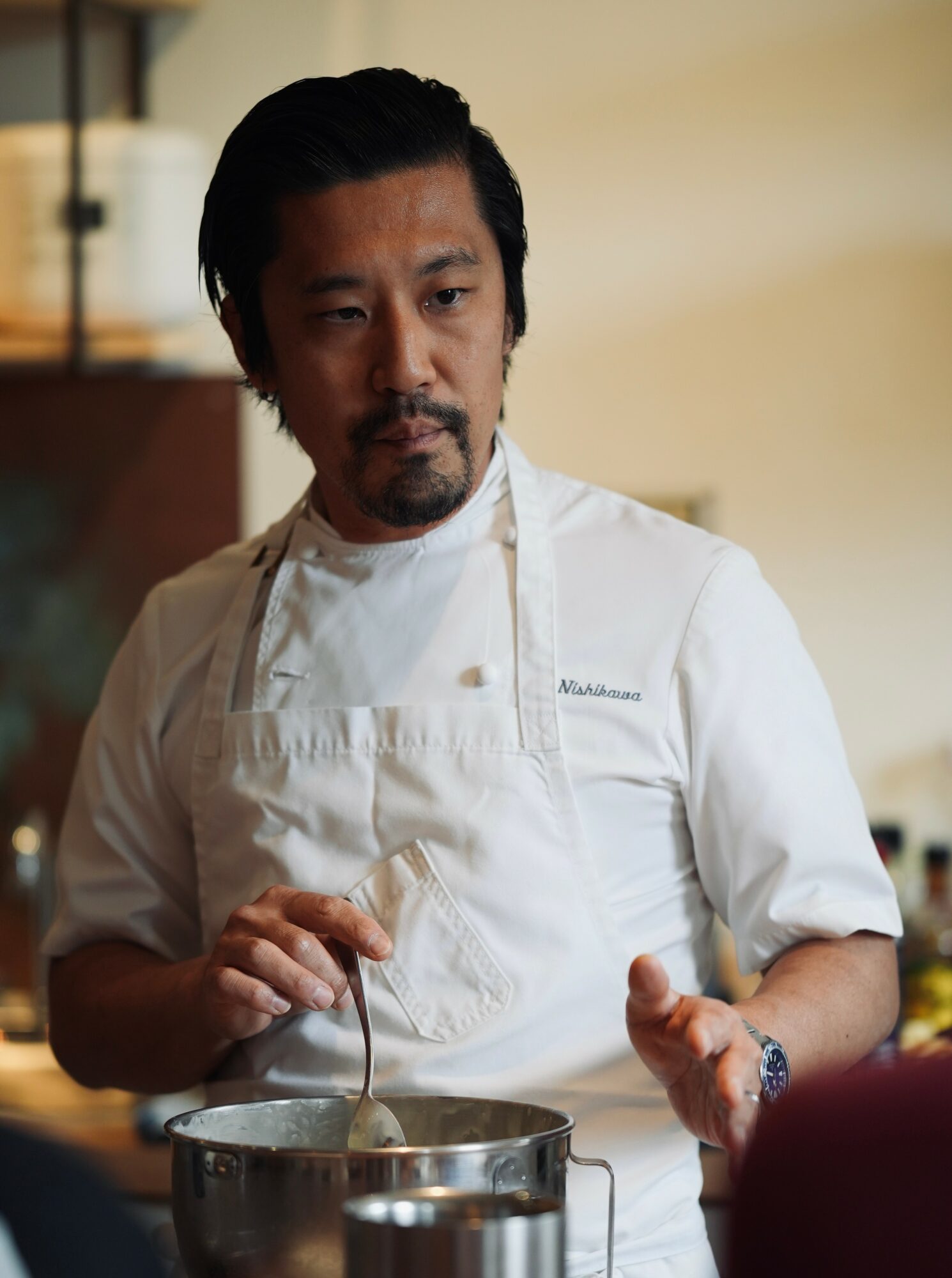
Today we’d like to introduce you to Takeshi Nishikawa.
Hi Takeshi, please kick things off for us with an introduction to yourself and your story.
I was born and raised in Japan and moved to the United States when I was young. I started working in restaurants in high school and quickly realized that hospitality gave me a sense of purpose. Over the past 20+ years, I’ve worked in some of the DMV’s most celebrated kitchens, eventually becoming Culinary Director for Rose’s Restaurant Group, where I helped lead culinary operations across Michelin-recognized restaurants including Rose’s Luxury, Little Pearl, and Pineapple & Pearls.
Throughout that time, I kept returning to a question I couldn’t shake: why were so many aspects of Japanese food culture still reduced to trends or stereotypes in the U.S., especially outside of sushi? There was so much depth in the ingredients, craftsmanship, seasonality, tea culture, and hospitality traditions I grew up around that I rarely saw represented thoughtfully or accessibly.
Snow Crane grew out of that feeling.
What began as an idea for Japanese-inspired ice cream slowly became something much broader — a way to share the flavors, rituals, and sense of care that shaped me. Through pop-ups, farmers markets, private events, and collaborations, I started introducing guests to flavors like kinako, hojicha, black sesame, Okinawan black sugar, and yuzu in a format that felt familiar but still deeply rooted in Japanese tradition.
At the same time, becoming a father changed the way I think about time, community, and the kind of work I want to leave behind. Snow Crane is no longer just about dessert to me. It’s about creating moments that feel thoughtful and memorable, even if brief. In Japanese culture, there’s a phrase — ichigo-ichie — that roughly means “one time, one meeting.” The idea is that every encounter is unique and can never be repeated exactly the same way again. That philosophy has shaped how I approach hospitality and how I hope people feel when they experience Snow Crane.
Right now, we’re in a transitional stage — continuing to grow through pop-ups, residencies, and community events while building toward the next phase of the brand. It’s been a slower and more winding road than I originally imagined, but in many ways, that process has helped clarify what Snow Crane is really meant to become.
Can you talk to us a bit about the challenges and lessons you’ve learned along the way. Looking back would you say it’s been easy or smooth in retrospect?
It definitely hasn’t been a smooth road. Like many small businesses, Snow Crane has grown through a combination of persistence, uncertainty, and constant adjustment behind the scenes.
One of the biggest challenges has been building something that sits outside of an established category. People understand coffee shops. They understand traditional ice cream shops. But a Japanese dessert and tea concept rooted in seasonality, craftsmanship, and hospitality culture requires a lot more education and storytelling. Sometimes that means introducing guests to ingredients they’ve never heard of before, or helping people understand that Japanese food culture extends far beyond sushi and matcha lattes.
There have also been practical challenges that come with trying to build an independent business in the current environment — rising construction costs, permitting delays, financing pressures, and the reality that opening a physical space takes far more time and capital than most people realize. At one point, we were moving toward a permanent storefront before having to reassess and pivot our plans. That was difficult emotionally, but it also forced me to think more carefully about sustainability, pacing, and what kind of business I actually wanted to build long term.
On a personal level, balancing entrepreneurship with family life has probably been the hardest part. My wife and I now have two young daughters, and starting a business while raising a family changes your relationship with risk, time, and energy. There are moments where the pressure feels very real. But becoming a parent has also clarified my priorities and deepened my sense of purpose.
At the same time, many of the challenges have unexpectedly become strengths. Operating through pop-ups, residencies, markets, and collaborations allowed Snow Crane to grow more organically and directly within the community. It taught me how important adaptability is, but also how much people value sincerity and consistency. Some of the most meaningful moments have happened in temporary spaces — conversations after service, repeat guests returning week after week, or seeing someone try a flavor tied to a childhood memory for the first time.
I think the biggest lesson has been learning that growth doesn’t always need to happen quickly to be meaningful. Sometimes moving slower allows you to build something with a stronger foundation and a clearer sense of identity.
Can you tell our readers more about what you do and what you think sets you apart from others?
I’m a chef and founder, but more broadly, I think of my work as creating experiences that connect people through food, culture, and hospitality. Over the past two decades, I’ve worked in Michelin-recognized restaurants throughout the DMV, where I learned the discipline, precision, and attention to detail that continue to shape how I approach everything today.
With Snow Crane, I specialize in Japanese-inspired desserts and beverages rooted in seasonality, craftsmanship, and storytelling. A lot of what we do centers around introducing people to ingredients and traditions that are deeply familiar to me but still relatively unfamiliar in the U.S. — things like kinako, hojicha, Okinawan black sugar, yomogi, or regional tea traditions from Japan. Rather than presenting them in an overly formal way, I try to make them approachable and emotionally resonant.
I think what sets Snow Crane apart is that it doesn’t fit neatly into an existing category. It’s not simply an ice cream shop or café. It sits somewhere between dessert shop, tea house, hospitality experience, and creative space. The products are chef-driven, but the larger focus is on creating experiences that feel transportive, thoughtful, and deeply cared for.
One of my long-term goals is for Snow Crane to help redefine what a frozen dessert experience can be in North America. Historically, frozen dessert concepts have focused mostly on flavor, novelty, or convenience, but I believe there’s room for something much more immersive — where hospitality, craftsmanship, seasonality, design, and cultural storytelling all exist together in one experience. That’s the space we’re trying to create.
I’m also very interested in the intersection between food and other forms of craftsmanship. Snow Crane has naturally grown into collaborations with ceramicists, designers, papermakers, tea producers, farmers, and artists because I see food as part of a much larger cultural ecosystem. The goal has never been to create “Instagram food,” but rather something timeless, grounded, and human.
What I’m most proud of is probably the community that has formed around Snow Crane before we’ve even opened a permanent space. So much of the growth has happened organically through pop-ups, markets, collaborations, and word of mouth. Seeing people return week after week, bring friends and family, or tell me that a flavor reminded them of a memory from childhood — those moments mean far more to me than recognition or scale.
More than anything, I hope Snow Crane creates a feeling of care. Even if someone only spends a few minutes with us, I want them to leave feeling lighter, more connected, and more present than when they arrived.
Alright, so to wrap up, is there anything else you’d like to share with us?
I think one thing I’ve come to appreciate more over the years is how powerful small moments can be. In hospitality, people often remember how something made them feel long after they forget exactly what they ate. That idea has become very important to me.
A lot of what we’re trying to build with Snow Crane is rooted in slowing people down, even briefly. Whether it’s through a seasonal flavor, a conversation over tea, or the atmosphere of a space, I hope guests feel a sense of care and presence that’s increasingly rare today.
I also want people to know that Snow Crane has only been possible because of community. So much of the project has grown through encouragement, collaboration, and generosity from people around the DMV — guests, farmers, artists, ceramicists, designers, fellow chefs, and local small businesses who believed in the idea long before it fully existed. I’m deeply grateful for that support.
And finally, I think it’s important to say that Japanese culture is incredibly deep, nuanced, and regional. I’m still learning myself all the time. Snow Crane is not about presenting a perfect or definitive version of Japan, but rather sharing the experiences, flavors, and values that have shaped me personally in a way that feels honest and respectful.
At the end of the day, I simply hope Snow Crane becomes a place people return to throughout different seasons of their lives — somewhere that brings a little joy, comfort, curiosity, and connection into their day.
Contact Info:
- Website: https://snow-crane.com
- Instagram: @snowcraneicecream
- Facebook: https://www.facebook.com/profile.php?id=61567851989748
- LinkedIn: https://www.linkedin.com/company/snow-crane/
- Other: https://takeshinishikawa.com