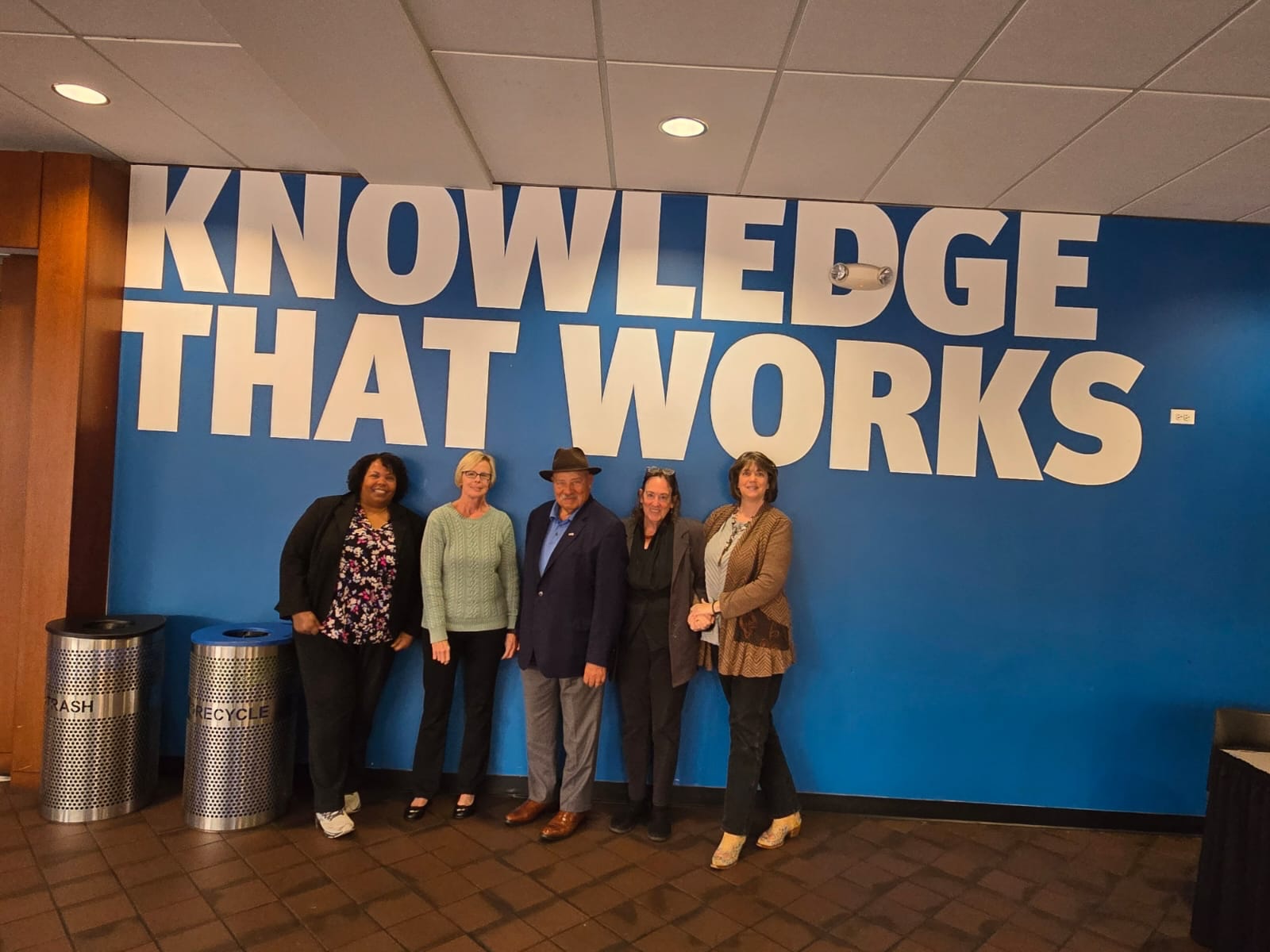
Today we’d like to introduce you to Alan Inman and Gail Hambleton.
This is the story of how two people from very different backgrounds, Gail Hambleton and Alan Inman, both deeply committed to peacebuilding and racial reconciliation in Baltimore, came together as co-coordinators of the Baltimore Cross-Community Reconciliation Project (BCCRP). Their work in Baltimore centers on building stronger cross racial relationships, reducing bias, and nurturing empathy, understanding, and real collaboration. Through hands on civic engagement, they’re helping communities grow more resilient and reframing traditional diversity goals into something deeper and more justice driven—relational healing, interrupting bias, and strengthening collective resilience.
Here are their stories, how their paths converged, what shaped their commitment to reconciliation, and how their shared vision continues to guide the work of the BCCRP.
Hi Gail, please kick things off for us with an introduction to yourself and your story.
My peacebuilding journey began long before I had the language for it. I grew up in a small farm town in Ohio where there were no African Americans, yet my parents—both classical musicians with the Cleveland Symphony Chorus—taught me to respect the dignity of every person. That early foundation shaped everything that came next.
When I began working for the Global Peace Foundation in 2009, I learned about our shared identity—we are all One Family Under God. I’ve spent the last twenty years unpacking that identity, making it real, and figuring out how to “live it.” This resulted in creating the term “Community-Driven Peacebuilding.” As we have developed workshops and interactive exercises to bring oppositional groups together based on the universal principles of our common humanity, I’ve learned that each of us has those shared ideals deep inside us. Scholars refer to this as the “Global Ethos.”
And Alan, please introduce yourself and your story.
My interest and commitment to fostering constructive race relations stem from my own heritage and life experience. I grew up during the time of strict segregation in North Carolina in the 50s and 60s, joining protest marches in my hometown during the era of the civil rights movement led by Dr. King across the U.S. However, another factor of my identity was that I was considered a mulatto and had to confront the reality of being questioned by both black and white as to who I was. So, while my heritage was clear to me, growing up on the side of the train track in the southern town as a black man, I still had to face questions related to whether I thought of myself as being better than others. While this led to personal struggles about identity, ultimately, my faith in God helped me resolve the internal conflict. With that conclusion, I could see all people through the lens of what they could be if they could resolve the internal conflict in their own lives.
Alright, so let’s dig a little deeper into the story – has it been an easy path overall and if not, what were the challenges you’ve had to overcome?
Implementing the BCCRP took longer than expected. Talking about reconciliation in a city where there is still so much justifiable rage, with both local and national incidents causing anguish, meant the project could only work if black and white leaders took it on together. We spent countless hours talking with people from all walks of life, discussing, and reading books just to begin to understand what racial reconciliation would require and how we could build a shared future based on our common humanity.
In Montana, we successfully used Gordon Allport’s Managed Contact Theory to foster unity and understanding between Native American and non-native communities. However, our Baltimore partners were not open to using a process where black and whites were initially separated in the first few dialogue sessions. True to our policy of listening to the community, we crafted all of our Sessions together in one group.
Thankfully, Reverend Kevin Slayton, Pastor of Northwood Appold United Methodist Church, helped us to put the “flesh on the bones.” With long and thoughtful conversations, he helped us to shape the process content that would align with Baltimore’s culture.
Finding a diverse team of black and white facilitators for our first pilot ten, in-person sessions was far more challenging than we expected. Only through persistence and unique connections were we able to bring together a diverse group who fit with what the project needed. You never know where those connections will lead. At one point, Gail’s hairdresser casually mentioned that her brother was a professor in the peacebuilding field. That single comment opened a new door. He introduced us to Dr. Sarah Federman at the University of Baltimore, who then recommended two retired graduate students in the Negotiations & Conflict Management program to help facilitate. One of them, Robin McDonough, has since become our project director.
We went on to recruit participants. While successful, there had to be significant effort in finding individuals of influence that were not only interested in participating, but willing to dedicate the time and energy required to join bi-weekly sessions over a five-month period. Those who did were clearly special, dedicated individuals.
Thanks – so what else should our readers know about Global Peace Foundation?
The BCCRP is sponsored by the Global Peace Foundation (GPF), an international nonprofit with field affiliates in 20 nations. GPF promotes a values-based approach to peacebuilding that emphasizes universal principles and shared values as a basis to address conflict, promote equitable and sustainable development, and engage all members of the human family as necessary and valuable contributors to building a culture of peace.
At GPF, we have learned that people will stay at the peacebuilding table if their relationships are built on these shared bedrock principles; then compromise can happen—mutual respect and understanding can happen. Our solutions are community driven. Issues are already in the hearts and minds of each particular community, and the local people are the best source for finding solutions. We facilitate the way for them to be able to compromise and negotiate.
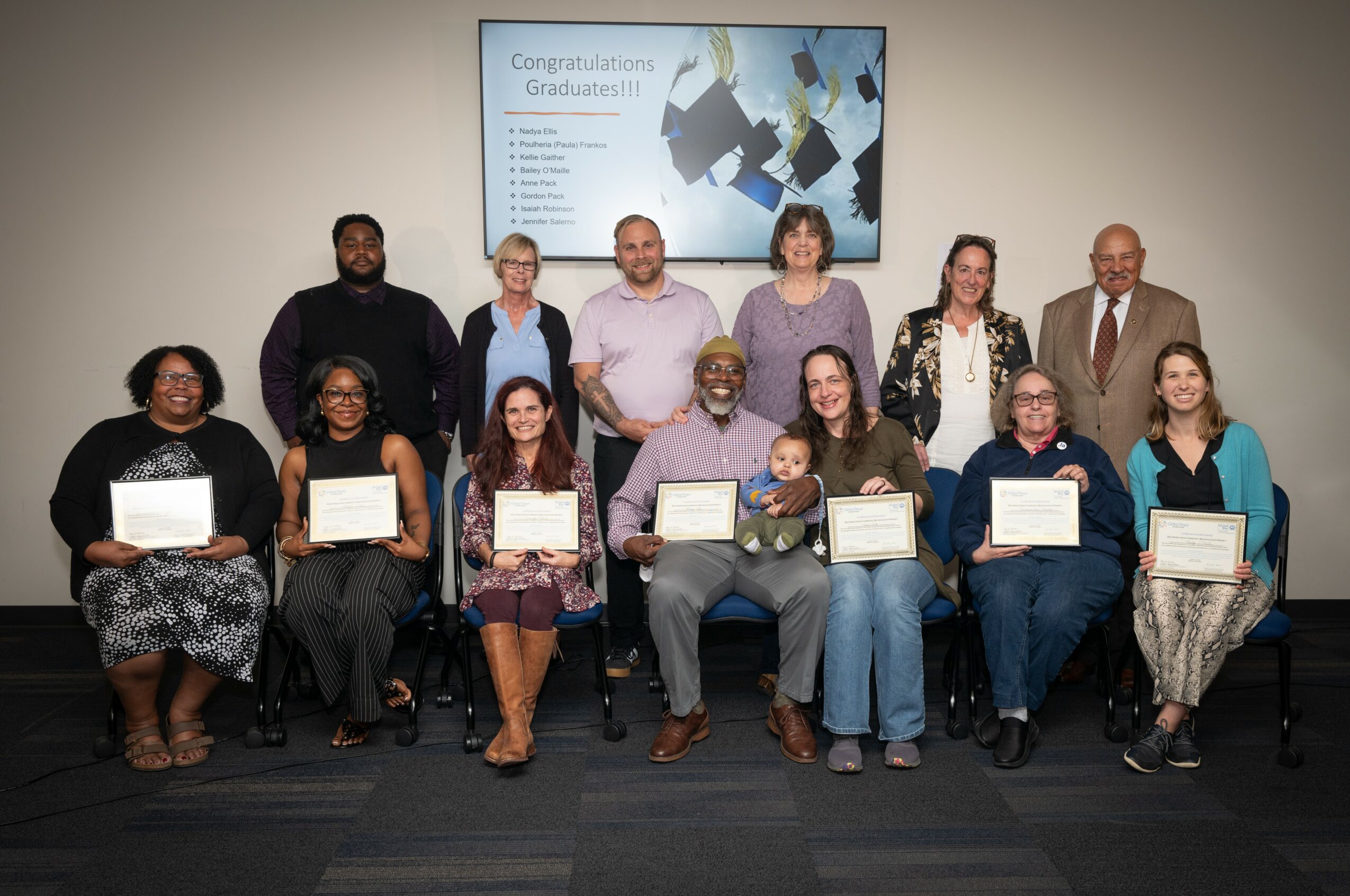
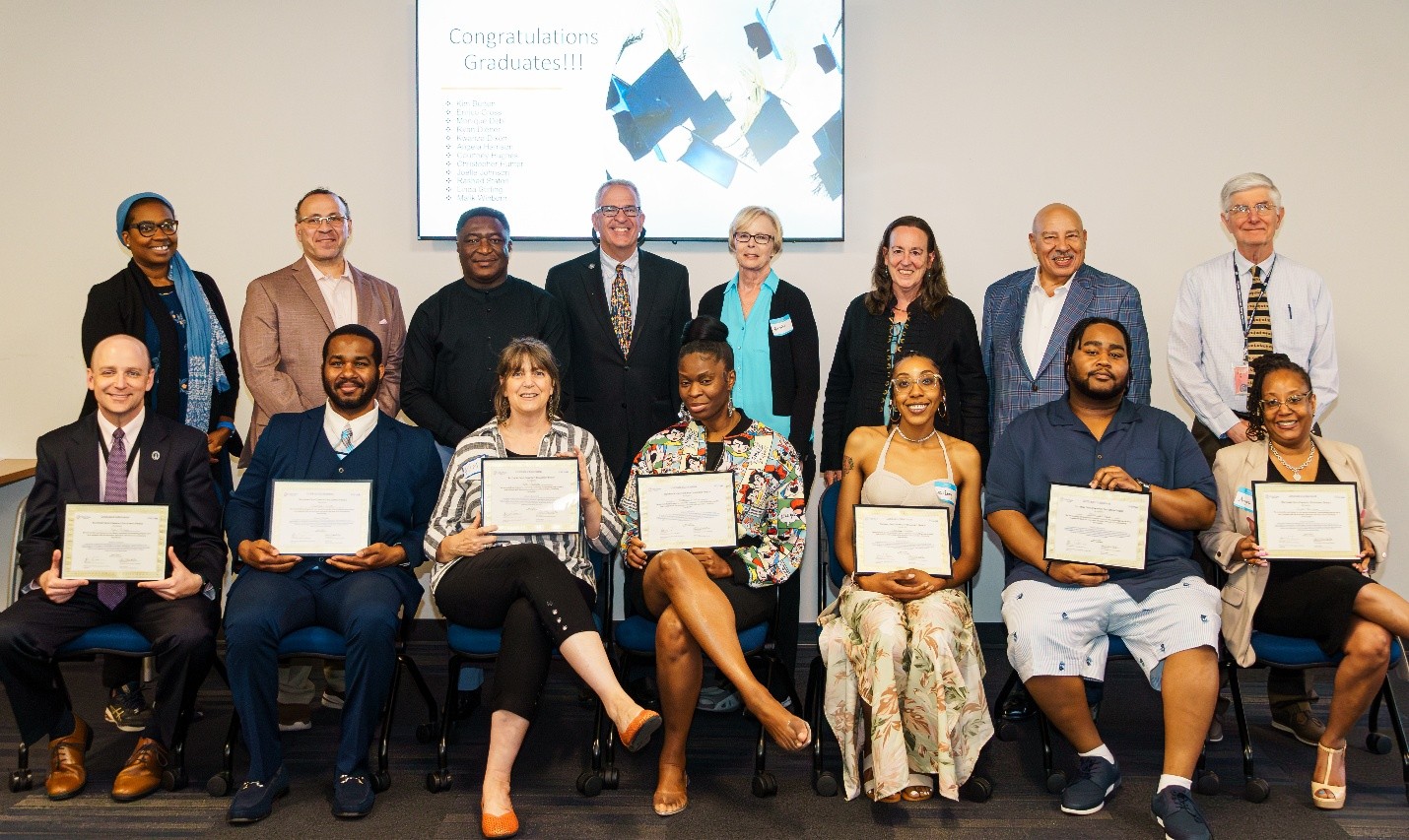
We believe that relationships rooted in our shared humanity can change everything. Based on GPF’s emphasis on collaboration and collective impact—we only go where we are invited. Working with project stakeholders, local organizations, and a diverse project team, the BCCRP began taking shape in 2021. By the following year, the first cohort of black and white residents from Baltimore and the surrounding area came together to build real relationships, have honest conversations about race and lived experiences, and create a path toward greater harmony and understanding. A second cohort followed in 2024. Fortunately, after successfully facilitating two cohorts, Robin McDonough became the project director that was needed. She is extremely detail oriented and “kept all the trains running on time.” We were able to step back a bit as they continued to do their international work. Additionally, cohort participants Kim Burton, Dr. Monique Durham, and Kellie Gaither have continued to support the project in a range of meaningful roles.
Following the two cohorts, the project has evolved into three active peacebuilding streams: the Baltimore Community Peacebuilding Committee (BCPC), the Baltimore Police Academy “Our Shared Humanity” sessions, and the “Building Our Shared Future Block by Block” self-directed group peacebuilding study series.
The BCPC became our first anchor, hosting bi monthly gatherings where residents connect across divides to build lasting relationships, learn together, and spark shared civic action throughout the city.
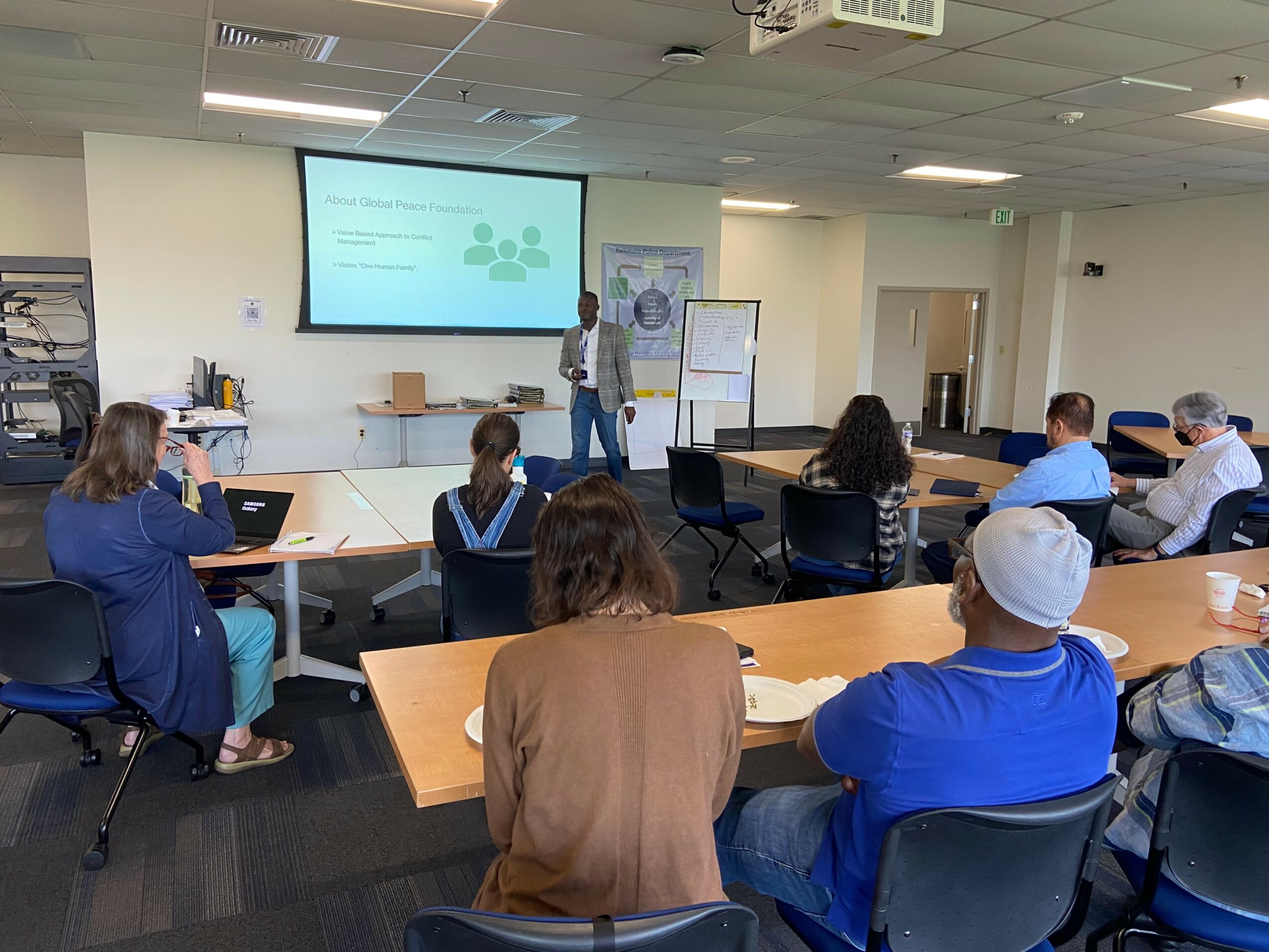
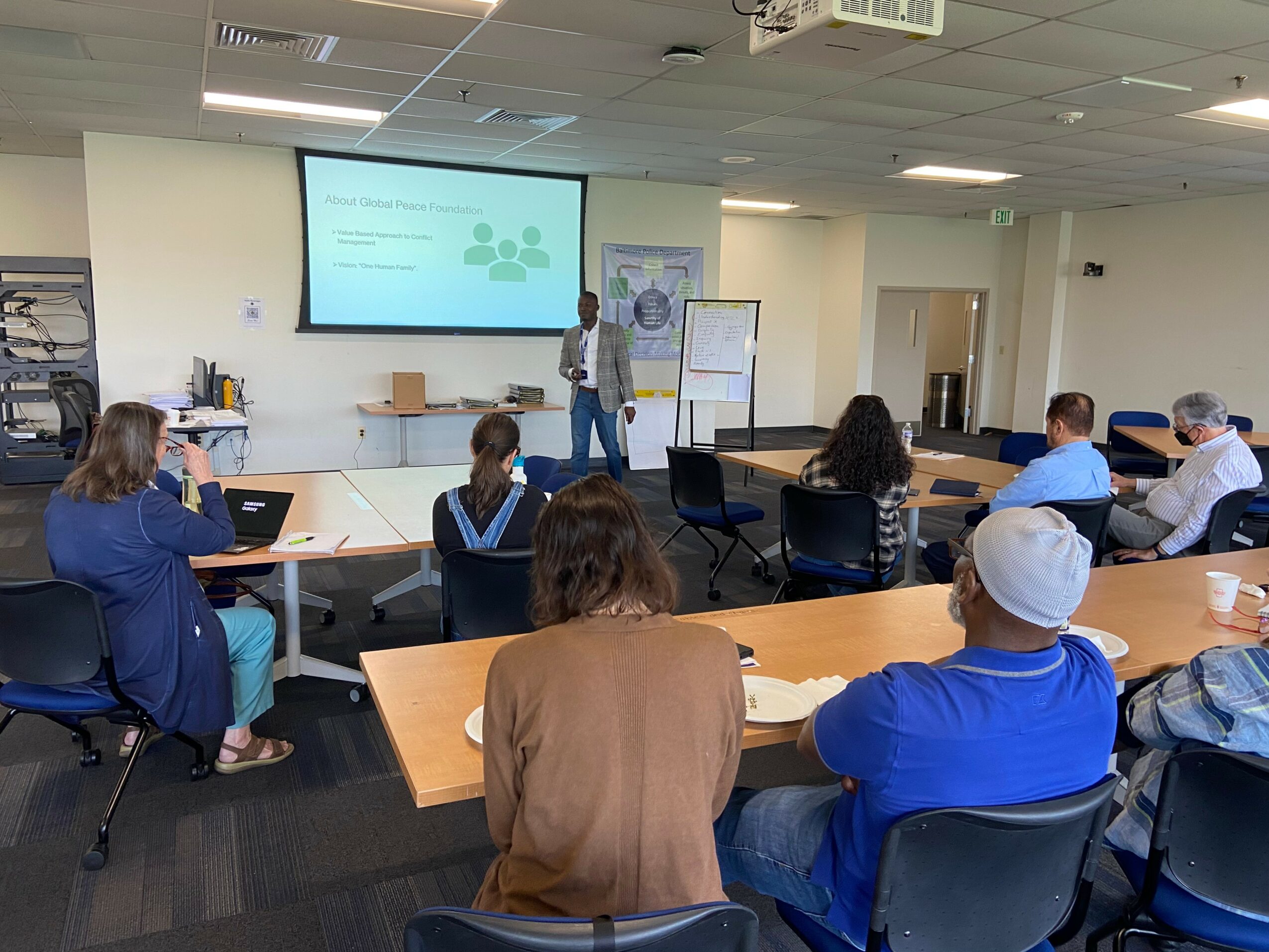
Several capacity-building workshops a year will now deepen that work, giving people practical tools—like mediation and restorative practices—to handle conflict constructively. Our first workshop was held on April 18 where Baissou Sissoko, an adjunct professor at the University of Baltimore and an experienced conflict resolution practitioner trained in several mediation models and restorative justice processes, guided an energetic, hands on conversation with a diverse group of community members. He opened the room with a simple but grounding reminder: “Conflict and peace are two sides of the same coin.”
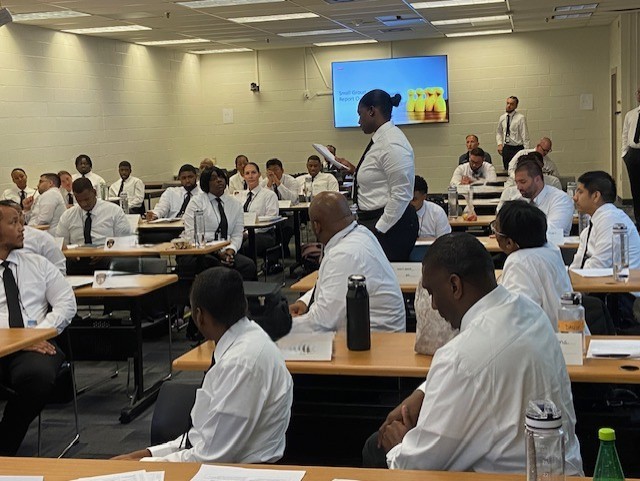
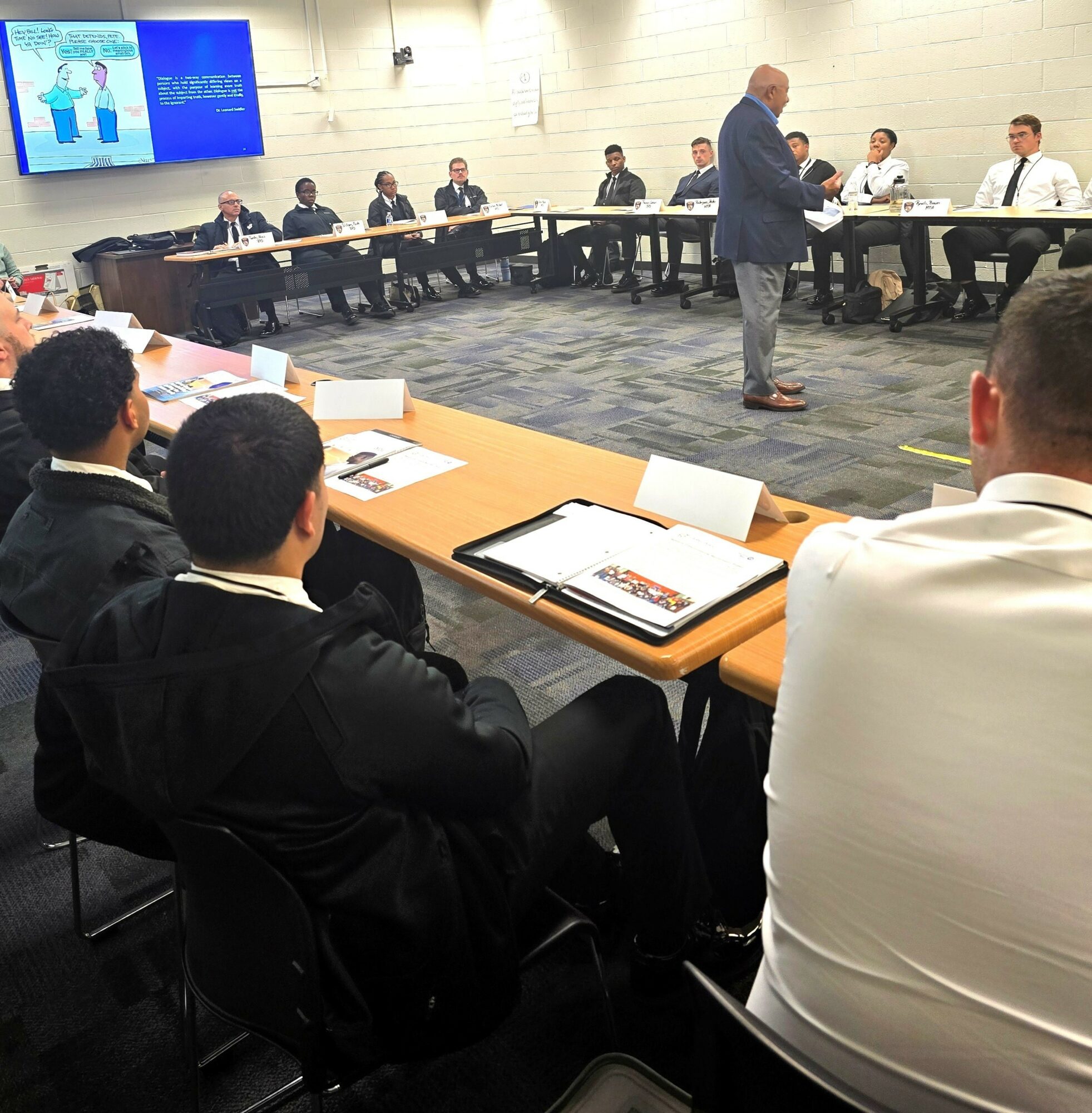
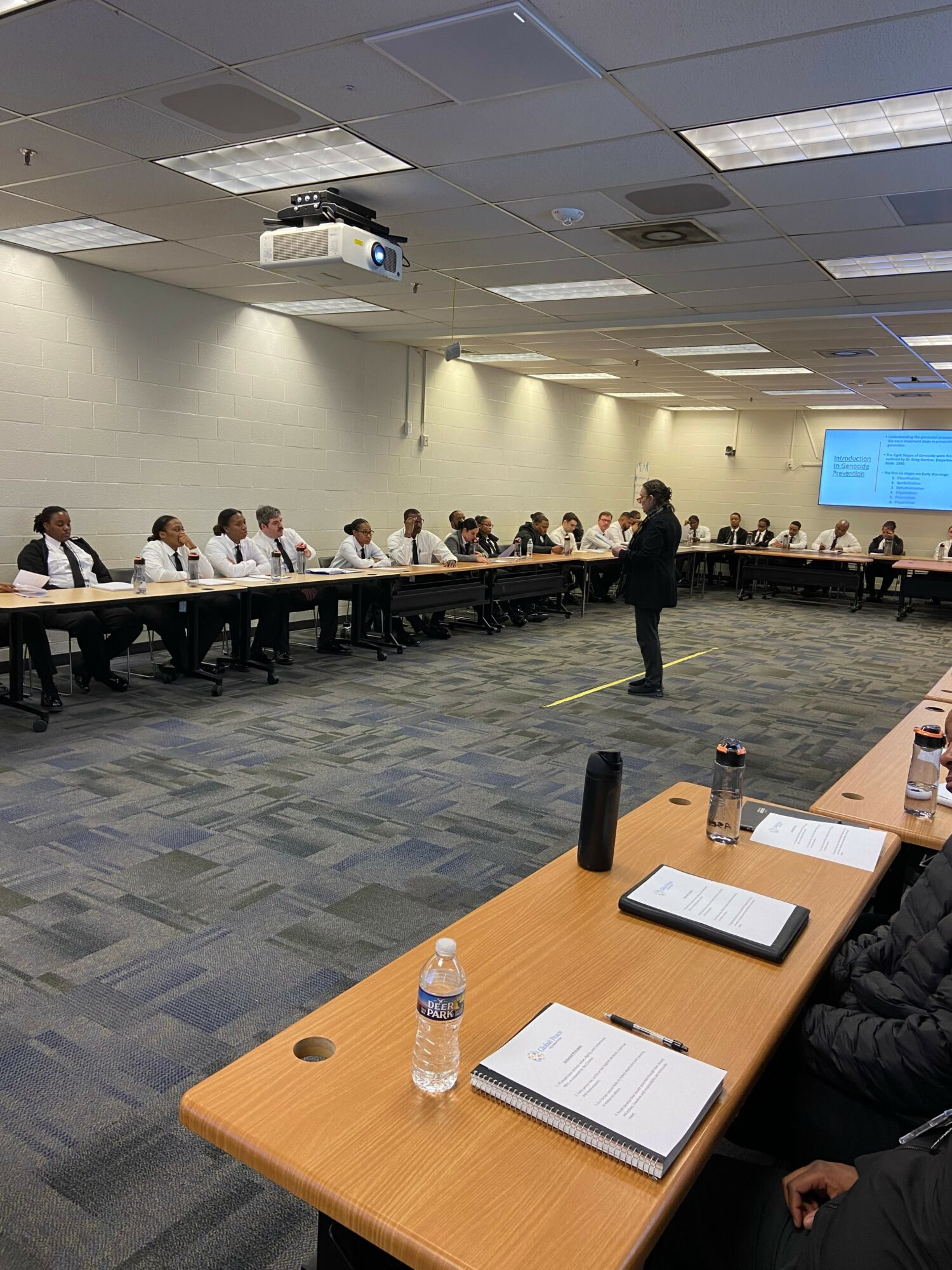
“Our Shared Humanity” sessions took shape inside the Baltimore Police Academy. These sessions present the foundational ethic that police officers and the Baltimore community have a “shared identity” of our common humanity. This sounds simple, yet it is profound. On that foundation all people have intrinsic value, dignity, and fundamental rights endowed by the Creator. This was proven and grounded in discussions, interactive exercises, and the sharing of personal stories. Since November 2024, we’ve held 8 sessions and reached more than 375 trainees. And since introducing surveys in June 2025, over 98% of participants have said the training will help them in their work as police officers.
Our “Building Our Shared Future Block by Block,” is a self directed group study series launched in early 2026. Adapted from a successful international model, it helps small groups explore shared humanity, heal historical injustices, and learn the core principles of peacebuilding. It’s designed to empower everyday residents to lead change in their own neighborhoods.
Together, these initiatives form a growing network—one that equips residents, community groups, and future officers with the mindset and skills to build a more peaceful Baltimore.
None of this work would be possible without the ongoing support of our community and partner organizations. From our early collaboration with Project Pneuma and the United Way of Central Maryland—who helped launch our first two pilot cohorts—to our growing partnerships with the Baltimore Police Academy and the University of Baltimore, each step forward has been made possible by people and institutions committed to a more connected, peaceful city.
If you’d like to learn more about our work—or explore ways to support or get involved—reach out anytime at bcpc-inquiries@globalpeace.org . We’d love to connect.
Is there anything else you’d like to share with our readers?
Can you talk to us about your view on risk taking. Have you taken any major risks (and if so, can you tell us about those risks)? Regardless of whether you view yourself as a risk-taker or not, we’d love to hear your perspective on how you think about risk.
There is an element of risk in conflict transformation that requires faith and a belief in our common humanity. Being a little older with extensive peacebuilding experience, one begins to trust the process. You don’t know how long it will take, but you know that healing is possible. One begins to accumulate a treasure chest of powerful real stories that become tools for building faith in humanity.
Pricing:
- Donate to the Baltimore Project: https://globalpeace.info/donate-to-bccrp
Contact Info:
- Website: https://globalpeace.org/community-driven-peacebuilding/cross-community-reconciliation/
- Facebook: https://www.facebook.com/groups/345913380937017/members
- LinkedIn: https://www.linkedin.com/in/alan-j-inman-667920a/
- Other: bcpc-inquiries@globalpeace.org