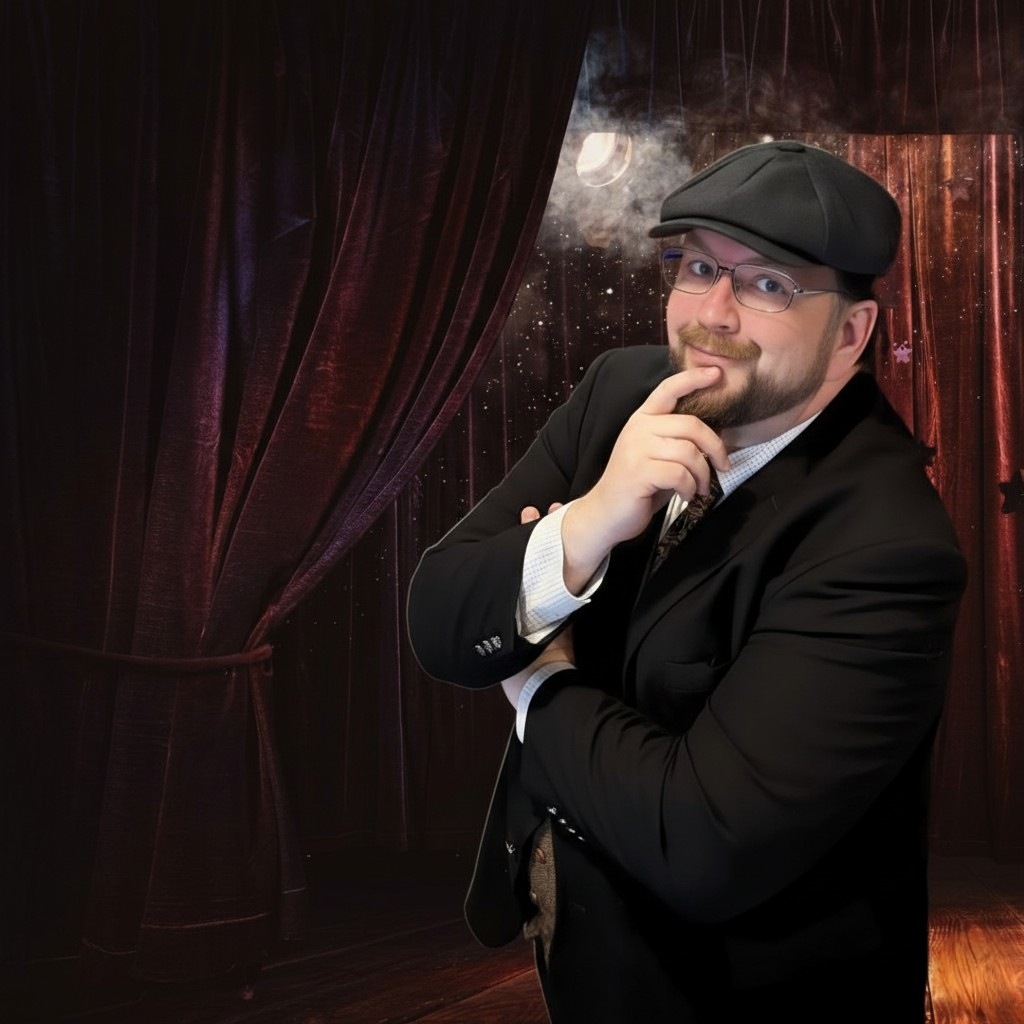
Today we’d like to introduce you to Vincent Wilson.
Hi Vincent, we’d love for you to start by introducing yourself.
I think the honest answer is that I never really chose magic. Magic chose me, and then I ignored it for a while, and then it came back and refused to leave.
Growing up in the late seventies and into the eighties, I was the kid who was always reading. Not because anyone told me to. I just couldn’t stop. I learned early, and once I did, books became this portal to everywhere else. Arthurian legend, Sherlock Holmes, Robin Hood, the kind of stories where someone ordinary walks into something much larger than themselves and has to figure out who they are in the middle of it. That’s what hooked me. Not the magic tricks in those stories. The stories. The mystery. The sense that there was always something just behind the visible world, something that operated on its own rules.
The Hobbit hit me like a freight train. Asimov too, for different reasons. Asimov taught me that ideas could be the main character. Tolkien taught me that a world with genuine depth underneath it feels different from one that’s just painted on. I didn’t have the vocabulary for any of that at the time. I just knew some stories meant something and some didn’t.
Magic came into my life early, the way it does for most kids, as a curiosity. A trick here, a book there. But I let it go the way you let go of a lot of things when you’re trying to figure out the basic logistics of existing as an adult.
Then, in my thirties, around 1998, I came back to it sideways. I was doing ghost tours. Running around old buildings at night, telling people about things that may or may not have happened in rooms that were definitely trying to give everyone a cold. I was also doing paranormal investigating, which sounds dramatic but mostly involved a lot of waiting in the dark with questionable equipment, hoping something would do something. What it actually did was sharpen my instinct for narrative. For atmosphere. For the moment when you can feel a room change because the story has gotten into people, not just past their ears.
Magic was the obvious next step. Or maybe the inevitable one. Because what I was already doing, the tours, the investigations, the storytelling, was already performance. I just hadn’t admitted it yet. When I came back to magic properly, I wasn’t interested in the shiny variety show version of it. I wanted the stuff that felt like it came from somewhere older. Bizarre magic. Mentalism. The kind of performance that leaves people not quite sure what category of experience they just had.
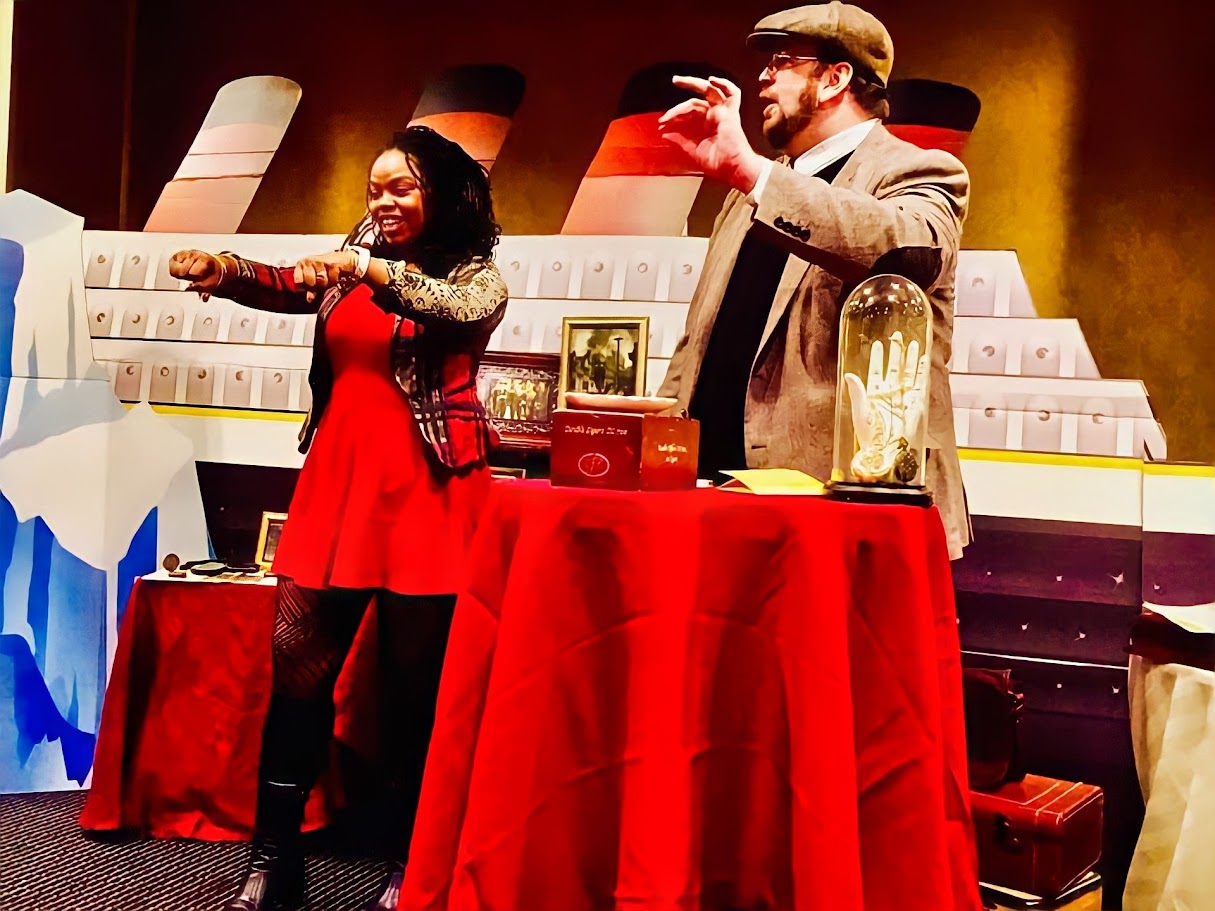
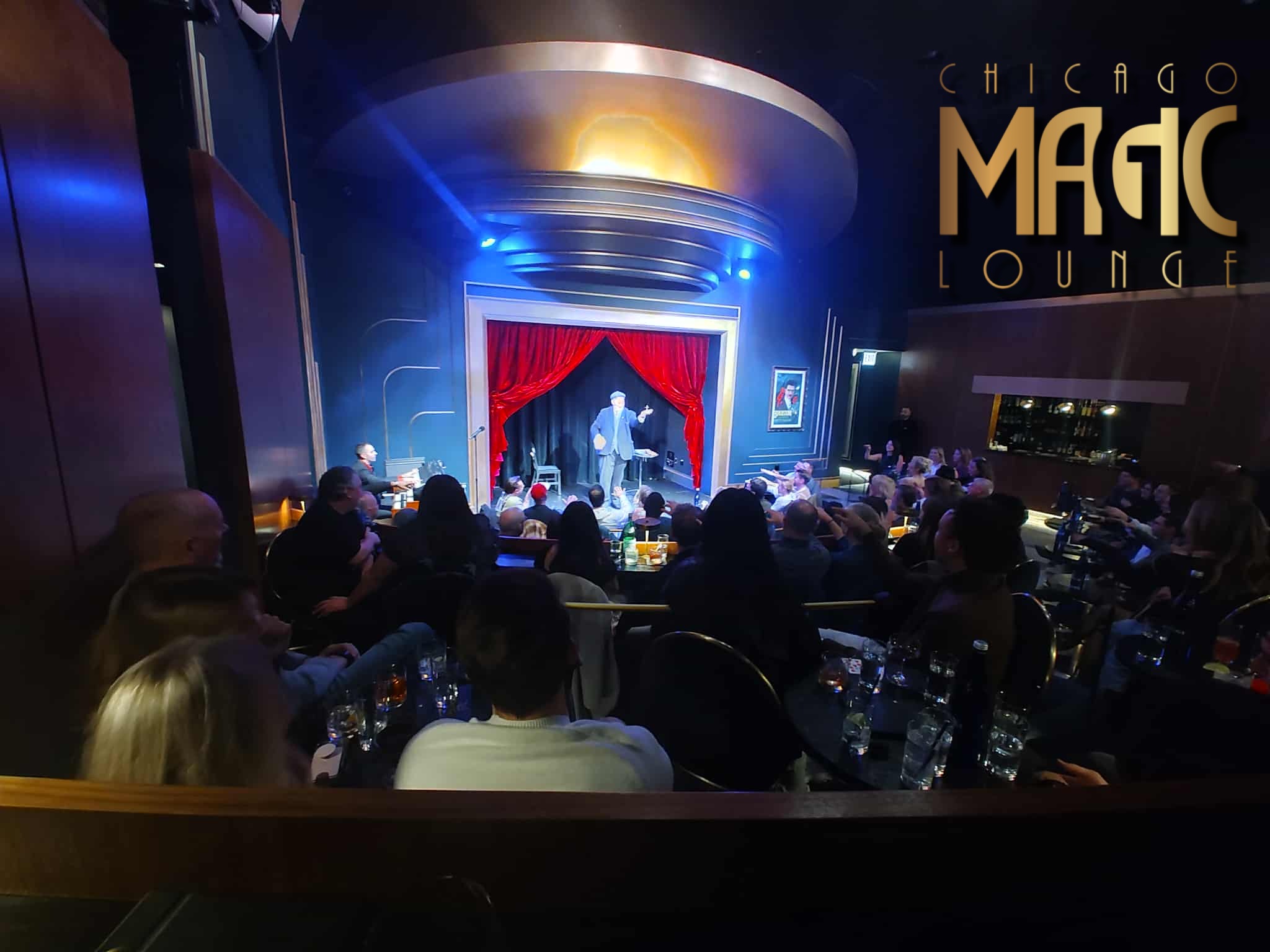
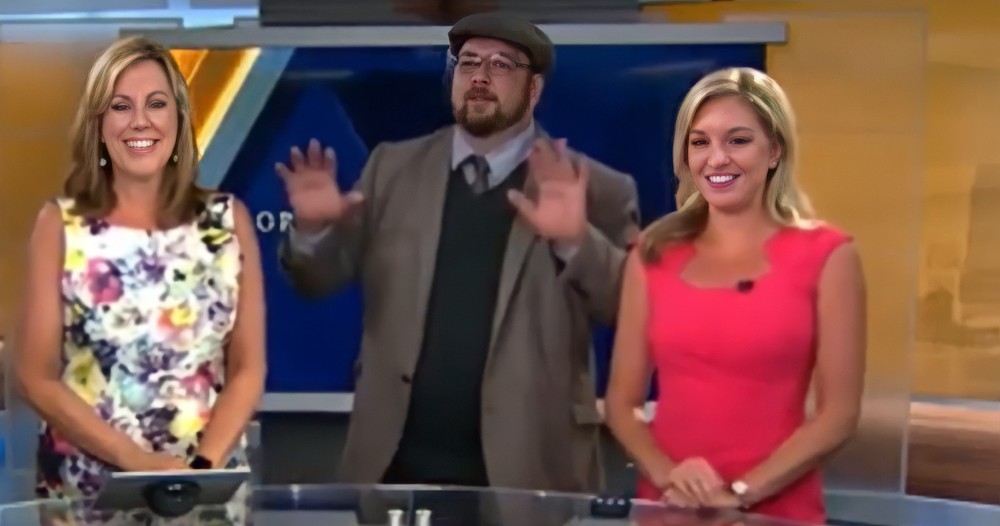
Over the next two decades I built something that I honestly didn’t have a name for until fairly late in the process. Television work came along, PBS, Discovery Channel, National Geographic, Travel Channel, which is surreal to type out and still sounds like someone else’s life. Lectures at the Inner Circle in London. The Chicago Magic Lounge. About twenty-five years of stage time that has a way of teaching you things no amount of reading can fully prepare you for, which is humbling given how much reading I did.
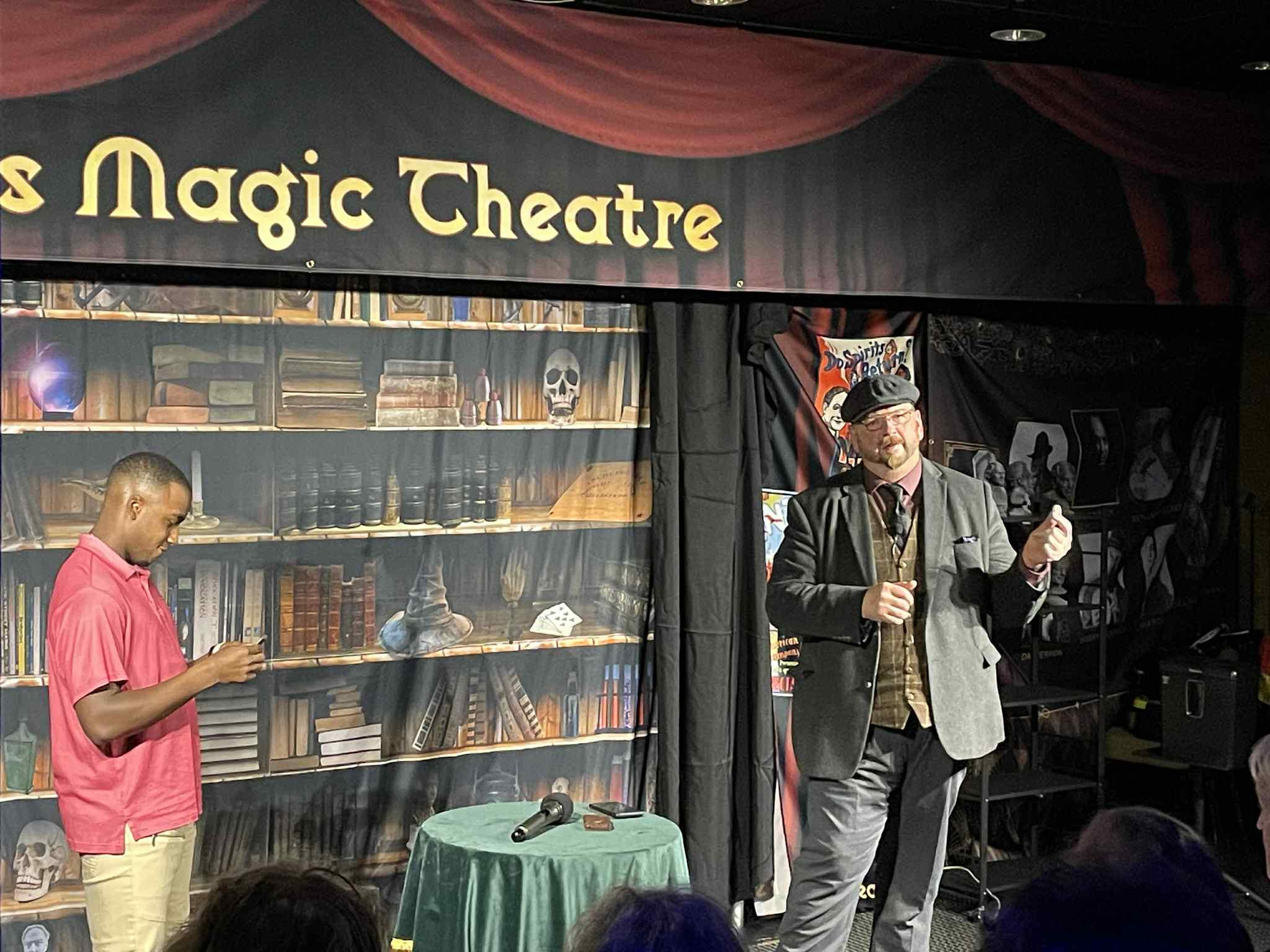
Then 2019. Poe’s Magic Theatre. The Lord Baltimore Hotel. I opened a venue dedicated to the exact kind of magic I had been obsessed with for years, theatrical, narrative-driven, rooted in the Gothic tradition of Edgar Allan Poe and the strange history of Baltimore itself. The pandemic arrived almost immediately after, which is the universe’s sense of humor operating at full capacity. We navigated that, came back, and the theatre is still there, still running.
I’m also a former board member of the Edgar Allan Poe House and Museum, which feels like a natural extension of everything I care about. I’m working on a nonfiction book called Eerie Eastern Shore for The History Press, chasing the folklore and strange history of the Chesapeake Bay region. There’s a novel in progress called The Adderstone, which is its own thing entirely. And since 2018 we ran Poe’s Magic Conference at the Lord Baltimore Hotel, a multi-day event that brought together performers and thinkers from across the magic community.
None of it was a straight line. It never is. But if I trace it back to that kid reading Arthurian legends at an age when most people thought he should be watching cartoons, the through-line is pretty clear. It was always about stories. It was always about the thing behind the visible world.
Magic just turned out to be the best tool for showing people the way.
I’m sure it wasn’t obstacle-free, but would you say the journey has been fairly smooth so far?
The timing of opening Poe’s Magic Theatre was, in hindsight, either incredibly brave or spectacularly poorly planned, and I’ll let you decide which one.
Grand opening. A beautiful historic hotel, a city I genuinely love, a vision I’d been building toward for years. We got a few months of actual operation before the pandemic arrived and the hospitality industry stopped existing. The Lord Baltimore Hotel closed. The theatre, as a concept, was suddenly without a home, which is an interesting problem when the home was most of the point.
We didn’t stop. We moved to a Holiday Inn, which is not a sentence I imagined ever saying out loud in connection with a magic theatre, but here we are. It wasn’t glamorous. It was, however, exactly the kind of unglamorous stubbornness that apparently defines how I do things. You find the room. You do the show. You keep the thing alive until the thing can be properly alive again.
When the Lord Baltimore reopened and Poe’s came back for its grand reopening, I understood something I hadn’t quite articulated before. That period of displacement had been a test the theatre didn’t know it was taking. It passed.
The bigger struggle is harder to explain because it’s not a single event. It’s ongoing, and it’s about Baltimore itself.
Baltimore gets written off constantly. It’s a running joke in some circles, this idea that the city is too broken, too dangerous, too whatever to bother with. I grew up there. I know what people mean when they say it, and I also know they’re describing a caricature. The Baltimore I know has always had an appetite for the strange, the theatrical, the genuinely weird. It has always had a community of performers who care deeply about their craft. It has history most people have no idea about. The first magic clubhouse in the United States was in Baltimore in 1911. That is not a trivial footnote.
The city has no IBM (International Brotherhood of Magicians) Ring of its own right now, which is the kind of thing that would strike most people as a fairly minor administrative gap and strikes me as a genuine missed opportunity. I’ve been working to change that. Not because it makes business sense, though it might. Because Baltimore deserves the infrastructure, the recognition, the formal acknowledgment that its magic community is real and has been real for over a hundred years.
I believe in this city in a way that’s probably irrational by conventional metrics. I’ve watched people give up on it and leave, and I understand why. I stayed. I built a theatre in it. I’m writing its folklore. I’m trying to get it a magic ring charter. At some point that stops being strategy and starts being something closer to a personal commitment you can’t entirely explain.
Charm City isn’t a nickname. It’s an argument. And I intend to keep making it.
Thanks for sharing that. So, maybe next you can tell us a bit more about your work?
The honest answer to “what do you do” is that I’ve never found a single word that covers it, and I’ve mostly stopped trying.
Magician is accurate but incomplete. Mentalist is closer to what most of my performance work actually looks like, but it doesn’t account for the theatrical framing I put around everything. Author. Actor. Venue director. Folklore enthusiast with a business license. I usually just say magician and let the conversation fill in the rest.
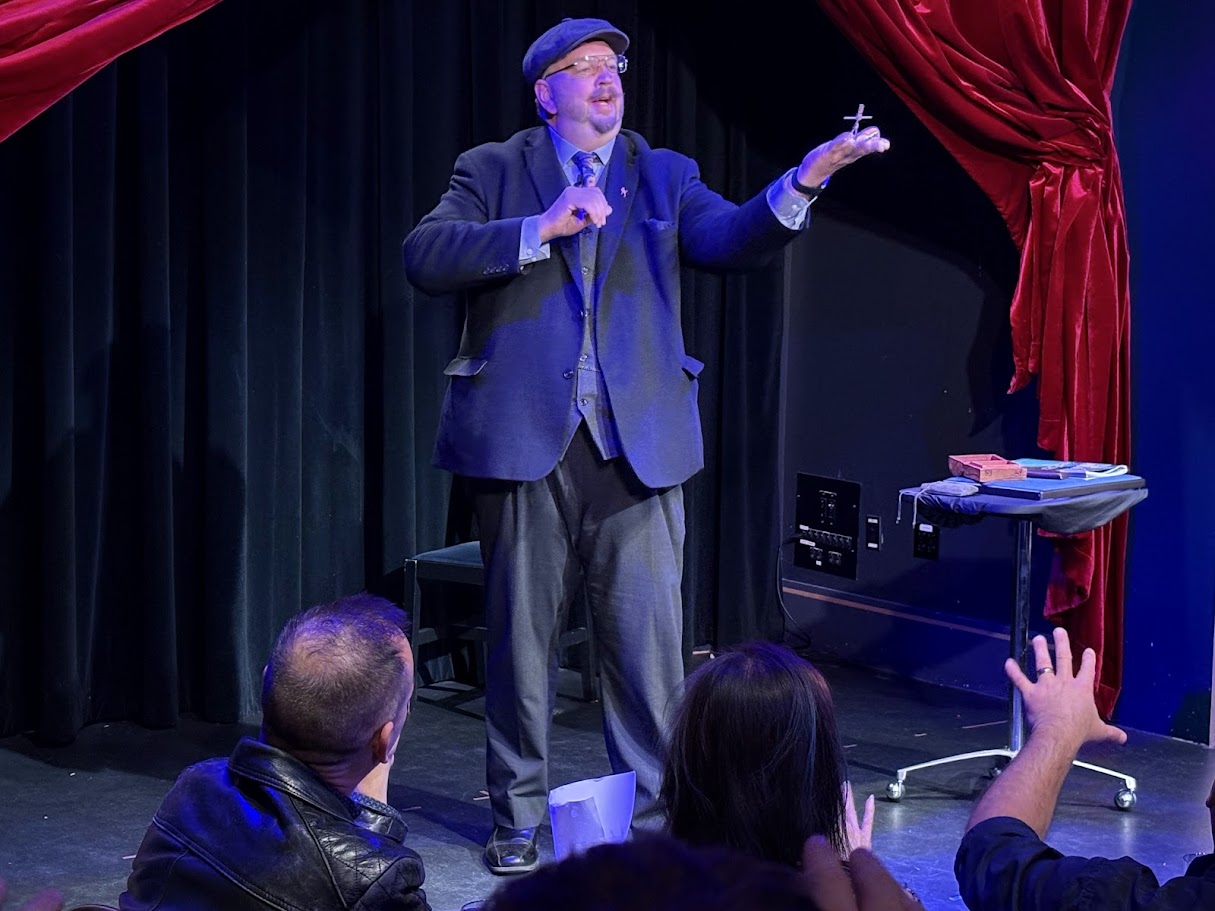
What I specialize in is bizarre magic and mentalism. Bizarre magic is a corner of the performance world that doesn’t get a lot of mainstream attention, which suits it fine. It’s magic that prioritizes atmosphere, narrative, and emotional experience over technical flash. The trick is almost beside the point. What matters is the story the trick lives inside, the world you’ve built around the moment, the feeling the audience carries out with them.
My mentalism work operates in the same territory. I’m not particularly interested in performing feats of memory or slick psychological demos. I want the audience inside a story. The Obol is probably my best example of what I mean, an original routine built around Greek mythology and the principle of free will, using a raven figurine, a skeleton key, and a custom coin. It does something to a room. I’m still not entirely sure I can explain it, which I consider a reasonable goal.
I’ve been fortunate. Television work, lectures abroad, about twenty-five years of stage time that has taught me considerably more than I expected and humbled me more than I’d care to admit.
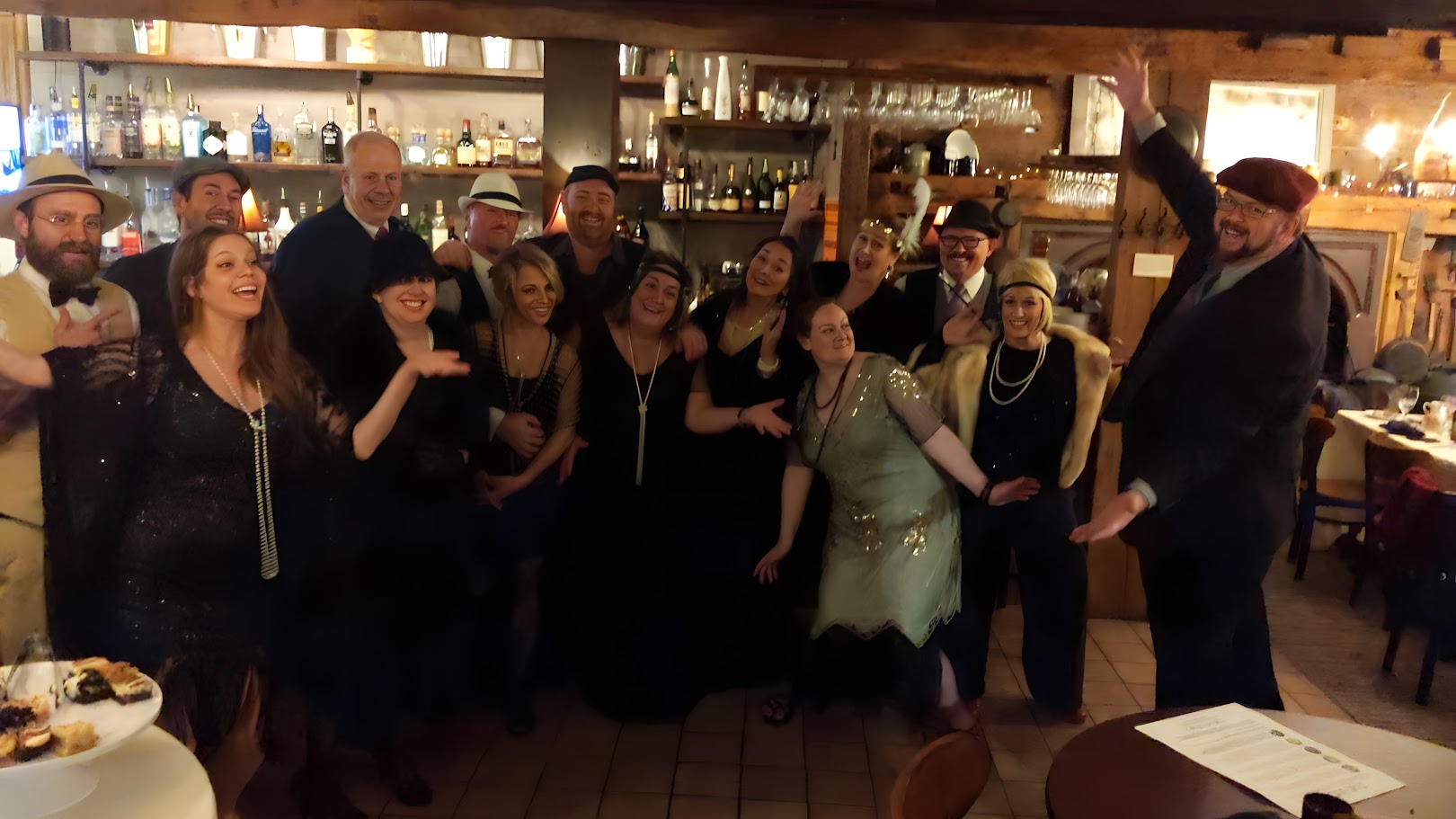
What am I most proud of? Honestly, the people. Poe’s has a co-owner, the Mystical TeAnna, who has been my friend since high school, and I am quite certain the theatre would be a lesser thing without her. Possibly not a thing at all. And then there are the magicians, the performers, the volunteers, the people who show up week after week because they care about this art form in the same slightly unreasonable way I do. Every show that works is really their work as much as mine.
What sets me apart, if anything does, is probably that I think like a writer when I perform. Every routine has a structure, a reason for existing beyond the mechanics of the effect. Whether that’s a strength or just a particular quirk I’ve leaned into, I’ll leave to the audience.
Alright so before we go can you talk to us a bit about how people can work with you, collaborate with you or support you?
Several ways, depending on what you’re after.
If you want to book me personally for a performance or an event, I work as an independent contractor and I’m available for private events, corporate work, theatres, festivals, and the kind of unusual booking requests that don’t fit a standard category but are usually the most interesting ones. The best place to start is vincewilsonmagic.com.
If you’re interested in Poe’s Magic Theatre specifically, whether that’s attending a show, inquiring about the venue, or exploring what we offer, that’s poesmagic.com.
If you’re a performer, particularly one working in mentalism, bizarre magic, or anything that sits in that general neighborhood of strange and theatrical, I’d genuinely love to hear from you. Poe’s has a stage and an audience and a real appetite for the kind of work that doesn’t always find an obvious home elsewhere.
If you just want to support what we’re doing, the simplest thing is to come to a show. Bring someone who’s never been. That sounds like a small thing and it is genuinely not.
There’s a newsletter, the Purloined Dispatch, which goes out on Tuesdays and covers shows, Baltimore history, local folklore, and whatever else seems worth including that week. Poe’s Magic Club is the broader membership community around the theatre, and all of that lives on the site. I also write a Substack about magic and the strange history I keep tripping over, which is exactly what it sounds like.
There’s a book coming from The History Press, Eerie Eastern Shore, about the folklore and odd history of the Chesapeake Bay region. A novel in progress called
Mostly though, if something I’m doing resonates with something you’re doing, reach out. The best collaborations I’ve been part of started with someone just saying hello and the conversation going somewhere unexpected from there.
Contact Info:
- Website: poesmagic.com | vincewilsonmagic.com | spellcasttheatre.com
- Instagram: https://www.instagram.com/vincewilsonmagi
- Facebook: https://www.facebook.com/poesmagic and https://www.facebook.com/vincewilsonmagi
- Youtube: https://www.youtube.com/@paranormalist and https://www.youtube.com/@PoesMagic