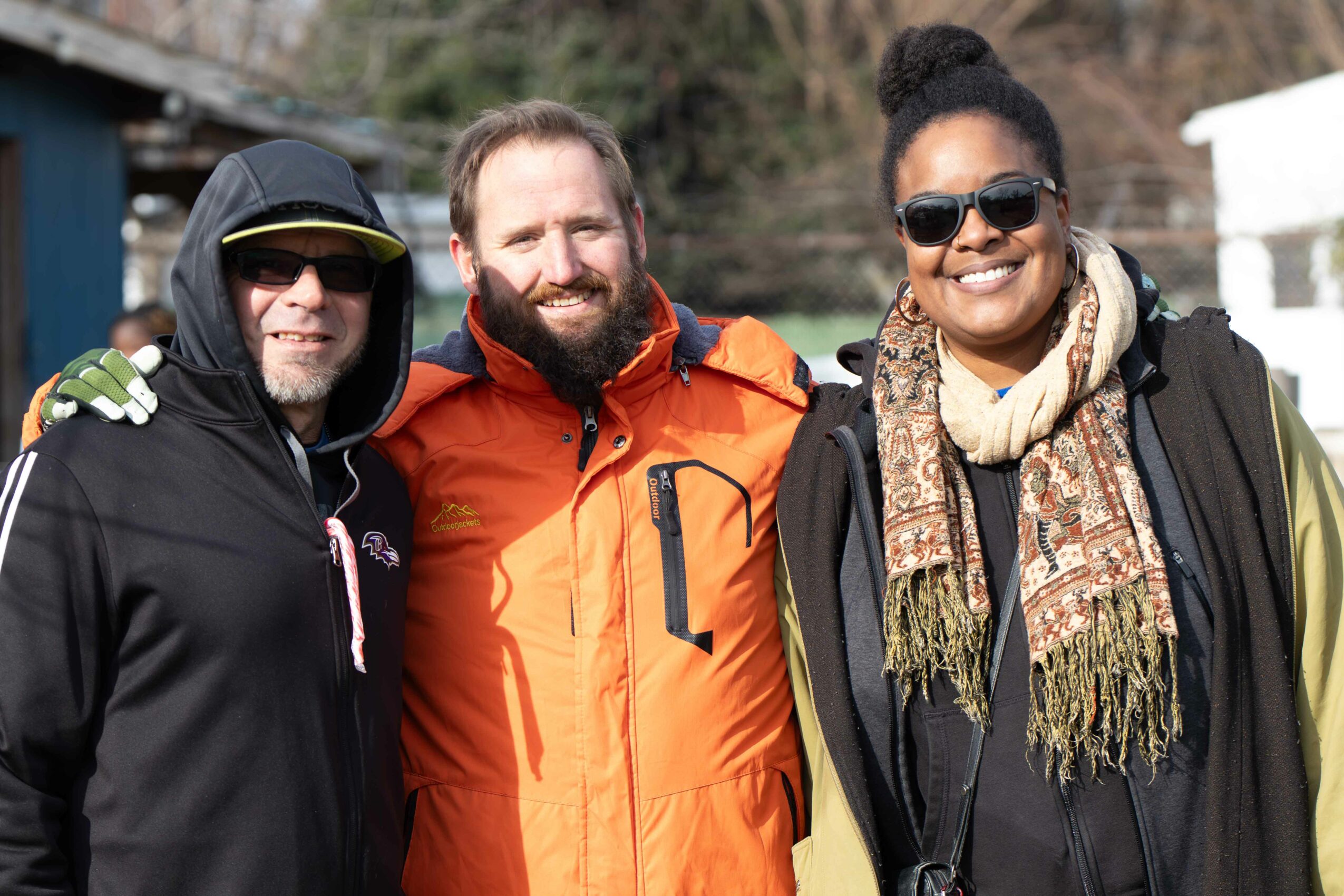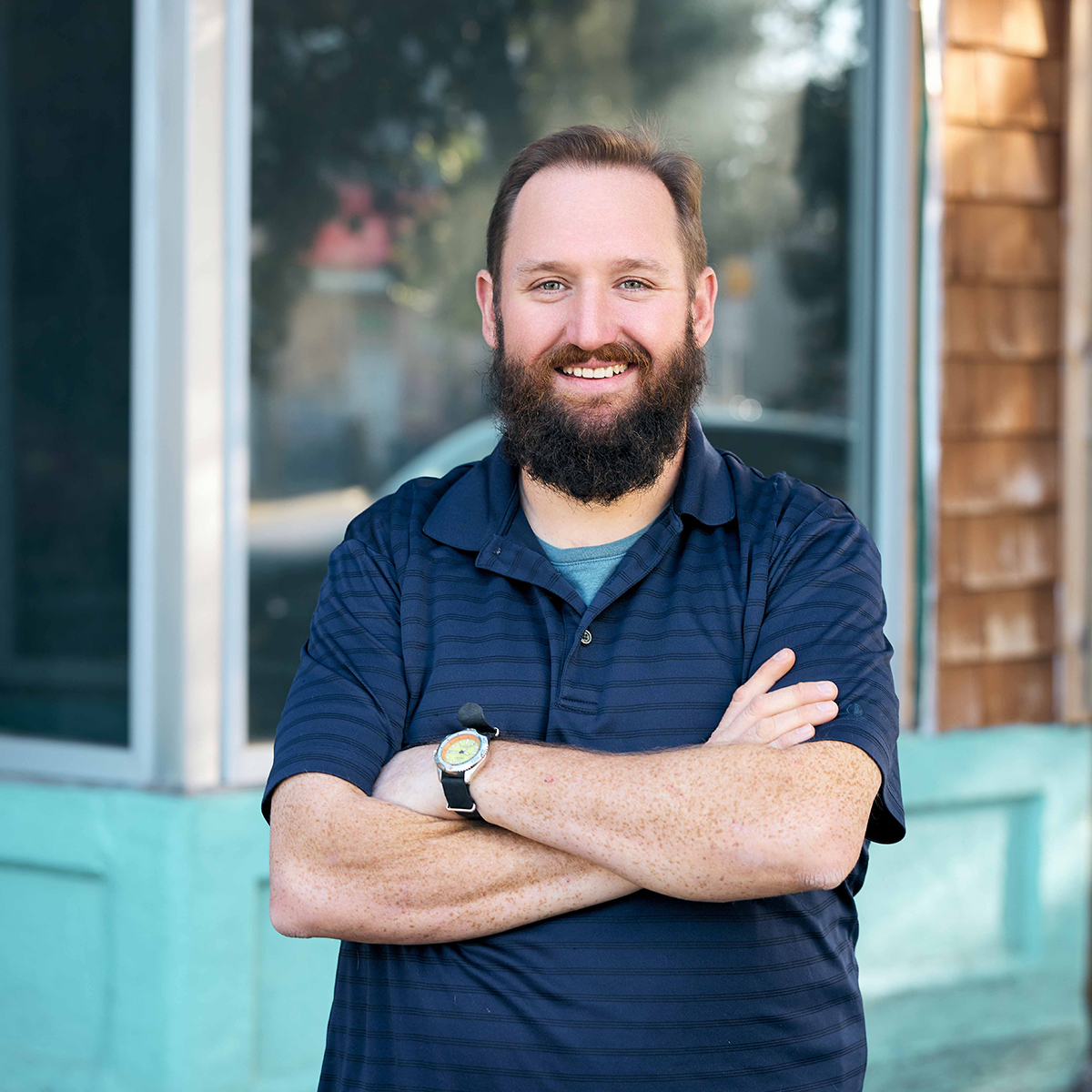
Today we’d like to introduce you to Michael Dorsey.
Hi Michael, so excited to have you with us today. What can you tell us about your story?
A big chapter in my story starts in September 2010, my first week of grad school at the University of Maryland School of Social Work. My first assignment at the Bon Secours Community Center where I was stationed was to go work with the church across the street on the 100 block of South Payson Street to help the residents do something with the vacant green spaces. No deep drawn-out playbook. More “Here’s the corner, good luck, kid!”
Before that, I’d been in education. Teaching middle school and being drawn to a deeper look at working inside school systems, and what I kept seeing was a gap. Education is incredibly valuable, and there are a lot of good people doing that work. But there didn’t seem to be enough people focused on the connection between schools as institutions and the communities those kids actually lived in. That’s where I thought my skills could do the most good. Fewer people were choosing that path, and the need was, still is, enormous.
I joined the grad program at Maryland wanting to be a community organizer. Social work is a major discipline that actually celebrates that calling, so that’s where I landed. As I learned about community organizing theory, I simultaneously lived it, watching and learning and participating in how community members, local institutions, city agencies, greening efforts, and nonprofits either connected with each other or didn’t.
My first real job after I completed my degree in 2012 was as a clinical case manager for first-time offenders and my office was in Baltimore’s Brooklyn neighborhood. The executive director who hired me after I got my degree was someone I’d volunteered with on a 5K run in Carroll Park (where Grow Home now runs a youth athletics program!).
In 2018 and 2019, so many of those pieces I had learned from came together and I was fortunate to be able to found Grow Home. It grew out of another real gap I kept running into: community members who had the vision and the will to improve the green spaces around them but lacked the infrastructure to access funding or make it happen. What’s grown from it is a full workforce development organization. At Grow Home, we offer green jobs training and placement for adults facing barriers to employment, Out-of-School Time vocational programming for Baltimore youth, and active community greening projects across the city, with a team of case managers and program staff working alongside participants every step of the way. Since day one the mission has been the same: use green spaces to cultivate the kind of community revitalization that sticks, and build the capacity for continued improvement with those living in the communities served.
Alright, so let’s dig a little deeper into the story – has it been an easy path overall and if not, what were the challenges you’ve had to overcome?
Grow Home serves people who may be experiencing hardships like generational poverty and institutional racism in communities without access to mental health services or basic support systems. Addressing these issues involves navigating the philanthropic agendas of funders and the infrastructure of government without losing sight of job seekers’ personal agency. What if someone decides not to take the job we helped set them up for? What if they don’t show up the next day? What if their parent gets evicted? Life comes at people from a lot of directions at once.
There’s also the organizing challenge that I don’t think gets talked about enough: building community cohesion in an increasingly digital world is genuinely harder than it used to be. People are caught in a large web of internet news, and are more isolated from their neighbors than they used to be. Communication doesn’t come as much from the talk around the block, but the social media tapped into from screens. But that’s actually one of the reasons green spaces matter so much to what we do. They’re public, shared, free, local, and only available in analog. You can’t Zoom into a community garden.
And then there’s the pace of large-scale community development, which is slow by nature. Planning processes, funding timelines, and infrastructure projects can take years or even decades. One of the ongoing challenges is figuring out how to keep real community engagement alive throughout all of that, not just at the beginning when there’s excitement, and not just when a check arrives. Green spaces help with that too – they’re tangible, visible, and they can be cared for across generations by ordinary people of all ages and skill levels. Some implementation can be immediate even if a larger project takes years. That continuity matters.
As you know, we’re big fans of you and your work. For our readers who might not be as familiar what can you tell them about what you do?
We’re targeting the overlap of workforce development and community revitalization. Green spaces are our primary canvas, including the ongoing maintenance of those spaces. Yes, I said maintenance. Not just the dramatic transformation or the ribbon cutting. Because the upkeep is where community takes root over the long haul, and where value is retained.
Grow Home works in Baltimore with residents who face significant barriers to employment, connecting them to green career pathways like landscaping, urban agriculture, and environmental stewardship through hands-on training in the neighborhoods they actually live in. We’re not busing people somewhere else to learn skills. The training ground is the community itself, and that’s intentional.
What sets us apart is the integration. A lot of organizations do workforce development, and a lot of organizations do green space restoration. We’re doing both at the same time, as often as possible in the same place, with the same people, and we’re measuring success not just in job placements but in the health of the community and the spaces left behind.
We also run afterschool programming for young people in Baltimore with a vocational focus, because we know workforce pathways start with young people understanding that those careers exist and that they’re worth pursuing. Skilled labor employment is in high demand, but the next generation isn’t targeted to take those posts. The systems we work in aren’t training them to know that working with your hands and feeling the soil through your fingers and the kick of a power tool in your hands is a path to good living, security, and economic mobility. We train around green careers to rebuild the community, and the skills are transferrable to any tactile industry.
Any advice for finding a mentor or networking in general?
Get involved and collaborate on a shared goal. That is the best networking advice I know, because it’s not really networking – it’s relationship building, and there’s a difference.
Build relationships in your community before you need them, not transactionally. Go work on something together, show up for something, sometimes anything. Again, the executive director who gave me my first job out of grad school was someone I’d organized a 5K with in SouthWest. That’s how it works.
Green spaces are a good teacher for this too. When you’re caring for a shared space – planting, building, maintaining something together – you practice the kind of relationship that isn’t extractive. You can’t fake commitment to a tree. And I think those habits extend to how we treat each other, how we show up for each other, and how we build things that actually last.
We encourage anyone reading this to find the next event happening in a park or other community green space local to you, show up, and connect with someone new. You never know what will grow from there!
Contact Info:
- Website: https://growhomebaltimore.org
- Instagram: @growhomebaltimore
- Facebook: https://facebook.com/growhomeinc
- LinkedIn: https://www.linkedin.com/company/grow-home-inc/