Today we’d like to introduce you to Nikki Clarke.
Hi Nikki, it’s an honor to have you on the platform. Thanks for taking the time to share your story with us – to start maybe you can share some of your backstory with our readers?
I started my practice in Sykesville, MD as a traditional speech-language pathologist, focusing on articulation and expressive/receptive language therapy for young children. At the time, my work looked much like what you’d expect in a typical speech therapy setting.
Everything changed when I was working with a two-year-old who wasn’t speaking. His family pursued craniosacral therapy with another speech therapist, and the very next week he came back with a sudden increase in words. It was one of those moments you can’t ignore — I knew there was something more going on.
I connected with that therapist, and through that relationship I was introduced to a completely different way of understanding the body. I began to see that tension patterns, restrictions, and regulation in the body directly impact what a child can do with their mouth — how they breathe, feed, and speak.
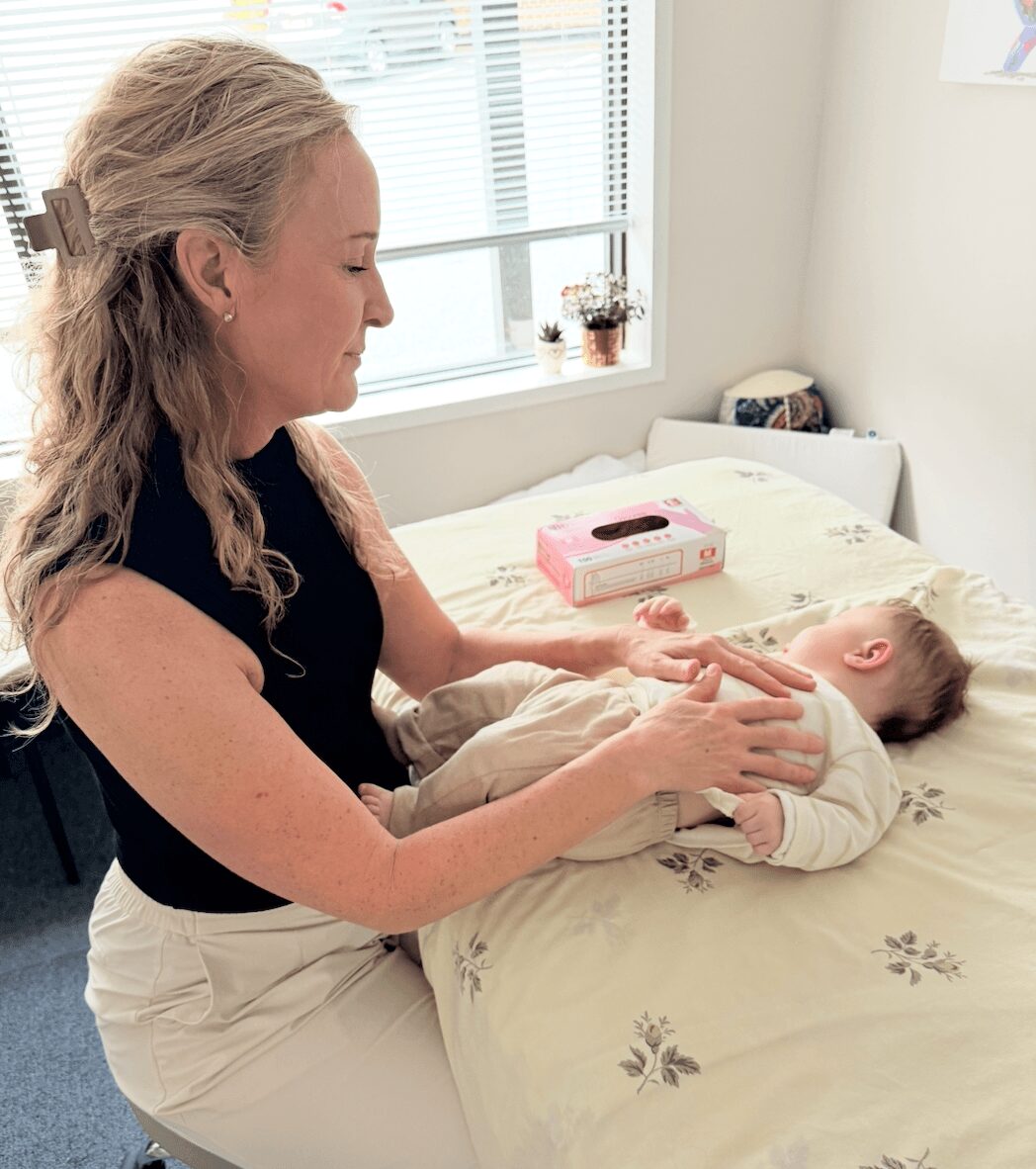
That realization led me to train with the Upledger Institute, where I’ve completed extensive and advanced coursework in craniosacral therapy. Over time, I found that I could no longer separate what was happening in the body from what was happening orally. It completely transformed the way I work.
Today, my practice integrates speech therapy, oromyofunctional therapy, feeding therapy, and craniosacral work to address the root causes of challenges rather than just the symptoms. We’ve also grown into a collaborative practice, working closely with lactation support and other providers to support infants, children, and families more holistically.
What started as a small, traditional speech practice has evolved into a space where we look at the whole child — because lasting change happens when everything is working together.
Can you talk to us a bit about the challenges and lessons you’ve learned along the way. Looking back would you say it’s been easy or smooth in retrospect?
Like many providers, one of the biggest challenges along the way has been navigating insurance. Billing, claim denials, and appeals became incredibly time-consuming — often taking hours outside of my clinical work. I found myself spending more time fighting with insurance companies than focusing on my patients or continuing my education. Making the decision to transition to a private-pay model was a leap of faith, but it has allowed me to be more present with the families I serve and to continue advancing my training, particularly in craniosacral therapy.
Another challenge has been building something that many families — and even professionals — aren’t always familiar with. Integrating craniosacral therapy, oromyofunctional therapy, and airway-focused care into speech therapy often requires education and trust. Over time, I’ve worked to build strong relationships with local providers and create a collaborative network so families can receive more comprehensive, connected care.
On a personal level, this work can be emotionally heavy. When you work closely with children and families, you don’t just see the clinical challenges — you see the worry, the frustration, and the hope parents carry. I care deeply about the families I work with, and there have been moments where I’ve felt the weight of wanting to help more, faster, or in ways that aren’t always possible.
Balancing that with running a business — and being a mom myself (my children are now ages 18-26)— has been a learning process. I’ve had to grow in setting boundaries, trusting the process, and recognizing that meaningful change often takes time.
What I’ve learned is that I don’t have to “fix everything” to make a real impact. Supporting families, helping them understand their child, and creating lasting functional change is enough — and it’s what continues to drive me forward.
Every challenge along the way has shaped this practice into something more intentional, more collaborative, and more aligned with the kind of care I believe families truly deserve.
Alright, so let’s switch gears a bit and talk business. What should we know?
At The Nest, we specialize in a more comprehensive, root-cause approach to working with infants, children, and families. While we are grounded in speech-language pathology, our work extends far beyond traditional therapy.
We focus on how breathing, oral function, and the body work together. This includes support for feeding challenges, speech development, oral motor function, airway health, and facial growth. By integrating oromyofunctional therapy, feeding therapy, and craniosacral therapy, we’re able to look at the whole child — not just isolated symptoms.
One of the things that sets us apart is that our sessions are fully integrative. We don’t separate services into silos. Instead, we address tension patterns in the body, tongue posture, swallowing, breathing, and muscle coordination all within the same session. This allows us to uncover and treat the underlying causes of challenges, rather than just managing what’s visible on the surface.
We’re also proud of the collaborative model we’ve built. By working closely with physicians, orthodontists, dentists, ENTs, and other local providers, we’re able to support families in a more connected and effective way — especially during critical stages like infancy and early development.
Brand-wise, what I’m most proud of is that The Nest has become a place where families feel supported, heard, and truly understood. We take the time to educate parents and empower them with knowledge about their child’s development, so they feel confident moving forward.
Ultimately, we want families to know that there is often a deeper “why” behind challenges with feeding, speech, sleep, or development — and when you address those root causes, you can create meaningful, lasting change.
Where do you see things going in the next 5-10 years?
Over the next 5–10 years, I think we’re going to see some significant shifts in the speech-language pathology world — especially when it comes to insurance and access to care.
Insurance and billing changes are already having a major impact on private practices. With upcoming changes to CPT coding, many smaller clinics are finding it increasingly difficult to sustain insurance-based models. In fact, in our local area alone, several private speech practices have closed in the past few years due to these challenges.
As a result, I believe we’ll continue to see a shift toward private-pay, specialized care. This allows providers to focus more on individualized, high-quality treatment rather than being limited by insurance restrictions, session caps, or reimbursement challenges.
At the same time, there’s a growing awareness around airway health, oral function, and the connection between breathing, sleep, feeding, and development. Families are starting to seek out more comprehensive, root-cause approaches rather than symptom-based therapy, which is encouraging.
One important piece I hope more families come to understand is that “out-of-network” doesn’t mean “no coverage.” We work closely with families to help them understand their benefits and even pursue in-network authorization ahead of time. Families are seeing 100% reimbursement for their out of pocket expenses.
Overall, I see the field moving toward more collaborative, integrative care models — where providers work together and look at the whole child. When we all understand that speech, language and feeding challenges are a symptom, we can look for root causes together. While there are definitely challenges ahead, I also think it’s an exciting time of growth and innovation in how we support children and families.
Contact Info:
- Website: https://www.thenestmd.net