Islam El-Hoseiny shared their story and experiences with us recently and you can find our conversation below.
Hi Islam, thank you for taking the time to reflect back on your journey with us. I think our readers are in for a real treat. There is so much we can all learn from each other and so thank you again for opening up with us. Let’s get into it: What do the first 90 minutes of your day look like?
The first 90 minutes of my day are about setting the tone for everything that follows. I usually start by grounding myself spiritually — prayer, reflection, and a reminder of why I’m doing what I do. That quiet moment of clarity helps me carry intention into the rest of the day. After that, I’ll review my schedule, check in on priorities for Athari Wear, and take time for some form of physical movement, whether it’s stretching or a workout. Those early hours give me balance: faith, focus, and energy. By the time I dive into the creative and business side of things, I already feel centered and ready.
Can you briefly introduce yourself and share what makes you or your brand unique?
My name is Islam El-Hoseiny, and I’m the founder of Athari Wear, the first Muslim-owned sneaker brand in the U.S. Athari Wear was born out of both conviction and necessity — after being unjustly terminated from a senior role in corporate fashion for standing by my morals, I wanted to create something that truly represented my values and community.
Athari Wear is more than sneakers or apparel — it’s about legacy, resilience, and identity. Every design carries meaning, whether it’s a keffiyeh-inspired sneaker that symbolizes solidarity, or collaborations with figures who have transformed their lives through faith and discipline — for example, our latest sneaker collaboration with Mutah Beale, better known as Napoleon, former rap member of Tupac Shakur’s legendary group the Outlawz, along with the author of his biographical memoir Life is Raw, Sulaiman Jenkins. What makes us unique is that we’re not just making products — we’re telling stories that often go unheard, and giving voice to a community that mainstream fashion rarely acknowledges.
Right now, I’m focused on expanding Athari Wear’s impact — from new sneaker lines and collaborations to events that connect us directly with people. At the core, my mission is to build a brand that uplifts, represents, and inspires — proving that fashion can be both meaningful and powerful.
Appreciate your sharing that. Let’s talk about your life, growing up and some of topics and learnings around that. What’s a moment that really shaped how you see the world?
A moment that really shaped how I see the world was when I lost my corporate fashion job for standing by my morals and beliefs. At the time, it felt like a door was being slammed shut, but in reality, it opened everything. It showed me how unforgiving the industry could be when your values don’t align with its culture, but it also taught me that integrity matters more than comfort.
That moment forced me to reevaluate what success really means. Instead of chasing titles and security, I chose to build something authentic — Athari Wear. It shifted my entire perspective: the challenges we face aren’t just obstacles, they can be the birthplace of something greater. Without that loss, I might never have seen the opportunity to create a brand that reflects who I am and gives a voice to a community that often goes unseen.
Was there ever a time you almost gave up?
Yes, there was a time I almost gave up — in the early days of Athari Wear. I had poured everything I had into building the brand, but between financial struggles, manufacturing setbacks, and the feeling that no one was really paying attention, it felt overwhelming. I remember staring at boxes of product stacked in my house, wondering if all the sacrifice was worth it.
What kept me going was faith, resilience, and remembering why I started: to create something that spoke for a community that mainstream fashion ignores. Every time I thought about giving up, I reminded myself that if I quit, the message and legacy I wanted to build would disappear too. That thought gave me the strength to push forward. Looking back now, I realize that those breaking points were actually turning points. They tested me, refined me, and gave Athari Wear its soul.
Alright, so if you are open to it, let’s explore some philosophical questions that touch on your values and worldview. What are the biggest lies your industry tells itself?
One of the biggest lies the fashion industry tells itself is that success only comes from following trends and appealing to the masses. That mindset produces disposable products with no real meaning behind them. Another lie is that representation doesn’t matter — as if culture, faith, or identity can be sidelined in the name of profit.
I’ve seen firsthand how that mentality leaves entire communities invisible. I’ve also seen how it shapes individuals with weak identities, into shells of themselves — people who portray themselves as something they’re not, people who trade away conviction for acceptance, who suppress their faith, culture, and tradition just to blend into a mold that was never made for them. It produces a weak sense of identity, where pride is replaced with imitation, and authenticity is sacrificed for approval. Instead of having conviction in their faith, culture, and tradition, they dissolve into whatever the industry dictates. That’s why Athari Wear exists — to challenge that narrative. Fashion can carry weight, history, and values. It can speak for people who rarely see themselves represented. It can be a voice for the voiceless. Breaking away from those industry lies hasn’t been easy, but it’s what gives Athari Wear its soul and sets it apart from everything else on the market.
Okay, we’ve made it essentially to the end. One last question before you go. What is the story you hope people tell about you when you’re gone?
I hope people say that I stood firm in my values, no matter the cost, and that I built something bigger than myself. I want the story to be that I didn’t just make sneakers or clothing, but that I created a movement — a brand that gave voice to people who were overlooked, and showed that you can succeed without compromising your principles.
If my name is remembered, I’d want it tied to resilience, faith, and service — someone who turned pain into purpose and left behind something that inspired others to walk proudly in their identity. For me, that’s legacy: not just what you build, but the strength and hope you leave behind in others.
Contact Info:
- Website: https://www.athariwear.com
- Instagram: https://www.instagram.com/athariwear
- Linkedin: https://www.linkedin.com/in/islam-mohamed-el-hoseiny-a4153725
- Twitter: https://x.com/AthariWear
- Facebook: https://www.facebook.com/athariwear
- Youtube: https://www.youtube.com/@AthariWear
- Other: https://www.instagram.com/islamartsnyc
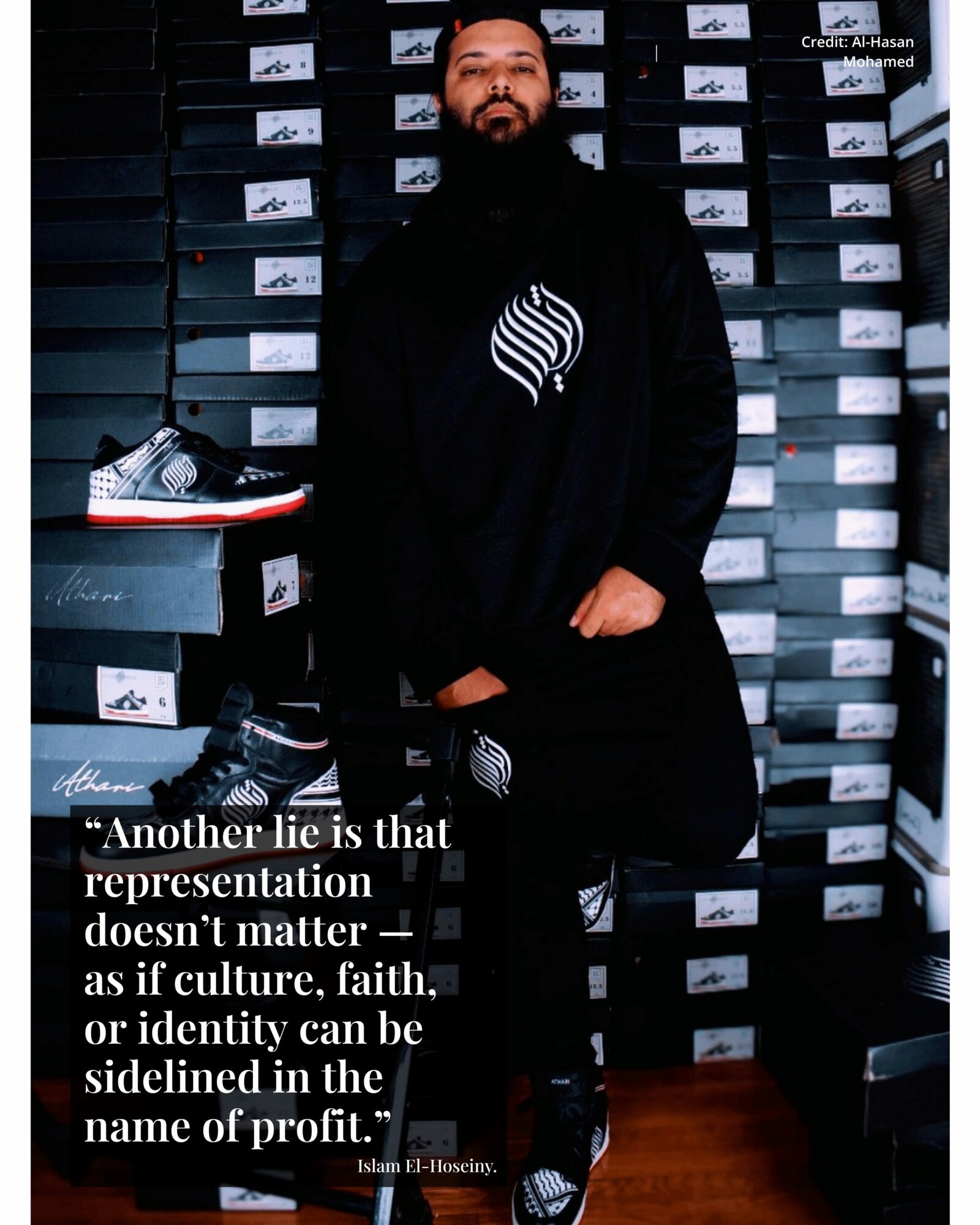
Image Credits
Al-Hassan Mohamed