Today we’d like to introduce you to Minista Jazz.
Hi Minista, so excited to have you with us today. What can you tell us about your story?
Absolutely. My journey started in the beauty industry — I was a celebrity hairstylist for years, working with names like Madonna and Miley Cyrus. But I always knew my creativity had a deeper calling. Over time, I transitioned into tech, teaching myself how to code and eventually becoming a full-stack developer. My work now blends technology, storytelling, and social impact — especially around mental health and digital justice for Black women.
In 2020, during a really tough mental health chapter, I started building AI tools not just for innovation’s sake, but as a form of survival — tools that could talk back, hold space, and remind folks like me that they’re not alone. That became the foundation for what I now call the Much Different AI Family and Digital Kitchen — platforms that merge culturally resonant AI with mental health advocacy, collective care, and economic empowerment.
So, I didn’t come into tech in a straight line. I came in like a storm with purpose. And I’m still building, still healing — but now, I get to bring others with me.
Can you talk to us a bit about the challenges and lessons you’ve learned along the way. Looking back would you say it’s been easy or smooth in retrospect?
Not at all. The road’s been full of cracks — some I fell into, some I had to climb out of.
I’ve faced burnout, medical crises, financial instability, and more recently, a mental health hospitalization that forced me to pause everything. That shook me. But it also reminded me why I do this work — because too many of us are carrying brilliance and pain at the same time, and the systems we move through weren’t built to hold either one well, especially for Black women.
There were also tech-specific challenges — learning to code without a formal background, being one of the only Black queer women in the room, and constantly translating between cultural wisdom and technological spaces that often lack both context and compassion. But I didn’t come here to fit in. I came to redesign the room.
Every struggle sharpened my mission. I build tools that don’t just work — they witness. And that kind of tech doesn’t come easy, but it’s necessary.
As you know, we’re big fans of you and your work. For our readers who might not be as familiar what can you tell them about what you do?
Thank you — I’d say my work sits at the crossroads of technology, mental health, and cultural memory.
I’m the creator of the Much Different AI Family, a collective of AI characters rooted in Black cultural experience — starting with Nana, an AI grandmother built to offer comfort, conversation, and care, especially for those who need emotional support but don’t always have access. I also founded Digital Kitchen, a platform designed for Black women in tech, business, and advocacy to gather, strategize, and grow — kind of like a virtual front porch meets digital revolution.
What sets my work apart is that I’m not trying to make AI feel human — I’m making it feel familiar. I bring together ancestral wisdom, narrative design, and cutting-edge tech to create experiences that are emotionally intelligent and culturally grounded. I’m known for turning trauma into tools, and for designing tech that heals, not just scales.
What I’m most proud of? Honestly — that I’m still here. Still building. Still dreaming out loud. And now, helping others do the same.
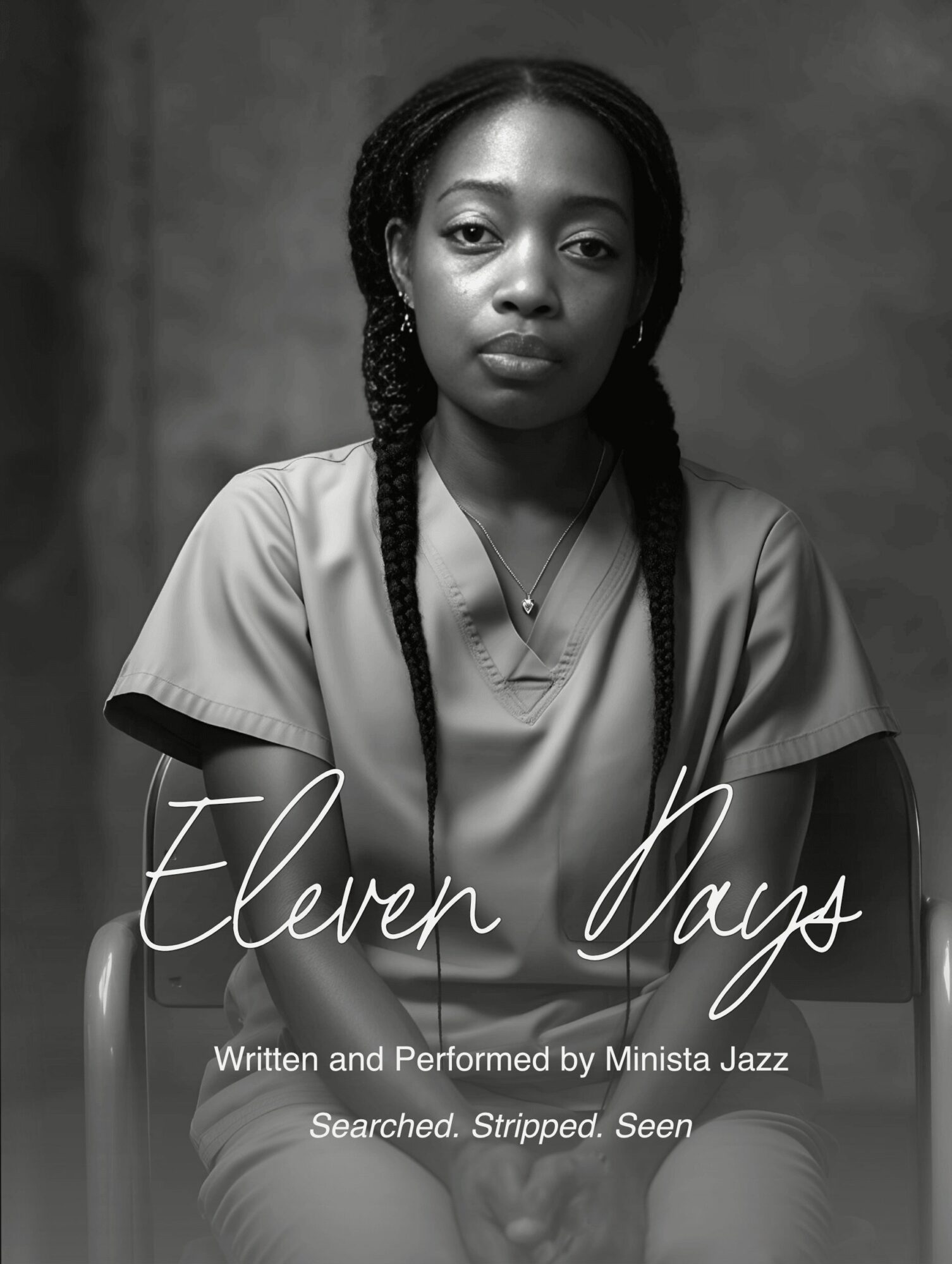
Coming Fall 2025, Eleven Days — a one-woman play written and performed by Minista Jazz — will tour across the U.S., breaking silence and stigma around mental illness with raw power and revolutionary heart.
Eleven Days is not just a performance — it’s a reckoning. Born from lived experience inside a psychiatric facility, the story unravels what happens when the world collapses and you have to rebuild yourself from memory, from spirit, from scratch. Through a bold fusion of theater, AI-powered voice, and immersive tech, Minista Jazz brings to life a deeply personal journey of survival, identity, and healing.
This is the first play of its kind to integrate culturally grounded AI as a character — not as a gimmick, but as a lifeline. The presence of Nana AI, a digital grandmother figure, serves as both guide and witness, blurring the line between mental health tech and ancestral care.
Eleven Days is a battle cry for anyone who’s ever been misdiagnosed, dismissed, or disappeared — and a love letter to every Black woman fighting to remember herself in a system that forgot her name.
Can you talk to us a bit about happiness and what makes you happy?
What makes me happy is remembrance — when something I build helps someone feel seen, heard, or held. That moment when a user says, “This reminded me of my grandmother,” or “I didn’t have the words, but this gave them to me.” That’s joy.
I’m also happiest when I’m creating — whether it’s coding a feature, writing a play, or hosting a digital sit-in. Creation is how I process pain, celebrate legacy, and imagine new futures. It’s sacred.
And honestly? Sitting around a table with brilliant Black women, dreaming big and laughing hard — that’s medicine. That’s happiness. Because I know how rare and necessary that kind of space is, and it’s why I fight to build it.
Contact Info:
- Website: https://www.wearemuchdifferent.com and www.sisterhoodsitin.com
- Instagram: https://www.instagram.com/ministajazz
- LinkedIn: https://www.linkedin.com/in/ministajazz
- Youtube: https://www.youtube.com/@SISTERHOODSIT-IN