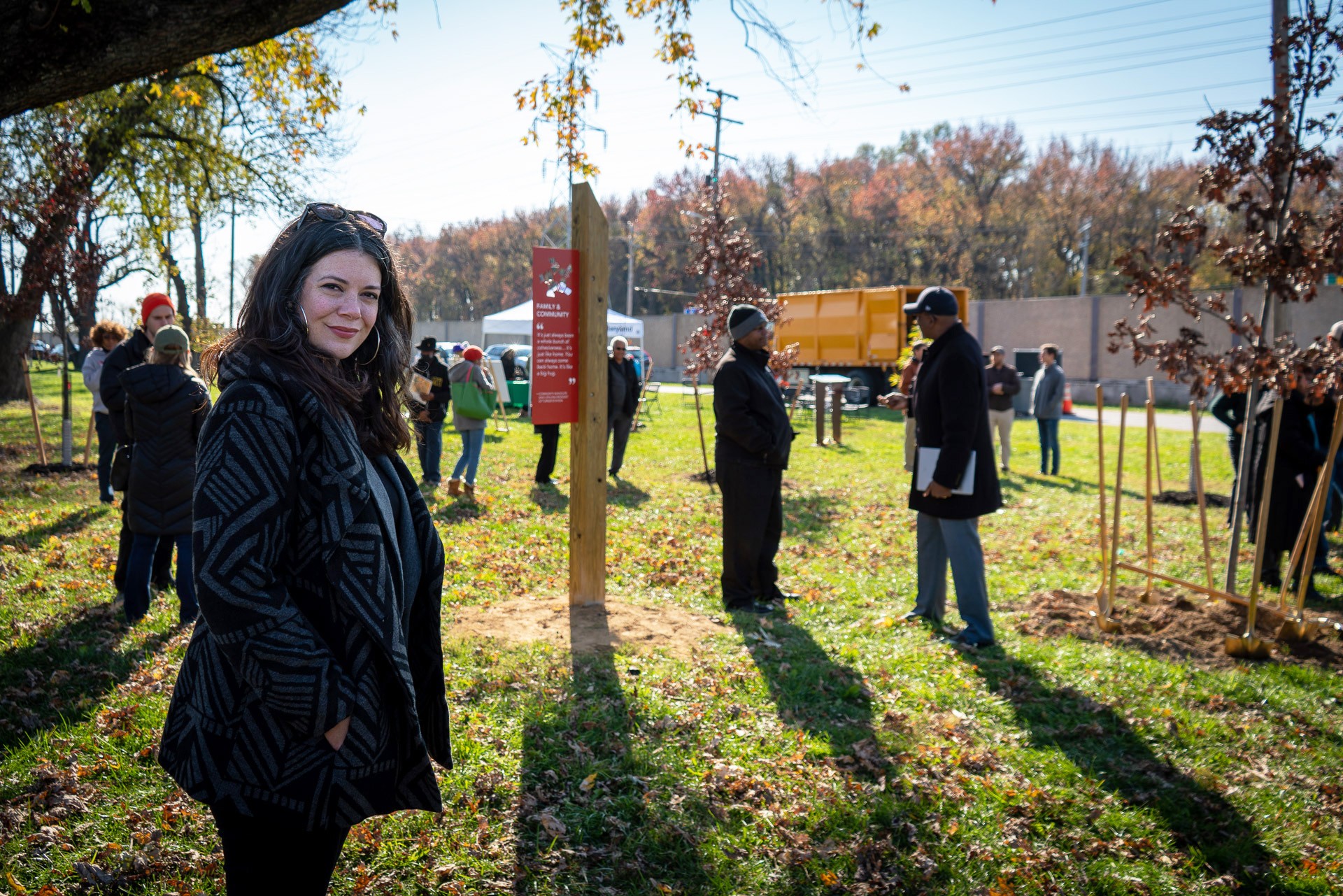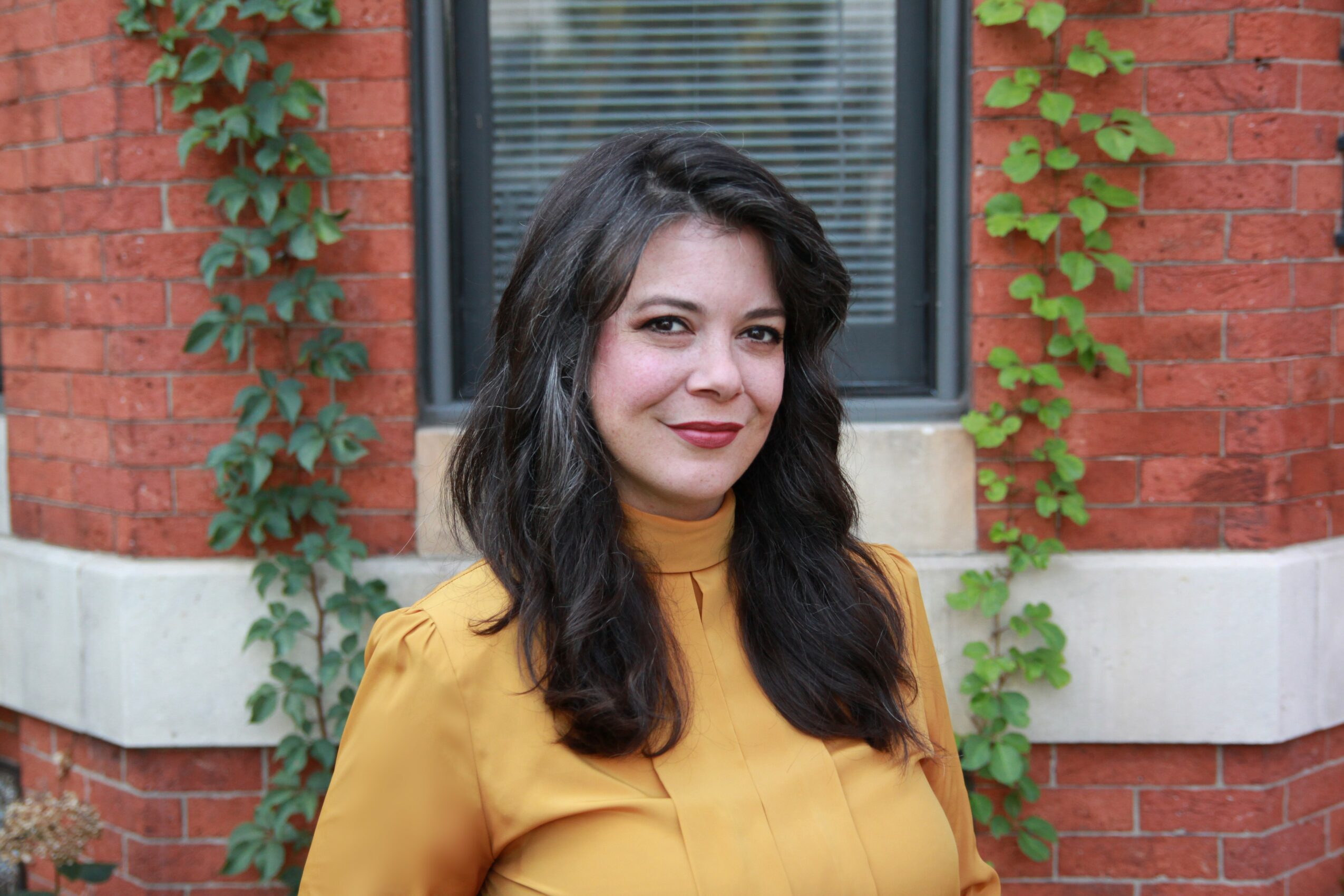
Today we’d like to introduce you to Heidi Thomas
Hi Heidi, please kick things off for us with an introduction to yourself and your story.
As a Baltimore-based landscape architect and urban designer, I’ve always been interested in exploring the intersection of environmental sustainability and social justice. I spent a large part of my career working for traditional design firms with a top-down organizational structure. As is typical across our industry, leadership roles in this patriarchal model are reserved for an elite few, with women and minority designers often facing discrimination and hitting the proverbial glass ceiling of advancement opportunity.
Feeling as though I was on that trajectory myself, after working in the field for 11 years or so I began to feel burnout and disconnection from the people our projects were intended to serve. Bordering on an existential crisis and nearly ready to leave the profession for something more values-aligned, I decided to pursue a Master of Arts in Cultural Sustainability. During my graduate coursework, I extensively studied humanities-based models of collective and post-capitalist living, working, and thriving. I performed cultural documentation research on intentional communities, ecovillages, and cooperative housing developments, and became familiar with the frameworks of ecological, steady state, and solidarity economics. Upon graduation, instead of leaving landscape architecture altogether, I began to reexamine the profession’s potential to shift its role in society beyond the design of beautiful places and biodiverse landscapes, which led to exploration of strategies for also addressing spatial equity and scaling social impact.
Reflecting on how landscape architecture, urban design, and urban planning have historically contributed to social inequity and environmental injustice, and how modern-day design practices perpetuate these inequalities through continued cultural imperialism and capitalism, I began asking more critical questions about the power structures at play not only across the field, but also through the places and spaces we are creating. As urban designers, should we be the arbiters or shepherds of social equity and justice in the built environment? How might power and privilege affect our work in community? Who has and SHOULD have a voice and seat at the table? How do we (re)define equity and empathy in practice? How can we help facilitate a joyful co-design process in partnership with our clients, acknowledging past harms while focusing on the future of what is possible in collaboratively reshaping the public realm?
I’m sure it wasn’t obstacle-free, but would you say the journey has been fairly smooth so far?
Launching EnviroCollab in 2018 was the best and hardest thing I’ve ever done in my career. Despite already having 17 years of experience under my belt, in many ways I felt like I was starting from scratch. Deep down I aspired to create an alternative business model centering collective ownership and practice, but didn’t yet have all the tools and resources available to do so. I found it tremendously difficult to run a firm as a single mother, an entrepreneur, and sole business owner, having to juggle wearing the many hats it took to build a team and the business, while serving our clients and community partners.
Despite those early struggles, my colleagues were invested in the concept of doing landscape architecture differently, and we worked together to shape the firm of our dreams. That process certainly hasn’t come without its own challenges and missteps along the way. Our conversion to a worker-owned cooperative took 3 years of taking incremental steps to define the new legal, financial, and cultural norms we aspired to implement. During that time we lost a few employees, and I experienced an absolutely draining level of personal and financial hardship, that on many days, had me all but wanting to completely abandon ship. But we pushed through and made it to the other side, and I’m proud to say I now share equal ownership with two other colleagues and worker-owners, Cherisse Otis and Amy Sametshaw – both incredibly talented landscape architecture and urban planning professionals who are committed and devoted to this journey.
We’ve been impressed with EnviroCollab, but for folks who might not be as familiar, what can you share with them about what you do and what sets you apart from others?
EnviroCollab is a landscape architecture, urban planning, and social design firm founded as a response to cultural inequities within our field, and as a challenge to social, economic, and environmental injustices across urban landscapes. We aspire to change how our profession influences the world by prioritizing inclusive engagement and equitable design strategies that first and foremost center marginalized communities and those most impacted by structural and systemic oppression.
We are a worker-owned cooperative that utilizes evidence-based strategies for creating sustainable sites and regenerative landscapes, seeking to help shape contextually sensitive environments which meet community development objectives and serve social, cultural, and environmental functions. Our breadth of local and regional project experience includes, but is not limited to, urban parks and civic spaces, streetscapes and plazas, schools, church and institutional campuses, sites for local watershed restoration, neighborhood master plans, green infrastructure projects, and dedicated cultural and environmental centers. In addition to prioritizing sustainable environmental design, EnviroCollab’s objective is to work in close, long-term partnership with our clients to ensure that their collective project vision for the site is brought to reality through a meaningful engagement process, successful implementation, and dedicated long-term maintenance.
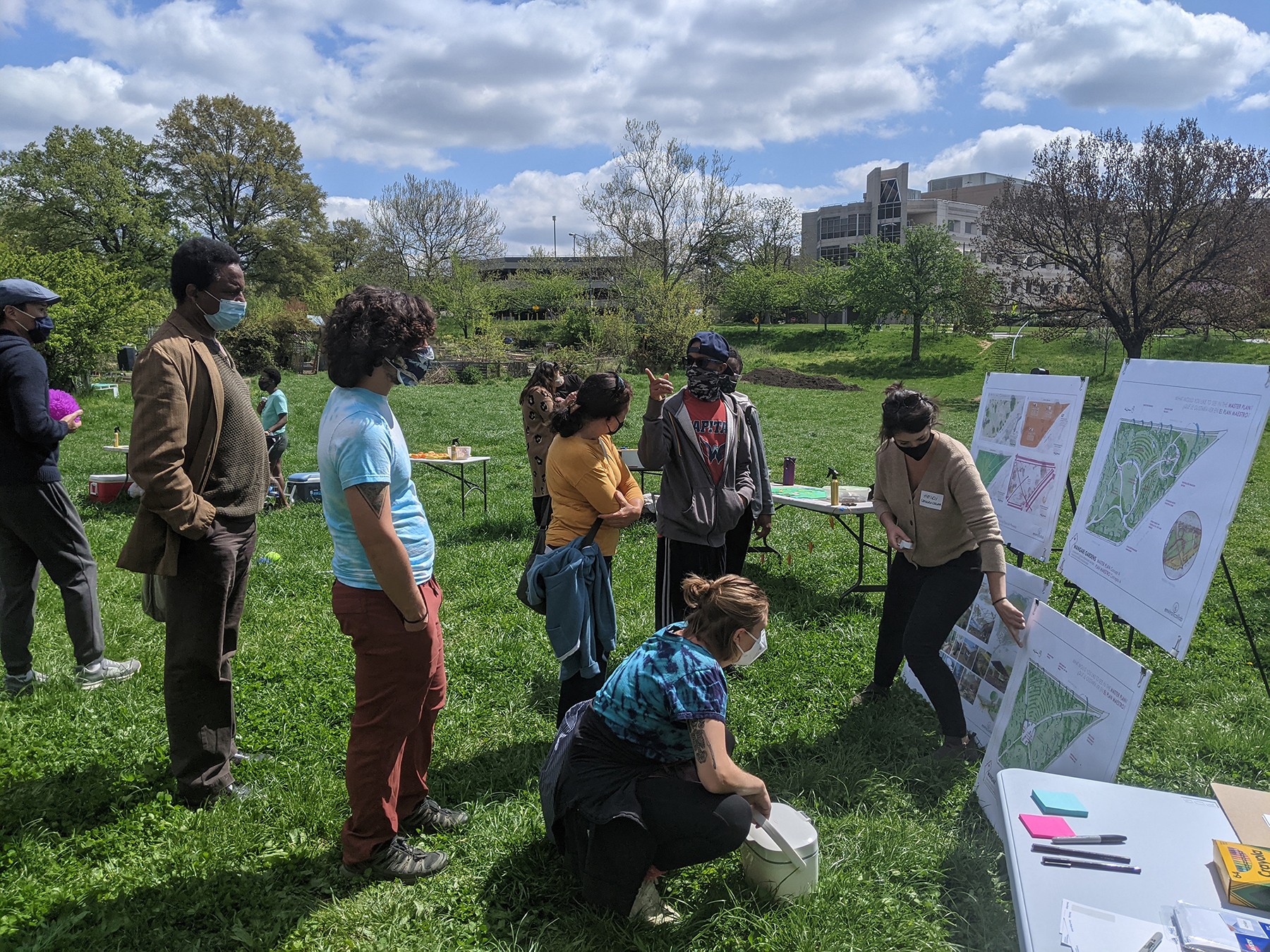
The bulk of our project work is community-based, and is often spearheaded by grassroots organizations. Our aim is to disrupt the de-facto design process by rejecting the conventional notion that designers are always the project experts. Our practice asks that we reflect on our own positionality and have the hard conversations about how power, white privilege, and traditional norms in our field have contributed to systemic injustices in the built environment. We humbly view ourselves as a creative partner in the co-design process, guided by the lived experiences and local knowledge of the communities we serve. By building in project feedback loops, we’re able to widen our own perspectives; by gathering community input we work to minimize our inherent biases; by educating ourselves on the context, history, and sociopolitical forces at play in public space design, we aspire to tackle spatial justice through equitable, community-centered design of the built environment.
At EnviroCollab, we believe we are made stronger by working together, both inside the office and through our work out in the world. This practice involves shifting and sharing power and prioritizing relationship-building. As a worker-owned cooperative, our business framework is focused on ‘enough’ rather than ‘more’. Nature itself seeks optimized growth and imposes limits. We view ourselves as a social ecosystem always striving for balance, and holding ourselves and each other accountable with compassion and care.
Biodiversity is something we strive to create across our landscapes, and as a profession, we must also diversify ourselves and decenter whiteness toward creating a more just, equitable, and sustainable societal ecosystem. Given the increasingly complex problems landscape architects are called upon to solve, we need a varied palette of voices rendering those conversations and design strategies. Envisioning more equitable futures involves building critical awareness, deepening our emotional and relational intelligence, and expanding our skills as creative problem solvers. We seek to intentionally take our work beyond environmental consciousness to social equity, spatial justice, and economic democracy, and aim to build resilience in practice through solidarity – in community with one another in the workplace, and in building community with our partners and clients.
We’d be interested to hear your thoughts on luck and what role, if any, you feel it’s played for you?
Luck has absolutely played a role in my life and career trajectory. I was born into a lower middle class family that was relatively stable financially and had plenty of resources available in the way of community, opportunity, and education. In a society that unfortunately (still) believes whiteness is superior, I’ve been lucky to only face discrimination when it comes to my gender. The circumstances of my life have aligned in such a way that I’ve been able to pursue my dreams with relatively few hurdles. Humility, gratitude, awareness, and whole-heartedness are values that keep me grounded and committed to the work of disrupting the system that marginalizes so many.
Contact Info:
- Website: https://www.envirocollab.com/
- Instagram: https://www.instagram.com/envirocollab/
- LinkedIn: https://www.linkedin.com/in/heidi-thomas-pla-asla-33b8bb103/