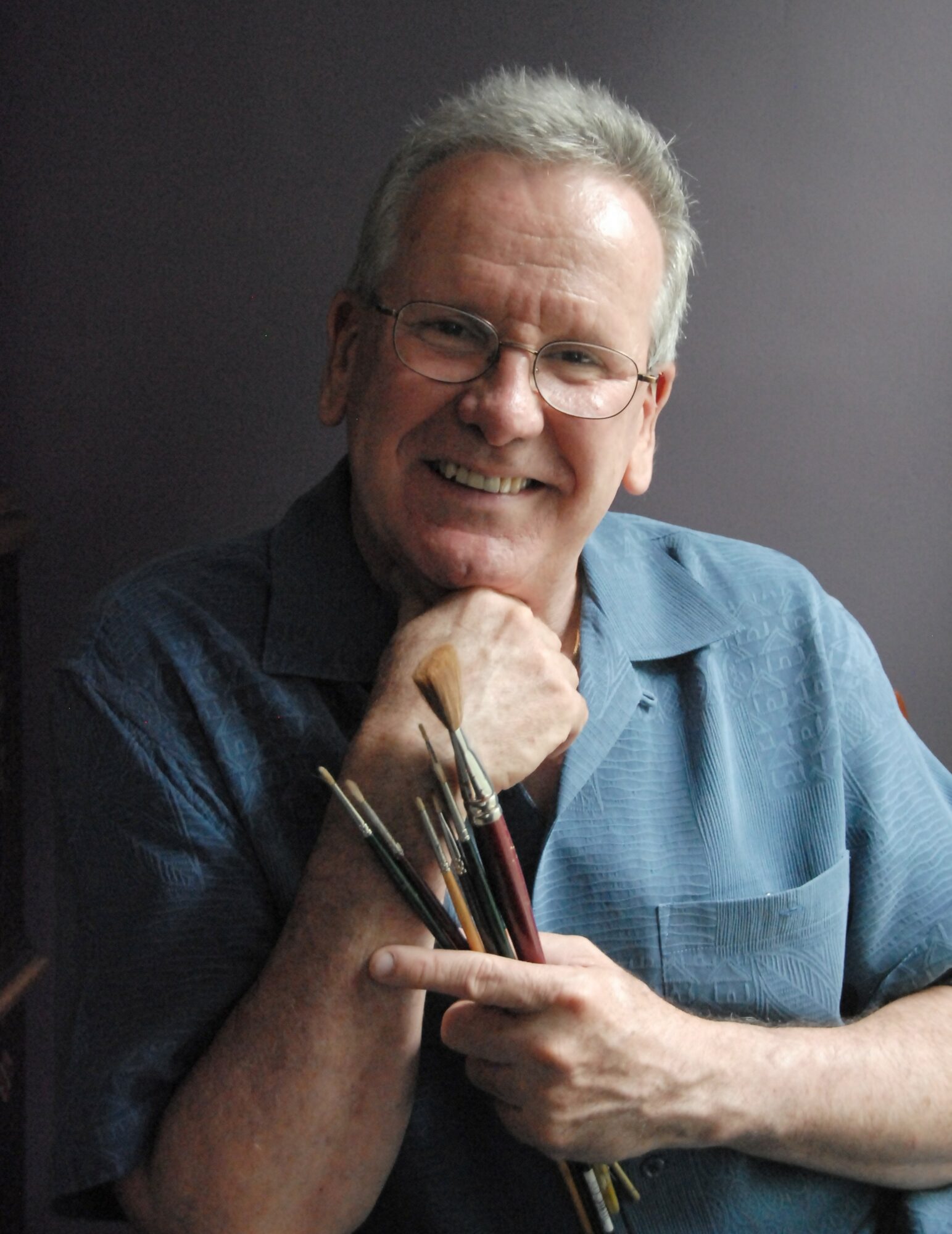
Today we’d like to introduce you to Jorge A Gonzalez
Jorge A, we appreciate you taking the time to share your story with us today. Where does your story begin?
I started creating art as a serious career in 1994. I remember as a young boy telling my mother I wanted to grow to be an artist. Since she wanted to study art herself and never had the means to do so she found this revelation most pleasing encouraging me to do so. As a result of the support I received from my parents, becoming an artist was natural for me. I credit them for nurturing my need to be creative.
I was born in the city of Sagua la Grande, Las Villas, Cuba August 24, 1949.
In 1965 I emigrated with my family to Mexico. After a four month stay in Mexico City we made home in Union City, New Jersey. Coming to a country with a different language was very frightening for a 16 year old. All I desired to do however was to lear the language and to go to art school to pursue my passion. In 1969 upon graduating from high school, I started formally studying art at the School of Visual Arts in New York City.
In 1972 after finishing the three year program offered by the school, I graduated with a certificate of completion with honors. A year later I was hired by the school and worked in their graphics art department for three years earning numerous awards.
The school started offering degrees in 1975 so I completed my studies and earned a Bachelor of Fine Art with a graphic design major. At that time my decision to become a graphic designer was prompted by the need to provide for my parents and thought that Fine Painting would not allow me to do so.
My ability to visualize a finish project and my sensitivity for design and color secured a job for me in 1978 in Baltimore, Maryland, with WJZ-TV in their graphics art department. My tenure with WJZ lasted fifteen years, from 1978-1994, during that time my duties ranged from make-up artistry, set design, construction and styling to computer graphics and animation. While working for WJZ was a tremendous opportunity, not only professionally but financially, my desire to become a fine artist never left my heart. In 1990 follow my dream and started attending part-time evening classes at Schuler School of Fine Arts. After meeting Ann D. Schuler, the school founder, I took her advice and in 1991 enrolled as a full time student while continuing to hold a full time job.
The move to this country at age of 16 taught me a very important lesson, that in order to get where you need to be, change has to occur, and that change does not come without some kind of sacrifice. To become a painter I worked nights at the TV station and studied at the art school during the day. I did this with a lot of pleasure for four years.
The day I started Schuler School I made a promise to myself that after completing the four years require by the school I would move to Florence, Italy and continue studying painting there. In 1994 after graduating from the school I moved to Italy. While in Florence I met John Michael Angel and under his guidance I perfected my skills as a painter.
Presently I live in Baltimore, Maryland and paint under the name of Jorge Alberto.
I
Can you talk to us a bit about the challenges and lessons you’ve learned along the way. Looking back would you say it’s been easy or smooth in retrospect?
I feel lucky that my artistic career so far has been a smooth road unlike other artists. Finding galleries to repress me has been easy and profitable.
Appreciate you sharing that. What else should we know about what you do?
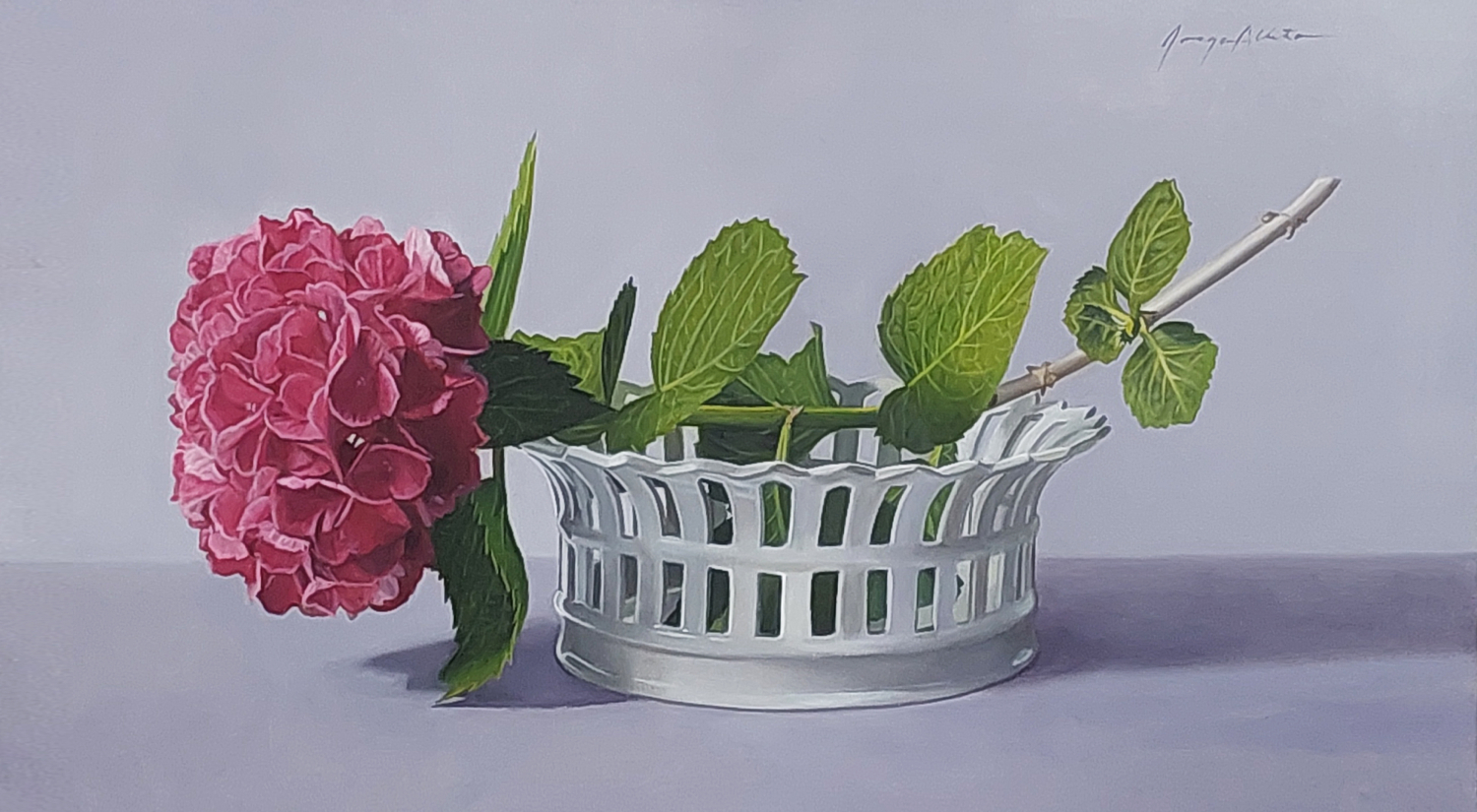
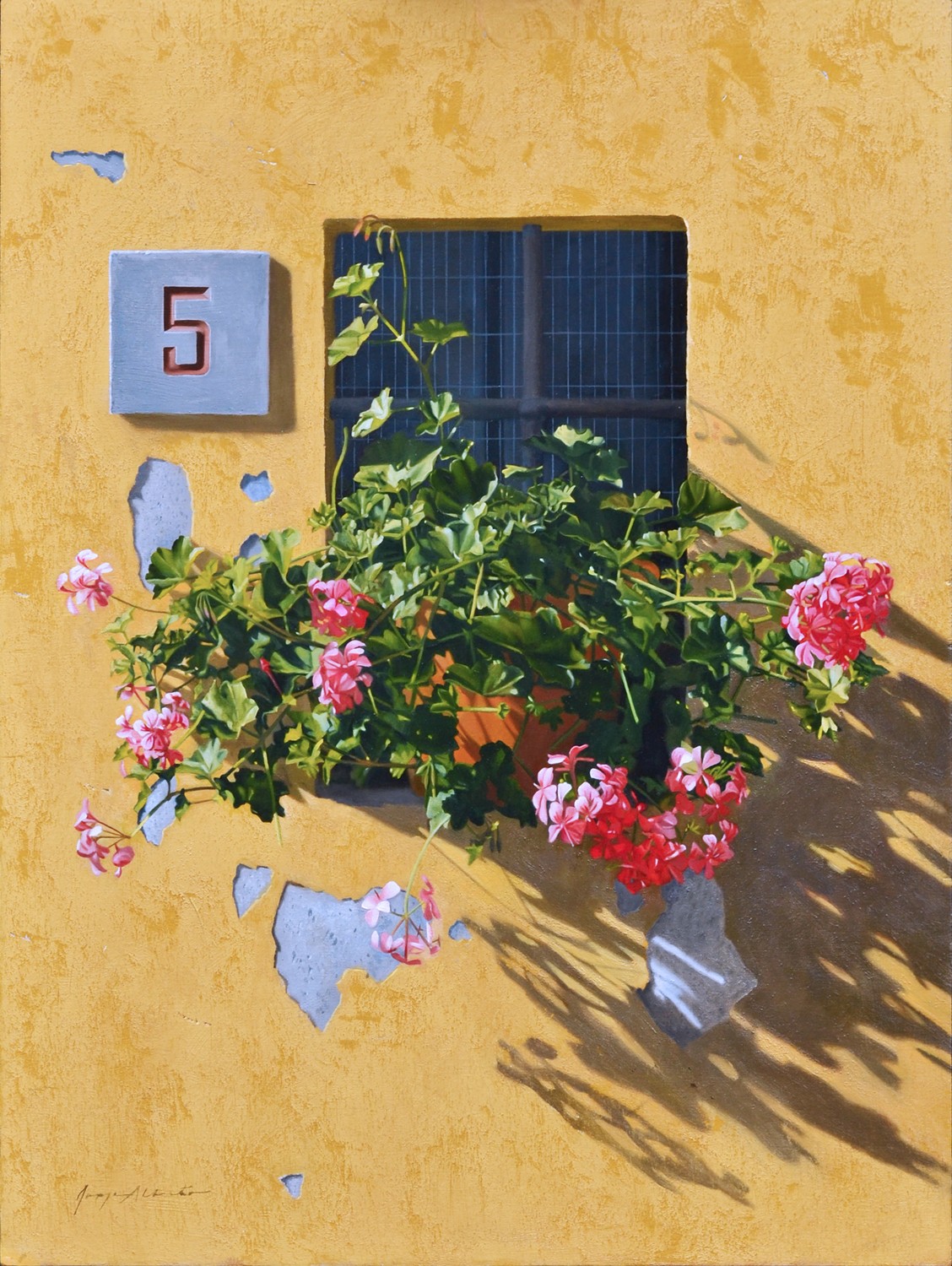
I am a realist contemporary painter and was trained to paint from life. My goal is to create a life-like painting. Although sometimes I might introduce some element from my imagination I always go back to the source of the inspiration and that is the set-up in front of me. All the information I need is there to be captured.
The initial drawing is the first and most important step towards a realistic looking finished painting. Objects have relationship in space and with each other, keeping this relationship, to me, is crucial to realistic painting.
The skeleton of a painting is a precise drawing for that reason I always do a detail drawing directly from the set up. Sometimes depending on the complexity of the setup I use the grid method to transfer the drawing to the surface. The grid method is an easy way to transfer the outlines of the reference photo to your drawing paper or canvas. The grid divides the original image into smaller, manageable pieces so that you can more easily see where to place the main lines.
I like to paint on panel that I prepare myself using H.D.O Plywood used by sign makers. I coat the panel with several coats of acrylic gesso, that I sand down to paper like finish starting with 400 grade sand paper and finishing with 600 grade. I usually like to tint the gesso with a small amount of acrylic raw umber because it provides me a medium warm grey vase color tone suitable for the kind of painting I do.
I always photograph set-ups, as it flattens the layers and gives me an immediate impression of the design’s visual impact. It helps me to see the relationship of the objects to each other, and how light travels through. I make the necessary changes until I am happy with the narrative created by the composition.
I only use the photos as reference. I always paint directly from the set-up, this way I can correctly see color and shadow temperature while I am working.
Starting with a precise and proportional sketch is crucial and doing a detail drawing helps me resolve any problems I might encounter and solve any issues with the composition. OnceI am happy with the drawing, I begin to paint.
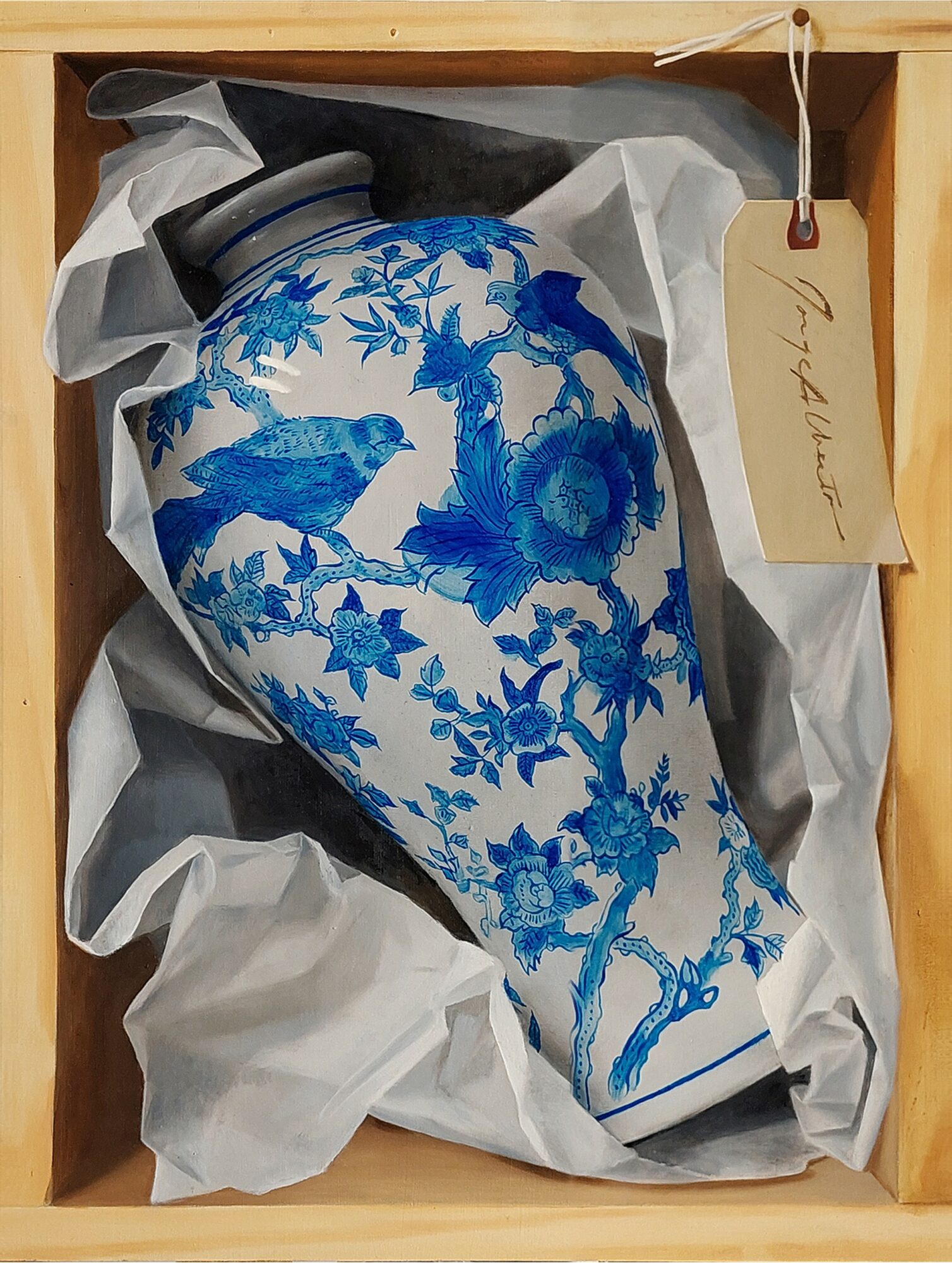
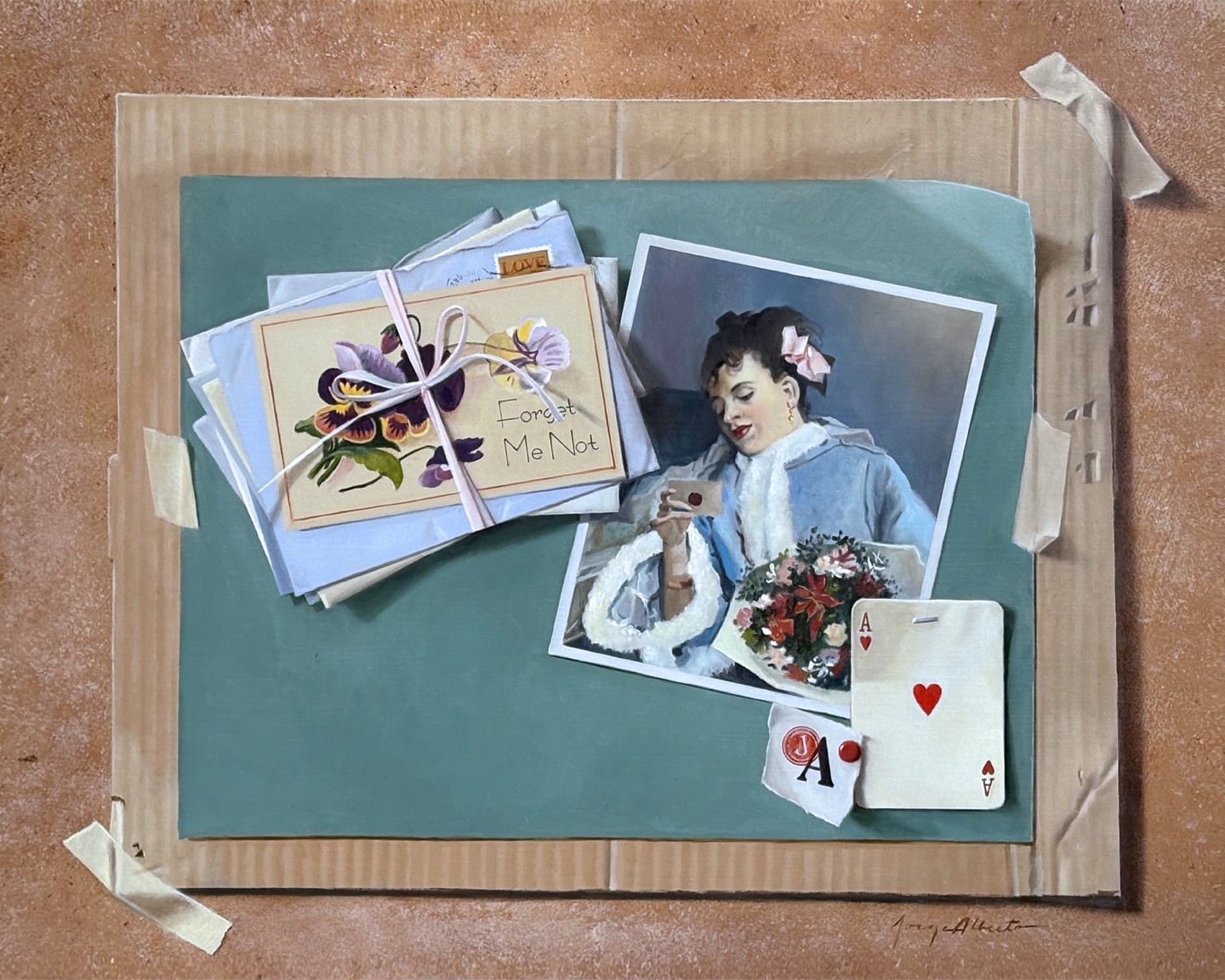
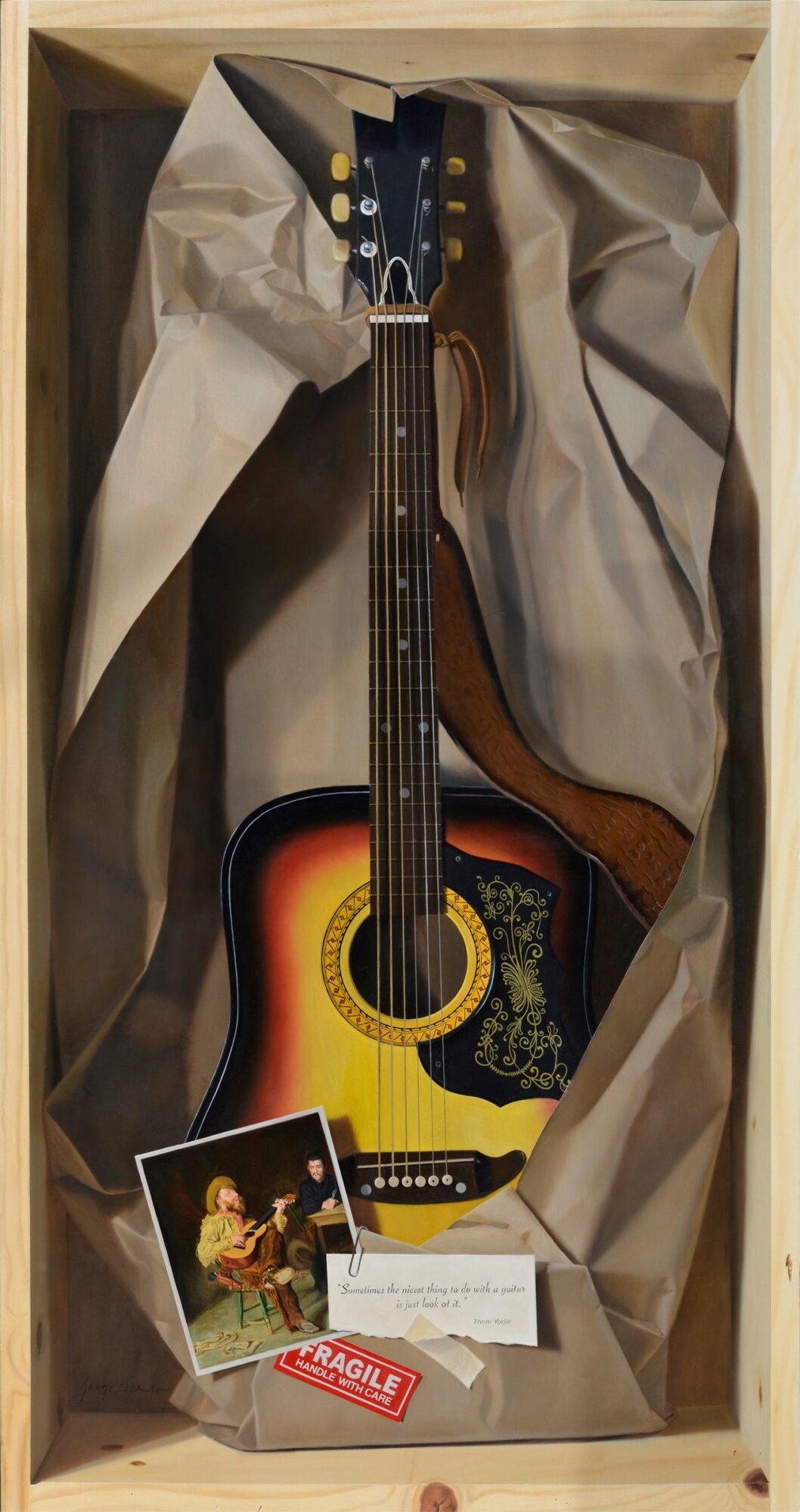
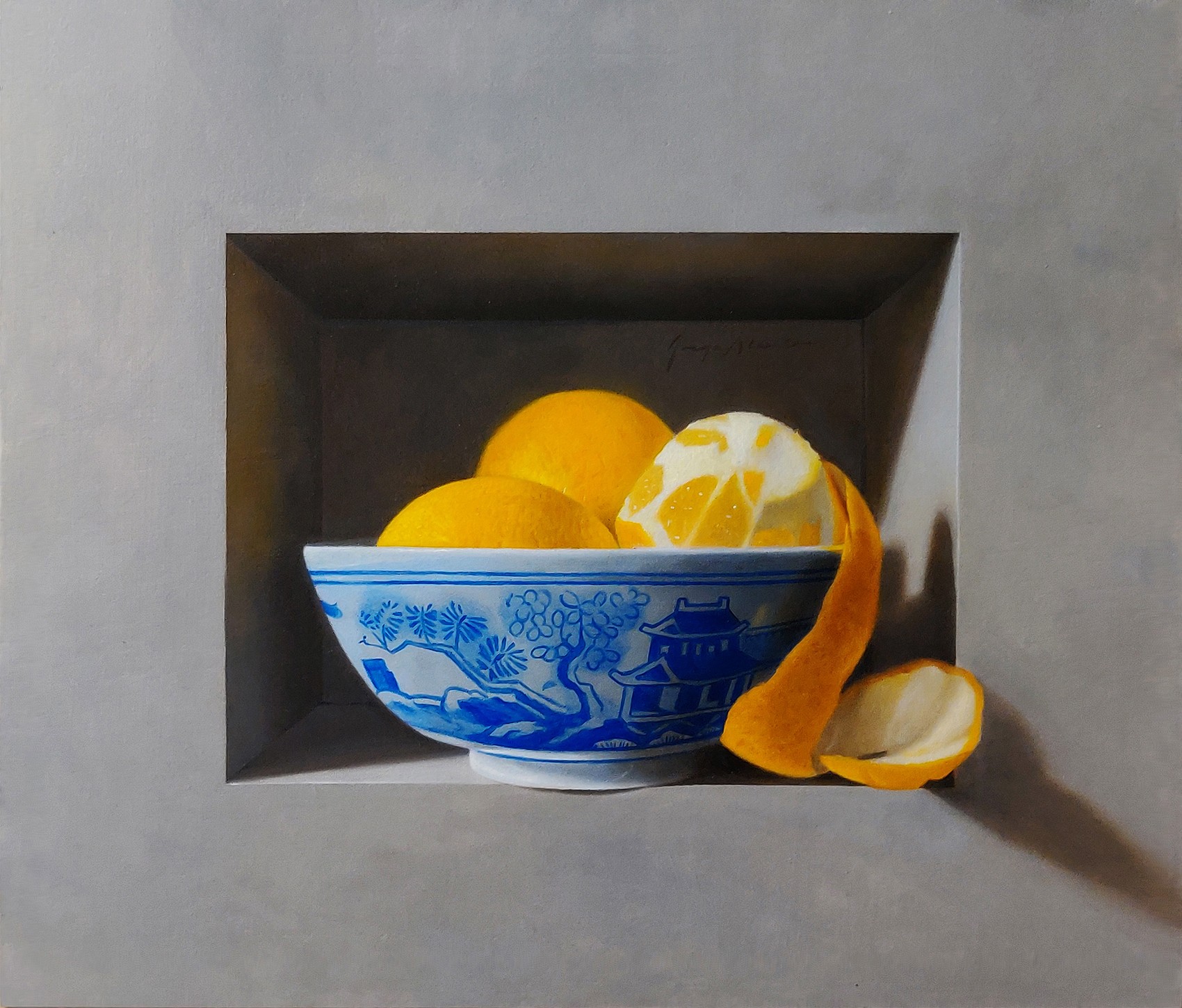
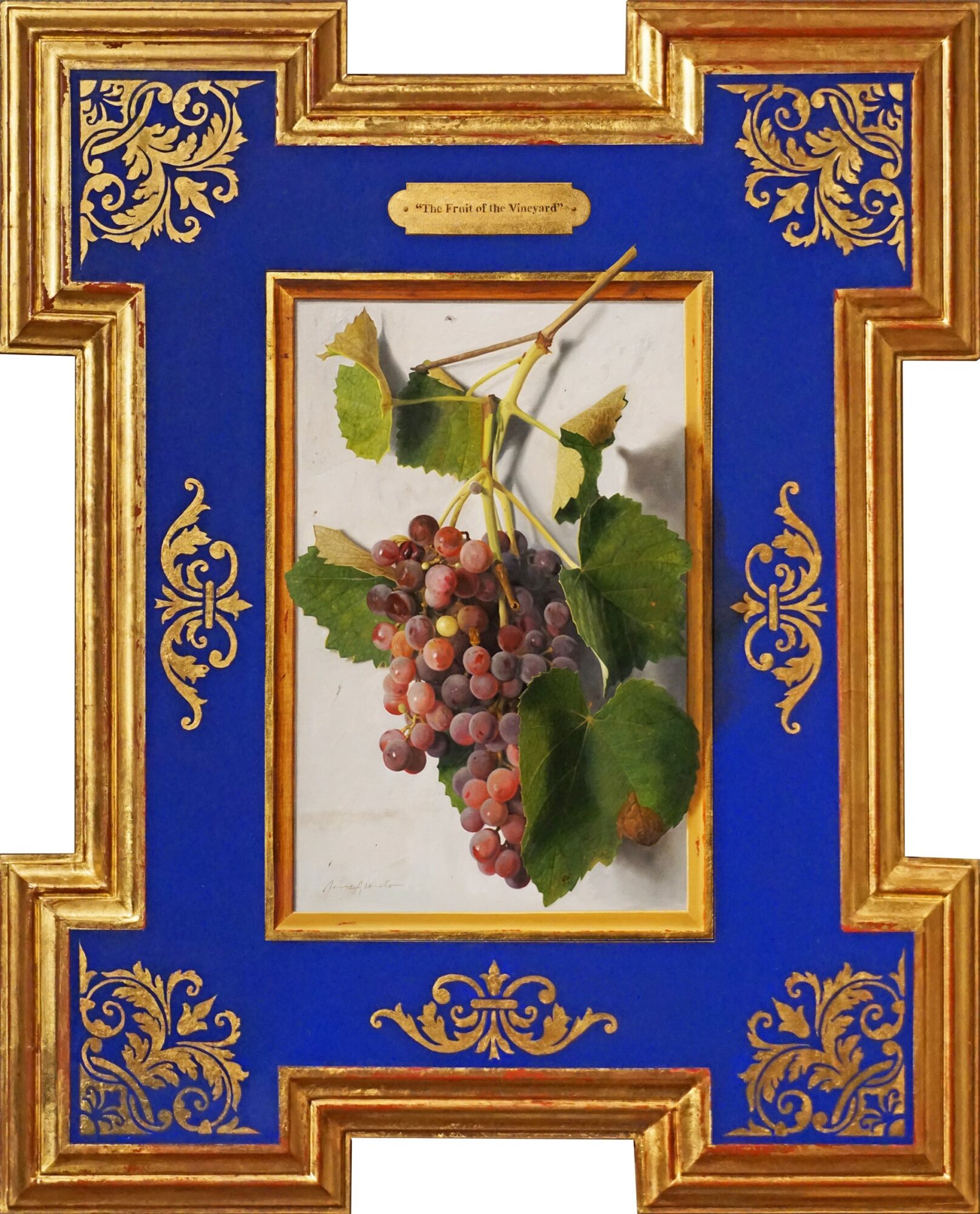
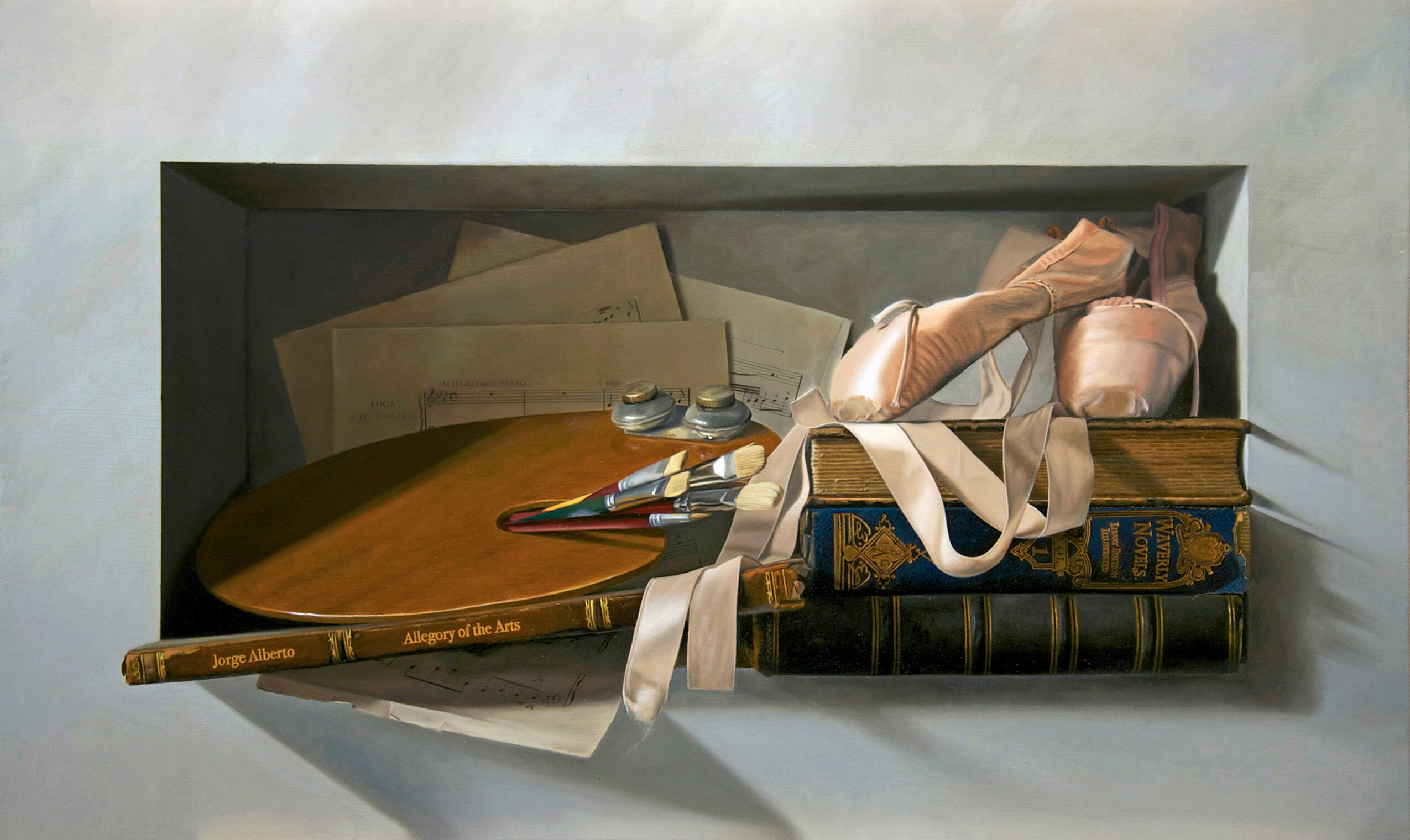
My specialty is trompe l’oeil painting, a French phrase meaning “ deceive the eye” used to describe paintings that create the illusion of a real object or scene.
Although frames are necessary to enhance and protect a painting I find them restrictive for the way I like to do my paintings. I usually paint the illusion of a frame in order to be able to bring the image out of the two dimensional plane and to create three dimensionality.
I like to paint objects inside a niche, doing this helps me create depth, and allows me to extend objects out of a contain space bringing in the viewer’s attention.
I think what sets me apart from others is my attention to detail!
The crisis has affected us all in different ways. How has it affected you and any important lessons or epiphanies you can share with us?
To keep a positive outlook and keep creating.
Contact Info:
- Website: https://jorgealbertofineartist.com
- Instagram: https://www.instagram.com/jorgealberto.art/