Today we’d like to introduce you to William Kimmins
Hi William, thanks for joining us today. We’d love for you to start by introducing yourself.
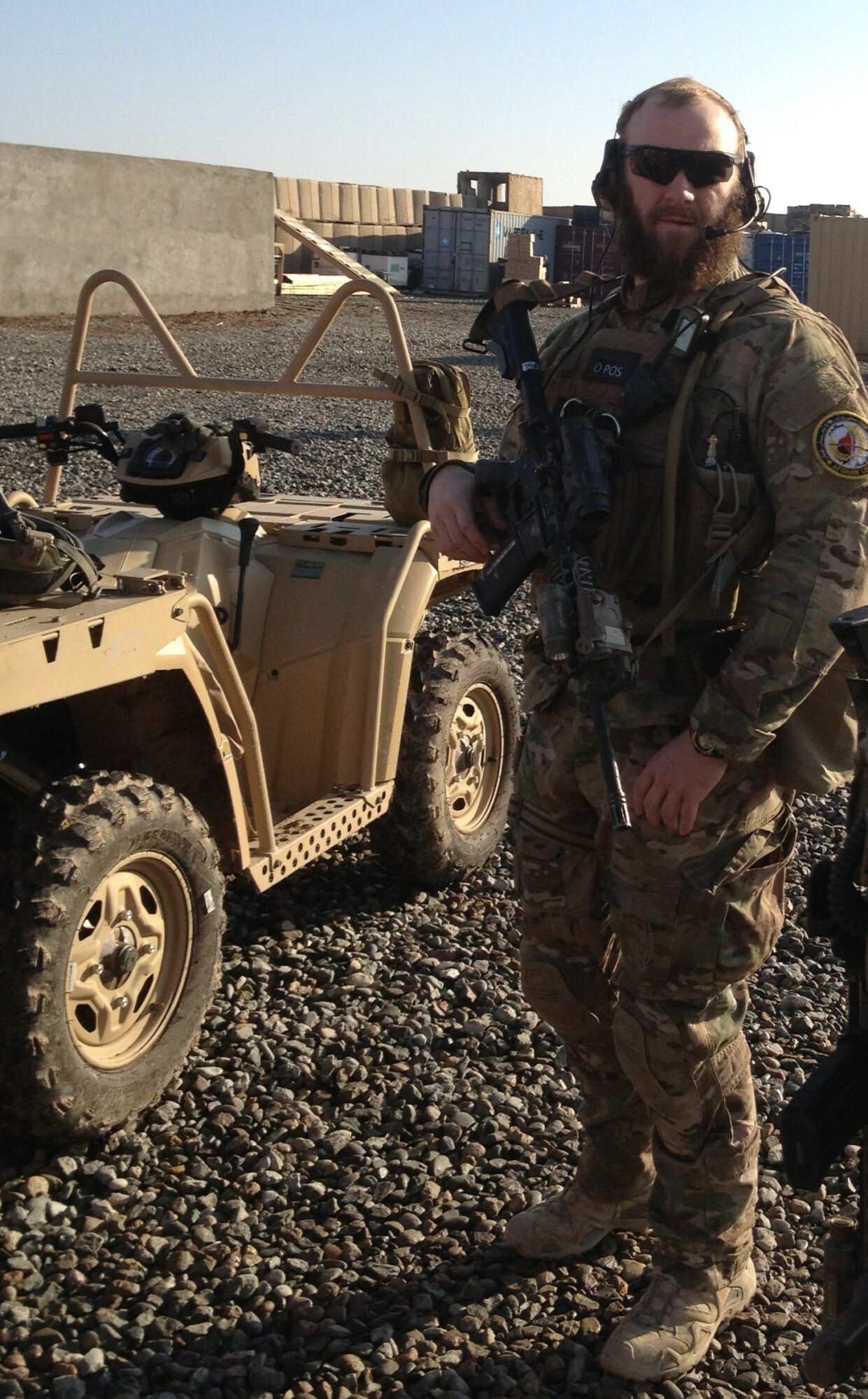
My story is a little longer and a lot different than many of my colleagues in the mental health field. I grew up in Maryland out by Frederick so I’m a bit of a hometown guy returned after many years away. After high school, I accepted an Army scholarship to pay for college. Since I’m the child of a single mom who taught in the public school system I knew that I would need to get college funded independently and the Army has often been happy to oblige if you’ve achieved enough in high school and show leadership potential.
After college, I began my service at Fort Bragg (now Fort Liberty) in North Carolina with the 82nd Airborne Division. Initially, I didn’t plan on making a career out of the military, just wanted to do my required time in uniform to get college paid for and then pursue opportunities in civilian life. That all changed during my sophomore year of college at UMBC. I remember waking up for a sociology class on 9/11/2001. To this day I don’t know why I put an 8 am class on my schedule since I already owed 3 early mornings per week to my ROTC unit. I remember picking up a coffee at the campus store right after the first plane hit the North Tower in New York before we all knew that the attack was just that. I became part of a generation of soldiers who knew that going to war was a when, not an if after I earned my degree and received my commission.
Once I returned home from my first overseas deployment, during the infamous troop surge in Iraq, I was fortunate enough to be asked to try out for the Army’s Special Operations component. I spent over a year in that training pipeline and then, despite my Russian language skills, I went right back to the Middle East a few more times. It was only after I was hired into a small command outside Washington, DC that I got to use those language skills and work in Europe. In total, I spent 21 years in uniform (if you don’t count my college experience when I was contracted to the service but not on active duty) and amassed deployments and utilization tours that number in the double digits. I participated in every major named operation the US undertook between 2001 and 2025, and worked in a lot of places that don’t often make the news.
Throughout my service, I had a front-row seat to observe the toll that the GWOT (that’s the Global War on Terror for those who didn’t experience it) took on my teammates, their families, and the culture surrounding military members. I think everyone has heard some concerning statistics like the suicide rate in military members since 2000, or the rate of military divorces (many years twice the level of non-military marriages), to struggles with substance abuse. I also experienced some of those issues firsthand (though thankfully the core relationships in my life somehow remained strong). As I watched these effects and experienced these issues I also saw something that really disturbed me: despite there being plenty of people wanting to provide mental health services to military members, their families, and the veteran community very few people seemed to improve their mental health.
The symptoms that I saw in my community didn’t fit with what the media would often tell people to expect from PTSD, but this was before I started my training so I had a very limited understanding of the range of mental health disorders our lifestyle and careers could generate. Eventually, I hit a moment in my career that every soldier gets to at some point: I was very advanced in both the rank structure and in terms of my competence but as I took stock I realized I had done just about everything I wanted to do in my military career. It’s counterintuitive for many folks but the further you rise in the rank structure the greater the limitations on available opportunities. High-ranking officers simply don’t perform certain functions, and those were the jobs I most enjoyed. As I looked forward at the opportunities that would still be available to me I realized that even fewer interested me enough to continue the sacrifices that the job requires. Example of said sacrifice: my oldest child spent the first decade of his life with his Dad deployed 6 months out of the year or prepping for the next deployment overseas.
As I started thinking about my next chapter I came back to the people I had served with over the years and what their service had done to their personal lives and mental health. These were some of the most effective operators you could ever hope to meet. People who had double-digit deployments and who had always gotten the job done. However, during part of my command time, more than one of these people came to me because they were experiencing suicidal ideation. At that point I hadn’t committed to this new career so I did what the Army had trained me to do: I repeated the “script” we had been trained on, I took them to the offices on base like behavioral health, and I trusted that by doing this I was being a good teammate and protecting my people. It turned out I wasn’t exactly correct on that score.
To the last operator, they came back with a similar story. They told me about the very nice people at behavioral health who tried to offer helpful suggestions. Some of them talked to me about meeting with a psychiatrist and receiving a prescription before being told to come back if things didn’t feel better in a month. Others told me about the clergy who had advised them to put their faith in a higher power (for the record I support people of strong belief leaning into their faith as part of their journey to mental health) and how they had never been a church-going person before. And then they all said something that struck a cord for me without me realizing why: “Boss I’m fine, I need to get back to work”
With the benefit of time and training, I realize that what that statement brought up for me was part of my own struggle. Because I know that there were years when the world of the fight made more sense to me than the civilian one. Times when I felt like I had become a different creature than the men, women, and children I was protecting with my service. During those times, I leaned on the consistency of the deployment cycle as my coping mechanism. To us (and yes I 100% mean us) the fight had become our drug of choice and what frightened those folks telling me they just needed to get back to work most was not having that drug to make everything else seem manageable. I say this with confidence because I looked into their eyes and I saw my own fear reflected back.
What I also realized at some point was that the problem wasn’t a lack of people wanting to help this population. My journey to becoming a clinician and practice owner has put me in contact with tons of phenomenal people who want to do exactly that. The problem in this scenario was that the people trying to help couldn’t understand the life-world of the people who came into their office. I talk about this a lot with other therapists who want to get into working with military and veterans, but some things make a normal person pull back. When that happens, the veteran client (or law enforcement client, or kid who has survived being trafficked) often loses faith in the therapeutic process and reaffirms their belief that they are so broken that there is no way to make them whole. The solution to this issue was once summed up nicely by another of my teammates: “People like us need a therapist like us.”
One of my realizations in this was that military members and those closely connected to us form a distinct culture within American society. Much of it comes down to the way we relate to the world and people around us. Our concept of empathy is different, the ways we communicate with each other is different, and even our concepts of family are somewhat different from the rest of the populace. We tend to cope with daily stress in ways that most people who aren’t a part of our world won’t understand. We seem rougher around the edges, our humor is often very dark and addresses things that polite society thinks are off limits. I could go on about this (and often do when I’m working with other therapists of practices to help them understand who is sitting across from them in session) but the key point was that the very well-meaning and highly trained folks interacting with my teammates and friends throughout my career simply couldn’t understand the culture of the people they were trying to help.
I began my journey into the mental health field working on the simple idea that there was a major problem out there that no one else was able to work on effectively. One of the things you learn in special operations is that the job is solving problems but those problems have more severe consequences than others. As I progressed through my training and began working with clients I found that many groups benefit from the way I practice. I worked with a few law enforcement professionals (specifically tactical teams and career homicide detectives). While doing my internship I came into contact with my first child who had survived being trafficked. I found that those kids vibe really well with combat vets and had a truly rewarding experience working with them.
There is a similarity in life experience between the two groups that isn’t easily seen at first. Both groups have spent time in situations where their actions directly and immediately affected their survival. Both groups have been at least partially at the mercy of people they likely didn’t understand while they interacted. These circumstances create a set of survival skills that look very similar and a worldview that is the foundation of that connection. I often tell a story about a client during my internship who other therapists had struggled to connect with. As we were walking from one room to another there had been a series of very loud noises and shouting in another part of the building. I moved through the door as though I was still working overseas. It’s easy to spot, strong step through the door with a hard pivot to put you a few inches off the wall but out of the center of the hall. What I didn’t expect was to look back and see that client move almost the same way. Right down to check the corners at all times to see what might be there. What I realized then was that both groups were defined by achieving their goal regardless of the obstacle. The difference was the level of agency for each group as they moved through those experiences.
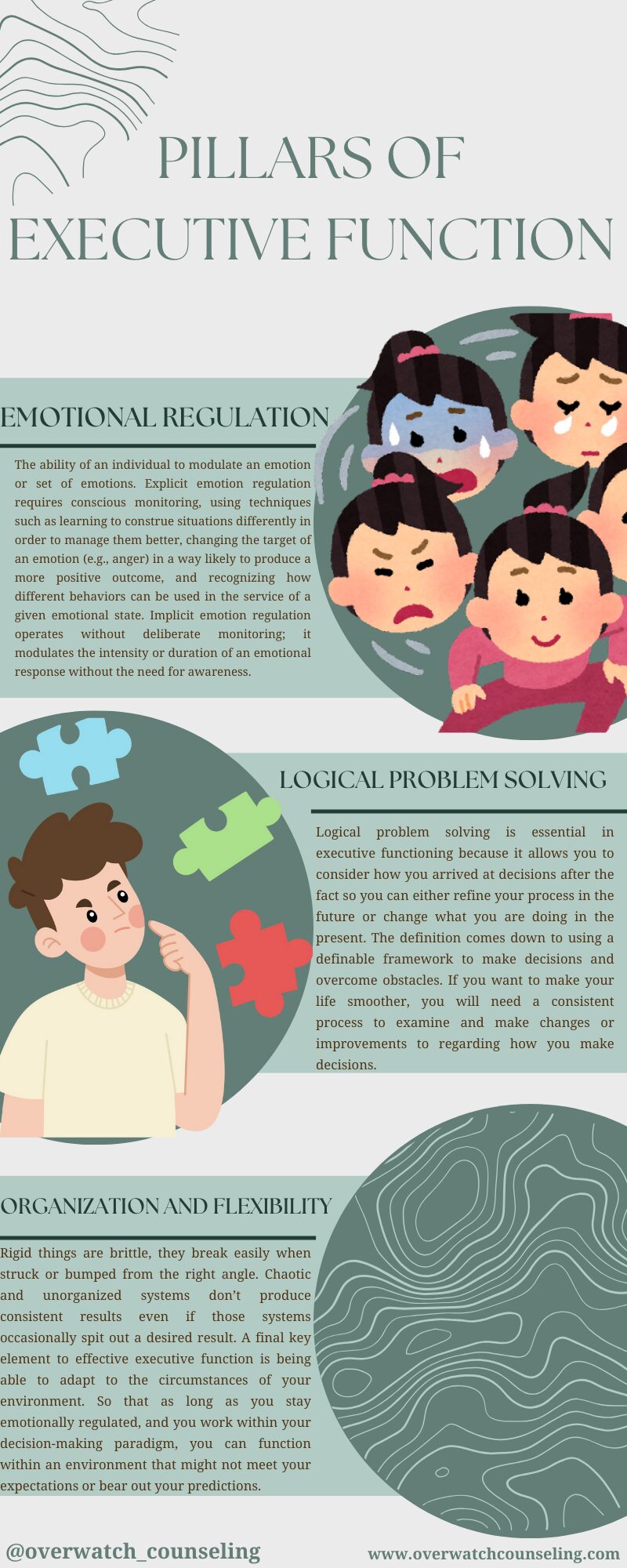
That’s part of why I practice a bit differently than other therapists. What I learned from observing both my community and those is that many people for whom therapy hasn’t worked is that they thrive on agency. The center of my practice is client agency. Building it, helping them maintain it, helping them reach a position where they are making deliberate choices even if their personal struggles are particularly hard at a given time. I approach the problem that a client brings me first, because helping them gain some relief and control allows them to start working their way down to the root of the problem. Without fail though, the clients who work well in the therapy I provide do best in the shortest amount of time when they are the ones making decisions based on my services. This puts them back in control of their own mental health, and yields change that lasts rather than momentary shifts in experience.
I created my practice and named it Overwatch Counseling Services for a very simple reason. In the military when planning a ground combat operation you always set part of your force apart. Their job is to support the main effort, to see the threats you main force might not, and to deal with those threats before they bring the whole operation to a halt. We call that element your overwatch. I view my work in therapy through a similar lens. My job is to help my clients make themselves safe and secure by looking at their whole situation and helping them make healthy change that lasts. I, and any future clinicians who come on board, become their mental Overwatch.
I’m sure it wasn’t obstacle-free, but would you say the journey has been fairly smooth so far?
The first thing I thought of after reading this question was just how much I didn’t know at the beginning of the process. I think every transition from a first career to a second is a rough road full of potential pitfalls but this journey was more complicated than even I expected. So to discuss a few of the potholes in the road I’ve had to deal with along the way:
1. The barriers to entry in the mental health field are significant. I started by working through a clinical mental health masters degree. I had to undertake that process while I was still serving on active duty, which meant not only was it nights and weekends with the occasional holiday thrown in but things were more complicated from the start. Anyone in the service can tell you that your nights and weekends are not always yours. As a simple example I remember a class seminar I was required to attend at a time when I was working overseas and thus 6 hours ahead. This meant that I was dialing in at around 2 or 3 AM, and if you knew that professor you would know that simply showing up without active participation wasn’t going to cut it.
2. As a student you spend the last year of your degree program beginning to work with real clients under a licensed clinician’s supervision. Again, I had to coordinate this while I was still working more than full time on active duty. Just to add to that difficulty, the Army decided to move my family and I halfway across the country in the middle of one of my internship semesters. That required me to find an entirely new internship site, and to build a new caseload of people willing to trust me with their care.
3. As I opened my practice I was trying to do everything myself. From providing service, to marketing, to social media management, to content generation, to website design and administration, on and on. I realized (probably slower than I should have) that I was going to burn myself out and be no use to anyone if I didn’t get those functions under control, but I was also starting a new business so every expense was a major expense. Trying to learn what roles I could effectively keep on my plate and what tasks I needed to off-load was a major process that involved a lot of learning.
4. Although many therapists will eventually open their own practices, there is no mental health related degree that includes coursework on running a business. I have had to learn everything about the business part of running my practice by trial and error (often more error than I would like). Things like the process of finding clients, to bookkeeping and tax preparation, to how licensure works for a practice in different states I have found I knew very little as I came out of school.
5. As I mentioned before I have managed to maintain a family throughout my military career. One of the achievements I often bragged about was that I started the Army with one wife and I was going to finish with the same one. However, the sacrifices during my service means that work/life balance is incredibly important to me. One major challenge (particularly during the time when I was both working in my practice and full time on active duty) has been my commitment to not miss things that are important to my wife and kids. If they want dad, they get me. So, I can’t grind on making the practice work 24 hours a day like some of my colleagues in other business ventures. I have to block out time and keep my efforts in those blocks so that I’m available when the most important people in my life need me.
Alright, so let’s switch gears a bit and talk business. What should we know?
Overwatch is a private mental health therapy practice focused on clients dealing with anxiety-based symptoms, especially those arising from long-term and chronic trauma exposure.
I specialize in solutions-focused therapy and that method is my usual go-to when working with a new client. I’m also certified as a clinical trauma professional, certified for dialectical behavior therapy, certified for treating substance abuse disorders in military populations, and for holistic practice so that I can advise or collaborate with many other helping professions like Dieticians and Physical Therapists.
Another item we are gradually phasing in is animal assisted therapy. One thing I noticed over the course of my service was that while people like me might have difficulty relating to normal folks in ordinary society they loved being around animals. Because of that observation and the number of people I’ve personally seen benefit from having a therapy companion animal or service animal I spent some more of that limited free time and earned a post graduate certificate in animal assisted therapy. We are starting very small (but plan to increase the number of folks we see through this modality) and are collaborating with some other organizations that are more mature in the service animal space to see what unique value we can provide.
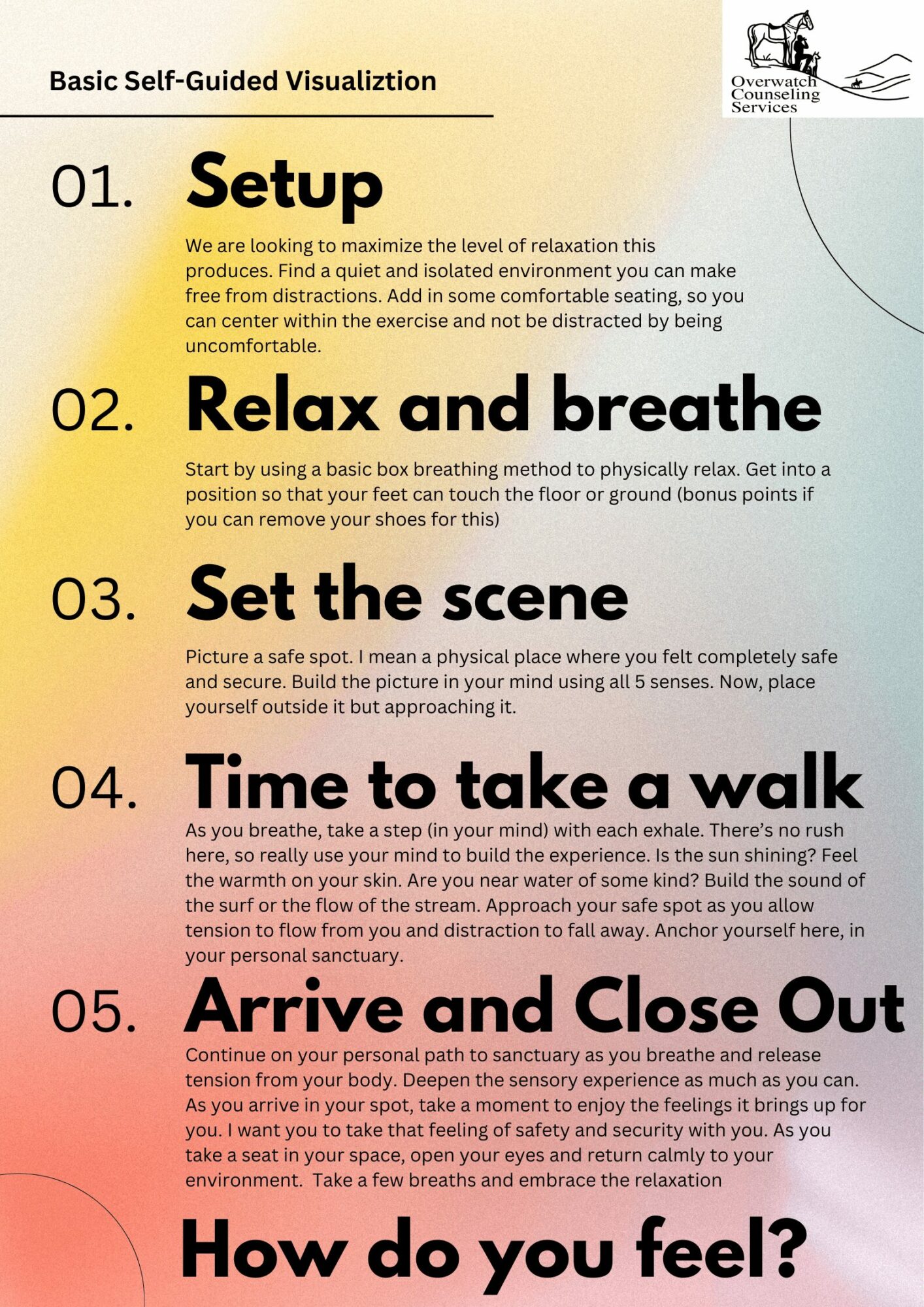
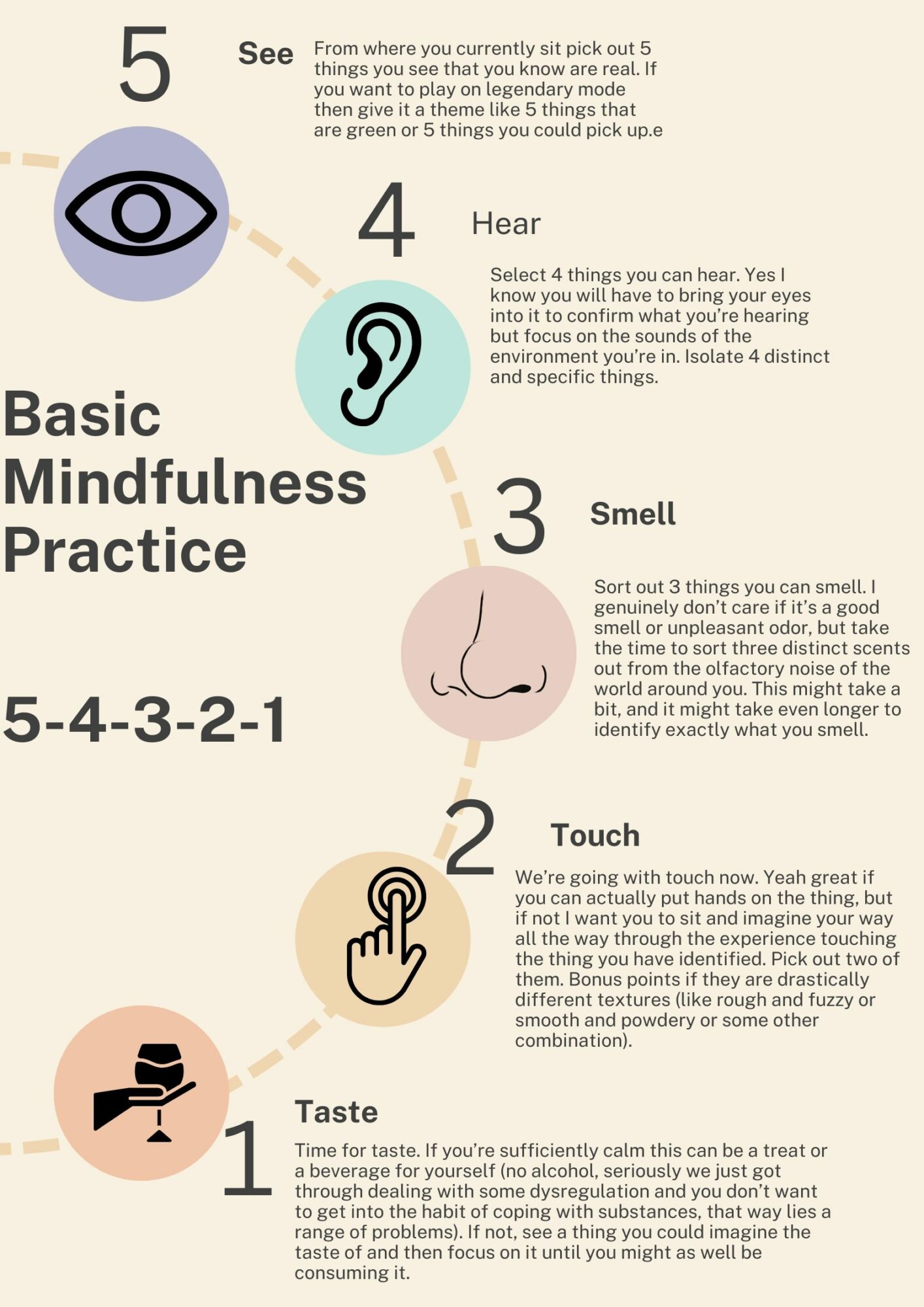
I am a bit different from other therapists you may have run across. I start the process by approaching the biggest problem in your daily life right now. Once we’ve gotten you some relief, built some resiliency, and you are in a place where you feel strong and competent we move on to working through the deeper origins of your struggle and work to optimize your mental health in the present so you can finish therapy and go live your life. Therapy shouldn’t be a forever commitment, and we will regularly review your feelings on progress. I don’t tell my clients what to do, I recommend solutions but I base my entire practice around the client’s deliberate choices.
I am most proud of some of the clients I’ve worked with. I have seen people overcome huge struggles, and it has been my privilege to have a small part supporting their success. The Overwatch brand is built around the concept that any problem is solvable, and that it’s ok to ask for help.
I offer individual, family, couples, and select group therapy sessions. I also offer case consultation, public speaking enagagements, training for other clinicians on working with military and veteran clients, and a few physical products focused on helping other clincians run their practices more smoothly.
Are there any apps, books, podcasts, blogs or other resources you think our readers should check out?
This might surprise some people but like many of my teammates from the special operations community when I read for entertainment it is almost always science fiction or fantasy. I’ve read the entire Wheel of Time series, and all of the Dresden Files books (though Jim Butcher is still writing so the series isn’t complete yet). When reading non-fiction it is almost always something meant to improve my skills as a therapist. I’m currently working my way through Jonathan Haight’s “The Anxious Generation” and a clinical guide to EMDR therapy.
Most of my podcast consumption falls into one of two categories: either fitness focused podcasts such as Power Athlete Radio or Squat University or storytelling podcasts like Old Gods of Appalachia or Mr. Creepypasta’s Storytime.
App-wise I use duolingo at least once a day, but I also speak 4 languages so sometimes I spend more time working on that skill set. I am also an absolute audiobook addict, so the audible app is a must have. My library on that app has over 500 books.
Contact Info:
- Website: https://www.overwatchcounseling.com
- Instagram: https://www.instagram.com/overwatch_counseling/
- Facebook: https://www.facebook.com/profile.php?id=61557551446829