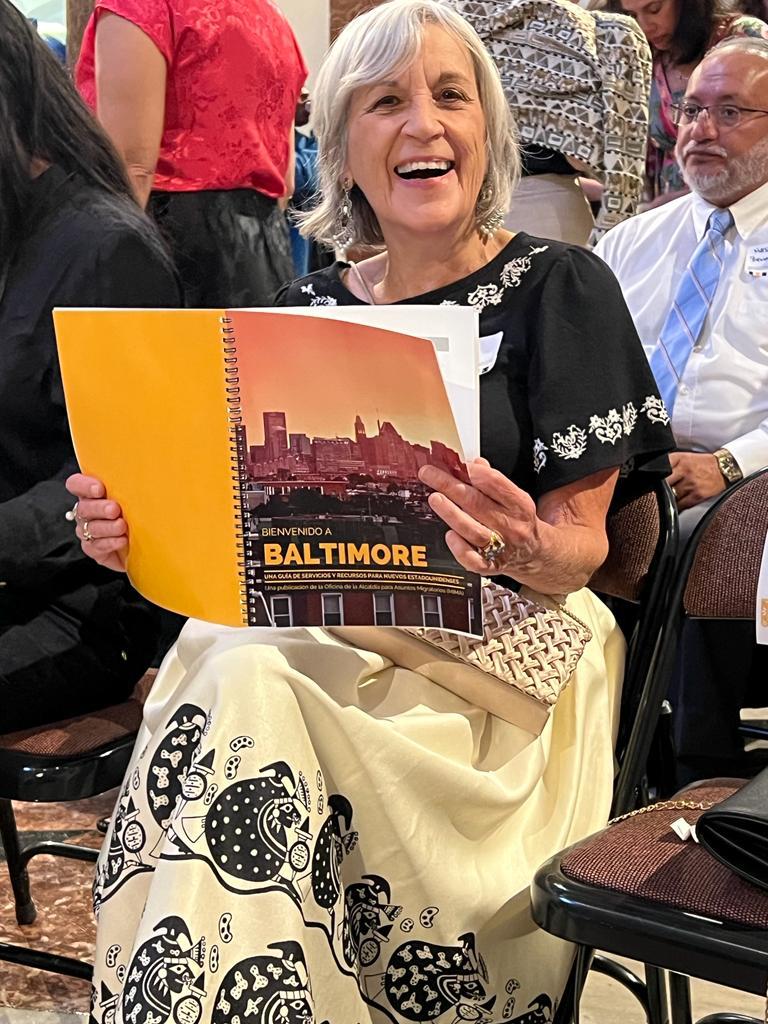
 Today, we’d like to introduce you to Flor Giusti.
Flor, we appreciate you taking the time to share your story with us today. Where does your story begin?
I am a Clinical Social Worker. I have provided services to members of the Latino community in the Baltimore metropolitan area for the past 30 years. I am originally from Callao, Peru. I grew up and studied in Lima, where I worked as a psychologist for eleven years. During the ’70s- and ’80s, Peru had very difficult times. Between an unstoppable economic crisis and the dirty war between Sendero Luminoso and the Peruvian government (and its army), everyday life became very hard.
I never thought that I would emigrate, but I did get to a point in which I felt that we needed to get out of that chaos, recharge energies (and what a better way to do that than to do some graduate studies), and return with renewed strength. My husband was admitted to the public health program at JHU. We were fortunate to find the funds, and we came thinking that it would be kind of a sabbatical year -well, maybe two years. I literally locked the doors of my house and private office, and we came to Baltimore. It was the year 1991, 33 years ago.
Life happens! At a certain point, it became clear to us that we had the opportunity to stay longer… so I decided to validate my credentials. An old Peruvian friend who was living in the US told me that here in the US, social workers do the kind of jobs psychologists do in Peru. So, I completed the Master’s program for Social Work at the University of Maryland and obtained my professional license. However, at the time, my visa didn’t allow me to work, so I became a volunteer. Teresa Tufano, then mental health therapist at JH Latino clinic, gave me the opportunity to assist her, and so I did.
During my Master’s, I did my second year of practice at the House of Ruth, Maryland. I realized that they didn’t have any information or programs in Spanish, and I knew that even though the Latino community was small, there had to be Spanish-speaking women who could benefit from that information. That was before the internet, so I wrote letters to programs around the country that were serving the Latino community on domestic violence, asking for materials, and they responded.
My supervisor at the time, Ellen Loy, supported me in developing that initiative, and I had the opportunity to do a presentation at the Hispanic Apostolate. After that, a new program for Latinos, El Centro de la Comunidad, also organized a presentation for women on the topic of good and safe intimate relationships. Participants in that meeting asked if we could keep talking. We set a meeting for the next two weeks. And that group met two Fridays a month, at 6 pm, for 16 years. Different locations, but the same group!
Eventually, that group became Adelante Familia, a comprehensive program specifically designed to meet the needs of the Latina immigrant community in Baltimore. At the same time, my regular job was also with Latinex young parents at Casey Family Services, where I worked for seven years. My last FT job was as a general social worker at the Children’s Medical Practice, the pediatric outpatient clinic of JH Bayview, where most of their patients were US-born children of foreign-born Latinex parents.
Since 2023, I am the owner and director of AYNI, LLC. (Ayni is a Quechua word that means reciprocity and mutual support). At AYNI, we provide direct social work services to members of the Latino community.
– Platicas con Dona Flor (FB, Instagram, YouTube): Monthly presentations through FB and YouTube on topics of interest of members of the Latino community; Online and phone individual support services; In-person support services at the South East Anchor – Enoch Pratt Library, every Wednesday from 12 to 4 pm. All direct services are free.
– Consulting services on how to deliver culturally appropriate services to the Latino immigrant population to organizations who want to reach and provide services to the Latino immigrant community. Training and supervision of Community Health Workers. Facilitate emotional support groups for members of the community.
– Individual and group counseling, support group facilitation, parenting classes. It was clear to me that in order to provide meaningful services, I had to be involved in the larger community. Not only to meet and learn about services and resources but also to be the voice of the members of the Latinx community whose struggles I was witnessing.
Right now, I am a member of the Maryland Community Health Resources Commission, President of the City of Baltimore Hispanic Commission, a board member of the Mental Health Association of Maryland, and a member of the Latino Providers Network.
I’m sure it wasn’t obstacle-free, but would you say the journey has been fairly smooth so far?
Yes, and no… Since I have been working with the Latinx community since the 90s, I have seen it grow, not only in the number of members but also in participating at a broader level, advocating for better public and private services for them. The most rewarding aspect of my work has been the response from the community. I have learned so much about their strengths, their resilience, their hard work, and their determination to succeed despite all barriers against them.
If you are an immigrant, you have no choice but to keep going. No matter how difficult or traumatic your life was before (so much that you made the decision to risk your life making the journey), and how difficult it is to learn to live in a different culture, with different rules, and always at risk of being taken advantage of. It’s inspiring to see how people keep working and making it.
The most challenging aspect of my work has been trying to ensure that services for the Latinex community are meaningful and respond to its specific characteristics here in Baltimore. Everybody talks about cultural competency but it is easier to make a statement than to really do the work. Most big organizations, public and private, recognize the importance of working with immigrant communities, and all have cultural competency as a value.
But it usually stays as a “value,” maybe a yearly training course for their workers on its importance. However, the most I have seen is the translation of programs into Spanish. Even those “evidence-based” programs. When we talk about evidence-based… who are the people from whom that evidence was obtained? US White middle-class people? African American (“minorities”) communities? What is their sense of self, their cultural background, their idea of being a good person, their idea of health and success?
Even when the programs have been validated for Latinos… who are those Latinex? In most cases, they are people of Latinex origin who were born in the US or Latinex who live in areas with more available services (think California, NY, Texas, Chicago…). I have encountered a lot of resistance against tweaking programs to meet the needs of our immigrant Latinex community. In general, standardization is a mainstream value and goal… so there is a lot of pressure to do the same for everybody.
And, since they want to be effective, they only support programs or treatments that are “evidence-based.” Of course, that doesn’t work. Then, the conclusion usually goes against those people who don’t fit the norm. Every standardization results in the same people being left behind and marginalized. Even when there is a declared objective to reach “hard-to-reach populations,” the programs are built on the same premises as those mainstream programs that created the problem that left people behind.
As you know, we’re big fans of you and your work. For our readers who might not be as familiar with what you do, what can you tell them about what you do?
I have made my best efforts to provide meaningful services. I want to listen to my clients and assist them in a way that they find useful and productive. Actually, at present, there are many services available for the Latinx community.
However, most of them are specific programs or for people who live in specific catchment areas: how to obtain medical insurance for their children, how to get school services for their children with learning difficulties, access to social benefits, mental health (even when they are so scarce) and so on. What I find it is missing is the opportunity to process whatever life just threw at you.
Many times, I have talked to people who were asking how to obtain some specific thing, let’s say food benefits for their children, only to find out that the request was just the tip of the iceberg: they had experienced a traumatic event, the breakup of their family, so hard situations that they need to process – in addition to obtaining the specific request. I value very much the opportunity to talk to people, to connect with the human being who has that specific request, and to acknowledge and respect their difficult circumstances.
Then, I really understood the importance of completing the services I had been asked for. That is how I became Dona Flor. People in the community were referring to me as Dona Flor, and I have embraced that name. I consider that the best honor I have received in my professional life.
Where do you see things going in the next 5-10 years?
Immigrants are an essential part of the American life. Throughout its history, the US has benefited tremendously from immigrants, those who were fleeing from despair, wars, violence, and hunger. However, over time, all newcomers have encountered resistance, suspicion, and attempts of dehumanization, which has resulted in their marginalization.
White immigrants have found a way to assimilate into the mainstream community. People of color, on the other hand, have always met harder roads. Currently, many immigrants are not white: Latinos, Africans, Middle East, or from Asia… Some of their US-born children are becoming adults and are working for opportunities for their communities.
The work of making our society more just and living our stated standards of democracy and opportunities for all is never-ending. History moves forth and then back. Right now, we are experiencing a strong backlash against people who do not fit the “white,” “male,” “able,” and “heterosexual” norm, whose rights were advancing just shortly ago. We need to keep working to ensure that those advances are not closed up and that we build a society in which all people really have opportunities. All are valuable members of our communities.
Throughout the 30 years I have been working in and for the Latinx immigrant community in Baltimore/Maryland, I have seen progress. That is encouraging. I have also experienced how difficult it is to make changes. There is a LOT to be done. We need to keep hope and to keep our best energies focused on achieving our goals.
Contact Info:
- Instagram: @platicascondonaflor
- Facebook: @platicascondonaflor
- Youtube: @platicascondonaflor
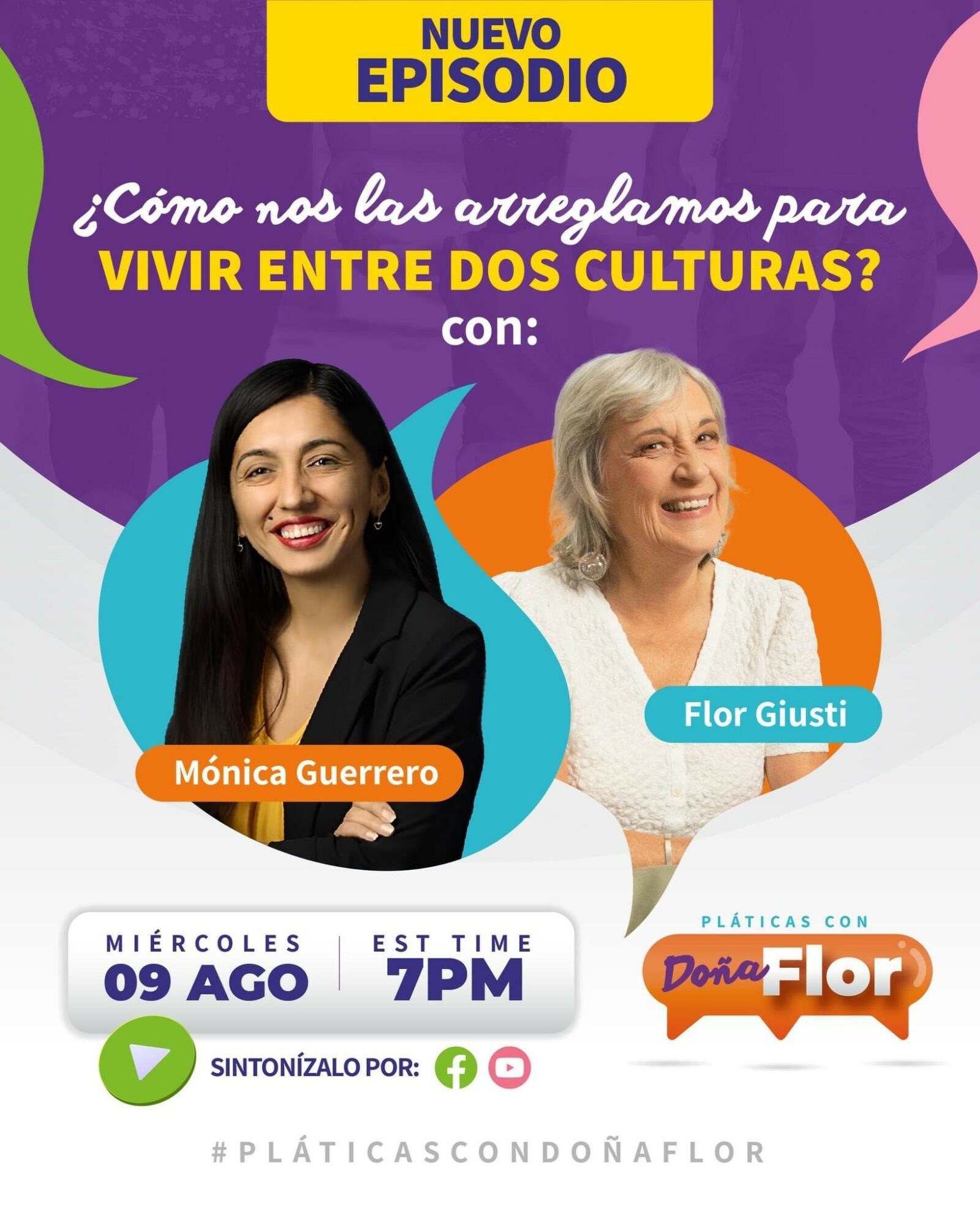
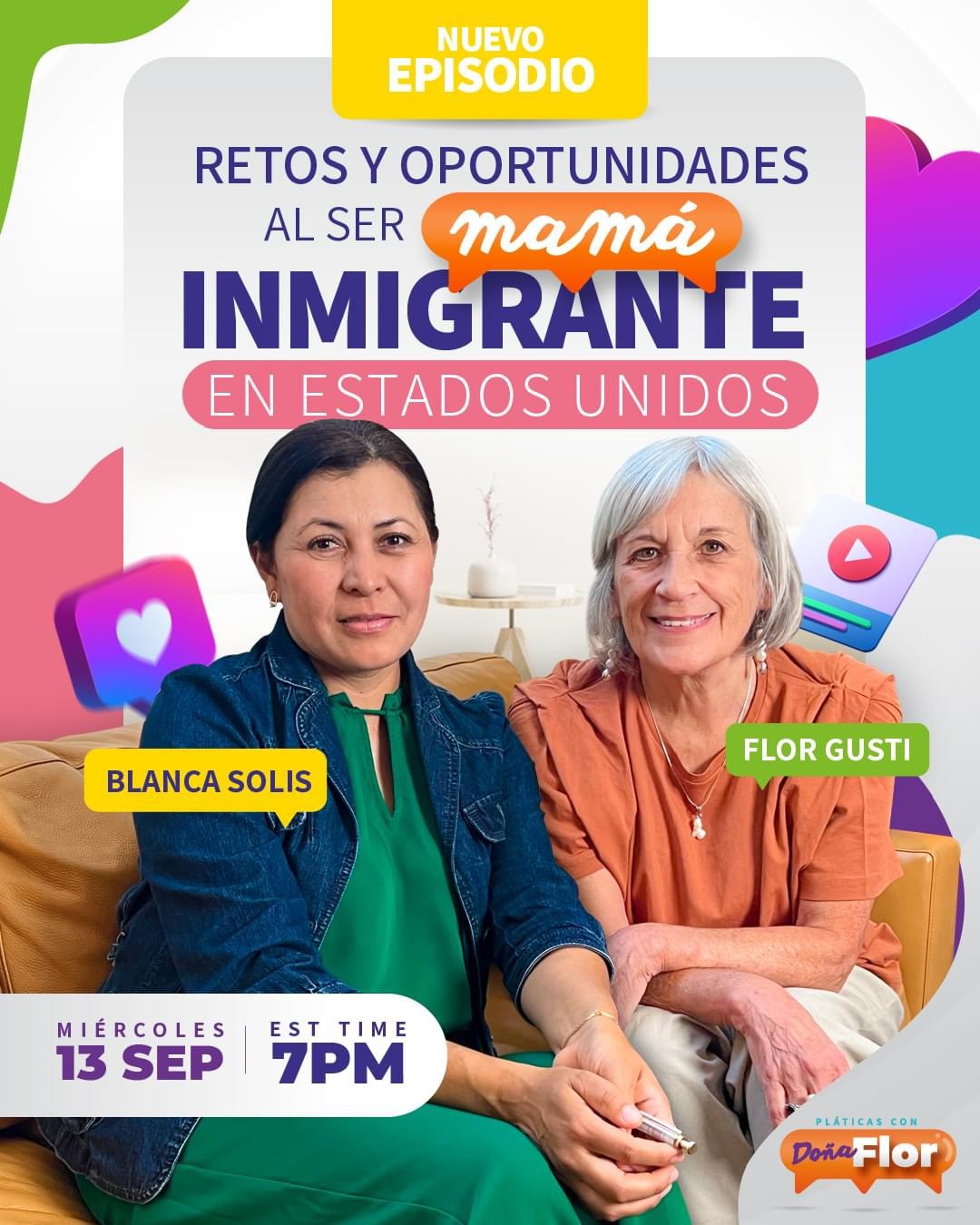
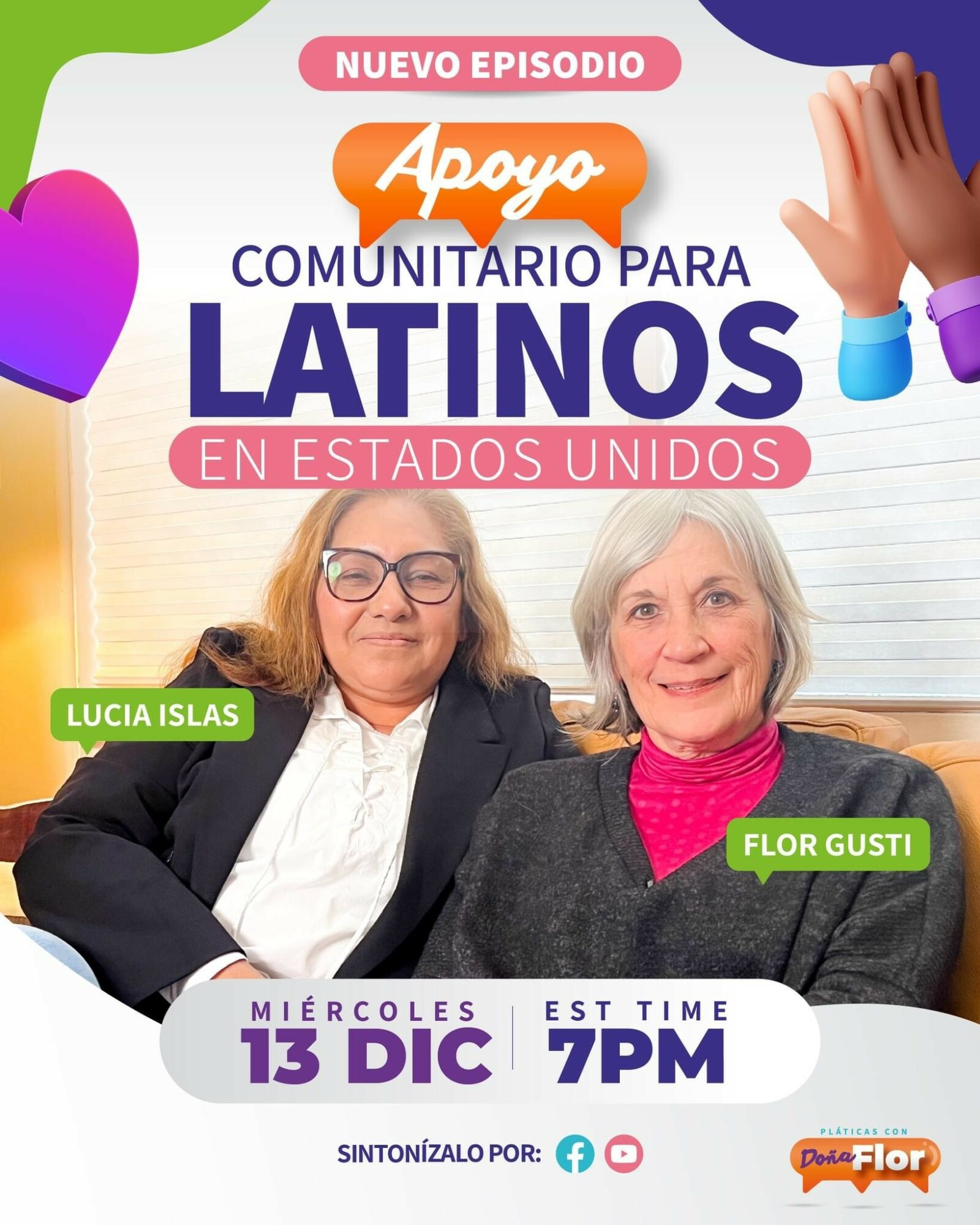
 Image Credits
Estudio Dual and AYNI, LLC