
Today we’d like to introduce you to Carole Feuerman.
Hi Carole, please kick things off for us with an introduction to yourself and your story.
My name is Carole A. Feuerman, and I grew up in upstate New York and Hollis Hills, Queens, I knew I wanted to pursue art as a career.
When I was five, I helped my grandfather design and build our home by spray-painting an outline of each room on the lawn. In fifth grade, my teacher asked me to give weekly drawing lessons to my class. While in high school, I sold my first painting to appreciative neighbors who paid me $300. I guess you could say that officially made me a professional! I then went on to study art at Temple University and SVA and got my Bachelor of Arts degree in 1967.
I knew I wanted to be an artist at three years old when I used shoe polish as my paint and my mother’s white linoleum kitchen floor as my canvas. I graduated from the School of Visual Arts and began my career as an illustrator before pursuing sculpture. I am passionate about my sculptures for their ability to resonate with people on a personal level.
I‘ve taught, lectured, and given workshops at the Metropolitan Museum of Art and the Solomon Guggenheim Museum. In 2011, I founded the Carole A. Feuerman Sculpture Foundation. My works are owned by twenty-three museums. They are in the selected public and private collections of the City of Peekskill, New York, the City of Sunnyvale California, President and Senator Hillary Rodham Clinton, the Frederick R. Weisman Art Foundation, Dr. Henry Kissinger, the Mikhail Gorbachev Art Foundation, Steven A. Cohen, and the Malcolm Forbes Magazine Collection. My public works have been displayed across the globe, from Central Park, Park Avenue, and SoHo in New York, avenue George V in Paris, Harbor City in Hong Kong, and Florence, Milan, Venice, and Rome in Italy. Recently, my piece Egyptian Woman in the Form of Goddess Hathor, was featured in the Pyramids of Giza in Egypt throughout October and November 2023.
I got where I am today by persevering and never giving up, by not saying I can’t do it, but by just doing it. I developed resilience and the act of handling pressure. With every achievement, I gained more confidence. I believed in my ability as an artist. I always had a plan (b) if plan (a) didn’t work. Regarding my art career, there was a fire burning inside me. I was completely devoted to my art. The more I was told I couldn’t do something, the more I was determined to do it, be great, and leave a legacy. If you want to be successful, you need to find your passion and identify what you want to achieve. Without passion, you won’t achieve it. You must be clear about your goals and your plans to achieve them.
I want my art to engage and inspire the viewer to look closely at what stands before them. It is not the fleeting moment that I want to capture, but the universal feeling caught in that fleeting moment. — Carole A. Feuerman
Can you talk to us about the challenges and lessons you’ve learned along the way? Looking back, would you say it’s been easy or smooth in retrospect?
As an artist, trials and tribulations are the norm for us. In my early career, I wanted to work in resins, but I didn’t know how. There was a mannequin company down on Bond Street. I went there and I asked them if they would hire me. I said I would work for nothing and that I wanted to learn how to lay up resin. They said no. I called a few other mannequin companies, and it was clear that I wasn’t going to be hired by any of them. I was buying my resin at Canal Plastics in those days, so I went there and asked them how to work with it.
They said they would explain how to use the materials if I came to their store at 7 AM before the store opened, which I did. I also had an artist friend, a realist sculptor named Ben Bianchi who worked with resins and molds. He posed for Duane Hanson as the “artist.” He gave me lessons. After Bianchi taught me how to cast, I made my first sculpture, the erotic series. Panda, my very first erotic piece was a little bit of my hip, a very tiny fragment with two male fingers on it,
In 1978, I created thirteen erotic sculptures and showed them in a gallery in Fort Worth Texas. The show was called “Rated X”. The art dealer told me the people of Fort Worth Texas were not going to show erotic art, but I could have my opening. The next day I was told to remove my work and go home. Although I was disappointed, to say the least, I got back to New York and decided never to do erotic art again. Meanwhile, my marriage was falling apart, and my life seemed to be a mess, so to get away from the chaos at home, I went to the beach with my kids to find inner peace and calm my nerves.
As I stared at the sea, I saw a swimmer, water drops streaming down her face. She looked proud like she had just accomplished something great. I thought to myself, ‘If she can do it, I can do it’, and I gained strength as I identified with her. That swimmer gave me the idea to make my first swimmer sculpture. That swimmer was me. She was proud and brave in all the ways that I had imagined myself to be in the coming years and a much more refined and stronger version of myself.
On that day, I made the life-changing decision to not only completely give up illustrating and start a career as a fine artist making sculptures, but also to finalize my divorce. I also decided to sign my name Carole A. Feuerman, as opposed to the name Carole Jean that I used for illustrating. Then, I created a new body of work and found a gallery in New York City. Knowing nothing about sports but knowing it’s not sexual – I cast my first swimmer. I visualized a swimmer coming out of the water… hair slicked back, water dripping off their skin, and the look of ecstasy on their face as she accomplished something that made her happy. This sculpture I called “Catalina”. It went on to become my most famous sculpture and led to my signature swimming series of wet sculptures.
Whether it was my rocky divorce or other obstacles in the way, art has always been there for me. I could be at the lowest point in my life, and art would be there, ready to offer its unwavering support and love. In many ways, my art is a lot more to me than just creating sculptures- it’s about finding purpose in life! It has healed me when I needed it most. It helped me in my self-discovery and uncover my emotions buried deep in my subconscious mind, and it has given me confidence.
Appreciate you sharing that. What else should we know about what you do?
I am an American sculptor, author, and a mother. I’m known as a Superrealist and began making sculptures in the 1970s. I am best known for my figures of swimmers and dancers that make people ask, “Is it real”? I’m the only woman to make outdoor painted realistic figurative sculptures. It can be argued by art historians that my life-like sculptures are post-postmodern. Hyperrealism was rooted in modernism. I presented my sculptures as, not so much a photograph of reality, but as a reflection of a feeling.
I was always planning on being a fine arts artist even though I started as a commercial illustrator. I wanted to create art that could interact with the viewer on a very personal level. I knew I could paint and draw, that was easy. I was painting and drawing when I was illustrating. Gradually, my illustrations became more three-dimensional and larger—some of them were six feet tall! I even began combining two-dimensional and three-dimensional aspects in my work—like in my Self Portrait (1973), in which I included three-dimensional, sculptural legs and platform shoes beneath my painted self-portrait, and Gloria, a painting I made for Gloria Steinem in the same year. The art directors who hired me for illustration work saw these large works and suggested I move into the fine art realm since the pieces I was creating were considered fine art instead of illustration. My first life casting was Nose To The Grindstone, a sculpture of a man with his nose cut by a grindstone for the cover of the National Lampoon (1975).
Since 1958, I have concentrated on swimmers and figures with water elements. Through my sculptures, I explore classicism and beauty, which are subjects that have been taboo in contemporary art. There is a conditioned, yet inaccurate, belief that “good” radical art must reject something attractive and pleasing to the eye. I do not reject the concept of beauty but embrace it. I see it, create it, and portray it with my swimmers, who show emotion, joy, grace, tranquility, and sensuality. They are peace-loving, and sometimes pleasure-loving. They are satisfied with life and they are survivors.
My swimmers have their personalities and tell their own stories. Their stories are my stories, sometimes autobiographical and sometimes stories I just need to tell. While their outward appearance is often one of beauty and tranquility, these elegant faces mask a deeper meaning of heroism, triumph, and liberation. Their titles are derived from islands around the world that I have visited and gained inspiration from over the years. For example, in 1976, I went to the Isle of Capri, Italy, in the Mediterranean Sea and created a sculpture called “Capri” named after that special island. In 1979, inspired by the blue horizon of the Pacific Ocean, I envisioned a swimmer emerging like a phoenix from the sea with water droplets streaming across her face, which took form in my creation of “Catalina”. She appears as a proud survivor, beautiful, and strong.
After 56 years of creating swimmers, I continue to be fascinated with the figures in the water with water patterns on them. I love the mechanics of water and its presence as an enduring symbol of life. The symbolism of water is far-reaching and profoundly deep. Water cleanses and purifies. Water touches all people; Water connects one land to another. Water moistens and revives. I sculpt swimmers because we are all swimmers.
What are your plans for the future?
I would love to have a show at an esteemed New York City Museum or a major museum in France, the United Kingdom, or Italy. I plan to have my next monograph, written by Demetrio Paparoni, published by Rizzoli.
A Documentary of my life is in the works and is projected to be released in 2025. I plan to have my work shown at the 2024 Paris Olympics and in Regent’s Park in London. Lastly, however, I’d love to keep on making art, and leaving behind my legacy!
Contact Info:
- Email: info@carolefeuerman.com
- Website: https://www.carolefeuerman.com/
- Instagram: https://www.instagram.com/carolefeuerman/
- Facebook: https://www.facebook.com/caroleafeuerman
- Linkedin: http://www.linkedin.com/pub/carole-feuerman/9/111/678
- Youtube: https://www.youtube.com/@CaroleFeuerman
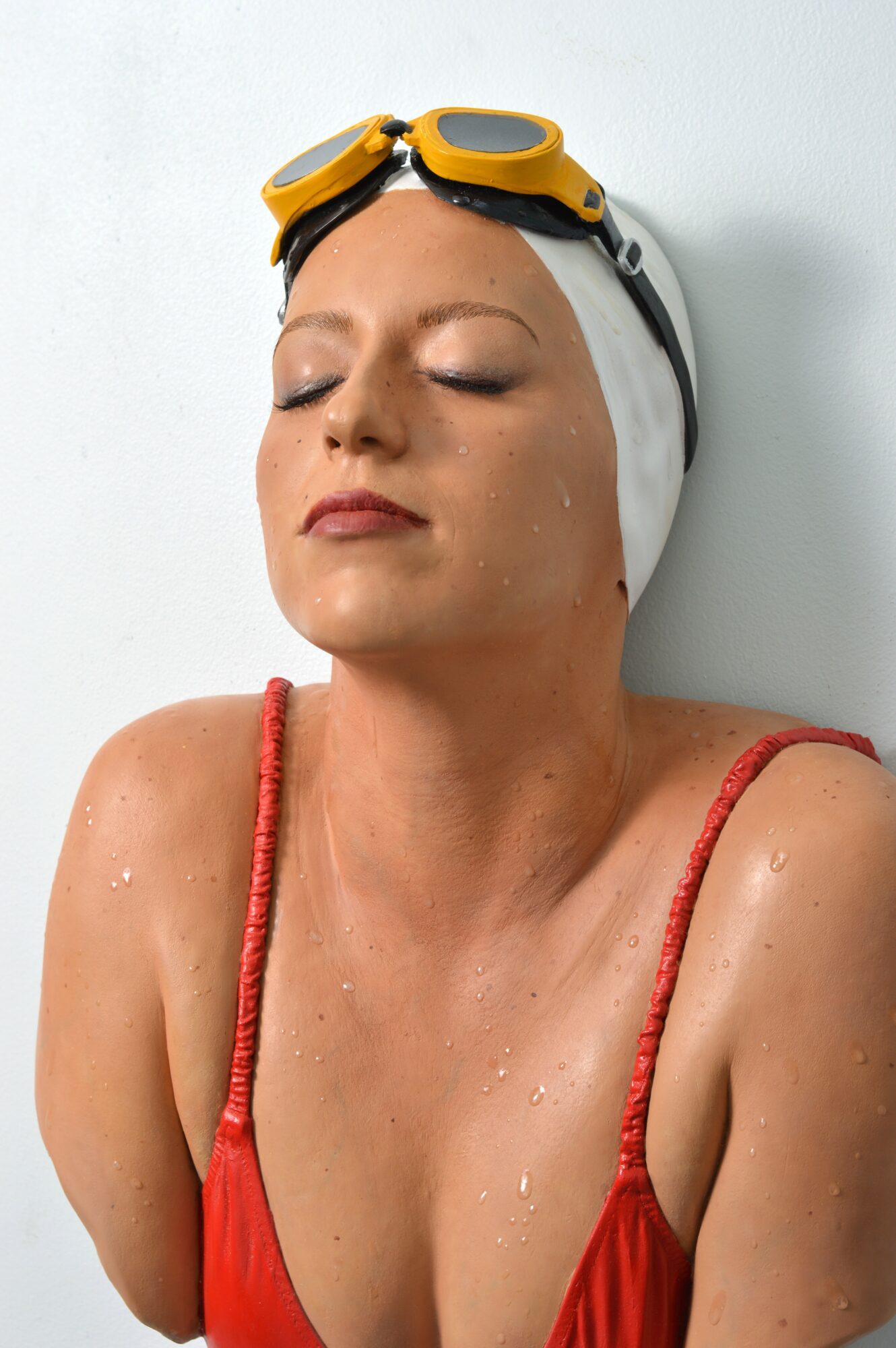
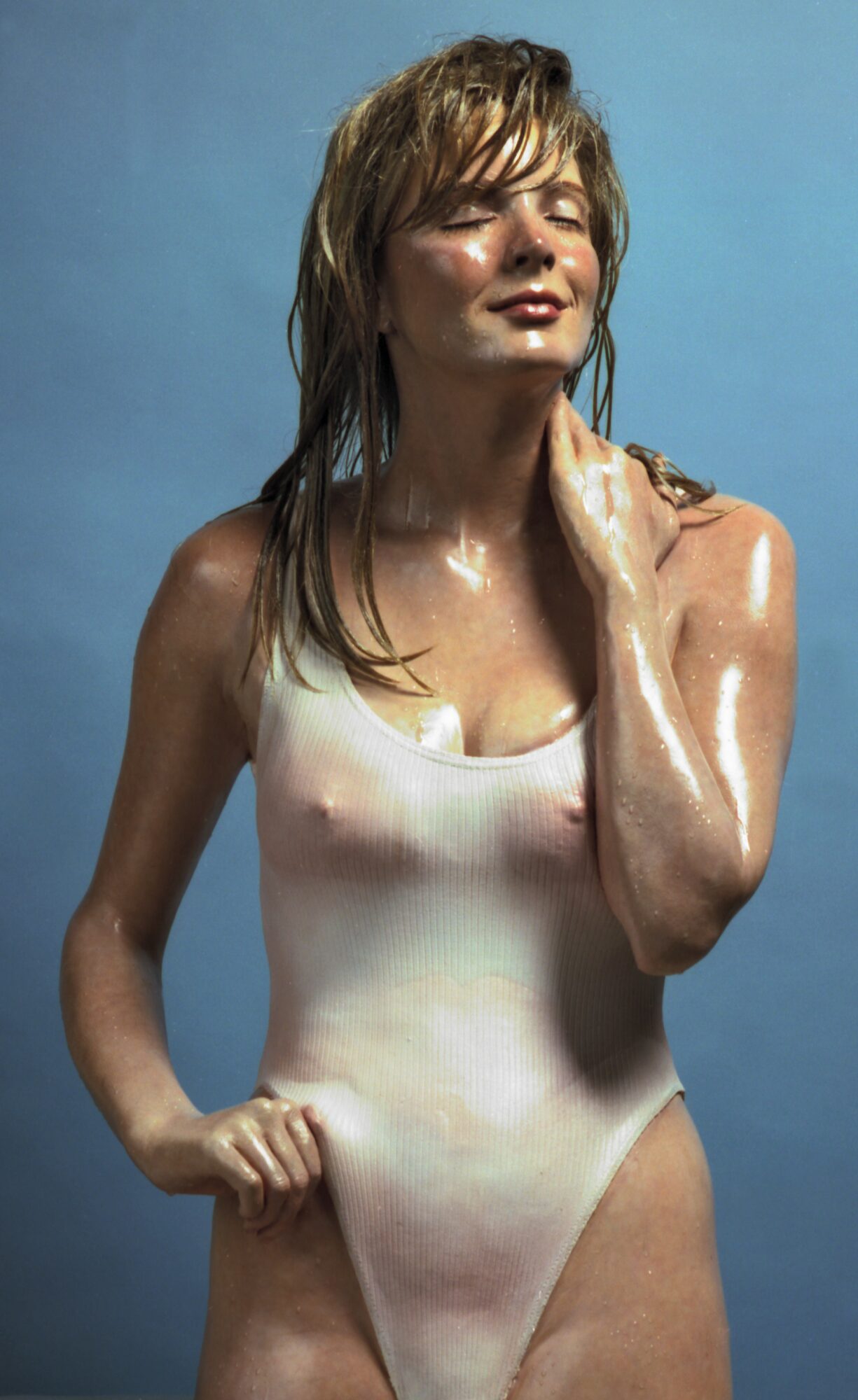
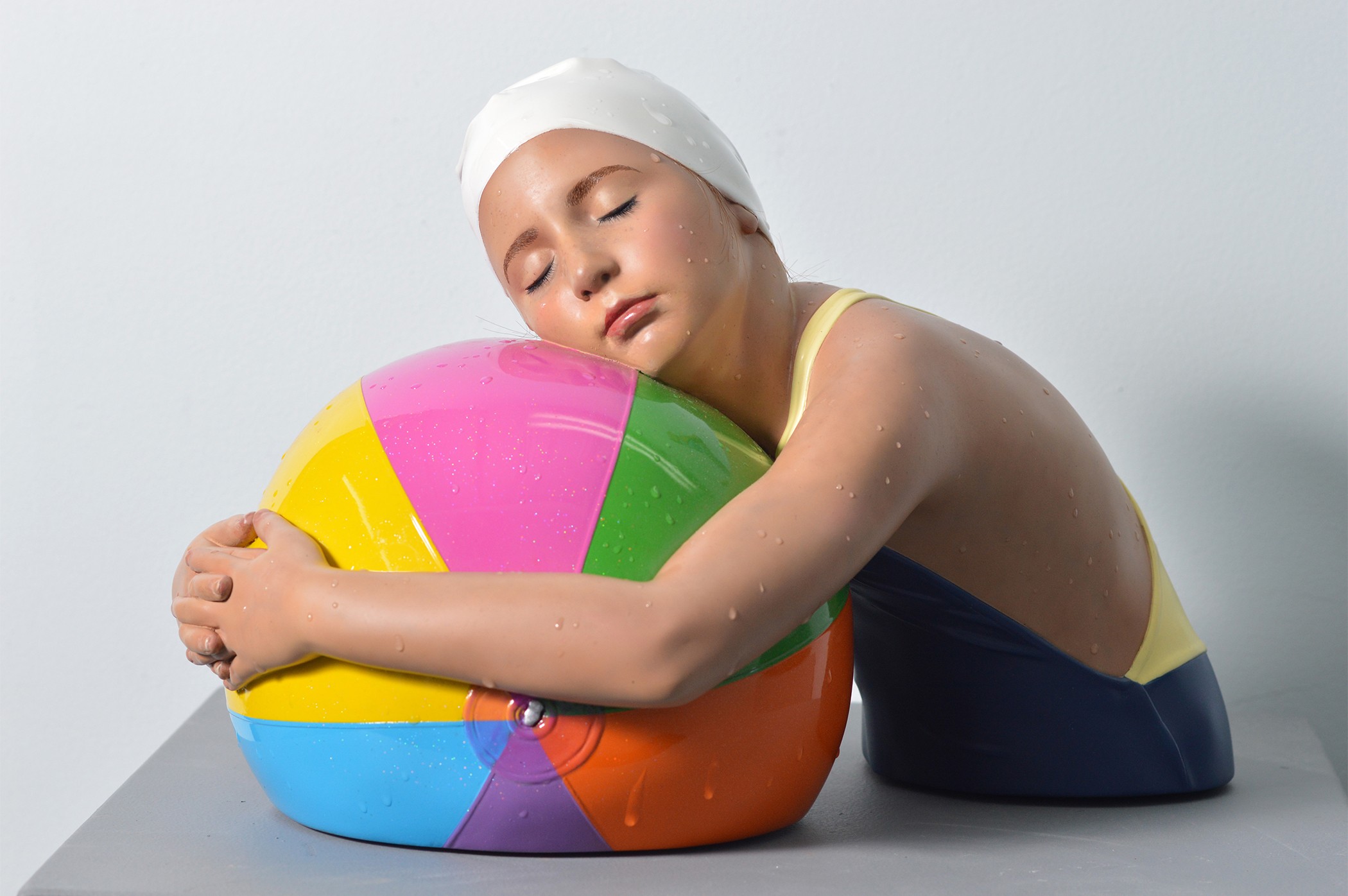
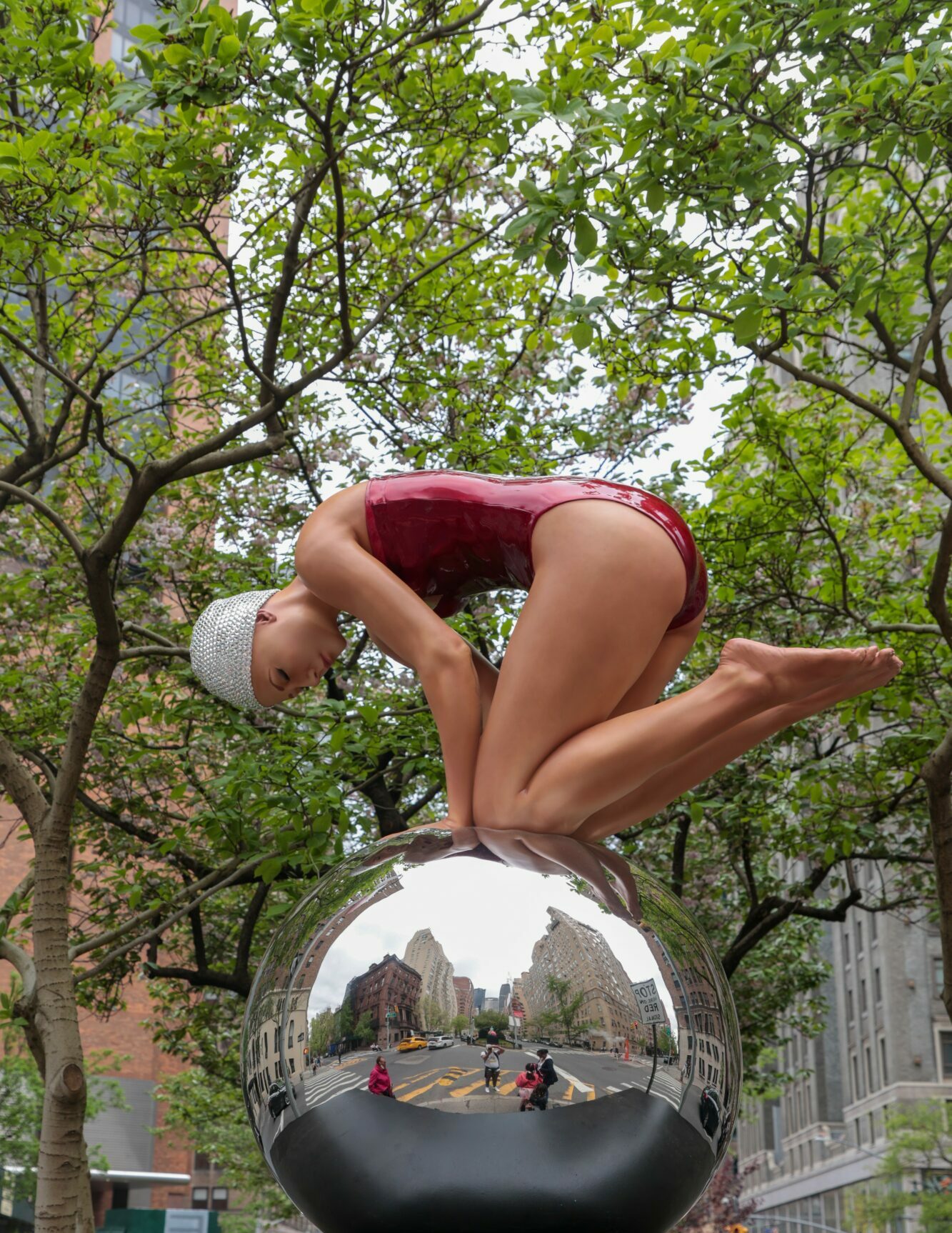
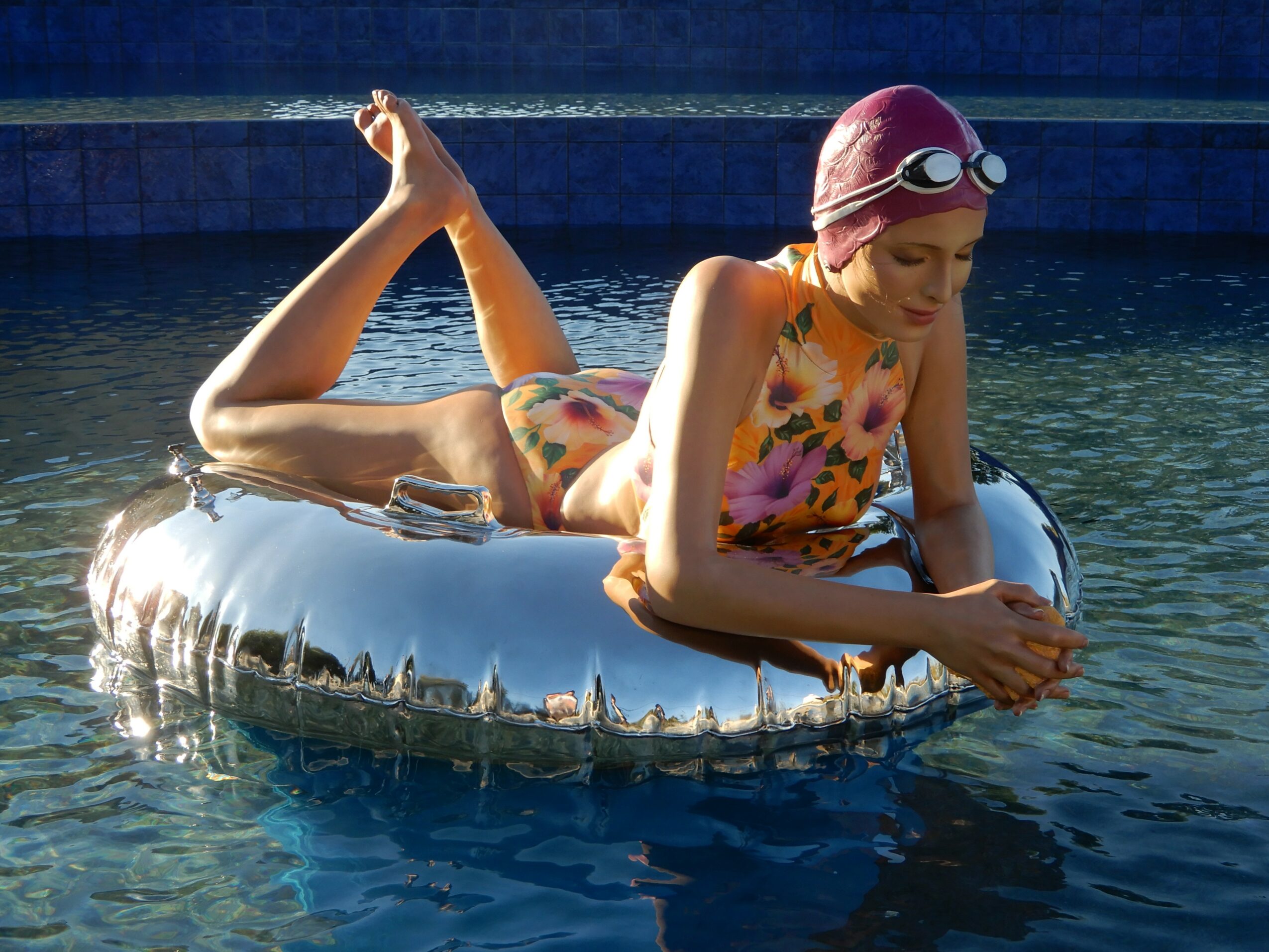
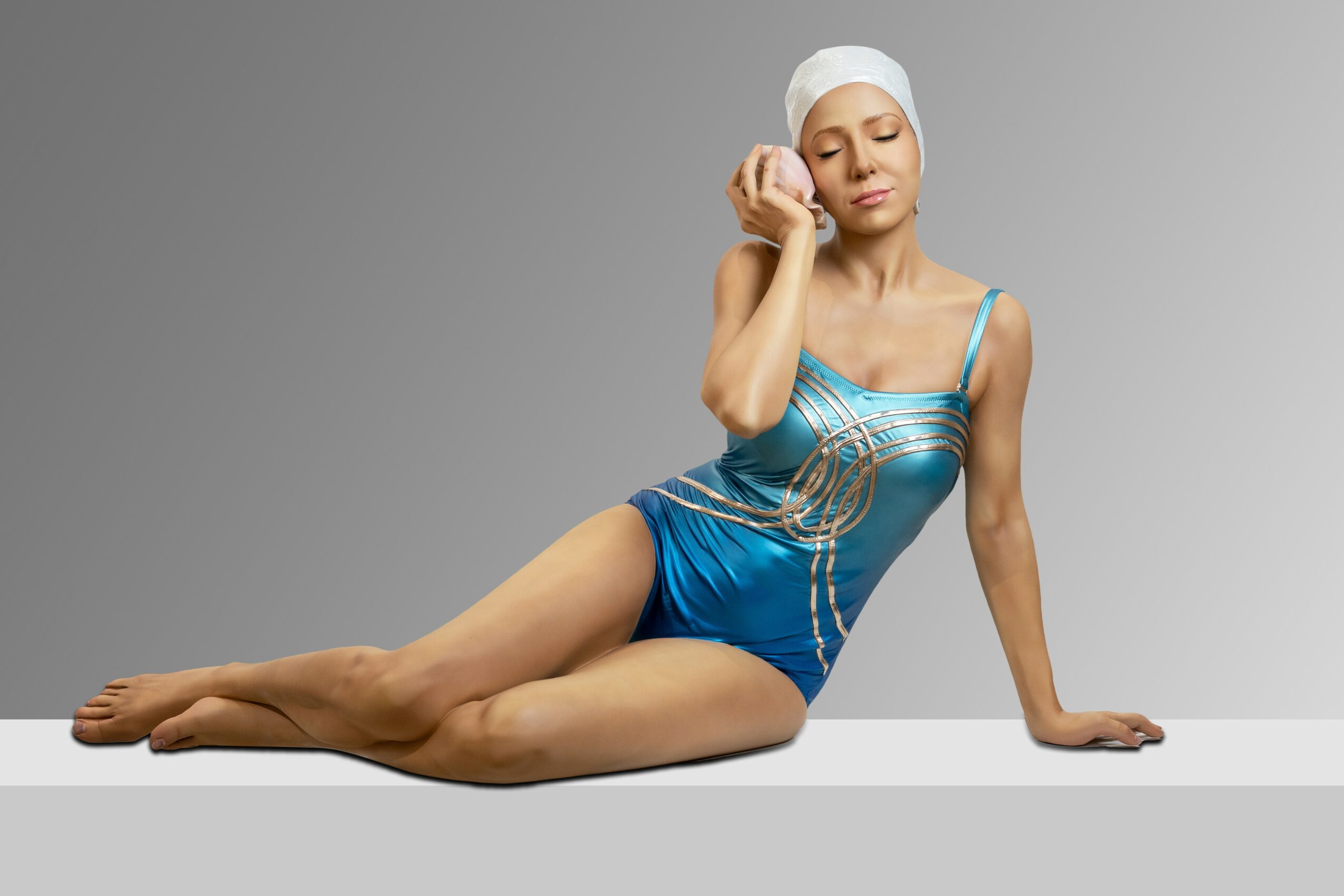
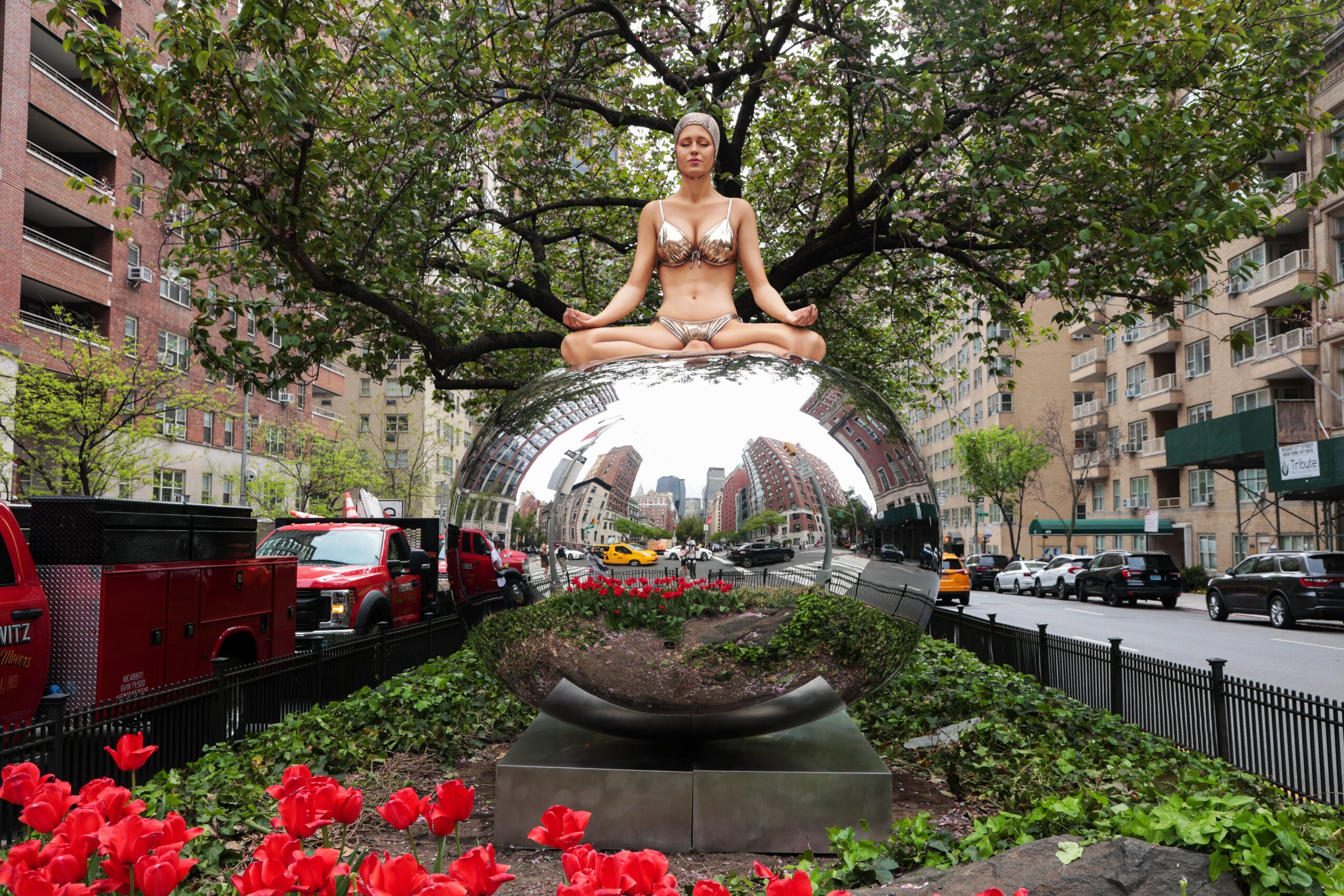
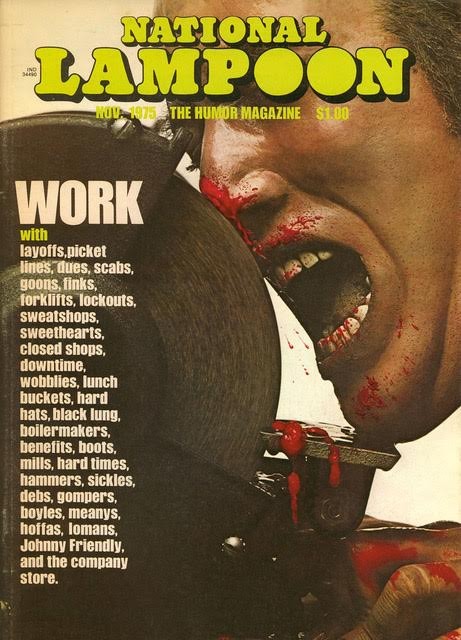
Image Credits
David Brown, Carole Feuerman, Rich Nuzz, and National Lampoon Magazine