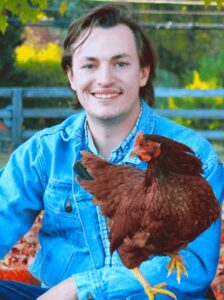
 Today we’d like to introduce you to Iain Davis.
Hi Iain. Can you start by introducing yourself? We’d love to learn more about how you got to where you are today.
Growing up, we always had fresh eggs in the kitchen. And when I say fresh, I mean the hens laid those eggs the same day we ate them. In my childhood, I raised fifty hens in my family’s old dairy barn.
The yolks were orange with a firm white. With just a tablespoon of good butter and a cast iron pan, we could whip up a delicious meal within minutes. Farm life had its perks. When I left for college in 2013, I said goodbye to the farm, became a teacher with Baltimore City Public Schools, bought a house in Federal Hill, met a wonderful partner–Kaetlyn–and pursued life in the city.
My family owned a farmhouse candle company in the old dairy barn. Eventually, they outgrew the barn and moved to a larger facility. This left the barn empty and full of business possibilities. In 2022, Kaetlyn and I decided to move back to the farm after I lived five years in the city. The global pandemic changed our perspectives, and it was time for a break. I was a country boy at heart, and it took being stuck inside to realize that! I rented my rowhome, quit teaching, and began working for my family. I asked Kaetlyn if she’d be interested in setting up a coop for laying hens; I missed those farm-fresh eggs on the kitchen counter. Kaetlyn thought it was a wonderful idea and jumped right into it.
We bought twenty baby chicks from our local feed store. All of them grew up to lay incredibly delicious eggs from grazing the pasture and eating high-quality non-GMO feed. Kaetlyn and I realized we could sell these pasture-raised eggs, especially as grocery store prices soared in 2022. We could provide a better product for a more reasonable price. We recognized the egg industry keeps their hens in cages or “cage-free” by keeping them inside. Our hens were part of the rare 6.5% of hens in the United States that gets daily outdoor access to fresh grass.
So, Kaetlyn and I began Birdland Pastures in April 2022 with a mission to become the industry standard for owning and operating a pasture-raised poultry farm. Using our combined education from Johns Hopkins University, we researched poultry husbandry by reading everything we could about the art of farming. From Joel Salatin to academic research literature, we read whatever we could. We combined backyard chicken farming with industrial scale, creating a business model that’s sustainable, profitable, and connects our community to their food.
Kaetlyn suggested we buy 100 more baby chicks and raise them for egg production. It grew rapidly from there. One hundred hens grew to 200, then 300. We invested in turkeys, quail, and other animals. We entered the Kent Island Farmers Market and Olney Farmers & Artists Market to sell our eggs. Eventually, we joined a third market in Baltimore in the Mt. Washington neighborhood. We are in three markets and sell over 1200 eggs per week. That number is growing fast!
Today, we have over 350 animals on our farm, including laying hens, turkeys, quail, rabbits, and a big livestock guardian dog named Delilah. We are currently expanding into rabbits for breeding and meat. We’re thrilled to continue our farm journey. We’re a young enterprise, but we are certainly the fastest-growing small livestock farm in Maryland.
Would you say it’s been a smooth road, and if not, what are some of the biggest challenges you’ve faced along the way?
It’s been quite a learning experience starting a poultry farm from scratch. The smooth sailing was raising the hens. It’s a blast to watch baby chicks grow. The birds get to know you and vice versa, so we look forward to letting them outside every morning. It’s adorable to watch them run around, flap their wings, and thrive in the outdoors.
The struggles center on doing poultry husbandry the right way, even though it requires a lot of work. Many farms like to cut corners, sacrificing poultry health for lower prices. That means keeping the hens inside or giving them the bare minimum amount of food. Not us. We spend countless hours making sure the hens get quality outdoor time and good food. Keeping the grass as fresh as possible is difficult because chickens will absolutely destroy any fresh grass that’s left underneath them if you keep them there for an extended period. It makes sense; grass tastes very good for them! So we had to figure out a livestock rotation to keep the grass rested.
Keeping predators away was another struggle. When we first started, we lost 30 chickens to a hungry raccoon. That devastated us. However, we persevered by researching the best ways to keep predators away from our chickens. A good combination of electric fencing and a guard dog–along with vigilance and a keen eye for predator signs–does wonders.
Further, our neighbors and the community are wonderful folks who really enjoy the chickens. They love watching the hens and seeing Delilah, our guard dog, walk her perimeter, keeping the foxes at bay. They put flowers on our fence and spread the word about our farm. We love the conversations with our neighbors when we’re outside doing farm work. However, just one neighbor is enough to cause a headache. We had an entire breeding program scratched because one neighbor complained about our roosters crowing. If you don’t have roosters, you can’t hatch. So, we had to pivot to solely buying chicks from hatcheries. We’d love to hatch our own, which we’ve done before, but we also want to respect the neighbor’s wishes of no roosters. I get it, honestly. We’d really like to have roosters, though!
Lastly, raising livestock is different than any other business. For instance, if you can get wax, a container, and a wick, you can pour a candle within that day and have a finished product by the evening. It’s not that simple with eggs. We have to wait six months until a baby chick lays her first egg. And even when that pullet (a baby hen) starts laying, she’s laying medium eggs for the first month, which doesn’t sell as fast as large or extra large. There are dangers for that hen too.
If a predator gets a hold of the hen, she’s gone. No more eggs. So, realizing how important it is to keep our hens safe from predators, along with raising hens at the right time to meet the consumers’ demands, has been very bumpy for us. Not long ago, we had low egg inventory as our new hens grew, but we’re at a nice point right now where we can meet our demands. We’ve ordered baby chicks to be ready by Spring 2024 so we don’t repeat this mistake again.
Overall, livestock farming is just a bumpy industry. However, the smoothness rests in the love of nature and sustainability. Our customers can recognize the difference and passion that we have for our animals.
Great, so let’s talk business. Can you tell our readers more about what you do and what you think sets you apart from others?
Our farm is focused on regenerative agriculture, animal ethics, and the community. Too often, hens are raised in cages with just a square foot of roaming space. We believe that happy and pastured hens make delicious eggs.
Further, we believe that fresh and affordable ingredients are a necessity in every kitchen. Birdland Pastures has 350 hens and two farmers who are dedicated to sustaining our land, providing quality poultry products, and creating a wonderful life for the hens. We solely sell our eggs at local markets for an authentic farm-to-table experience. Kaetlyn and Iain are the sole owners and employees of the farm. Birdland Pastures is not tied to any corporate integrators or major grocery stores. That means when you buy from us, you’re buying good ingredients directly from the farmer.
We are so confident in our approach to animal husbandry that we invite anyone to watch our hens live on our 24/7 Livestream. You can watch the hens live at any time and even feed them using our robotic feeder. Check it out on our website at https://birdlandpastures.com – The best part is it’s free. We want to be the standard of poultry husbandry in the United States.
Any big plans?
Our company is growing at a rapid pace, and numerous plans are on the horizon.
One huge change is that we’re selling on-farm to the public. Every Wednesday from 4 PM-Sunset, we’ll have a farm stand on York Manor Road in Phoenix, MD. Stop by and say hi! Get some delicious eggs, cheese, butter, and even scented candles.
We are going to transition to certified organic once we move to a new farm. We plan to reach 1,000 certified organic laying hens within the next few years. The family farm is wonderful yet not large enough to sustainably raise that amount of hens. We’re making all of our coops mobile so they can be on any land at any time. Just plop some electric fence around the coops, and the hens will be ready to graze. Also, we fully plan to stay in Maryland and the Baltimore County area!
We’re also planning to get our license for rabbit and chicken on-farm meat processing. We’re going to be different from standard meat farms. I’m choosing a special kind of meat, chicken and a French diet to make delicious poultry. For rabbits, we’re raising two females and a male to begin our breeding program. We’ll bring pasture-raised rabbit meat to markets sometime in 2024. As well, we will be selling pedigreed rabbits that are not for meat!
Lastly, we plan to sell quail and turkey meat at markets. We have heritage turkeys being raised right now and adult quail on pasture. If you’re looking for the most delicious Thanksgiving turkey and quail you’ve ever had, we’ll have them.
So the plans for the future include both eggs and a variety of meats. All are sustainably sourced and pasture-raised.
Pricing:
- Pasture-Raised Eggs – $7 per dozen
- Quail Eggs – $12 per dozen
Contact Info:
- Website: https://birdlandpastures.com
- Instagram: https://instagram.com/birdlandpastures
- Facebook: https://www.facebook.com/profile.php?id=100082616057648
- Youtube: https://www.youtube.com/channel/UCU6FQdwFha2wEoAlxQiUtxA
- Other: https://www.twitch.tv/birdlandpastures